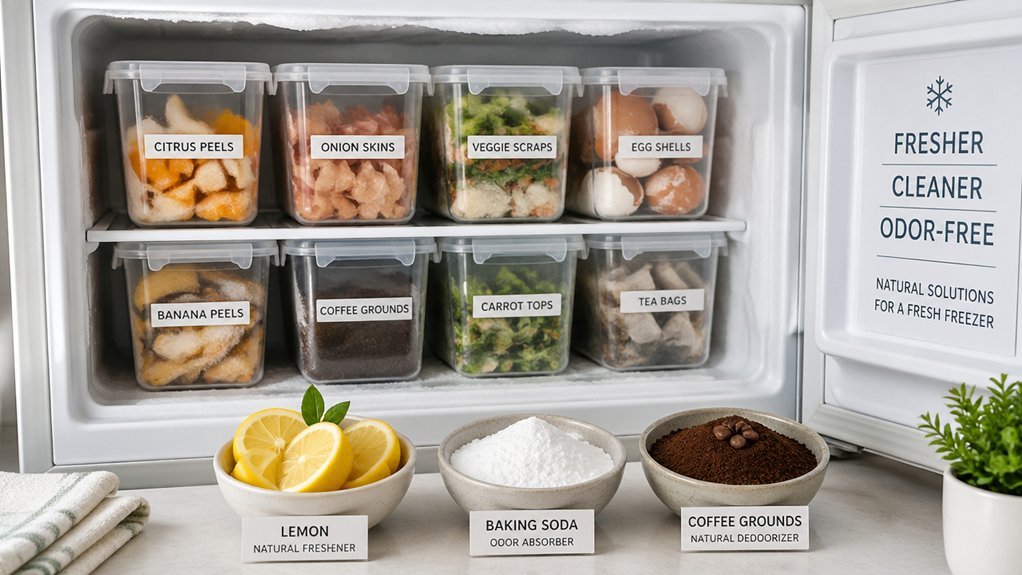
Pick the most pungent leftovers—meat trimmings, dairy bits, fish bones, mold‑prone fruit, or greasy scraps—and freeze them right away in airtight, freezer‑safe containers. Use BPA‑free plastic or glass with leak‑resistant seals, and line each bag with a dry absorbent layer like shredded paper or a sprinkle of baking soda. Store the packs in the freezer’s coldest spot (0 °F/‑18 °C) to halt microbial activity, and when it’s compost day, transfer them with a liner and clean your tools afterward. Keep following these steps and you’ll discover even more tricks.
Choose Airtight High‑Odor Scraps Before Freezing Food Scraps
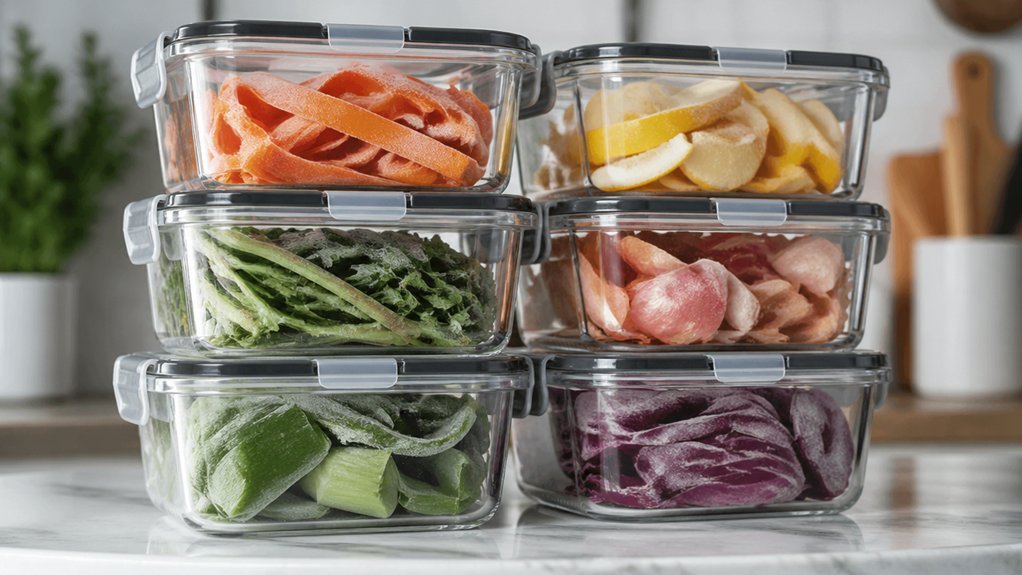
Why not start by picking the most pungent leftovers—meat trimmings, dairy bits, fish bones, mold‑prone fruit, and greasy scraps—before you lock them away? You’ll find that high‑odor scraps generate the worst smells if left at room temperature, but freezing them stops decomposition and cuts odor by up to 80 %.
Pack each batch in airtight containers or freezer bags, keeping meat, dairy, fish, fruit, and grease separate to avoid cross‑contamination. The sealed environment blocks volatile compounds, delivering solid odor control.
Label each package with its contents and the date you froze it; this makes collection‑day disposal easy and prevents old scraps from lingering. By prioritizing these steps, you keep your freezer fresh and your kitchen odor‑free. Odor-Control
Use Airtight, Freezer‑Safe Containers to Freeze Food Scraps Odorlessly
After sealing the most odorous scraps, the next step is to store them in airtight, freezer‑safe containers. Choose BPA‑free plastic or glass containers with leak‑resistant seals and smooth interior surfaces; these prevent odor absorption and make cleaning a breeze. Regularly replacing charcoal filters helps maintain odor control and hygiene in storage systems odor control. Portion the scraps into 3–6‑cup, stackable units so they freeze quickly and you maximize freezer space. Label each lid with the contents and freezing date to track freshness and avoid unnecessary opening that can release smells. Rinse and dry containers before refreezing to keep moisture low and maintain an odorless environment. By using proper airtight containers, you’ll keep your freezer smelling fresh and your food scraps ready for future meals.
Add a Dry Absorbent Layer When Freezing Food Scraps
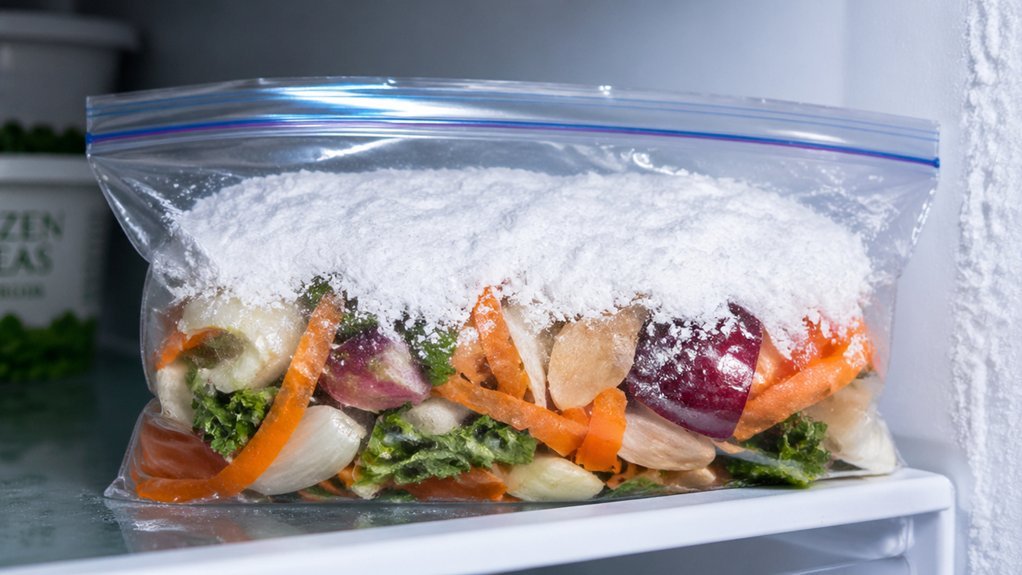
Ever notice how thawing scraps can leave a soggy mess and lingering smell? You can stop that by adding a dry absorbent layer before you seal your freezer scraps. Place shredded paper, newspaper, or dry leaves at the bottom of the bag, then sprinkle a bit of baking soda or coffee grounds into the mix. This layer pulls moisture away, so when the frozen scraps storage thaws, the liquids stay trapped and odor control stays intact. Swap the liner each time you add a new batch, and you’ll keep frozen scraps storage tidy and odor‑free. The simple moisture absorption trick also prevents leaks, cross‑contamination, and keeps your freezer smelling fresh. Moisture absorption helps maintain longer freshness and aligns with reusable, durable filtration concepts similar to how 600 µm and 400 µm mesh bags maintain filtration integrity in compost tea systems.
Store Packs in the Freezer’s Coldest Spot, 0 °F (‑18 °C) or Lower
Ever wondered how to keep frozen food scraps truly odor-free? Store your packs in the freezer’s coldest spot—ideally 0 °F (‑18 °C) or lower. This freezer temperature halts microbial activity, keeping smells at bay. Use dedicated storage containers or flat, stackable bags to maximize freezer organization and freeze irregularly shaped frozen scraps quickly. Label each container with its contents and date; labeling helps you track how long items have been stored and prevents extended retention that could trigger odor control issues. Keep the freezer door closed as much as possible to maintain consistent low temperatures and avoid moisture release. By placing scraps in the coldest zone, you ensure rapid freezing, preserve freshness, and keep your kitchen smelling clean. Regularly monitor the freezer’s seal to maintain optimal odor control and storage efficiency freezer seal maintenance.
Transfer Frozen Packs and Clean the Bin Afterwards
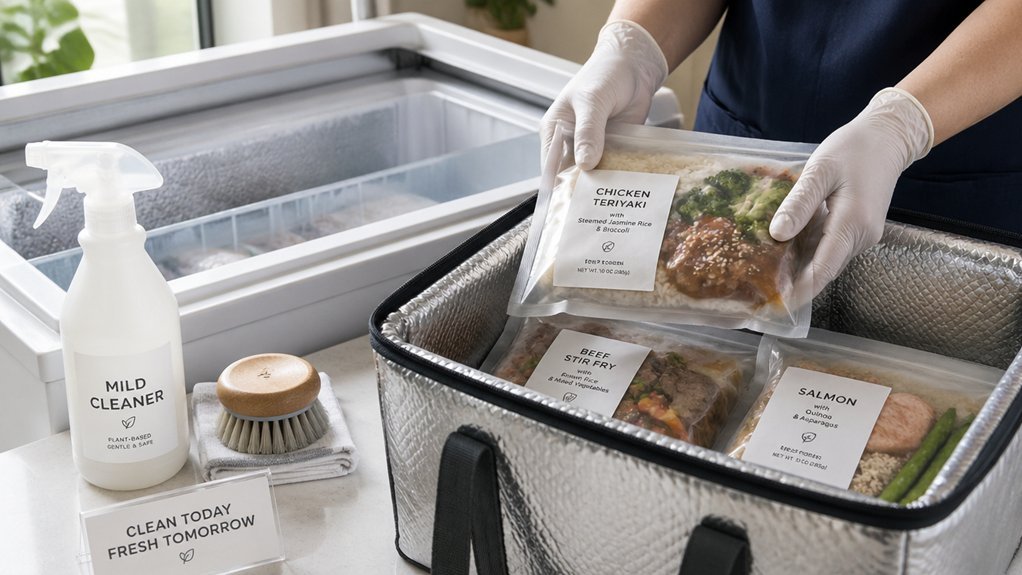
A practical way to keep your kitchen odor‑free is to move the frozen packs straight to the outdoor compost bin on collection day, preventing any thawing that could release smells indoors. When you gather frozen scraps, place them in a freezer container lined with a leak‑resistant liner, then use dedicated tongs to transfer them to the bin. The liner stops moisture from escaping, keeping the transfer odorless.
If you can’t make the pickup day, store the packs in a separate freezer compartment or cooler until you can move them. After the transfer, rinse or wipe down the container and any tools, then let everything dry. This routine protects bin cleanliness and ensures cleaning after transfer stays quick and effective.
Frequently Asked Questions
How to Make Kitchen Compost Not Smell?
You’ll keep kitchen compost odorless by layering dry paper, freezing strong‑smell scraps, using a breathable compostable liner, emptying the bin every couple of days, and cleaning it regularly with vinegar and baking soda.
How to Store Food Scraps in the Freezer?
You should place scraps in a zip‑top freezer bag or a small airtight container, squeeze out excess air, label it, and keep it on a dedicated freezer shelf so you can grab it quickly when collection day arrives.
What Three Items Should Not Be Placed in a Compost Pile?
You should keep meat scraps, dairy products, and oily foods out of your compost pile, because they attract pests, cause strong odors, and slow down decomposition.
How to Keep Frozen Food Frozen Without a Freezer?
You can keep frozen food frozen by packing it in insulated containers, surrounding it with ice packs or dry ice, storing it in a cooler, and limiting opening time; also, place it in a cold, shaded spot.
In Summary
By sealing your scraps in airtight, freezer‑safe containers, adding a dry absorbent layer, and storing them in the coldest part of the freezer, you’ll keep odors at bay. Once frozen, transfer the packs to your bin, then clean the bin promptly. This simple routine guarantees your freezer stays fresh, your kitchen stays odor‑free, and your frozen scraps stay ready for future meals.