
You’ll eliminate offensive odors by balancing moisture, carbon, and nitrogen—not by masking smells. Zero-smell doesn’t mean no scent; it means your compost smells earthy, like damp forest soil. You’ve got two main paths: sealed fermentation for compact indoor spaces, or layered aerobic systems for larger areas. Both rely on proper moisture (45–60%), loose layering to preserve airflow, and daily coverage of scraps with browns. Strong odors signal problems—too much moisture, excess nitrogen, or poor oxygen—all fixable with the right adjustments. Discover exactly how to build and maintain your first odor-free system.
What “Zero-Smell” Composting Actually Means

What does “zero-smell” really mean in composting? It’s not literal odorlessness—decomposition always produces volatile compounds. Instead, “zero-smell” means you won’t notice nuisance odors during normal indoor use. You’re aiming for an earthy, faint aroma like damp forest soil after rain, not a rotten or sour stench.
Strong odors signal problems: anaerobic breakdown, excess moisture, too much nitrogen, or poor oxygen management. When you maintain the right balance of carbon, nitrogen, and moisture, you prevent odor formation at the source rather than masking it afterward. The three main culprits—lack of oxygen, excess animal protein, and excessive moisture—are entirely preventable through proper system design. Charcoal filters and sealed lids can provide additional odor containment during the composting process.
Your finished compost should resemble dark, crumbly soil with a clean natural scent. If you smell ammonia, sulfur, or decay from a distance, your system isn’t meeting the zero-smell standard—it needs rebalancing.
Sealed Fermentation vs. Aerobic Layering: Which System for You?
How do you choose between sealed fermentation and aerobic layering? Your answer depends on your space, volume, and goals.
| Feature | Sealed Fermentation | Aerobic Layering |
|---|---|---|
| Space | Indoor, compact | Larger outdoor areas |
| Processing Time | 14–21 days (pre-compost stage) | 6–10 weeks (finished compost) |
| Waste Types | Meat, dairy, cooked foods accepted | Primarily yard waste, greens |
Sealed fermentation excels when you’re collecting kitchen scraps indoors with minimal odor and space constraints. You’ll get pre-compost quickly but need a second stage for finishing. The anaerobic fermentation process uses lactic acid bacteria and other microorganisms to break down waste without oxygen generation.
Aerobic layering works better for larger volumes and yard waste. You’ll achieve finished compost directly, though it takes longer. Consider combining both: ferment scraps first, then layer the pre-compost into an aerobic system for complete stabilization. For optimal results in your aerobic layering stage, incorporating carbon-rich bedding material can enhance aeration and prevent compaction while supporting microbial activity.
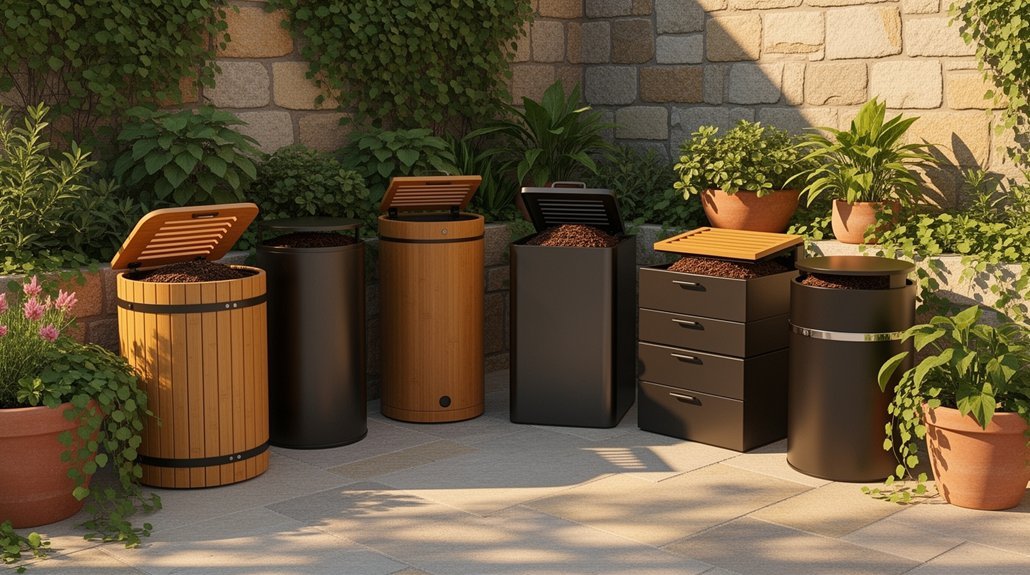
Choose Your Container: Fermentation Bin, Bucket, or Compact Composter

You’ll want to pick a sealed fermentation bin if you’re composting in your kitchen, where a tight-sealing lid and drainage tap keep odors contained and manage leachate efficiently.
For balcony or outdoor spaces with limited room, a compact countertop composter works better as a collection point before you transfer scraps to your main fermentation bucket. Bokashi bran layering between waste materials initiates the fermentation process that breaks down organic matter in an oxygen-free environment. Most indoor composting systems rely on charcoal filters to maintain odor control during the collection phase.
The right choice depends on your available space, waste volume, and whether you’re prioritizing daily convenience or total capacity.
Sealed Fermentation For Kitchens
When you’re ready to start sealed fermentation, selecting the right container becomes your first practical decision. You’ll choose among three main options: a dedicated fermentation bin, a 5-gallon bucket, or a compact countertop composter.
Fermentation bins offer airtight lids and built-in drainage for liquid tea. Buckets provide an affordable, simple alternative that works equally well when sealed properly. Compact composters suit kitchens with limited space, holding daily scraps before transfer to larger vessels. For maximum odor control, consider containers with silicone gasket seals, which create superior anaerobic conditions similar to those found in premium food storage systems.
Regardless of your choice, prioritize an airtight seal—this maintains anaerobic conditions and minimizes odor. Ensure your container is food-safe plastic and easy to clean, since fermentation produces acidic residue. Match container size to your household’s food-scrap volume and emptying frequency for consistent results. The microbial inoculant you select will determine fermentation speed and the quality of nutrient delivery to your soil.
Compact Bins For Balconies
What makes balcony composting different from kitchen fermentation? You’re moving beyond your kitchen to contain larger volumes of waste in an outdoor space. You’ll choose from three main container styles: bucket systems, compact upright bins, or tumbling composters.
Bucket-based setups work well if you’re handling single-person household scraps. You can drill holes for passive aeration or build a DIY system with an inner bottomless bucket inside a larger container. Ready-made compact tumblers, typically around 70 liters, fit tight spaces and decompose faster because movement increases oxygen flow. For year-round balcony composting in cold climates, consider that fermentation will pause if freezing occurs and you may need to relocate your system indoors during winter months.
Size matters—match your container to your waste volume and available floor space. Placement in dappled sun or shade helps, and drainage holes with a catch tray prevent moisture buildup. These compact systems produce enough finished compost for your balcony plants. The rotating design of tumbling composters like the EJWOX model facilitates turning and rapid composting while maintaining the octagonal shape that maximizes space efficiency on small balconies.
Build Your First Low-Odor Fermentation Bin
How do you contain fermentation odors before they escape into your home? Start with a food-grade plastic bucket or glass container that seals tightly. You’ll need a lid, an airlock, and ideally a spigot for easy transfers. Sanitize everything—bucket, lid, airlock, spigot, and tools—using warm water and sanitizing powder before use. When loading your bin, add liquid gently to minimize splashing and oxygen exposure. Leave adequate headspace so foam won’t push through the lid during active fermentation. Pitch your yeast after sealing the vessel to start fermentation promptly. Keep your bin in a cool, stable location and leave it closed as much as possible. Consider using a spunding valve to regulate pressure and prevent unwanted gas buildup that can create odors during active fermentation. For enhanced odor control, prioritize bins with activated charcoal filters positioned near airflow sources to trap odors effectively. This setup contains odors effectively without requiring external airflow.
Build a Layered Aerobic System Without Airflow

Why do layered composting systems work without forced airflow? You’re creating natural oxygen pathways through strategic material placement.
Layered composting creates natural oxygen pathways through strategic material placement, eliminating the need for forced airflow systems.
Start with a 4- to 6-inch base of bulky browns like twigs or wood chips—they’ll lift your pile and establish air circulation underneath.
Alternate nitrogen-rich greens and carbon-rich browns in loose layers, avoiding tight compression that blocks pore space. This structure lets oxygen passively diffuse throughout without mechanical help.
Coarse materials absorb excess moisture while preserving void spaces where air moves freely. You’ll maintain damp conditions rather than saturated ones, which keeps aerobic microbes active and odors away. The ideal moisture level for effective composting should be crumbly but not soggy, similar to a wrung-out sponge.
The layered approach prevents wet pockets and compacted zones where anaerobic bacteria thrive. Your pile stays aerobic, stays cool, and stays odor-free through thoughtful architecture alone. Unlike systems that rely on internal aeration tubes, passive layering maintains the high internal temperatures needed to accelerate decomposition naturally.
Balance Moisture and Carbon to Stop Odor
You’ll want to nail the green-brown ratio—roughly 2 to 3 parts browns to 1 part greens by volume—because it’s your first line of defense against odor and excess moisture.
Moisture control is equally critical: your compost should feel damp like a wrung-out sponge, not soggy, since waterlogged piles trigger anaerobic bacteria that produce foul smells. A moisture buffer layer at the bottom of your bin, made from half-rotted cardboard or coconut coir soaked in compost tea, will trap excess liquid and maintain the right internal humidity while feeding your microbes. Vented lids with replaceable natural charcoal filters can further support odor management as your pile decomposes.
Get these two elements right, and you’ll eliminate the rotten-egg and sewage-like odors that plague most beginner composters.
The Green-Brown Ratio
The secret to odor-free composting lies in balancing two essential material types: nitrogen-rich greens and carbon-rich browns. You’ll want roughly 2 to 3 parts brown material for every 1 part green by volume—think 70% browns and 30% greens.
Why does this matter? Your compost microbes need both carbon and nitrogen to work efficiently. Too many greens create a dense, wet, oxygen-poor pile that smells terrible. Too many browns slow decomposition because nitrogen runs out.
Use dry leaves, shredded paper, straw, or wood chips as your browns. Layer greens with browns instead of dumping food scraps all at once. Cover kitchen waste with several inches of browns. When your pile looks slimy or wet, add extra browns immediately. Quality compost pails with charcoal filters can provide additional odor control while you maintain proper green-brown ratios. This ratio keeps odors at bay from the start. Imbalance in the composting system disrupts microbial activity and increases odors, so maintaining proper proportions is essential to preventing unwanted smells.
Moisture Control Essentials
Getting your green-brown ratio right sets the foundation, but moisture control is what actually stops the smell from developing. You’ll want to maintain 40% to 60% moisture by weight—think of a damp sponge, not dripping mud. When moisture exceeds 65% to 70%, water fills pore spaces and blocks oxygen, pushing your pile toward anaerobic decomposition and foul odors.
Test moisture by squeezing a handful. If only a drop or two emerges and the material crumbles slightly, you’re in the right zone. If water streams out, you’ve got a problem. In hot or dry weather, you’ll need regular water additions at least once per week to prevent feedstocks from becoming too dry and hydrophobic.
Combat excess moisture by turning your pile to introduce air, adding dry carbon materials like leaves or sawdust to absorb water, or covering it with a tarp. For composting systems without regular aeration, bokashi bran can absorb excess liquid and minimize odors while maintaining anaerobic conditions. Wet nitrogen-rich inputs like kitchen scraps need drier materials nearby to maintain proper balance and keep odors at bay.
Daily Steps for Odor-Free Composting

How do you keep a compost pile fresh day after day? You’ll establish a simple routine that tackles odor before it starts.
| Task | Frequency | Purpose |
|---|---|---|
| Add scraps & cover with browns | Daily | Prevents odor escape |
| Check moisture level | Daily (warm weather) | Maintains 45–60% moisture |
| Remove stray scraps | Daily | Eliminates localized smell sources |
After each food addition, bury kitchen scraps under 2–4 inches of carbon-rich material like shredded paper or dry leaves. Rinse your collection container regularly so old waste doesn’t ferment beforehand. Clean your bin’s rim and surrounding areas where residue accumulates. When bad odors emerge, add dry browns immediately and mix top layers. If you detect earthy smells, your conditions are balanced. This daily discipline prevents the moisture imbalances and oxygen shortages that create foul odors. Remember that brown materials absorb moisture and maintain the damp-sponge consistency your pile needs to stay odor-free without requiring turning.
When to Harvest and Cure Your Compost
After you’ve mastered your daily composting routine, you’ll eventually reach a point where your pile stops actively heating and the materials transform into something unrecognizable—that’s when harvesting becomes possible. Look for dark brown or black, crumbly material with an earthy smell and no visible food scraps or yard waste.
Before harvesting, allow a curing period of at least one month. Stop adding new materials several weeks beforehand. During curing, your compost stabilizes as remaining decomposition completes. You’ll know it’s ready when the pile no longer generates heat or steam when disturbed. Macroscale organisms like worms and beetles will naturally migrate away as conditions stabilize, leaving behind finished material.
Harvest from the bottom or center of your bin. If you need finer texture for containers, screen or sift the material. Store finished compost in moist, aerated conditions until you’re ready to use it.
Fix Common Odor Problems: Wetness, Pests, and Smell Breakthrough

Even with a solid daily routine, you’ll likely encounter odor issues—and that’s normal. Most smells signal one or more fixable problems:
- Wetness: If your pile feels soggy rather than like a wrung-out sponge, mix in dry carbon materials like shredded leaves or cardboard to restore airflow and shift decomposition back to aerobic activity. Maintaining moisture between 45-60% ensures dissolved oxygen remains available for aerobic microbes in the liquid films around feedstock particles.
- Pests: Fruit flies thrive on exposed scraps. Cap every addition with dry browns, use tight-fitting lids, and avoid meat, dairy, and oils in beginner setups.
- Ammonia or sour smells: Too many greens, excess moisture, or compaction creates anaerobic conditions. Loosen the pile with bulking material rather than packing it down further.
- Thin coverage: Scraps added faster than your system can process cause odor spikes. Layer consistently and top-dress thoroughly.
Frequently Asked Questions
Can I Compost Meat, Dairy, and Oils in a Sealed Fermentation System Safely?
Yes, you can safely compost meat, dairy, and oils in a sealed fermentation system. You’ll need adequate inoculated bran, proper layering with carbon-rich material, and a sealed lid. Further decomposition in soil is required before garden use.
How Long Does It Take to Get Finished Compost From Start to Harvest?
You’ll typically get finished compost in 3 months to 2 years. Hot composting speeds things up to 1-12 months, while you can achieve usable results in as little as 4 weeks with optimal management and frequent turning.
What’s the Best Way to Store Food Scraps Before Adding Them to My Bin?
You’ll store food scraps best in tight-lidded containers in your freezer or fridge. Wrap scraps in newspaper to absorb moisture, and empty your storage container regularly to prevent odor and mold buildup.
Can I Use Finished Compost or Fermented Material Directly in My Garden Immediately?
Yes, you can use finished compost directly in your garden immediately. You’ll mix 2-4 inches into soil or apply it as mulch. However, you shouldn’t use fermented material the same way—treat it cautiously.
How Do I Know if My System Has Shifted From Low-Odor to Problematic Smell?
You’ll notice your system’s shifted when you detect sharp ammonia, rotten egg, or garbage-like odors. If your pile feels wet and slimy instead of like a wrung-out sponge, that’s your warning sign to act.
In Summary
You’ve now got the tools to start composting without offensive odors plaguing your space. By choosing between fermentation and aerobic layering, you’ll find what works best for your lifestyle. Remember to monitor moisture, layer your carbons properly, and troubleshoot quickly when problems arise. You’re ready to transform your kitchen scraps into garden gold—quietly and cleanly.