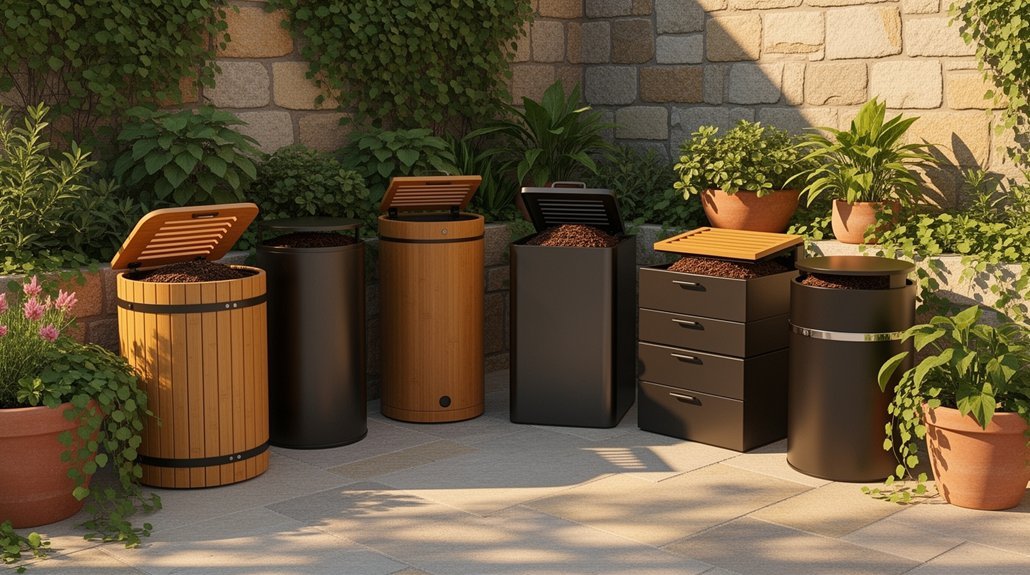
You’ll keep your patio pristine and pest-free by choosing hidden composting bins that blend seamlessly into outdoor spaces. Consider pullout cabinet systems with full-extension slides, recessed countertop bins for kitchen prep zones, or undersink drawer solutions for compact layouts. Outdoor options include tumblers, sealed bins, and strategically placed containers near shaded areas. Each system controls odors, prevents leachate staining, and maintains accessibility. The right bin transforms your composting routine while protecting your entertaining space—discover which solution suits your specific patio layout.
Hidden Compost Bins: Why They Matter on Patios

Why hide a compost bin on your patio? You’re protecting your outdoor space from clutter and unpleasant sights. Hidden bins keep your seating and walking areas open in compact layouts, maintaining the intentional design aesthetic you’ve worked to create.
Beyond appearance, concealed composting solves practical problems. Enclosed bins limit fruit flies, rodents, and other pests while reducing odor that can interfere with dining and lounging nearby. They also prevent leachate from staining your concrete, pavers, or decking—a real concern when bins sit directly on hardscaped surfaces. For patio use, raising bins on feet allows drainage above ground and keeps moisture away from your hard surfaces. Many hidden composting solutions include activated-charcoal filters to further minimize odors that might affect your outdoor enjoyment.
Properly designed hidden bins still support efficient decomposition through adequate ventilation and drainage. You’re combining better aesthetics with functionality, making composting more acceptable in urban and suburban yards where space is premium and neighbors are close.
Recessed Countertop Bins: Drop-and-Forget Composting
How can you streamline your composting routine without sacrificing kitchen aesthetics? Recessed countertop bins offer the answer by integrating seamlessly into your prep zone while keeping food scraps accessible and out of sight.
These flush-mounted stations work best when you:
- Pair them with removable undercounter pails for easy emptying and cleaning
- Utilize tight-fitting lids to contain odors during active kitchen use
- Position them near prep areas to encourage frequent small compost deposits
The stainless steel construction resists wear, while the recessed design eliminates countertop clutter. You’ll collect vegetable scraps and coffee grounds during meal preparation, then transfer them to your backyard pile or municipal service. Consider installing a cutting-board cutout that drains scraps directly into the compost bin below for maximum efficiency. Charcoal filters or odor-control features may require periodic maintenance and replacement to keep your composting station fresh. This drop-and-forget approach promotes consistent composting habits at the source, making it ideal for households serious about waste reduction.
Pullout Cabinet Systems: Composting Out of Sight

What if you could stash your compost bin entirely within your cabinetry, eliminating the visual clutter of countertop containers?
Pullout cabinet systems hide compost bins inside base cabinets using full-extension slides for easy access. You’ll find single-bin, dual-bin, or triple configurations designed for 15- to 21-inch cabinet openings. These steel-framed units work perfectly positioned near food-prep zones, shortening the journey from cutting board to bin. Framed cabinets are particularly well-suited for accommodating these pull-out systems, as their internal structure provides reliable support for the sliding mechanisms and weight distribution of filled bins.
| Configuration | Cabinet Size | Bin Count | Best For |
|---|---|---|---|
| Single Compost | 15 inches | 1 | Small kitchens |
| Trash & Compost | 18 inches | 2 | Basic sorting |
| Triple System | 21 inches | 3 | Full waste management |
| Multi-Bin Setup | 21+ inches | 4+ | Large households |
| Custom Integration | Varies | Flexible | Patio-adjacent kitchens |
Lidded containers reduce odors while keeping scraps contained. Quality hardware ensures smooth operation during frequent use. For best results, consider organic certified materials that complement your composting efforts and align with sustainable garden practices.
Undersink Drawer Solutions for Small Kitchens
While pullout cabinet systems work well for dedicated composting spaces, you might lack the room for such installations in a compact kitchen. Under-sink drawer retrofits offer a practical alternative for organizing composting supplies alongside cleaning essentials.
You can maximize tight cabinet spaces by installing:
- U-shaped or L-shaped drawer designs that navigate around plumbing obstacles
- Vertical stacking systems that utilize cabinet height for increased capacity
- Moisture-resistant bins that protect compost liners and bags from leaks
Before purchasing, measure your cabinet clearance carefully—sink type, width, and plumbing placement vary significantly. Pull-out drawers bring stored items into view, eliminating the need to crouch or reach blindly. Group composting materials separately from cleaning supplies for clearer organization. Soft-close mechanisms ensure quiet operation while protecting your composting setup from damage during daily use. Keep only essentials under the sink to maintain plumbing access and prevent overcrowding that reduces visibility and airflow. Storing compostable trash bags with proper certifications like BPI or OK Compost HOME ensures your liners will break down correctly in your composting system.
Outdoor Compost Bins: Placement Strategies for Patios

You’ll maximize your limited patio space by positioning your bin where it won’t obstruct foot traffic or furniture, yet stays close enough for convenient daily use.
Strategic shade placement reduces moisture loss and overheating while keeping your composting active year-round. Placing your bin at least 10 feet away from your home prevents odors and pest attractions from affecting your living spaces. Consider using a wall-mounted dispenser to organize compostable bags near your bin for easy access during collection.
Balancing accessibility with privacy means you can turn materials easily and monitor decomposition without compromising your patio’s aesthetics or your neighbors’ comfort.
Maximizing Limited Patio Space
Because patio real estate is precious, choosing the right compost bin design and placement strategy makes all the difference between a functional outdoor space and one that feels cramped.
You’ll maximize your limited space by implementing these key strategies:
- Select vertical, narrow-footprint bins that store materials upward rather than outward, fitting seamlessly against walls or corners
- Position bins along patio edges rather than in activity centers, preserving walking and seating areas while maintaining accessibility
- Incorporate concealment features like lattice panels or decorative enclosures that blend the compost area into your landscaping
Strategic placement near your kitchen and garden reduces travel distances while keeping materials out of sight. Slim tumblers and compact stationary designs tuck behind planters or privacy fencing without consuming central patio space. Models featuring wall-mounted or hanging options provide additional flexibility for patio layouts with limited ground space. Prioritizing convenience and accessibility over ideal environmental conditions ensures you’ll maintain your compost consistently throughout the year. This approach lets you compost effectively without sacrificing the entertaining environment you’ve worked to create.
Strategic Shade and Access
Once you’ve positioned your bin to fit your patio’s layout, you’ll want to contemplate how light and shade affect your compost’s performance—and how easily you can actually tend it.
Partial sun with afternoon shade offers the best balance: morning light warms your pile while afternoon shelter prevents excessive drying. East-side placement near a shed or fence achieves this naturally. This stable moisture environment allows beneficial microbes to thrive without temperature fluctuations that can slow decomposition.
Beyond light, prioritize accessibility. Keep your bin within easy reach of your kitchen—short travel distances encourage consistent feeding and maintenance. Ensure you have space to open lids, add scraps, and harvest finished compost. A high-density activated charcoal filter placed under your bin’s lid will contain odors while you work.
Position your bin on well-drained ground near a water source, simplifying both watering and cleanup. Strategic placement transforms composting from a chore into a sustainable routine.
DIY Hidden Bins: Converting Storage Containers
Converting a basic storage container into a functioning compost bin doesn’t require specialized equipment or extensive modifications. You’ll start by selecting an 18-gallon plastic storage tote with a fitted lid, then strategically drill holes for airflow and drainage.
Here’s your modification plan:
Follow this three-step modification plan: drill side holes for aeration, add bottom drainage holes, and install wire mesh to prevent rodent access.
- Drill holes throughout the sides at 1 to 2-inch intervals using a 5/16-inch bit for proper aeration
- Drill holes in the bottom to allow excess moisture to escape into a collection container
- Add wire mesh inside if holes are large to prevent rodent access
Once modified, you can nest your drilled bin inside a solid container, creating a dual-chamber system perfect for patios. This setup manages both compost decomposition and liquid drainage efficiently, keeping your outdoor space clean and organized. The aerobic bacteria in your bin will break down materials more quickly when provided with proper oxygen circulation through these strategically placed holes. For optimal results, mix your compost materials with carbon-rich bedding material to improve aeration and drainage while accelerating decomposition.
Tumblers and Sealed Bins for Hands-Off Composting

While DIY bins offer customizable solutions, tumblers and sealed composters take hands-off convenience to the next level. You’ll only need to spin your tumbler a few times weekly to accelerate decomposition—many users achieve finished compost in just 6 to 8 weeks. The enclosed design retains heat better than open piles, speeding the breakdown process while allowing faster aeration through rotation, which ensures materials stay well-mixed throughout the composting cycle.
These sealed systems excel at pest control too. Rodents and flies can’t access your compost thanks to tight lids and minimal ventilation holes that allow airflow without entry points. You’ll appreciate the cleaner removal process when opening a side door or tipping the drum. For those interested in vermicomposting as an alternative, red wigglers or European nightcrawlers thrive in stackable worm farm systems that offer similar hands-off benefits through modular designs.
Though tumblers typically hold 4 to 15 cubic feet—smaller than traditional bins—their patio-friendly, off-ground placement makes them ideal for hidden composting setups in limited spaces.
Why Your Compost Needs Air (And Not Too Much Water)
Why does your compost pile smell like a swamp? You’ve likely trapped too much moisture and created anaerobic conditions. Your patio bin needs oxygen to work properly—and balanced water content to let that oxygen flow.
Here’s what matters:
- Moisture level: Keep your pile as wet as a wrung-out sponge—not waterlogged
- Airflow: Small material pieces improve oxygen movement; bulky items maintain pore spaces
- Turning: Regular aeration replenishes oxygen and reduces odors
Excess water fills pore spaces and blocks airflow, slowing decomposition and producing methane. Anaerobic breakdown also creates those foul, sour smells you’re trying to hide. Aerobic bacteria work faster and more efficiently than their anaerobic counterparts, making them essential for rapid composting. By managing moisture carefully and ensuring proper aeration through turning or structural design, you’ll maintain aerobic conditions that speed composting and keep your patio setup odor-free. Models with built-in vents and fins optimize airflow to maintain these ideal decomposition conditions without requiring constant manual turning.
Shade Prevents Compost Drying Out Prematurely

How quickly does your compost dry out in the summer sun? Direct sunlight rapidly evaporates moisture from your pile’s surface, creating a hard, crusty barrier that slows decomposition. Microbes need consistent moisture to thrive, so when your compost dries out, microbial activity plummets and breakdown stalls.
Shade solves this problem. By placing your patio bin in a shaded spot, you’ll retain moisture naturally and reduce watering demands. Shaded locations maintain steadier decomposition conditions because moisture stays stable, supporting the microbial activity that drives the process.
In hot, dry climates, shade becomes essential. Deciduous tree coverage offers summer protection while allowing seasonal light changes. You’ll notice fewer strong odors, better compost consistency, and significantly less maintenance required to keep your bin active and productive. May need extra carbon-rich materials to absorb excess moisture when shade prevents natural evaporation.
Maintaining Moisture and Decomposition Year-Round
You’ll want to keep your patio bin’s moisture at roughly 50%—about as wet as a wrung-out sponge—to support steady microbial activity throughout the year. Adjust your watering schedule seasonally: add water during dry spells and use covers during wet periods to prevent waterlogging that slows decomposition.
Proper airflow matters just as much, so turn your compost occasionally and ensure drainage holes aren’t blocked, since stagnant, oxygen-depleted material will stall the breakdown process. Excess moisture causes anaerobic conditions and odors, so monitor your bin’s texture regularly and add carbon-rich materials like brown leaves or cardboard to absorb any buildup of water from heavy rainfall.
Moisture Balance for Decomposition
Getting moisture right is critical to keeping your hidden patio composter active year-round. You’ll want to aim for that “wrung-out sponge” feel—damp but not dripping—at roughly 50–60% moisture content.
Monitor three key indicators to maintain balance:
- Moisture checks during turning – Feel your pile regularly to catch dry or soggy zones before they compromise decomposition.
- Balanced green-to-brown ratios – More greens naturally reduce your watering needs while supporting microbial activity.
- Proper drainage setup – Use coarse bottom layers like twigs or wood chips to prevent waterlogging in confined patio spaces.
Below 30% moisture, bacterial activity stalls and decomposition slows substantially. Above 60–65%, excess water displaces air, creating anaerobic pockets that produce odors. When your compost becomes too wet, adding bulking agents like woodchips will help restore balance and improve aeration in your confined patio bin. You’ll find success by layering materials strategically and adjusting based on seasonal rainfall.
Seasonal Adjustment Strategies
Moisture demands shift dramatically across the seasons, and your patio composter won’t thrive on a one-size-fits-all watering schedule. You’ll need to adjust your approach based on temperature, rainfall, and microbial activity levels throughout the year.
| Season | Challenge | Action |
|---|---|---|
| Summer | Rapid evaporation | Water early morning; add moisture-rich greens |
| Fall | Cooling temps | Compact pile; reduce watering frequency |
| Winter | Microbial slowdown | Insulate bin; minimize moisture checks |
| Spring | Variable rain | Monitor saturation; improve drainage if needed |
| Drought | Dry feedstock | Layer fresh organics; sprinkle water between additions |
Daily checks during hot spells prevent decomposition slowdowns. You’ll find turning the pile redistributes moisture evenly. Seasonal adjustments preserve microbial activity while protecting against freeze-thaw damage and waterlogging. The organic matter in compost acts like a sponge, retaining water and making it available to your pile’s beneficial microbes during dry periods.
Airflow and Drainage Management
While seasonal watering adjusts your moisture levels, the underlying structure of your bin—how air moves through it and water drains from it—determines whether those efforts actually work. You’ll need:
- Bottom drainage holes to prevent waterlogging and support healthy decomposition
- Side ventilation openings sized to balance oxygen supply without excessive drying
- Coarse bulking materials like twigs and corncobs that create air channels and maintain porosity
Target moisture around 50–60%, resembling damp coffee grounds. Without proper drainage, your bin becomes waterlogged; without airflow, anaerobic pockets develop and odors intensify. Raised placement on bricks improves drainage while limiting pest access. A fitted lid preserves internal moisture while blocking direct rainfall. This structural balance—not maximizing either factor alone—keeps your hidden patio bin performing year-round. Adequate air exchange prevents buildup of carbon dioxide and ensures circulation throughout the composting environment.
Frequently Asked Questions
How Long Does It Typically Take for Compost to Fully Decompose in a Hidden Bin?
You’ll typically see full decomposition in your hidden bin within 2 to 12 months. If you’re actively managing temperature, moisture, and turning regularly, you can achieve finished compost in as little as 3 to 6 months.
Can I Compost Meat, Dairy, and Oils in My Hidden Patio Compost Bin?
You shouldn’t compost meat, dairy, and oils in your hidden patio bin. They’ll attract pests, create odors, and slow decomposition. Instead, try bokashi fermentation or municipal organics programs for these materials.
What’s the Best Way to Eliminate Odors From an Indoor or Outdoor Compost Bin?
You’ll eliminate odors by controlling moisture with carbon-rich materials, improving airflow through regular turning, using activated charcoal filters, and avoiding meat, dairy, and oily foods that create foul smells.
How Often Should I Empty or Harvest Compost From a Hidden Bin System?
You’ll empty your hidden bin system every 2-4 days to weekly, depending on kitchen scrap volume. Watch for odors, fruit flies, or fullness—these signal it’s time to empty before contents deteriorate.
Will Hidden Compost Bins Attract Rodents or Pests to My Patio Area?
Yes, hidden compost bins can attract rodents because they’re often placed in undisturbed corners where pests settle easily. You’ll reduce risk by keeping your bin enclosed, sealed tightly, and regularly maintaining it actively.
In Summary
You’ve discovered that hidden composting bins transform your patio into an efficient, attractive space. By choosing the right system—whether recessed, pullout, or tumbler-style—you’ll reduce waste while keeping your outdoor area neat. You’ll maintain proper moisture and aeration, ensuring your compost thrives year-round. With strategic placement and shade protection, you’re ready to start composting sustainably without sacrificing your patio’s appeal.


