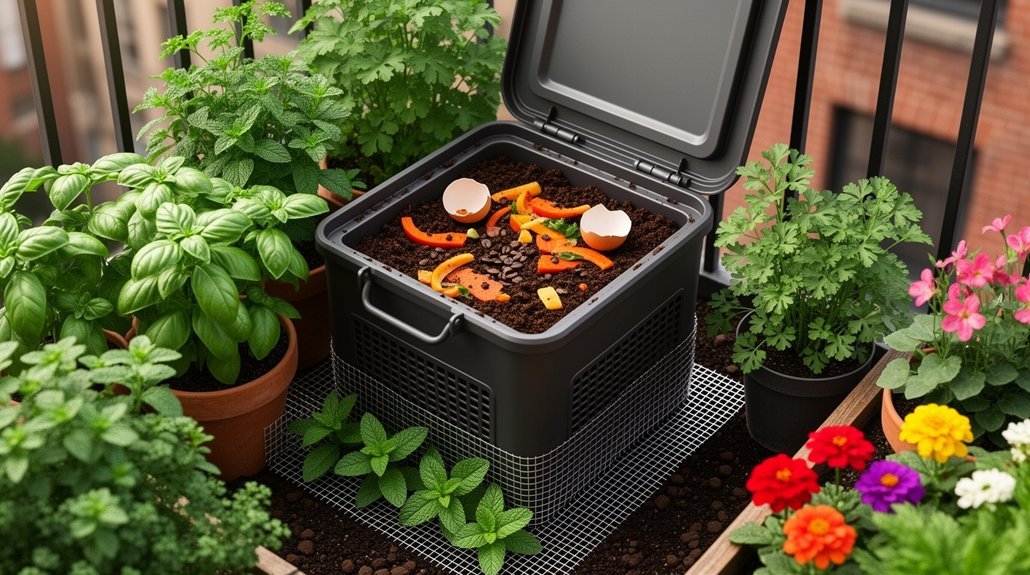
You can keep rats out of a tiny backyard compost by sealing the bin with ½‑inch hardware cloth, covering vents with mesh, and using a sturdy lid. Chop scraps into bite‑size pieces, add plenty of brown material, and keep the pile dry and hot by turning it weekly and misting only until it feels like a wrung‑out sponge. Place the bin on a concrete slab away from walls, sheds, and food sources, and trim nearby vegetation. If you follow these steps, the next section shows how to fine‑tune moisture, add charcoal filters and set up traps for extra protection.
Understand Why Small‑Space Compost Attracts Rodents
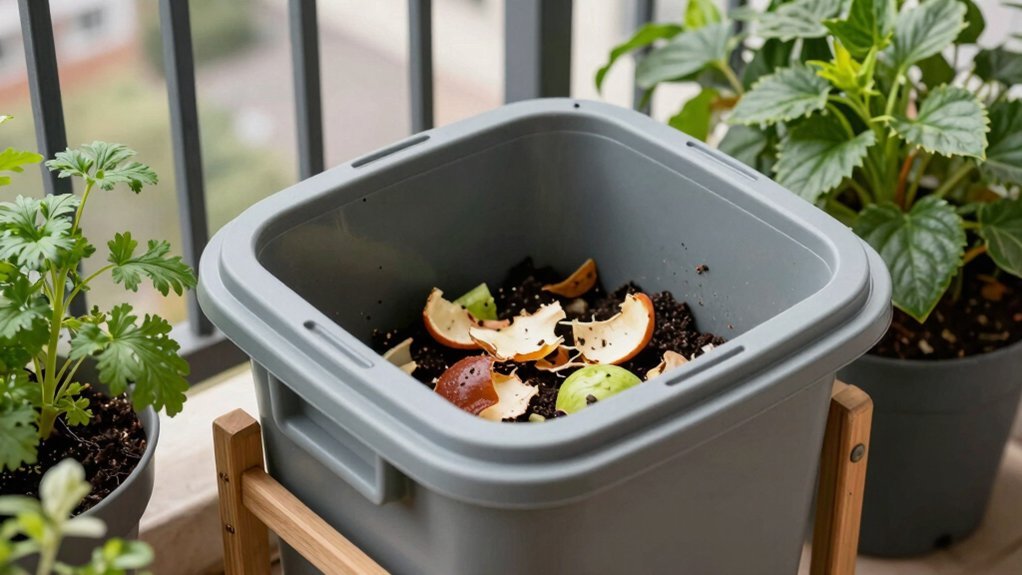
Why do rodents gravitate toward a tiny compost bin? Because it gives them food, water, and shelter in one spot. You’ll notice that scraps left near your home become a repeatable buffet, especially when meat, dairy, or greasy leftovers emit strong odors.
In a small yard the bin sits close to sheds, fences, and woodpiles, shortening the travel distance from existing nests. Moist, soggy piles amplify smells and keep food recognizable longer, while a sheltered, warm bin offers a dry hiding place in cooler weather. Using moisture control aids with higher absorption capacity reduces liquid runoff and maintains drier conditions that deter rodent activity.
Open piles let rats and mice crawl in and even nest, whereas cold compost breaks down slowly, extending the feeding window. Tight urban spaces limit where you can place the bin, so rodents can hop between the compost and other nearby food sources with ease. Regular turning disturbs potential nesting sites and reduces rodent attraction.
Create a Rodent‑Proof Compost Checklist
You’ll start by choosing a solid‑bottom bin or tumbler and adding a mesh barrier under any open‑bottom model.
Then, place the bin away from feeders, pet food, and clutter while covering vents with wire mesh. Consider a stainless steel bin for durability and odor control in your composting setup.
Finally, inspect the base, mesh, and surrounding area regularly and turn the pile often to keep rodents out.
Do not compost meat to prevent attracting rodents.
Secure Bin Design
Ever wondered how a simple bin can keep rats out without chemicals? You can build a secure bin by choosing the right materials, sealing every opening, and adding a solid base. Use 1/2‑inch hardware cloth or 2 mm vermin mesh for sides, lid, and bottom; fasten edges with zip ties or staples to eliminate gaps. Bury the lower edge 10 cm deep or line it with bricks to stop digging. Fit a sturdy mesh lid with reinforced framing and handles for easy access. For additional odor control, consider pairing your secure bin design with charcoal filter technology to further deter rodents from targeting your compost. Top each load with wood chips or sawdust to mask odors and keep pests at bay.
| Feature | Action |
|---|---|
| Mesh | 1/2‑inch cloth or 2 mm vermin mesh |
| Base | Solid or mesh, buried 10 cm, bricks underneath |
| Lid | Fitted, reinforced, mesh layer optional |
| Fill | Carbon layer on top, chop scraps small |
Vermin mesh can remain effective for about five years even if it rusts.
Strategic Site Placement
Where should you place your compost bin to keep rodents at bay? Put it far from bird feeders, pet bowls, garbage cans, fruiting trees, and berry bushes. Remove any seed spills and bring pet food inside at night. Keep the area clear of fallen fruit and vegetables, and avoid any other easy food sources.
Choose a spot away from wood piles, brush, sheds, and overgrown vegetation. Pick an open, visible location rather than a hidden corner, and strip nearby clutter that could serve as nesting cover. Install the bin on a cement slab, paving stones, or use a legged model to block burrowing. If the bin lacks a bottom, spread 1/4‑inch hardware cloth under it, extending beyond the edges and securing it with bricks or ties. For additional pest prevention, consider using compost-ready potting soil principles that emphasize proper aeration and drainage to discourage rodent habitation.
Ensure good drainage, a gentle 4‑6 % grade, and a screened‑out view to reduce odor and visual attraction. Avoid adding meat to the compost to prevent attracting rodents.
Regular Maintenance Routine
Turn the compost each morning, knock the bin as you pass, and pause for any rustling or droppings. Bury fresh scraps in the center, cover each layer with browns, and add extra carbon if odor rises. Use a compost thermometer to monitor temperature and ensure the pile stays within the optimal range, preventing excess heat that can attract pests. An airtight lid with activated charcoal filter will further reduce odor that draws rodents to your composting area.
Inspect the bin bottom, ventilation holes, and mesh for gaps; ensure hardware cloth openings stay under 1.25 cm. Keep the area clear of brush, bird feeders, and spilled food.
After storms or yard work, reassess clutter and repair any displaced fasteners. This concise checklist blocks entry, deters scent attraction, and keeps your compost rodent‑proof.
Choose a Rodent‑Proof Compost Bin and Seal It
Pick a bin with a solid, elevated base and cover it with a tight‑fitting lid that locks, then add a mesh screen under the bin to block digging. The lid’s latch keeps the compost sealed while the mesh prevents rats from slipping underneath. This simple combo gives you a sturdy, rodent‑proof container you can trust. Rodents can tunnel through compost piles, creating air pockets that dry out decomposition. For compact spaces, consider food-safe plastic bins designed with proper aeration to maintain moisture and feeding balance while keeping pests out.
Secure Lid With Latch
Ever wondered how a simple latch can keep rats out of your compost? Choose a bin marketed as rodent‑proof and make sure its lid snaps shut with a tight‑fit latch. A gate‑type or locking latch eliminates wiggle room, so mice can’t pry the lid open. Inspect the latch weekly; warped hinges or bent hardware create gaps that invite pests. Use heavy‑duty plastic or metal bins; they hold alignment better than thin plastic. Overlap the lid edges and keep the rim sealed, and never overfill—room for a full closure is essential. When you deposit scraps, close the lid immediately and lock it. This constant, sturdy seal cuts odor, blocks access, and keeps raccoons and rats at bay. Bokashi bran absorbs excess liquid and minimizes odors in bins or tumblers, which further deters pests from your composting system. The Speedibin is designed to avoid attracting pests such as mice, rats, and raccoons.
Elevated Mesh-Blocked Base
Why settle for a low‑lying bin that invites rats when you can lift it and lock out pests with a mesh‑blocked base? Raise your compost on bricks, blocks, or a pallet so the floor sits off the soil.
Cut galvanized‑steel vermin mesh (≈6 mm squares, 2 mm wire) to cover the entire bottom, adding an extra inch of overlap. Fold the mesh up over the bin’s edge, press it firmly with your boots, and secure a tight, removable grip. For maximum pest prevention, pair your elevated platform with a wall-mounted compost bin equipped with secure odor-sealing lids to further discourage rodent activity.
The elevated platform denies burrowing access while the mesh blocks even baby rodents. Check seams for gaps, and consider a shallow 200 mm burial to seal the bin‑to‑ground junction. This simple combo keeps airflow and drainage intact, yet stops rats from tunneling, nesting, or stealing food. Supports waste reduction by turning food scraps into garden gold.
Break Down Food Scraps and Keep the Pile Hot
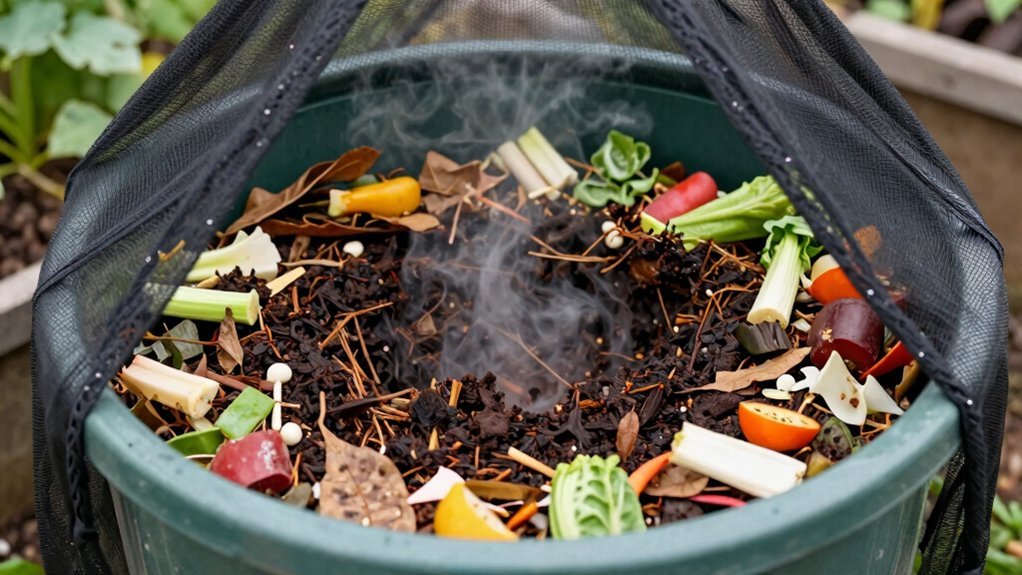
When you chop food scraps into bite‑size pieces, you instantly boost the surface area that microbes can attack, which speeds up decomposition and helps the pile stay hot. Smaller bits let thermophilic bacteria work faster, so the temperature climbs into the 130‑140 °F sweet spot without overheating. Keep the pile insulated with a lid or a solar‑warmed bin; this traps heat that would otherwise escape through the edges. Turn the compost every week or whenever it drops below 100 °F, pushing cooler outer material into the hot core and re‑oxygenating the mix. Unlike traditional composting systems, Black Soldier Fly larvae can process food waste rapidly without requiring constant temperature monitoring in apartment settings.
After each turn, spray water until the pile feels like a wrung‑out sponge—moisture fuels the microbes and prevents the small heap from drying out. By chopping, insulating, turning, and moistening, you maintain a steady, productive heat that rapidly breaks down food waste. Use a balanced greens‑to‑browns ratio to sustain the heat.
Balance Greens With Browns and Bury Waste Properly
How do you keep your compost pile hot, fast‑decomposing, and pest‑free? Balance greens and browns, then bury waste properly. Greens—food scraps, grass clippings—supply nitrogen, while browns—dry leaves, cardboard, wood chips—provide carbon and bulk. A 2:1 to 3:1 brown‑to‑green ratio keeps the pile warm, dry, and odor‑free. Cover each green addition with a generous brown layer, chopping larger pieces for better contact. This absorbs excess moisture, creates air pockets, and hides smells that attract flies and rodents. Using enzyme-based bacteria digestants can further accelerate decomposition and break down organic matter more efficiently.
Balance greens and browns, bury waste, and maintain a 2:1–3:1 brown‑to‑green ratio for hot, fast, pest‑free compost.
- Start with a coarse brown base for drainage.
- Add greens in a central well, then fully cover with browns.
- Alternate layers, adjusting ratios when you smell ammonia or notice a cool, dry pile.
- Ensure the pile has enough nitrogen‑rich greens to support microbial growth.
Place Compost Away From Walls and Trim Vegetation
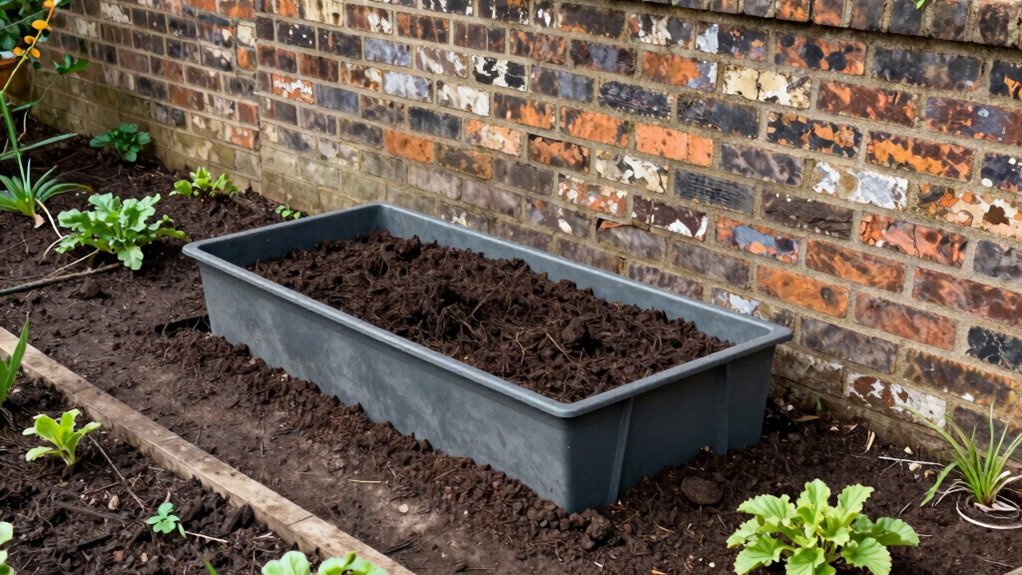
Ever notice how a compost bin tucked against a wall or hidden behind dense shrubs becomes a rat magnet? Keep the bin clear of structures and shelter edges; walls create protected corridors that hide burrows and make inspection tough. Set it on open ground with a buffer zone—gravel, bare soil, or mown turf—so you can spot droppings, gnaw marks, and spills instantly. Trim vegetation short and sparse; dense shrubs and tall grass give rodents cover and connect your bin to their habitat. Regularly mow or prune to expose the area, making it less inviting for predators and more visible for you. Proper airflow is essential to prevent moisture buildup that attracts rodents.
Deploy Snap/E‑Traps and Install Mesh Barriers
Clearing the area around your compost bin not only exposes rodent activity but also creates clear pathways for snap traps and mesh barriers. Position large snap traps where you’ve spotted runs, bait them with a dab of peanut butter, and space them a few feet apart along the likely travel line. Use e‑traps in enclosed corners; the battery‑powered, no‑touch design lets you check catches without handling carcasses. Then seal every opening with fine‑gauged hardware cloth, fastening seams tightly and covering vents, base edges, and lid gaps. The combo of targeted trapping and solid exclusion keeps rats out without toxic chemicals.
- Place snap traps on active runways, bait lightly with peanut butter.
- Install e‑traps in hidden, high‑traffic corners for quick, clean kills.
- Fit mesh barriers over all openings, securing seams to prevent re‑entry.
Victor No Touch, No See Electronic Mousetrap provides a reliable, high‑voltage kill that requires no direct contact with the mouse.
Frequently Asked Questions
How Often Should I Turn My Compost to Deter Rodents?
You should turn your compost every 4 days during the active phase, then at least weekly once it slows. This keeps it hot, aerated, and unappealing to rodents, preventing nesting and odor buildup.
Can I Use a Compost Tumbler in a Balcony Setting?
Yes, you can place a compost tumbler on a balcony if it fits the space, respects weight limits, stays level, and you keep the lid closed while balancing greens and browns to deter rats.
What Natural Scents Repel Rats Without Harming Them?
You’ll repel rats with peppermint, eucalyptus, citronella, clove, lavender, and garlic scents. Apply them on cotton balls, diluted sprays, or diffusers near entry points, and refresh every few days to keep the odor strong.
Do Indoor Worm Bins Attract Pests if Not Sealed Properly?
Yes, if you don’t seal your indoor worm bin, you’ll invite fruit flies, fungus gnats, and even maggots. Keep the lid tight, cover scraps with bedding, and maintain sponge‑like moisture to deter pests.
Is a Carbon Filter Effective for Odor Control in Small Compost Bins?
Yes, a carbon filter cuts most smells, but you still need a tight lid, regular emptying, and dry scraps. It’ll keep odors low for weeks, yet it won’t eliminate every scent on its own.
In Summary
By sealing your bin, keeping the pile hot, and burying scraps, you cut off the smells and shelter rats crave. Position the compost away from walls, trim nearby plants, and add mesh barriers. Snap or electronic traps finish the job. Follow this checklist, and you’ll enjoy a clean, rodent‑free compost system without any toxic tricks.