Keep your bin dry, sealed, and balanced with plenty of carbon‑rich browns. Cover fresh scraps with shredded leaves, straw, or cardboard and store the scraps in the freezer or fridge until pickup. Use a snug, leak‑proof liner and empty the bin weekly, washing it with hot, soapy water and drying it completely. Turn the pile regularly to add airflow and consider a hot compost pile to kill any eggs. If you follow these steps, you’ll discover even more tricks to keep maggots at bay.
Our Recommended Products on Amazon
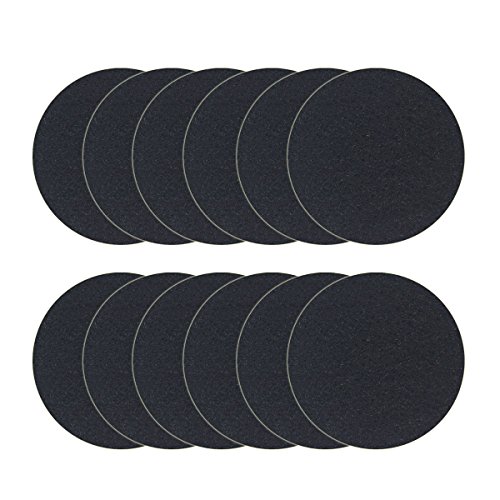

As an Amazon Associate we earn from qualifying purchases.
Why Maggots Appear in Small Compost Bins
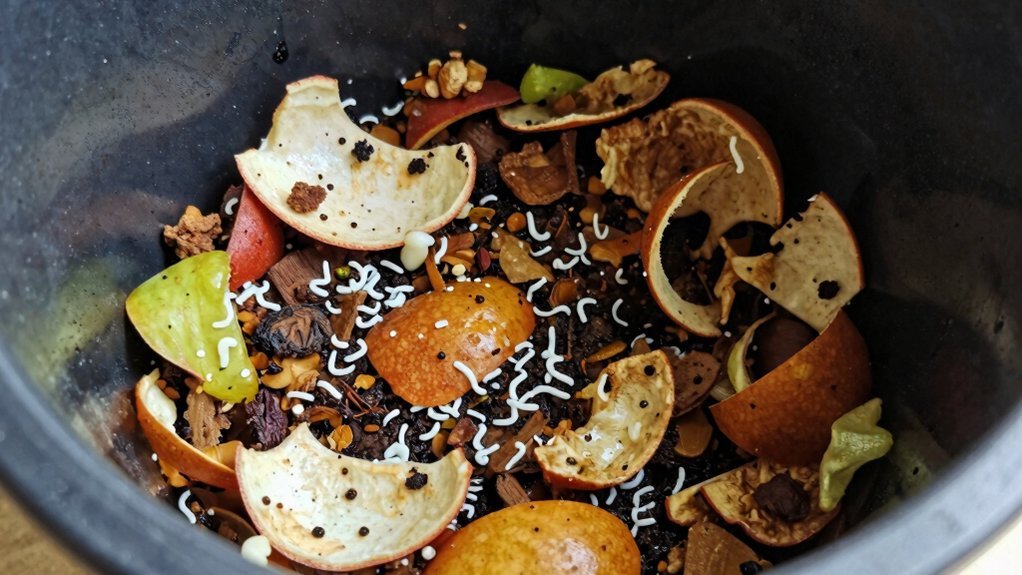
Why do maggots keep showing up in your small compost bin? You’re giving flies a buffet: exposed fruit, veg scraps and other kitchen waste sit on the surface, so adult flies land, lay eggs, and the larvae hatch into white‑gray maggots.
Small bins stay moist longer—condensation, wet greens, and poor drainage create soggy, oxygen‑poor pockets that flies love.
When you overload the bin with nitrogen‑rich greens and neglect carbon‑rich browns, the mix turns dense and wet, inviting more egg‑laying. Using compost accelerators can help break down materials faster and reduce the time scraps remain exposed and attractive to flies.
Low heat and slow breakdown mean fresh scraps linger, keeping the bin attractive for weeks.
Finally, shallow depth and limited aeration leave scraps uncovered, while lids and vents let flies in.
These conditions together turn a tiny bin into a maggot haven. Direct sunlight exposure can reduce maggot activity on the rim.
Freeze or Refrigerate Scraps to Stop Maggots
When flies find a warm, moist pile of kitchen waste, they lay eggs that hatch into maggots, but you can break the cycle by chilling the scraps before they reach the bin. Freeze meat, fish, and strong‑smelling leftovers as soon as you finish cooking; the cold kills any eggs and removes the breeding window until pickup.
If freezer space is tight, store scraps in a sealed container in the refrigerator; the low temperature slows decomposition and cuts odor, keeping flies at bay during warm days. Use a lidded bin or a small countertop container as a transfer point, then move the sealed bag to the freezer or fridge. Models with airtight lids provide an extra layer of protection against fruit flies and odor escape while storing scraps temporarily.
Align the chilling period with your collection schedule—store until the day of curbside pickup to guarantee no maggots develop. Adding browns such as shredded paper or cardboard to the bucket helps absorb moisture and further deter maggots.
Add Dry “Browns” to Balance Moisture & Odor
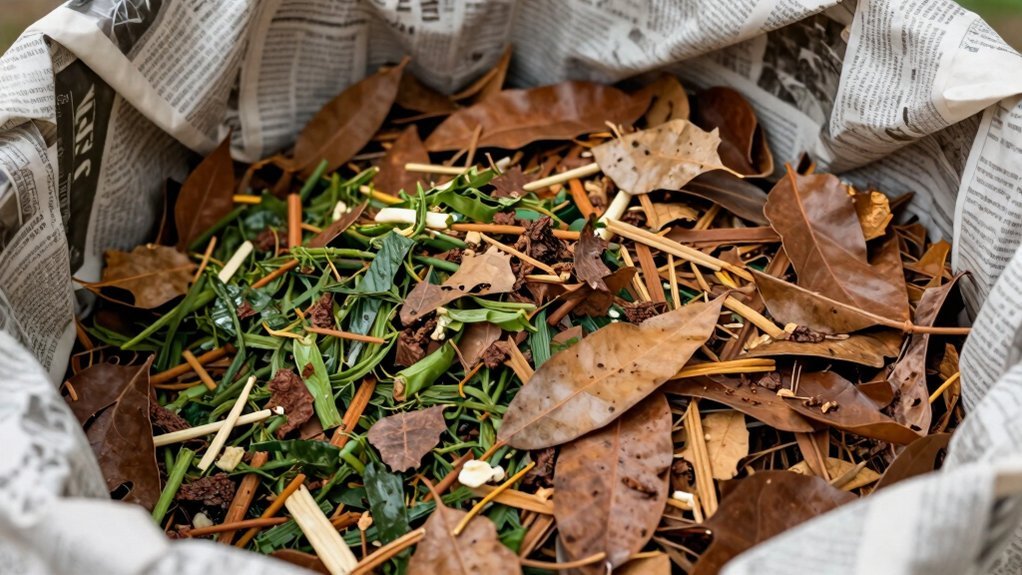
If your compost bin feels soggy or smells sour, toss in a handful of dry “browns” like shredded newspaper, cardboard, or straw to soak up excess water and mask odors. Dry browns act as carbon‑rich absorbents that pull moisture from the pile, restoring the “wrung‑out sponge” feel that signals 40–60 % humidity. They also create pockets of air, preventing compaction and keeping aerobic microbes active while suppressing anaerobic smells that attract flies.
After each green addition, top‑dress with a layer of leaves, straw, or wood chips to trap wet surfaces and limit egg‑laying sites. This simple step rebalances the carbon‑to‑nitrogen ratio, improves aeration, and keeps the bin less inviting to maggots and other pests. Quality bedding materials like coconut coir can also be mixed with browns to enhance drainage and moisture retention while maintaining optimal conditions. Target moisture level is roughly 40 to 60 percent.
Choose a Liner That Blocks Fly Access
Ever notice how a single gap in your compost bin’s liner can become a highway for fruit flies? Pick a liner that fits snugly under the lid so no excess material creates openings. Choose a tear‑resistant, leak‑proof bag that stays hidden and sealed, keeping damp scraps and odors from attracting flies. Opt for BPI‑certified compostable liners like BioBags or simplehuman, which break down with food waste and meet clear standards. Finally, use a liner that folds or ties securely, allowing quick, clean removal without spills. For enhanced composting efficiency, consider adding pesticide-free straw to your bin layers, which accelerates decomposition while maintaining a pest-resistant environment.
- Snug, sealed fit to block rim gaps
- Durable, tear‑resistant material for leak prevention
- Certified compostable construction for safe breakdown
- Easy‑close design for hygienic, frequent removal
Cover material helps retain moisture and warmth, speeding up composting while deterring fruit flies.
Empty Your Bin Weekly to Break the Fly Cycle
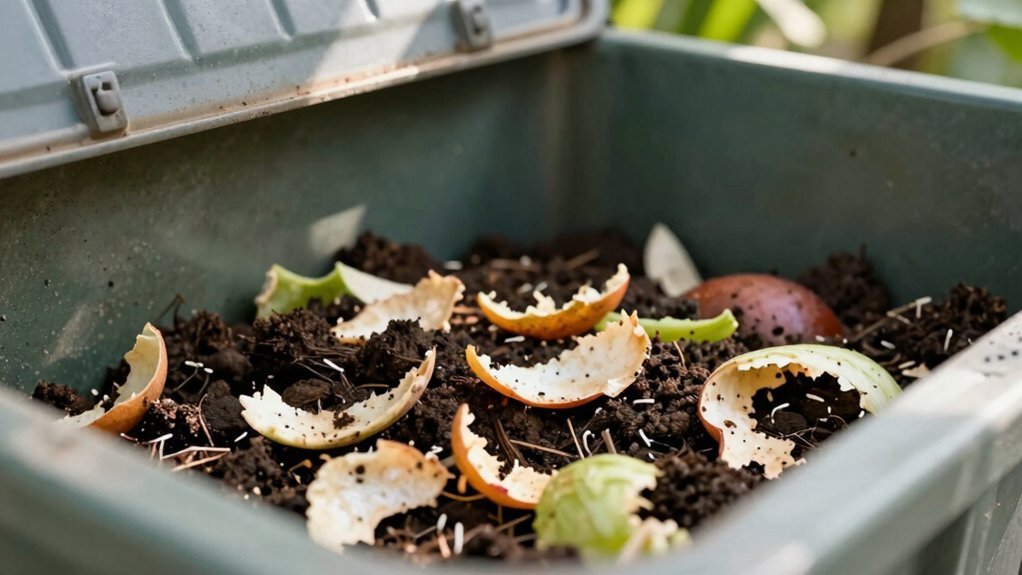
Because fruit flies can complete their life cycle in about five days, emptying your compost bin every week stops eggs from hatching and larvae from maturing. By removing fresh scraps before they become breeding material, you cut the egg‑to‑adult pipeline and keep odors low.
A weekly schedule limits how long rotting food sits, reducing moisture and the smell that lures flies. Small indoor pails fill fast, so a once‑a‑week dump—or sooner if the bin overfills—keeps the environment dry and clean. Avoid composting meat and dairy in these containers, as they decompose slowly and create strong odors that attract pests.
After each emptying, wash the bin with hot, soapy water, dry it thoroughly, and check for cracks. Warm, moist conditions inside bins create ideal breeding grounds for flies. Pair this routine with covered scraps and occasional aeration for a robust, fly‑free compost system.
Kill Existing Maggots With Vinegar or Boiling Water
You can spray a 1‑to‑3 vinegar‑to‑water mix directly onto the maggots and watch the acidity shut them down.
If you prefer a faster kill, pour boiling water over the infestation, making sure every larva gets a full soak.
Both methods work instantly, but you’ll need to rinse the bin afterward to keep odors at bay.
Regular cleaning reduces waste and prevents new maggots from appearing. For best results, consider using a compost bin with large opening doors to ensure thorough access during cleaning and treatment.
Vinegar Spray Effectiveness
How well does a quick spray of white distilled vinegar actually kill maggots in your compost bin? You’ll see a sharp drop in activity within hours because the acetic acid creates an environment the maggots can’t tolerate. Undiluted white vinegar works fastest, especially on exposed larvae, while a 1:1 or 1:2 vinegar‑to‑water mix can still shrink or weaken them. The spray also masks odors, deterring flies from laying more eggs. However, it won’t reach maggots buried deep in damp compost, and overuse may harm beneficial microbes that are essential for decomposition. Boiling water can be poured directly onto maggots to instantaneously kill them.
- Use straight white vinegar for immediate contact kill.
- Spray until every visible maggot is fully coated.
- Reapply after a few hours if any are still moving.
- Remove dead larvae and clean the spot to cut odor and fly attraction.
Boiling Water Application
If vinegar gives a quick surface kill, boiling water delivers the fastest, most thorough eradication of maggots in a compost bin. Empty the bin, move indoor containers outside, and wear long sleeves, pants, closed‑toe shoes, heat‑resistant gloves, and eye protection. Heat a kettle to a rolling boil (212 °F/100 °C) and pour it directly over every maggot, visible egg, and the inner walls, filling the bin if the infestation is widespread. The scalding water kills larvae within seconds and sanitizes the interior. After the pour, scoop out dead larvae, rinse the bin, and let it dry completely before reuse. Keep food scraps sealed and dry to prevent future maggot outbreaks. For long-term prevention, consider using probiotic bokashi bran to create an anaerobic environment that discourages fly and maggot colonization. Warm, humid conditions inside the bin accelerate maggot development and make rapid treatment essential.
Heat Your Bin to Create a Hot Compost Pile
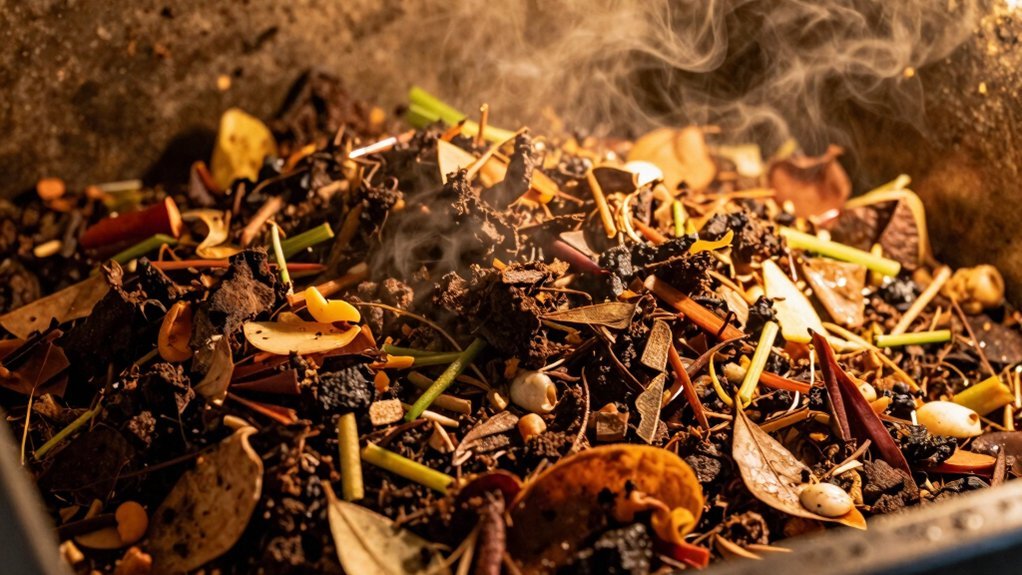
A hot compost pile is the most reliable way to keep maggots out, because temperatures around 55‑70 °C accelerate microbial activity and outpace fly egg and larva survival. Start with a 3 ft × 3 ft × 3 ft pile, mixing roughly two parts greens (food scraps, grass, coffee grounds) with one part browns (straw, leaves, shredded cardboard). Shred everything, keep it damp, and add a scoop of finished compost as an activator. Check the core temperature with a thermometer; aim for 60 °C and turn the pile 2‑4 times a week to re‑oxygenate and sustain heat. Insulate the bin or cover it to prevent rapid cooling, and keep adding greens during turns to maintain the thermophilic zone. For indoor kitchen composting, consider using an airtight compost container to manage scraps before adding them to your hot pile, which helps reduce odors and pest attraction in the home.
Deep‑Clean the Bin With Soap, Vinegar, and Drying
You’ll start by washing the emptied bin with a warm, soapy solution to loosen any residue.
Then give it a vinegar rinse to neutralize odors and kill lingering microbes.
Finally, let the bin dry completely—sun or air—so moisture can’t invite mold or maggots when you refill it.
Regular cleaning helps prevent pest infestations and keeps beneficial decomposer organisms thriving. Avoid using bleach to sanitize your compost bin, as it can harm the beneficial bacteria essential to the composting process.
Clean Soap Solution
When you empty the compost bin, rinse it with warm water and a mild dish soap, then scrub every interior surface—walls, base, lid, and removable parts—using a sponge or brush, paying special attention to corners, seams, and drainage areas. Use a handled brush or old toothbrush for tight crevices, avoid abrasive sponges, and unclip the lid for thorough access. Rinse completely so no soap film remains, then flip the bin or place it in a well‑ventilated spot to dry. Moisture control prevents flies and maggots; don’t refill until everything is bone‑dry. Regular weekly clean‑ups keep odor low and extend the bin’s life.
- Warm water + mild biodegradable soap
- Soft sponge or brush for walls and lid
- Small brush for corners, seams, hinges
- Full rinse and air‑dry before reuse
Use a vinegar trap to catch any remaining fruit flies before they lay eggs.
Vinegar Rinse for Odor
The vinegar rinse tackles lingering odors by lowering surface pH and breaking down the sour, stale smells that cling to bin walls after you’ve scrubbed away grime. Mix equal parts white vinegar and warm water, spray the interior, and let it sit a few minutes. The acetic acid neutralizes sour, ammonia‑like, and moisture‑related odors while the mild soap you used earlier handles grime. After rinsing, wipe with a clean cloth to avoid a lingering vinegar scent. Repeat every few weeks for consistent odor control, but remember it won’t fix excess moisture or poor airflow.
Odor formation requires moisture, warmth, and lack of oxygen, so reducing surface moisture helps prevent VOC release.
| Step | Action | Reason |
|---|---|---|
| 1 | Empty bin | Removes residue that fuels odor |
| 2 | Soap wash | Clears grime and biofilm |
| 3 | Vinegar spray (1:1) | Lowers pH, neutralizes smells |
| 4 | Wait 5‑10 min | Allows acid to act |
| 5 | Rinse & wipe | Prevents vinegar residue |
Thorough Drying Process
Why bother with half‑drying a compost bin? Moisture left after cleaning invites maggots, mold, and foul smells. After you’ve emptied, scraped, and washed the bin with soap, give it a thorough dry before reinstalling the lid. A dry interior eliminates the damp refuge maggots love and speeds up the next compost cycle.
- Turn it upside‑down – let gravity pull water out of seams and corners.
- Place it in direct sunlight – UV heat evaporates lingering moisture faster.
- Air‑flow it – prop the bin on a rack or hang it to let breezes circulate.
- Check for damp spots – run your hand over edges and lid hinges; if any wetness remains, repeat drying.
Only when the bin feels completely dry should you reattach the lid or liner, ensuring a pest‑free compost environment.
Use a brush to scrub any stubborn residue before the drying step.
Adopt Long‑Term Carbon‑Rich Additions & Cool Storage
If you keep a steady stash of carbon‑rich browns and store them dry, you’ll prevent the wet, nitrogen‑heavy conditions that invite maggots.
Gather dried leaves, shredded cardboard, newspaper, straw, and a modest amount of wood chips. Keep them in a sealed container or a dry corner, away from rain, so they stay absorbent. When you add kitchen scraps, immediately blanket the layer with a handful of these browns; mix lightly to avoid matting. Rotate the pile every few days to maintain airflow and keep moisture at a wrung‑out‑sponge level. A dedicated dry‑browns bin near the compost area lets you cover fresh waste the same day, ensuring the carbon‑to‑nitrogen balance stays around 25‑30:1 and flies stay out.
Switch to a Worm Bin When Compost Bins Fail
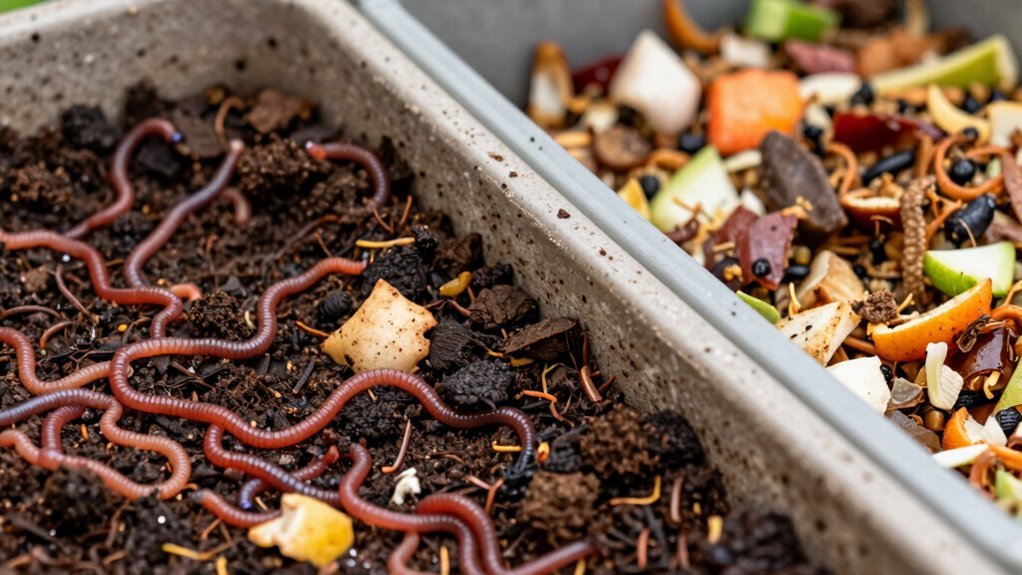
When your compost bin starts attracting maggots, swapping to a worm bin can save the process. Worms thrive in moist, microbe‑rich bedding where food disappears before flies can lay eggs. Enclosed bins limit fly access, and a carbon‑rich layer plus buried feedings keeps the surface clean. To transition, start with fresh bedding, add a small amount of food, wait a few days, then introduce the worms. You can also “bait and switch” by placing moist bedding and scraps in one section and letting worms migrate over 2‑4 weeks. Follow these steps to keep maggots out and maintain a healthy vermicompost system.
- Prepare fresh, moist bedding and add a thin food layer.
- Wait 2‑4 days before adding worms or introduce a portion of existing vermicompost (≈25%).
- Use the bait‑and‑switch method: keep old compost drier, fresh side moister.
- Cover new scraps, feed sparingly, and monitor moisture and aeration.
Microbial bloom is essential before introducing worms, as it creates a healthy habitat for them to thrive.
Frequently Asked Questions
Can I Use a Commercial Enzyme Cleaner to Deter Maggots?
No, you can’t rely on an enzyme cleaner alone to deter maggots. It’ll break down residues and reduce odors, but you still need moisture control, sealed containers, and direct treatments like boiling water or lime.
Do Scented Trash Bags Help Keep Flies Away From Compost?
No, scented bags won’t keep flies away. They mask odor but don’t eliminate moisture or food smells that attract insects. Use tight lids, dry cover material, and frequent emptying for real fly control.
Is a Small Indoor Compost Tumbler Better Than a Static Bin?
You’ll find a small indoor tumbler outperforms a static bin for maggot control; its sealed drum blocks flies, keeps moisture balanced, and lets you turn scraps regularly, preventing larvae from thriving.
Can I Add Crushed Eggshells to Repel Flies?
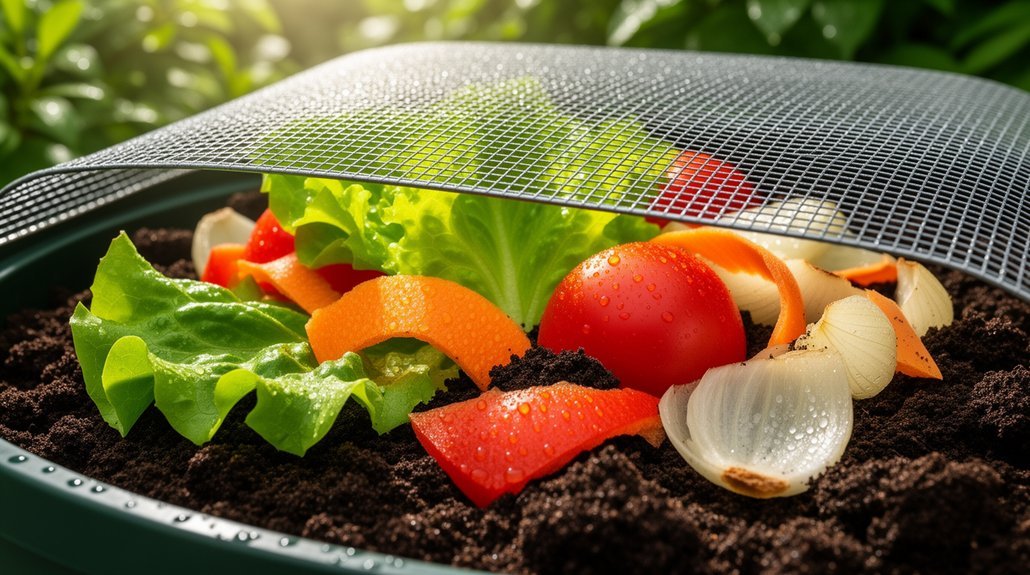
No, crushed eggshells won’t repel flies. Focus on burying scraps, keeping moisture balanced, turning regularly, and using a screened lid. Rinse, dry, and grind shells only for calcium, not pest control.
Will a UV Light Placed Near the Bin Reduce Maggot Infestations?
No, a UV light won’t meaning maggots. It won’t deter flies from laying eggs or kill larvae inside the bin. Focus on covering scraps, adding dry browns, and controlling moisture instead.
In Summary
By keeping your bin dry, cold, and well‑balanced, you’ll starve the flies that spawn maggots. Regularly add carbon‑rich browns, use a tight‑fitting liner, and empty the bin each week to break the life cycle. A quick heat boost or a thorough clean wipes out any leftovers, and switching to a worm bin gives you a low‑maintenance, maggot‑free solution for the long haul.