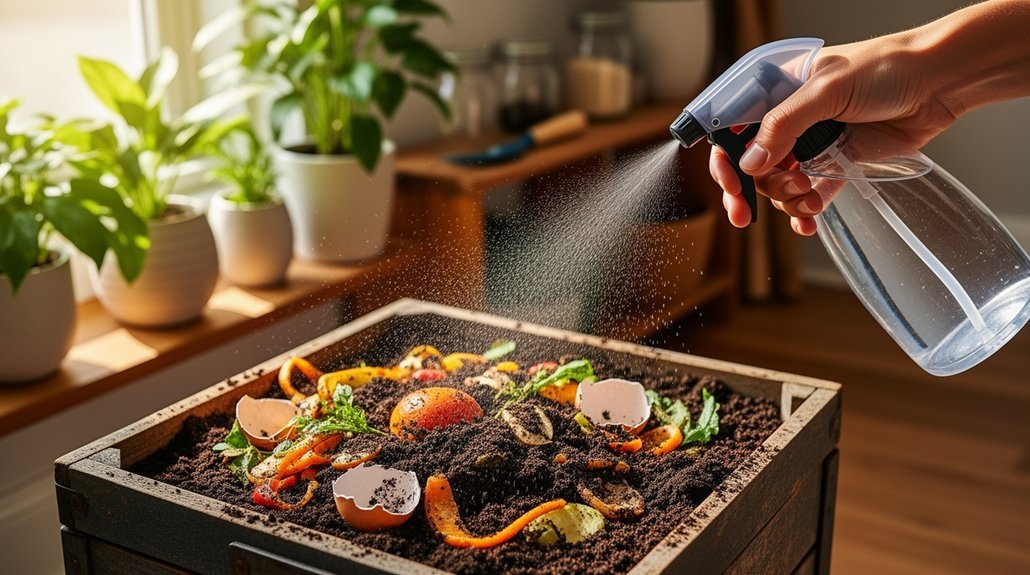
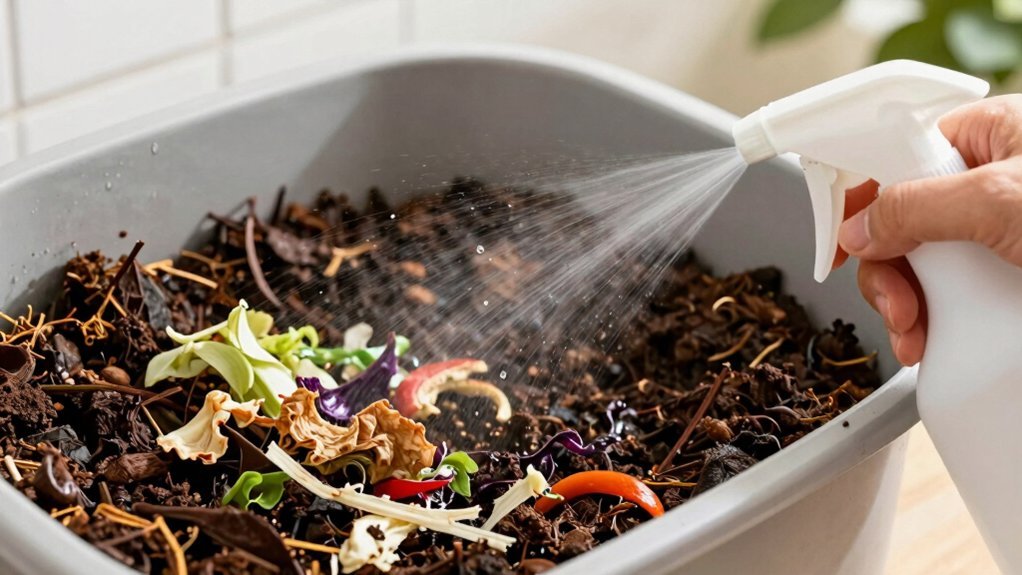
Spray a fine mist over the pile, then stir it so the water spreads evenly. Toss in a handful of fresh fruit peels, coffee grounds, or tea leaves—they’re water‑rich and feed microbes. Layer those greens between dry browns like shredded leaves, straw, or wood chips to soak up excess moisture and keep airflow. Use a breathable lid or fabric cover to slow evaporation, and check the moisture with the fist‑test or a meter; the next steps will show you how to fine‑tune the balance.
Why Your Apartment Compost Is Dry – Spotting the Problem Fast
Ever wonder why your compost looks more like dust than dirt? You’re probably dealing with a dry pile. Dry compost appears pale, brittle, and flaky; the ingredients stay separate, and grass clippings stay yellow for weeks. When you grab a handful and it crumbles instantly, the texture is more like a powdery sponge than a wrung‑out one. A light‑colored, hard mass signals that microbes have gone dormant, and the pile emits little to no earthy odor. Indoor heat, small bins, and excess dry inputs—cardboard, paper, leaves—drain moisture quickly, especially if you turn the pile often or skip watering. Without enough dampness, bacteria and fungi can’t break down scraps, so decomposition stalls and the compost looks and smells dead. Consider that dried materials like cardboard and paper are commonly used for decorative purposes, but they similarly absorb moisture when repurposed as compost ingredients. Keep the pile’s moisture level similar to a wrung‑out sponge by adding water as needed, especially in dry climates.
Ideal Moisture Range for a Healthy Small‑Space Compost
Typically, a healthy small‑space compost thrives when its moisture sits between 45 % and 60 % by weight, with most guides zeroing in on the 50 %–60 % sweet spot. You’ll notice the difference instantly: dry, dusty material signals below‑range moisture, while a tacky, slightly shiny handful shows you’re in the ideal zone. Keep an eye on odor—foul or ammonia smells mean you’ve crossed the upper limit and oxygen is being displaced. Use the hand‑squeeze test regularly; if the pile feels heavy and water‑logged, trim excess liquid or add dry browns. Below 40 % you risk fungal dominance and stalled breakdown. Adding dry bulky material helps lower moisture when the pile gets too wet.
| Moisture % | What you feel |
|---|---|
| 45‑49 | Mostly dry, slight dampness |
| 50‑54 | Tacky, clumps together |
| 55‑60 | Moist, slight sheen, no drip |
Which Kitchen Scraps Boost Moisture and Microbial Activity
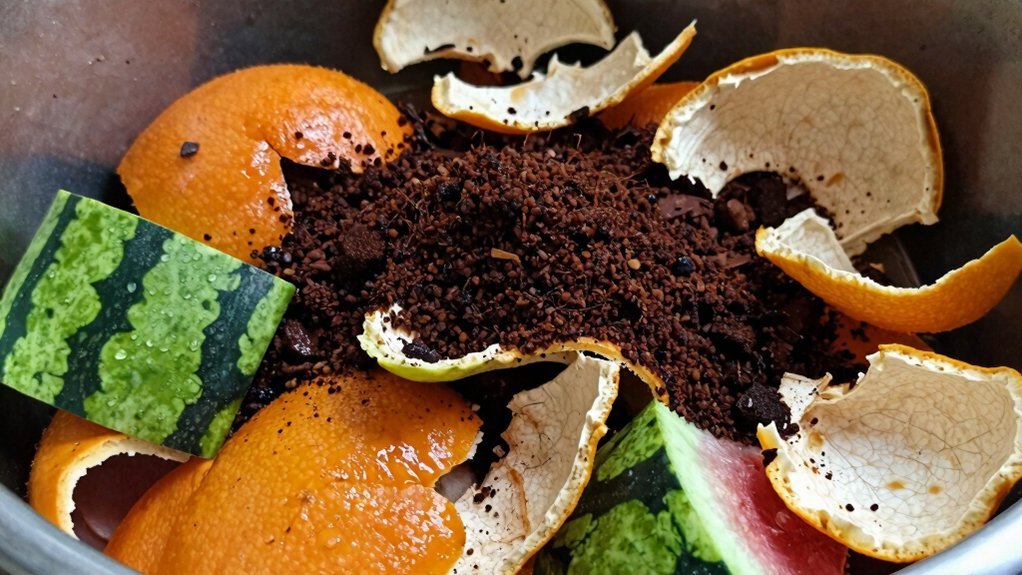
You can boost moisture and feed microbes by tossing fresh fruit peels, coffee grounds, and tea leaves into your bin.
Those scraps are water‑rich and nitrogen‑laden, so they keep the pile damp while energizing microbial growth.
Just mix them with a bit of carbon material to prevent sogginess and maintain airflow.
Including a small amount of dry leaves helps balance moisture and provides structure. For apartment dwellers, ensure your mini compost bin has adequate odor control features like charcoal filters to handle the increased moisture from these wet scraps.
Fresh Fruit Peels
Fresh fruit peels are a powerhouse for moisture and microbial activity in apartment compost. They dump water straight into dry bins, keeping the mix supple while supplying sugars, soft fibers, and nutrients that microbes love. Chop or shred banana, orange, apple, or pomegranate peels before tossing them in; the smaller pieces boost surface area, speed decomposition, and lessen odor risk.
Mix the peels with carbon‑rich browns—cardboard, dry leaves, paper—to avoid a soggy mess and balance acidity, especially with citrus. Bury the bits in the bin’s center to deter flies, and rinse non‑organic peels to cut pesticide residue. You can also layer in solid wood construction materials like untreated wood chips to further enhance carbon balance and structural integrity.
Add modest amounts frequently, cover loosely for airflow, and sprinkle in worm castings or garden soil for extra microbial diversity. This routine keeps moisture steady, accelerates breakdown, and prevents the slimy, smelly pile that can plague small indoor compost systems. Proper aeration and temperature control maintain active decomposition and help eliminate odors.
Coffee Grounds & Tea Leaves
After peels, the next kitchen scraps that keep your apartment compost moist and lively are used coffee grounds and tea leaves. Both are nitrogen‑rich “greens” with a C:N ratio near 20:1, close to the ideal 25:1, so they balance carbon‑heavy browns and speed decomposition. Sprinkle a thin layer of grounds and loose leaves between shredded cardboard or dry paper to improve airflow and prevent compaction, keeping the pile as damp as a wrung‑out sponge. Their slight acidity (pH 5‑6.8) nurtures fungi and bacteria, even in cooler months, while supplying nitrogen, phosphorus, potassium, magnesium, and iron. Use only spent grounds and tea leaves; avoid fresh brews and plastic‑lined tea bags. Moderation is key—small, regular additions mixed with browns keep odors low and the compost thriving. For indoor countertop bins, consider using charcoal odor filters to manage moisture-related smells while you build your compost layers. Adding green material in winter helps maintain microbial activity despite lower temperatures.
Fast‑Acting Ways to Add Water to Your Apartment Compost
Spray your bin evenly with a bottle to give the whole pile a quick moisture boost.
Then layer wet greens between brown scraps so the water spreads naturally as you turn it.
Adding moisture‑retaining additives like shredded newspaper or coffee grounds helps lock in dampness without over‑saturating the compost.
Turn the pile daily with a pitchfork to speed up decomposition.
Spray Evenly With Bottle
Wondering how to revive a dry compost pile in minutes? Grab a fine‑mist spray bottle and mist the surface in short, even passes. Light misting keeps the material sponge‑like without soaking it, preventing dry pockets that stall microbes. After each spray, stir or turn the bin so water spreads uniformly, especially in corners and top layers. Use multiple light rounds rather than a single heavy burst to avoid soggy spots and odor‑causing anaerobic zones. For balcony systems, place your bin on a tray to protect balcony flooring from excess moisture during this process.
Key steps for even spraying
- Fill the bottle with a quarter‑full of water.
- Spray across the entire surface in quick, overlapping strokes.
- Turn the compost to mix moisture.
- Repeat until the pile feels damp, not dripping.
You’ll see decomposition speed up and odors fade, all with minimal effort. Adding balanced moisture helps maintain the proper carbon‑to‑nitrogen ratio for active microbial activity.
Layer Wet Greens Between Browns
If you’ve just misted the surface, the next step is to build moisture from within by layering wet greens between dry browns. Toss fresh vegetable peels, fruit scraps, coffee grounds, or grass clippings in a thin strip, then cover with a handful of shredded paper, cardboard, or dry leaves. Keep each green layer no thicker than a quarter‑inch; the alternating pattern spreads water evenly and prevents dry pockets. By burying the moist material under browns, you trap humidity, buffer excess wetness, and cut odors. This structure also maintains airflow, which is essential in a compact apartment bin. Check the feel—like a wrung‑out sponge—before adding more greens, and you’ll keep the pile in the ideal 50 % moisture range for rapid breakdown. Adding a small amount of unsulured molasses can boost microbial activity during decomposition. For apartment composters, ensure your bin features airtight seals and charcoal filters to maintain odor control while building moisture within the layers.
Use Moisture‑Retaining Additives
When you need a quick moisture boost, reach for moisture‑retaining additives like peat moss, coconut coir, vermiculite, or even a pinch of water‑absorbing polymer crystals. These materials let your apartment pile stay sponge‑moist without drenching, keeping decomposition steady and odor‑free. Mix them thoroughly to prevent clumping, and monitor the feel—if it’s too soggy, add a dry brown layer. Soil texture influences how much water each additive can hold, so adjust quantities accordingly.
Key actions for effective use
- Add 1‑2 tablespoons of peat moss per quart of compost.
- Substitute coconut coir for peat when you want a lighter, renewable option.
- Sprinkle a thin layer of vermiculite to lock in humidity in tight containers.
- Use polymer crystals sparingly; a pinch per cup of material releases water gradually.
Stay within a 25‑30 % additive ratio to preserve airflow and microbial health.
Low‑Cost Materials That Keep Water in Your Apartment Compost
Ever wondered how to keep your apartment compost from drying out without breaking the bank? Use cheap, dry “browns” like leaves, straw, or sawdust. They soak up excess water, keep the pile porous, and follow EPA’s 2‑3 : 1 brown‑to‑green rule. Shredded coconut coir is another low‑cost fiber that holds several times its weight in water while staying airy; mix one part coir with three parts compost for balanced dampness.
Add a 6‑12‑inch top layer of wood chips, leaves, or straw as a biocover; it insulates against sun and wind, preserving moisture beneath. Finally, sprinkle a handful of mature leaf mold or biochar throughout the pile. Biochar can boost retention up to 30 % and tame odors, while leaf mold buffers moisture and feeds microbes. Consider incorporating lactic acid bacteria and other beneficial microorganisms to enhance decomposition during moisture fluctuations. Moisture levels must stay within the 40–60 % range to keep microbes active.
Easy Lid & Fabric Covers to Cut Evaporation
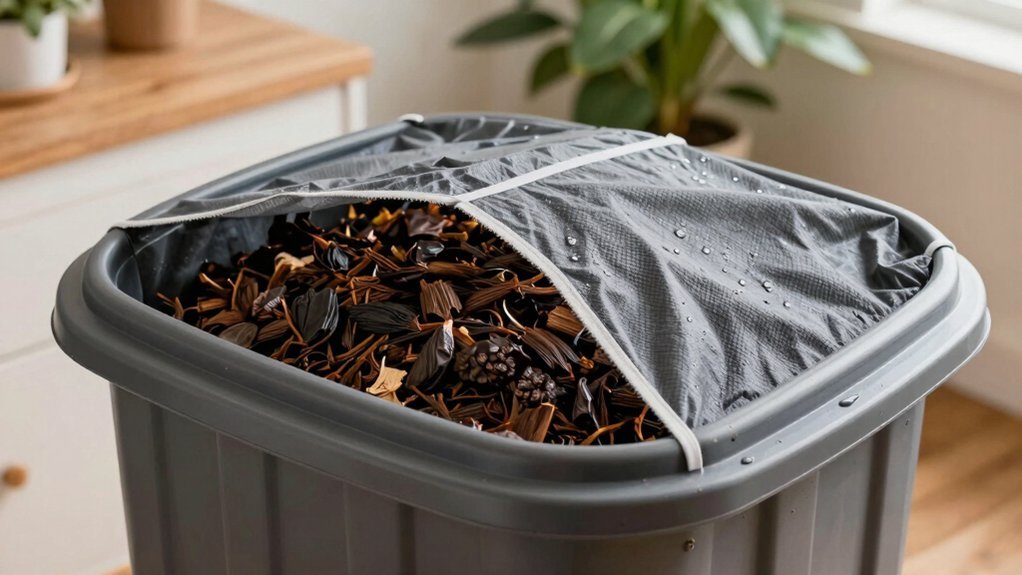
Wondering how to keep your apartment compost from drying out without turning it into a sealed sauna? A snug lid or breathable fabric cover is your quickest fix. Lids cut direct air exchange, slowing the fastest‑drying surface layer while still letting you vent occasionally to avoid odor build‑up. Breathable fabrics—like fleece, ComposTex, or TopTex—let water vapor and gases escape, preventing heat traps and keeping microbes happy. They also shed rain and reduce leachate, so you won’t drown the pile. Pair a lid with a fabric cover for extra protection, but avoid airtight seals that suffocate the compost. The fleece protects compost feedstock from dehydration and over‑saturation while still allowing aerobic microbes to breathe. Most ceramic crocks feature charcoal filters in lids with typical lifespans of 4–6 months, which can help regulate moisture and odor when paired with proper ventilation. 1. Use a tight‑fitting lid to limit surface evaporation. 2. Choose a gas‑permeable fabric for airflow and moisture balance. 3. Vent the lid briefly each day to release excess gases. 4. Fold excess fabric under as the pile shrinks to keep edges covered.
Test Moisture With the Fist Method & a Meter
Curious to know if your compost is just right? Grab a handful of material from the active zone, squeeze it tightly in your fist, and watch. If it crumbles with no drops, it’s too dry; if it forms a clump and drips a few beads, you’re in the 50‑60 % moisture sweet spot. Excess water will stream out, signaling a wet pile that could turn anaerobic. For a more objective read, insert a moisture probe into a representative sample. The meter gives an instant percentage, though readings can vary with heterogeneous material. Pair the test with regular sampling—after building, turning, or troubleshooting—to keep moisture within the optimal range and avoid dusty or soggy conditions. Strategically placed air vents help prevent moisture accumulation and ensure even drying across your pile. This approach is a quick field method that provides an estimate rather than a precise measurement.
Turn and Aerate Your Bin to Spread Water Evenly
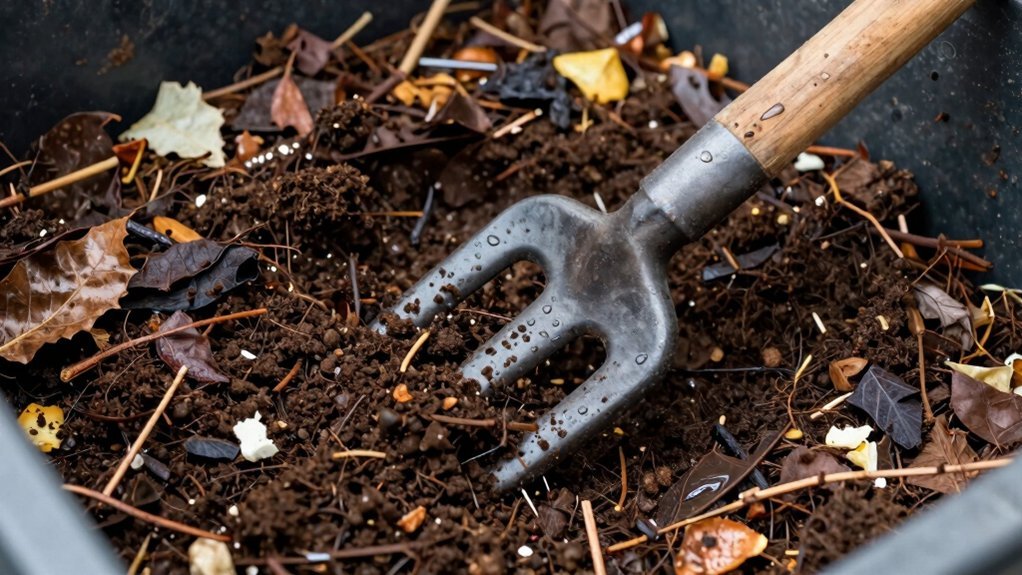
When you turn and aerate your compost bin, the water you add spreads through the whole mass instead of pooling in one spot. Turning mixes dry and wet pockets, creates fresh air channels, and breaks up compacted zones, so moisture penetrates evenly. Use a simple fork, a compost stirrer, a hand cultivator, or a tumbler to lift, flip, and fluff the contents while you water. This restores oxygen, revives stalled microbes, and prevents soggy outer layers. For apartment dwellers using bokashi systems, aeration works alongside anaerobic fermentation to manage moisture and prevent odors.
Key steps for effective aeration
- Lift and move material in layers to expose the core.
- Insert a stirrer or rake to blend new water with older matter.
- Employ a stab‑and‑twist tool to open tunnels for airflow.
- Rotate a tumbler a few turns for uniform fluffing.
Doing this once a week keeps moisture balanced and decomposition active.
Adding a layer of sticks at the bottom can improve airflow. air‑trapping base.
Fixing Over‑Watering: Add Dry Browns and Boost Airflow
How can you rescue a soggy compost pile? First, toss in dry, carbon‑rich browns—shredded leaves, straw, sawdust pellets, or shredded cardboard—to soak up excess water. Fine carbon materials work quicker than bulky ones, so sprinkle a handful and mix gently; repeat until the pile feels damp, not soupy. Add highly absorbent amendments like peat moss or untreated wood chips in stages, watching the texture improve. Balance moisture by keeping the nitrogen‑to‑carbon ratio around one‑third to two‑thirds; avoid more wet greens. Finally, boost airflow: break up dense spots with dry browns, insert coarse straw or wood chips, and keep air channels open. This restores aerobic conditions, reduces slime and odor, and steadies your compost’s moisture. If water drips when you compress a handful, the pile is still too wet.
Frequently Asked Questions
Can I Use a Humidifier to Raise Compost Moisture?
Yes, you can use a humidifier, but it’s only a supplemental boost. Directly spray water, add wet scraps, or cover the bin for faster, reliable moisture control.
How Often Should I Check Moisture in Winter?
You should check your compost moisture at least once a week in winter, and more often after snowmelt, rain, or heating changes; test during the warmest part of the day for accurate readings.
Do Scented Candles Affect Compost Drying?
Yes, scented candles can dry out your compost. Their wax coats material, blocks water, and adds chemicals that hinder microbes, so you’ll want to keep wax out and add moist greens instead.
Is Tap Water Safe for Apartment Compost?
Yes, tap water’s safe for apartment compost—just add it slowly until the mix feels like a wrung‑out sponge. Avoid overwatering, and if chlorine’s a concern, let the water sit a day before use.
Can I Add Ice Cubes Instead of Liquid Water?
No, you shouldn’t rely on ice cubes. They melt unevenly, chill microbes, and give poor moisture control. Use room‑temperature water, add it gradually, and mix to keep compost evenly damp.
In Summary
Keep your compost moist, not soggy, by watching the texture and using the fist test. Add water little at a time, sprinkle high‑moisture scraps, and cover the bin to slow evaporation. Turn it regularly so moisture spreads evenly, and if it gets too wet, balance it with dry browns and better airflow. With these quick fixes, your apartment compost will stay lively and break down efficiently.