You stop the rotten‑egg smell by keeping your compost aerobic: balance greens and dry browns in about a 1‑to‑3 ratio, maintain a “wrung‑out sponge” moisture level, and turn the pile regularly. Add bulking agents like straw, shredded cardboard, or a thin layer of biochar to create air pockets and absorb excess liquid. Skip high‑odor foods such as meat, fish, and dairy, and always cover fresh scraps with dry browns. If you follow these steps, the next section shows how to fine‑tune odor control.
Control Compost Odor: Balance Browns and Greens (3‑to‑1 Ratio)
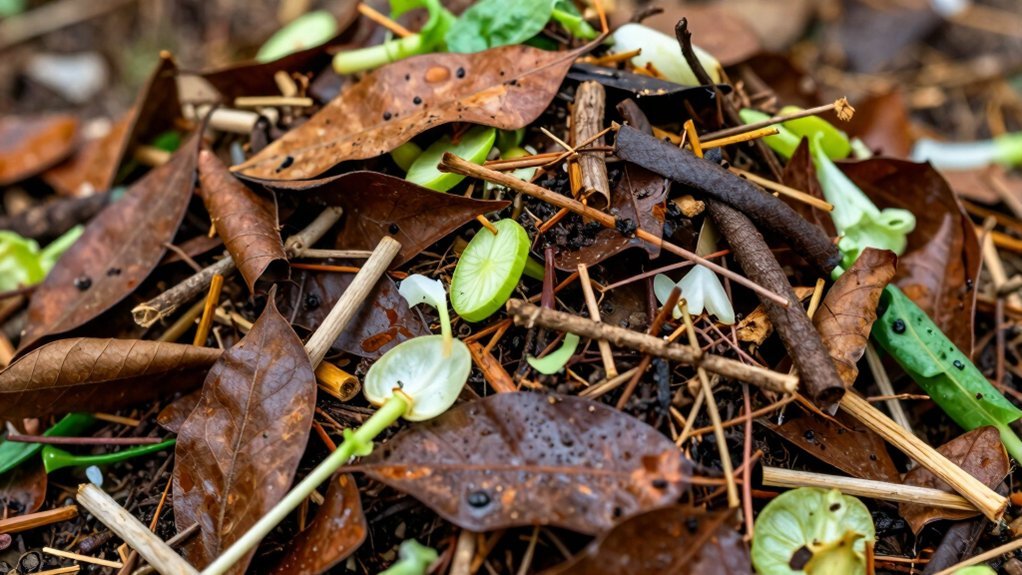
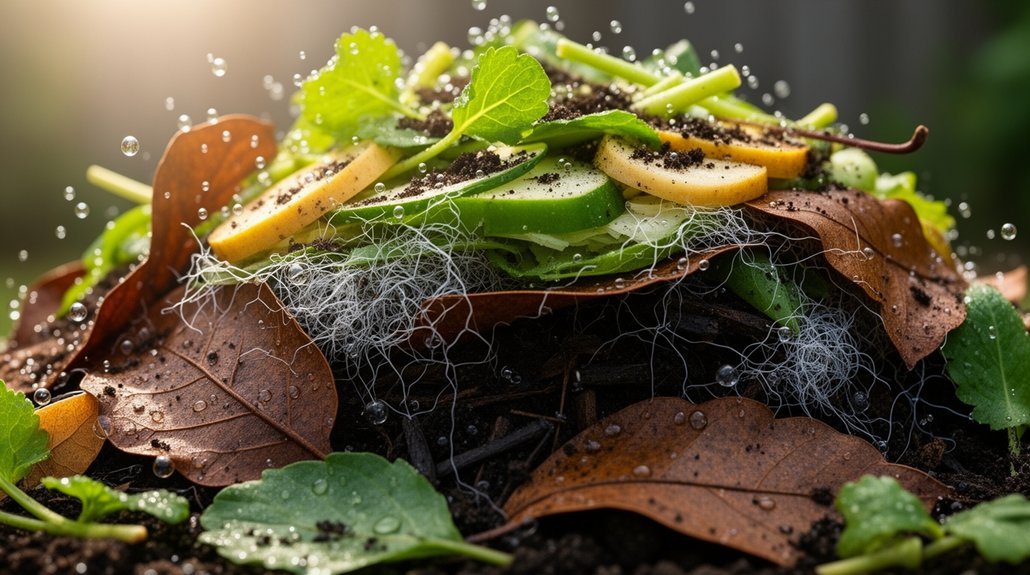
How can you keep your compost from smelling like rotten eggs? Focus on a solid brown‑to‑green balance. Aim for roughly three parts brown material to one part green. Browns—dry leaves, shredded cardboard, newspaper, straw, sawdust—supply carbon, structure, and absorbency. They soak up excess moisture, keep the pile loose, and block anaerobic pockets that produce sulfur‑rich odors. Greens—food scraps, fresh grass, coffee grounds—add nitrogen but can turn the mix soggy if they dominate. If the pile smells sour, toss in more browns quickly; the extra carbon will dry out wet spots and restore airflow. For kitchen waste including meat and dairy, consider using bokashi bran inoculant to accelerate fermentation and eliminate odors before adding to your compost pile. By maintaining this 3‑to‑1 ratio, you keep the compost aerobic, crumbly, and odor‑free. Insufficient oxygen leads to anaerobic conditions that cause the rotten‑egg smell.
Control Compost Odor: Boost Airflow With Turning and Bulking Agents
Balancing browns and greens stops the smell, but you also need to keep the pile breathing. Turn your compost after each addition or at least once a week to re‑introduce oxygen and break up compacted zones. Use a pitchfork or shovel to lift and mix the material, especially the lower layers where air-starvation breeds hydrogen sulfide.
Add bulking agents—shredded cardboard, coconut coir, straw, dry leaves—to create permanent voids. These fibrous, bulky items keep the structure loose and prevent the pile from packing down. You can also sprinkle newspaper, sawdust, or pine needles to reduce clumping and support airflow. For larger composting operations, a dual-chamber tumbler can simplify the turning process and improve aeration efficiency. By maintaining open channels and regular aeration, you’ll keep anaerobic microbes at bay and eliminate the rotten‑egg odor. Target moisture should stay around 50–60 % to avoid soggy conditions that promote anaerobic activity.
Control Compost Odor: Keep Moisture at the “Wrung‑Out Sponge” Level
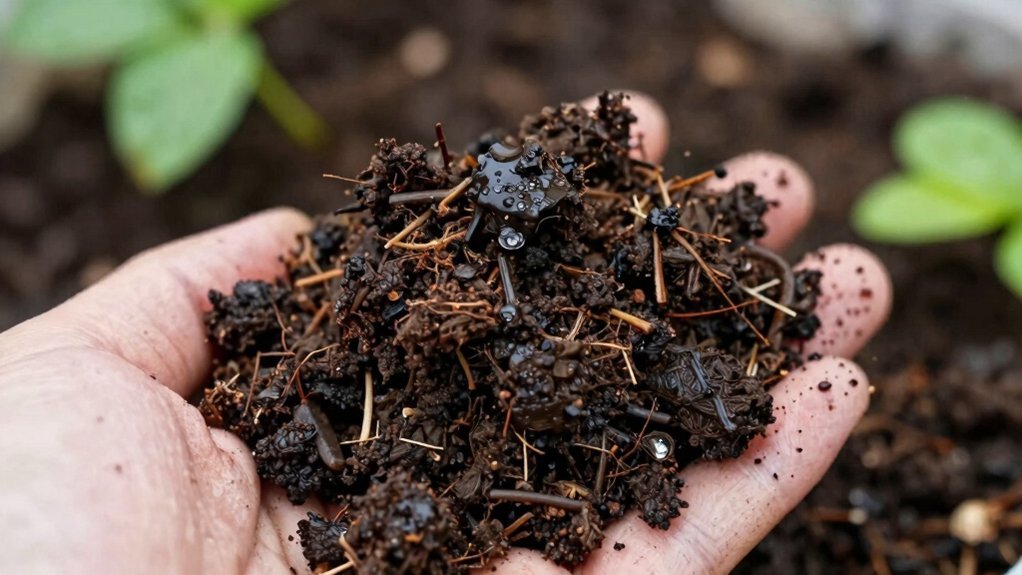
Ever wondered why your compost smells like rotten eggs? That odor means it’s too wet and anaerobic. Aim for a “wrung‑out sponge” feel: damp, not dripping. Squeeze a handful—only a few drops should appear.
If it drips or feels soggy, add dry, carbon‑rich browns like shredded leaves, cardboard, straw, or sawdust, mixing them throughout wet spots. Cover the pile during rain, improve drainage, and avoid piling on impermeable surfaces. For additional carbon-rich material options, consider dried corn stalk bundles which break down effectively and add structure to compost layers.
Balance juicy kitchen scraps and grass clippings with coarse browns, and consider freezing wet foods before adding them. Regularly check for slimy texture or leachate, and if you smell sulfur, bulk up with dry material. Keeping moisture in the 40‑60 % range preserves oxygen, stops rotten‑egg smells, and fuels active composting. Adding carbon‑rich material helps absorb excess nitrogen and prevents anaerobic conditions.
Control Compost Odor: Break Up Clumps and Layer Materials Evenly
You should shred the scraps, then spread a layer of browns over the greens before you turn the pile. By breaking up clumps and layering evenly, you give oxygen a clear path and keep nitrogen‑rich pockets from forming. Mix everything thoroughly each time you turn it, and the odor will stay under control. Proper aerobic decomposition prevents the sour, rotten‑egg smell. Layering waste with moisture control aids helps prevent soggy scraps that slow microbial activity and contribute to anaerobic conditions.
Even Shredd With
Why does a compost pile suddenly smell like rotten eggs? Because anaerobic pockets are forming where oxygen can’t reach. To stop that, shred your greens and browns into small, uniform pieces before you add them. Fine shreds create a fluffy matrix that lets air weave through, preventing dense mats that trap moisture and sulfur‑producing microbes.
Mix shredded material throughout the pile, not just on the top, and break up any clods you see in lower layers. Adding bulky, airy carbon sources—dry leaves, straw, corrugated cardboard—further opens the structure. Keep each new addition thin and spread, then give the pile a quick turn. This consistent, even shredding keeps the compost aerobic, reduces hydrogen sulfide, and eliminates the rotten‑egg odor. Maintaining proper carbon‑to‑nitrogen balance prevents the anaerobic conditions that cause foul smells. Using enzyme and bacteria formulations can further enhance decomposition and reduce odor control issues in your compost system.
Layer Browns Over Greens
How does a simple layer of browns keep your compost smelling fresh? By acting as a carbon filter, a brown cover so moisture, blocks odor, and keeps anaerobic microbes at bay. When you layer dry leaves, shredded cardboard, wood chips, or paper over fresh greens, you create a physical barrier that hides food scraps from pests and limits ammonia and rotten‑egg smells. The brown cap also maintains aeration, letting oxygen‑loving decomposers work while keeping the pile balanced at roughly 1 part greens to 3 parts browns. A proper carbon-to-nitrogen ratio of approximately 25–30:1 further optimizes the breakdown speed and minimizes odors in your composting system.
- Use coarse browns as the base.
- Add a thin green layer.
- Cover greens with a generous brown layer.
- Repeat after each green addition.
The pile should be moistened to resemble a wrung‑out sponge or chocolate cake. Proper moisture ensures the microbes stay active and reduces odor.
Mix Thoroughly Every Turn
Ever notice a sour, sulfurous whiff after a quick toss? That smell means anaerobic pockets are forming, and the cure is simple: mix thoroughly every turn. When you break up clumps of food waste or grass, you let oxygen rush into the interior, reviving aerobic microbes that keep odors at bay. Uniformly blend nitrogen‑rich greens with carbon‑rich browns each time you turn; this stops wet, fast‑decaying pockets from developing and balances the C‑to‑N ratio. Deep, not superficial, turning exposes trapped material to fresh air, venting sulfur gases and preventing ammonia spikes. With wet inputs, turn more often to spread moisture evenly. Tools like aerator tools make breaking through dense clumps easier and ensure thorough mixing throughout the entire pile. Consistent, deep mixing keeps the pile aerobic, earthy, and odor‑free. Adding a large browns stockpile ensures excess moisture is absorbed and odors are quickly neutralized.
Control Compost Odor: Skip High‑Odor Foods Like Meat and Dairy
Ever wondered why your compost smells like rotten eggs? It’s usually the high‑odor animal scraps you’ve tossed in. Skip meat, fish, dairy, and any greasy leftovers. Those proteins and fats break down into putrescine and sulfur compounds that fuel anaerobic decay and attract pests. Instead, stick to plant‑based greens, coffee grounds, and eggshells, which decompose aerobically and stay fresh. For kitchen scraps, consider using a ceramic compost crock with a charcoal filter to contain odors while you collect materials before transferring to your main compost pile.
- Never add meat or fish – they release strong, sulfurous gases.
- Avoid dairy and butter – fats coat material, choking airflow.
- Leave out cooked, heavily seasoned foods – salts and sauces accelerate odor.
- Exclude pet waste and bones – they boost anaerobic bacteria and pests.
- Maintaining a proper carbon‑to‑nitrogen ratio helps keep the pile aerobic and reduces odor.
Control Compost Odor: Add a Top Layer of Dry Browns, Straw, or Biochar
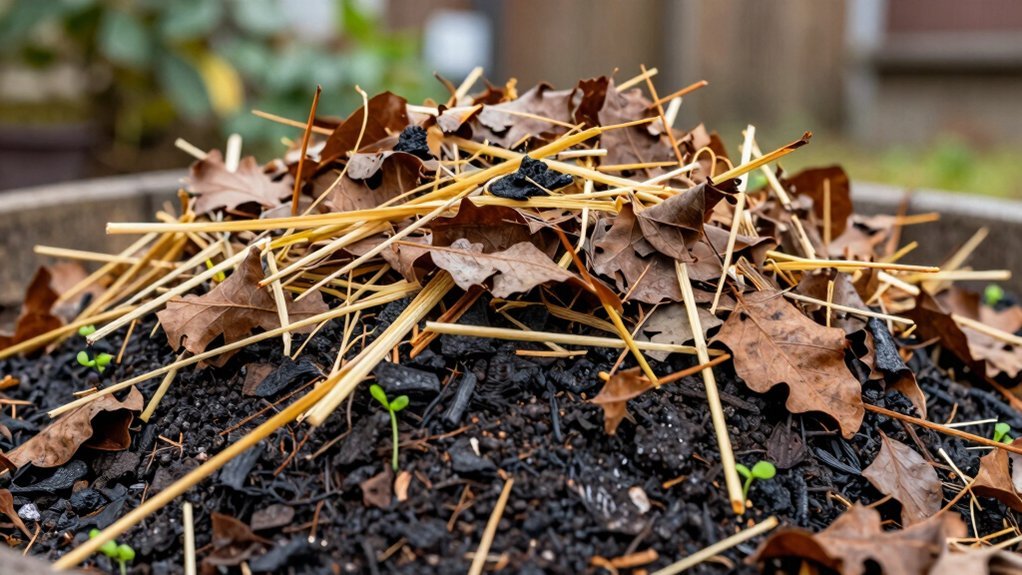
You can keep your pile from stinking by spreading a dry brown barrier on top, which soaks up excess moisture and balances nitrogen.
Tossing straw over the surface creates air pockets that prevent compaction and keep aerobic microbes thriving.
Adding a thin layer of biochar further absorbs any lingering odors while improving structure.
Using activated charcoal filters in your compost container provides an additional layer of odor control for indoor composting systems.
Dry Browns as Barrier
A thin, dry layer of browns—like shredded leaves, cardboard, paper, or straw—acts as an effective barrier that soaks up excess moisture from kitchen scraps and blocks odor‑producing anaerobic zones. By keeping the surface drier, you prevent sulfide‑rich pockets that smell like rotten eggs. The layer also shields pests and limits direct exposure of wet waste to air, so odors stay trapped beneath the carbon‑rich cover. Use a clean, carbon‑rich material and replenish it after each addition of greens. Biodegradable, non-toxic materials work best for maintaining both compost health and environmental safety.
Choose dry, unsaturated browns (leaves, cardboard, paper).
Apply a 2‑inch layer over fresh scraps.
Mix lightly to integrate, but keep the top intact.
Re‑top after every feeding to maintain the barrier. Aeration helps reduce odors by introducing oxygen.
Straw for Air Pockets
After the dry brown barrier has soaked up excess moisture, adding straw on top creates the air pockets that keep the pile aerobic. Straw’s coarse, high‑carbon fibers hold space for oxygen, forcing microbes to stay aerobic and preventing the hydrogen‑sulfide smell of anaerobic decay. Sprinkle a thin layer of shredded straw over fresh food scraps, or tuck a straw blanket between dense greens and kitchen waste. This “fluffy” barrier also soaks up extra liquid, keeping the compost damp like a wrung‑out sponge instead of waterlogged.
For best results, mix straw with nitrogen‑rich inputs—manure, coffee grounds, or fresh greens—so the carbon balances out and breakdown speeds up. Even in bins you rarely turn, straw maintains ventilation, drainage, and a pleasant odor profile. Adding small sticks can further improve airflow by creating additional channels for oxygen.
Biochar to Absorb Odors
Ever wonder why a thin layer of biochar on top of your compost can keep the air fresh? Biochar’s porous carbon adsorbs ammonia, hydrogen sulfide, and volatile organic compounds before they escape, cutting the rotten‑egg smell at the source. It also improves aeration, preventing anaerobic pockets that generate foul gases. Adding 5–10 % biochar, either mixed in or as a dry top layer, can slash VOC emissions by over 70 % and lower ammonia by up to 89 % during the active thermophilic phase. The result is a faster‑stabilizing pile that retains nutrients and smells cleaner. Microbial‑inoculated biochar further boosts odor control by enhancing microbial activity.
- Sprinkle a thin biochar blanket each turn.
- Keep the layer dry to absorb moisture.
- Combine with straw for extra airflow.
- Adjust to 5–10 % of total volume for best results.
Control Compost Odor: Vent the Bin and Freeze Scraps to Kill Sulfur Smells
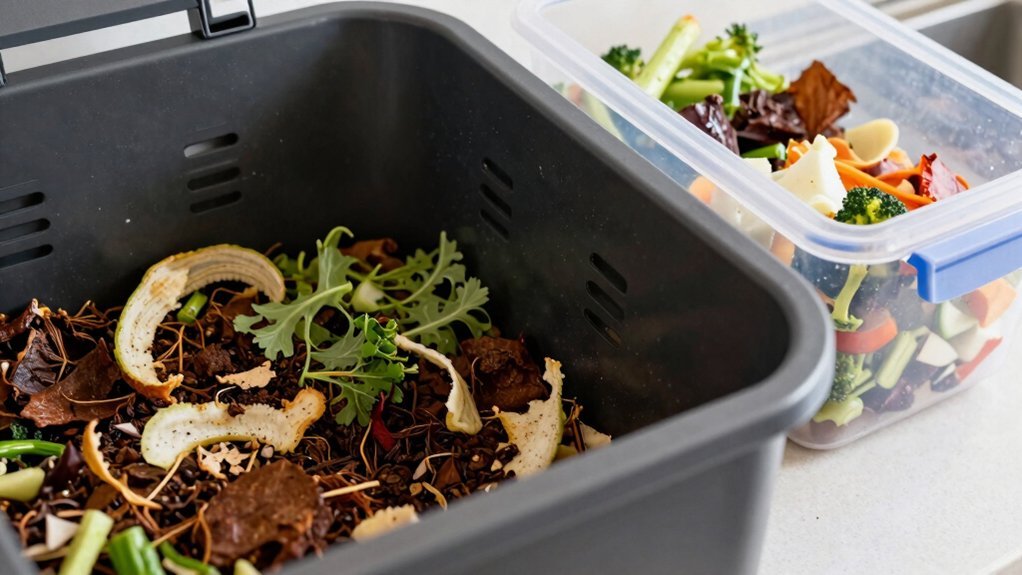
Why do your compost bins sometimes smell like rotten eggs? That odor signals hydrogen sulfide from anaerobic bacteria thriving in waterlogged, compacted material. To stop it, improve airflow. Open vents, add coarse browns, and turn the pile regularly to break up dense layers.
Keep moisture at a wrung‑out‑sponge level—no more than 65 %—by sprinkling straw, cardboard, or sawdust when you drop juicy scraps.
Before you even toss food waste into the bin, freeze it in a sealed container. Frozen scraps decompose slowly, so they release far fewer sulfur gases while you’re waiting for the next drop‑off.
Combine venting, turning, dry browns, and frozen storage, and you’ll keep the compost aerobic, dry, and odor‑free. Adding balanced C:N material helps maintain aerobic conditions and prevents ammonia buildup.
Frequently Asked Questions
How Long Does It Take for a Turned Pile to Stop Smelling?
You’ll usually notice the smell fade within a day or two, but strong egg‑like odors can take three to five days of regular turning and adding dry browns before they disappear.
Can I Use Kitchen Herbs to Control Compost Odor?
Yes, you you plant mint, rosemary, lavender, or thyme around the bin; their strong scents mask smells, while some herbs also deter pests, but you still need proper greens‑to‑browns balance and aeration.
What Temperature Range Prevents Sulfur Smells?
You should keep your compost between 131 °F and 149 °F (55–65 °C). At those temperatures the microbes stay aerobic, sulfur gases stay suppressed, and the pile stays hot enough to avoid rotten‑egg odors.
Do Different Bin Materials Affect Odor Control?
You’ll find that plastic, wood, metal, and fabric bins each influence odor control differently—plastic resists absorption, wood breathes, metal needs ventilation, and fabric maximizes airflow, all affecting sulfur smells.
Is a Compost Thermometer Necessary for Odor Management?
You don’t need a thermometer for basic odor control; just keep the pile loose, balanced, and well‑drained. It helps diagnose problems in large piles, but isn’t essential for everyday composting.
In Summary
By keeping a proper brown‑to‑green ratio, turning the pile regularly, and maintaining that “wrung‑out sponge” moisture level, you’ll let oxygen flow and microbes stay happy. Skip meat and dairy, add dry browns or biochar on top, and break up any clumps. With good ventilation and a quick freeze‑to‑kill step for sulfur‑rich scraps, the compost stays nutrient‑rich without the rotten‑egg stench.