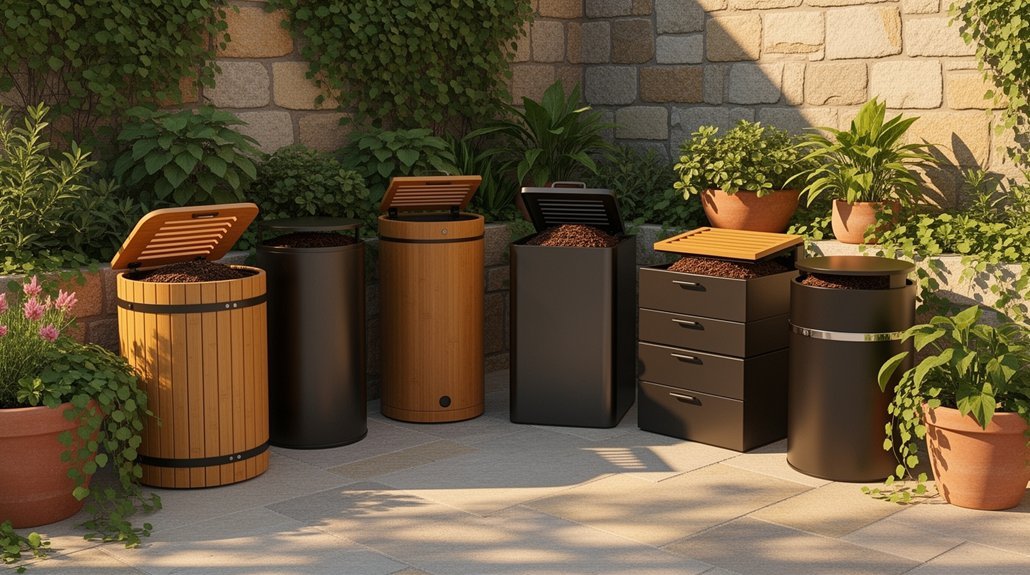
First, check your city’s compost ordinances and any permit or notification rules so you know whether a sealed bin, open pile, or enclosed system is allowed and what odor‑control standards apply. Next, choose a quiet, odor‑free method like a sealed worm bin or a bokashi fermenter; both keep the pile hidden, limit scent, and deter pests. Finally, set a regular weekly maintenance window—turn, aerate, and balance moisture during low‑traffic hours, and keep a log to show you’re staying compliant. Keep going and you’ll discover more details.
Understand Your City’s Compost Rules Before Picking a Bin
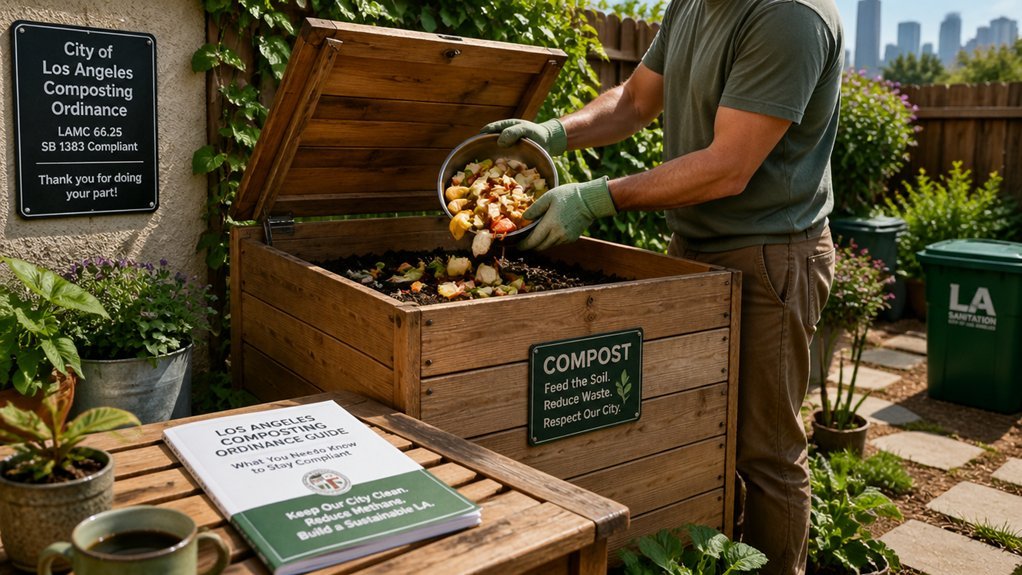
Ever wondered which rules actually govern your backyard compost? You should start by checking your city’s composting rules for yard waste. Those ordinances dictate whether you need a compost bin, an open pile vs enclosed system, and any permits and notifications required for regulatory compliance. Inspectors may interpret the code differently, and fines for non‑compliant piles can top hundreds of dollars per day. Focus on odor control and privacy—closed systems hide the pile and limit scent, reducing nuisance complaints. Verify if curbside or off‑site programs accept your material, which could make an on‑site bin unnecessary. Finally, choose a design that deters rodents and pests, keeping your setup legal and neighbor‑friendly. Odor control can help you maintain compliance by reducing smells that often trigger complaints.
Quiet Composting With Worm or Bokashi Bins
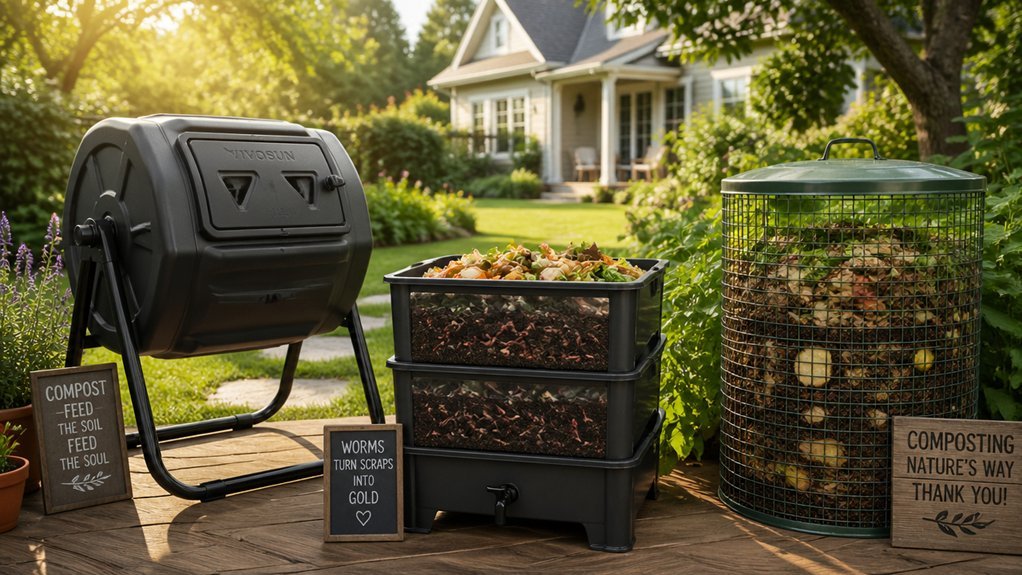
Looking for a truly quiet compost solution? You can achieve odor‑free, low‑noise decomposition by choosing worm bins or a bokashi system. Worm bins, often called vermicomposting units, use red wigglers in sealed containers with passive aeration, keeping pests out and smells down. Bokashi relies on lactic‑fermentation with inoculated bran, so you never need to turn the pile, eliminating mechanical noise. Both methods let you feed small amounts daily, which stabilizes temperature and prevents nuisance. Place the units away from windows and lot lines, use solid lids, and add odor traps for extra odor management. This passive, sealed approach delivers effective composting while respecting neighbors. Growth and maintenance cues echo established sustainable practices like vermicomposting and bokashi fermentation, both of which emphasize controlled environments and odor management passive aeration to reduce noise from turning.
Schedule Weekly Maintenance & Odor‑Control Steps to Satisfy Neighbors

How can you keep your compost quiet and neighbor‑friendly? Set a composting schedule that locks in a weekly maintenance window—say Saturday 9–11 am—to turn, aerate, and check moisture. Follow a turning schedule that keeps the pile aerobic, and practice moisture management so the carbon-to‑nitrogen ratio stays near 30‑35:1. Use sturdy, low‑cost containment options to limit airflow fluctuations and reduce noise from tools when working near neighbors budget-friendly containers. Cover fresh additions with carbon‑rich browns, and avoid adding wet scraps during early‑morning or late‑evening peaks. Record daily inputs, weather, and turning activity in a log; this shows proactive odor control if odor complaints arise. Add low‑profile odor mitigation measures like a privacy screen or windbreak, and share the plan with neighbors during your weekly update. These steps keep the pile healthy and the neighborhood happy.
Frequently Asked Questions
What 12 States Have Legalized Human Composting?
You’ve got twelve states allowing human composting: Washington, Colorado, Oregon, California, Utah, New York, Nevada, Texas, Arizona, New Jersey, Virginia, and Florida. Each has its own permitting process and regulatory oversight.
Can I Put Toilet Paper Rolls in My Compost?
Yes, you can compost toilet paper rolls—just shred or tear them, strip any plastic or adhesive, and keep them plain. They break down quickly, improve aeration, and won’t attract pests when properly prepared.
Do I Need a Permit for a Composting Toilet?
You’ll likely need a permit—check your city’s health department or building code. Most places treat composting toilets as on‑site wastewater, requiring approvals, inspections, and compliance with odor and setback regulations.
What Are Three Things You Shouldn’t Compost?
You shouldn’t compost dog waste, meat or dairy products, and any medical or human waste. These items attract pests, spread pathogens, and violate local regulations, risking fines and health hazards.
In Summary
By knowing your city’s rules, picking a low‑noise bin, and staying on top of maintenance, you can compost without disturbing anyone. Keep the bin sealed, turn the material regularly, and use odor‑control tricks like charcoal or baking soda. With a little effort, you’ll turn waste into garden gold while staying neighbor‑friendly and complaint‑free.