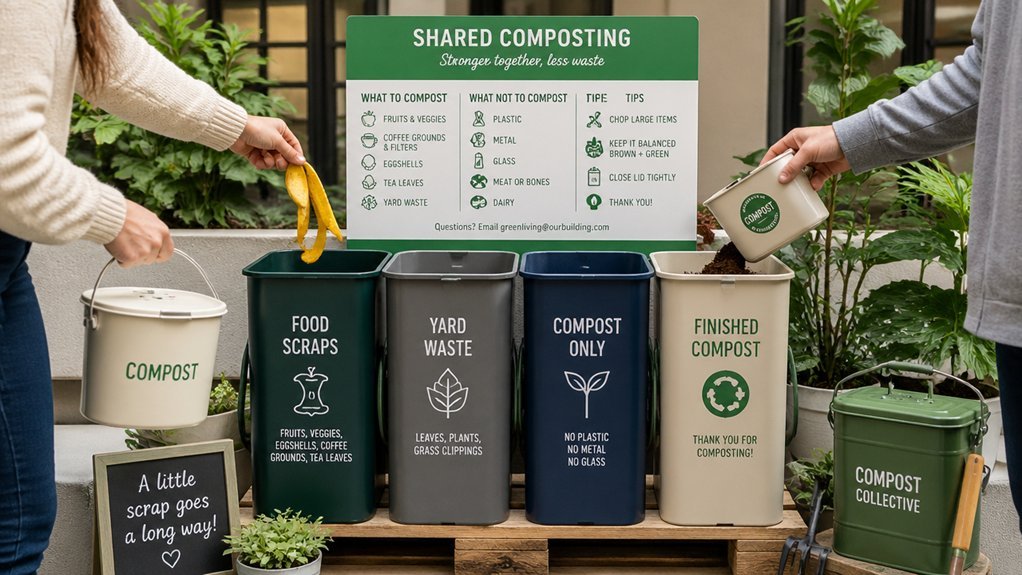
You’ll need a compost bin no farther than 25 feet from each trash container and a licensed hauler must service it weekly. Accept only food scraps, meat, dairy, coffee grounds, soiled paper, BPI‑certified items, and clean pizza‑box sections; keep plastics, glass, metals and non‑compostable packaging out. Keep the bin shaded, use a moisture‑absorbing liner, rinse pails after each use, and turn the compost weekly to prevent odors and pests. Provide bilingual signage, magnetic guides, and regular resident education, and set a Green Team to audit contamination and track participation. Keep reading to discover how to fine‑tune your program and boost resident engagement.
Learn Austin’s Composting Rules for Multi‑Unit Buildings
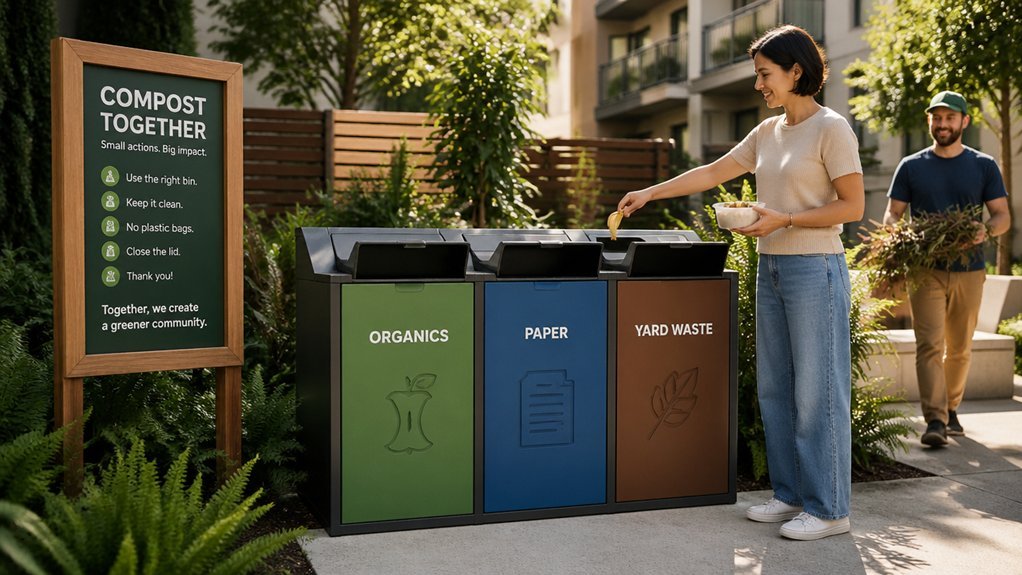
Ever wondered how to keep your apartment complex compliant while turning food waste into a resource? Austin composting rules demand that multifamily properties with five or more units provide convenient commercial composting access. You must place a compost collection container within 25 feet of every landfill trash bin, and a licensed hauler must service it at least weekly. Use bilingual signage to explain what goes in—food scraps, meat, dairy, pizza boxes, coffee filters, soiled paper—to drive contamination reduction. Property managers need to draft a recycling plan and submit it by February 1 each year; the enforcement timeline kicks in October 2025 for those without a plan or good-faith effort. Stay proactive, educate residents, and keep the system running smoothly. Magnetic guidance(69-inch Organic Waste Only chart) can help staff quickly sort materials at a glance to reduce contamination and improve sorting accuracy across shared spaces.
Select and Place Compost Bins Within 25 Feet of Trash Containers
How do you make composting as easy as tossing trash? In multi‑unit housing, follow Austin composting’s proximity requirement: place each compost container within 25 feet of the nearest trash containers. This short distance boosts resident access and cuts down on contamination by keeping organic waste next to regular waste. Group the bin with recycling in a centralized waste area so waste sorting stays intuitive for everyone. The licensed hauler can then grab both trash and compost during weekly collection without extra trips. If you have valet trash, extend the rule to valet recycling and composting, ensuring every floor meets the same standard. By meeting the requirement, you keep the system efficient, clean, and user‑friendly. Proximity guidelines support easier, more consistent waste management across all units.
Identify Compost‑Eligible Items (and What to Exclude) for Apartments

Placing compost bins close to trash makes them handy, but the next step is knowing what you can actually toss in them. In multi‑family housing, you can add food scraps—fruit peels, veggie trimmings, meat and seafood leftovers—plus coffee grounds and filters. Soiled paper, napkins, and BPI‑certified compostable products are safe, as are pizza boxes and cardboard that once held food; just tear off any clean sections. Avoid contaminants such as plastic bags, glass, metal, or any non‑compostable packaging; if you’re unsure, put it in landfill trash. Clear signs and education, preferably in several languages, help residents distinguish compostable items from waste, keeping the bin effective and the building greener. FSC-certified facilities and recyclable materials guidance can further support proper disposal practices for these programs.
Keep Your Bin Smell‑Free and Pest‑Free With Simple Practices
Keeping your compost bin odor‑free and pest‑free starts with a few easy habits. Place the outside bin in a shaded spot away from direct sun, then line its bottom with newspaper or a light dusting of baking soda for moisture absorption and odor prevention. Rinse your kitchen pail after each use and slip a liner—paper bag or BPI‑certified bag—inside to simplify cleaning and curb smells. Store food scraps in a covered container or fridge storage until collection day, which cuts down on smell and deters pests. Finally, practice weekly turning or aeration to keep the pile breathable and decomposition fast. A key factor is choosing coconut coir bedding or amendments with low salt content and neutral pH to maintain a healthy worm environment as part of long‑term bin maintenance coir bedding benefits.
Motivate Residents and Track Compost Success in Multi‑Unit Housing
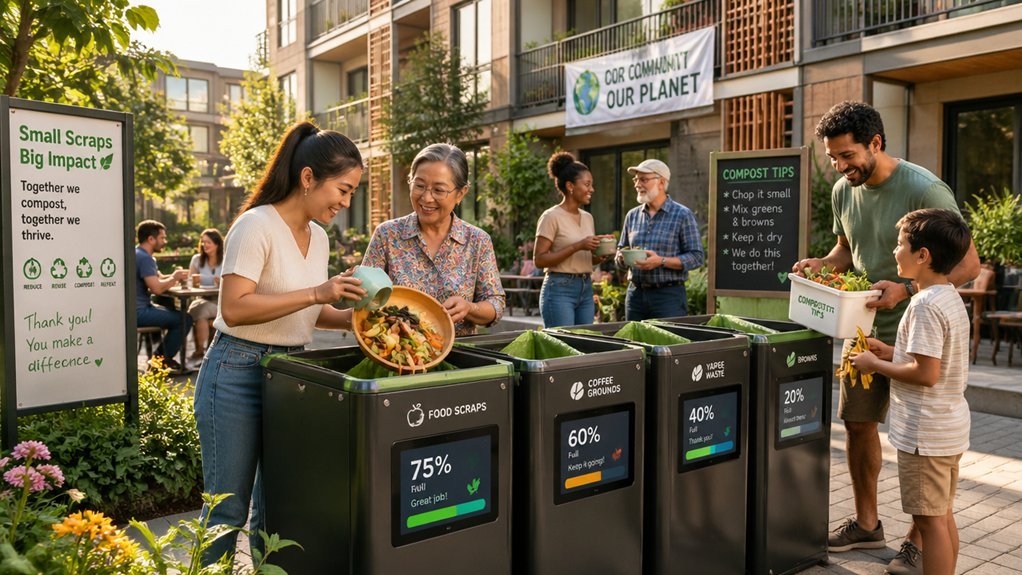
Ever wonder how a simple goal and clear data can turn your building’s compost program into a community habit? Set a 50 % resident engagement target and announce it with multilingual signage and education. Form a Green Team to run monthly checks, perform contamination audits, and post monthly weights that compare pounds of compost to baseline waste. Use tracking progress charts in newsletters and on the lobby board. Promote visibility of the 360° ventilation and underground placement features from the DIY guides as benchmarks for effective and odor-minimizing designs ventilation features. Celebrate milestones with incentives and recognition—public shout‑outs, small gift cards, or a “Compost Champion” badge. Keep videos, emails, and maps in the languages most residents speak, and update them regularly. This transparent loop fuels motivation, reduces contamination, and makes composting a proud, shared habit in multifamily housing.
Frequently Asked Questions
What Three Items Should Not Be Placed in a Compost Pile?
You shouldn’t toss meat, dairy, or oily foods into the compost, avoid adding plastic bags or non‑compostable wrappers, and keep glass, metal, or stone out, because they attract pests, cause odors, and damage equipment.
Do Potato Peelings in Compost Attract Rats?
No, potato peels alone won’t attract rats if you keep your bin sealed, aerated, and moisture‑balanced; just close lids tightly, maintain proper greens‑to‑browns ratios, and schedule regular collections.
What Are the 5 Mistakes That People Commonly Make When Composting With Worms?
You’re overfeeding, adding dairy or meat, letting the bin dry or stay soggy, sealing it without ventilation, and neglecting regular turning or harvesting castings—each slows worms and creates odors.
Can You Compost on an Apartment Balcony?
Yes, you can compost on a balcony if you use a compact, odor‑controlled bin, keep the greens‑to‑browns ratio near 1:1, and follow building rules about distance and weekly collection.
In Summary
By following Austin’s composting rules, you’ll keep your multi‑unit building clean, odor‑free, and environmentally friendly. Place bins within 25 feet of trash, stick to the approved item list, and use simple tricks to deter pests. Encourage neighbors, track progress, and watch your community’s waste shrink while your green impact grows. This easy routine makes sustainable living practical for everyone in the building.