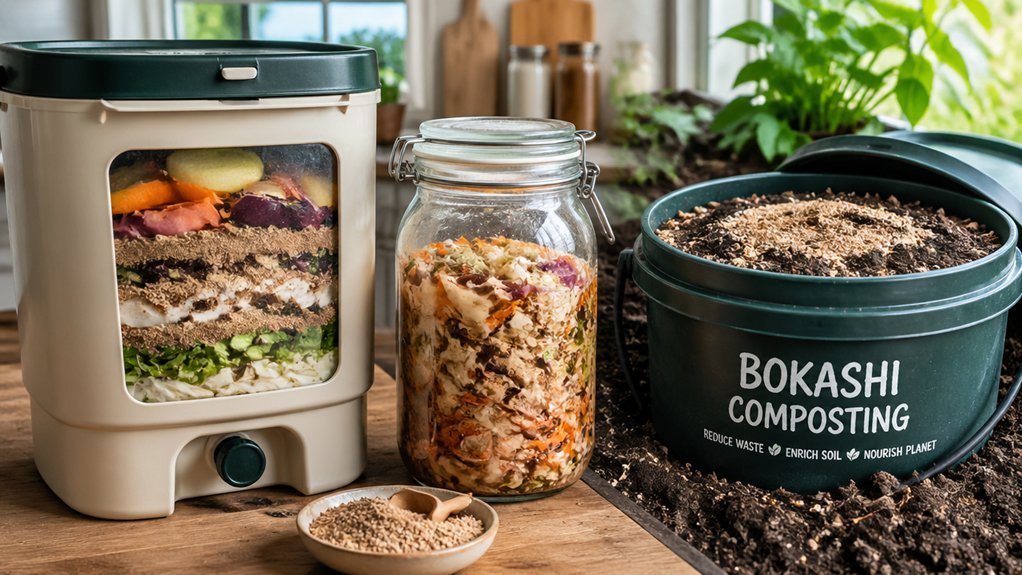
Pick a tight‑sealing bokashi bin with a charcoal filter or airtight lid, keep the interior damp like a wrung‑out sponge, and drain the bokashi tea daily. Use a bin that lists a compatible inoculant and offers easy replacement parts, then sprinkle bokashi bran on each layer and add dry waste or shredded newspaper to balance moisture. Treat the tea as a non‑potable fertilizer, dilute it per local regulations, and never pour it into storm drains—keep going for more details.
Pick a Legal Bokashi Composting Bin
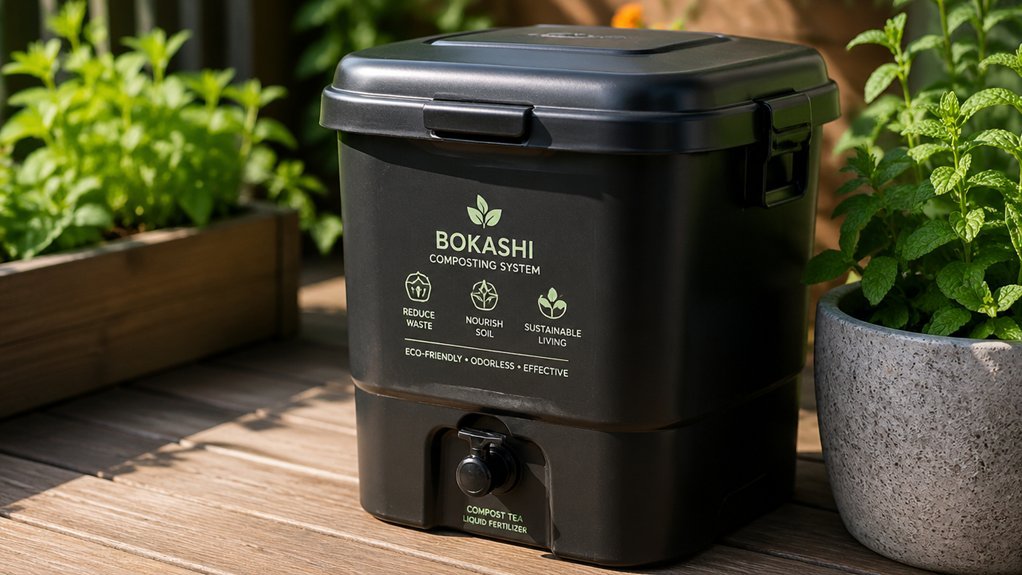
Choosing a legal bokashi bin starts with a tight‑sealing container that keeps oxygen out and odors down, so look for models with a built‑in drainage system to capture bokashi tea and prevent liquid buildup. A reputable brand should back the bokashi bin with a warranty and provide easy access to replacement parts, and consider a bin with an air‑tight lid and charcoal filter options to optimize odor control during indoor use odor‑control features. Verify the size matches your food‑waste volume—small for apartments, larger for households. Check that the product lists a compatible inoculant and includes clear maintenance instructions.
Control Moisture & Fermentation in Bokashi Composting
Managing moisture is key to a successful bokashi fermentation, so keep the bin’s interior just damp enough for the lactic‑acid microbes to thrive without pooling liquid. Aim for a substrate moisture level that feels like a wrung‑out sponge; add dry waste or extra bokashi bran when it gets soggy, and always drain liquid (bokashi tea) before it accumulates. Regularly check for the tart, bready scent that signals proper fermentation and watch for any odor spikes, which mean you need more moisture balance.
| Action | Result |
|---|---|
| Sprinkle bokashi bran on each layer | Enhances anaerobic fermentation |
| Drain liquid daily | Prevents odor mitigation |
| Add dry waste or shredded newspaper | Maintains moisture balance |
Manage Bokashi Composting Tea Legally

After you’ve nailed the moisture balance, the next step is handling the bokashi tea without tripping local regulations. First, treat bokashi tea as a non‑potable liquid and check fertilizer regulations in your area. Most jurisdictions require you to follow wastewater rules and dilution requirements before you apply it to soil. Stick to disposal guidelines that keep the tea out of storm drains and waterways; this protects waterway health and ensures environmental compliance. If you plan to sell the product, prepare labeling and safety data that meet local composting laws and agricultural product standards. Always store the tea in a sealed container, keep it away from potable water sources, and document each application to stay on the right side of the law. Wastewater rules ensure you stay aligned with local discharge guidelines.
Frequently Asked Questions
What Is the Main Problem With Bokashi Composting?
You’ll find the main problem is keeping the bin truly anaerobic and sealed; any air leaks, excess moisture, or moldy inputs disrupt fermentation, cause odors, and stall the bokashi process.
How Do the Amish Compost?
You compost by stacking yard waste, kitchen scraps, and manure in wooden bins or windrows, adding straw or leaves for carbon, turning the pile every few weeks, and keeping it moist and aerated.
What Is the Japanese Bokashi Technique?
You’ll ferment food scraps in a sealed bucket, layering them with bokashi bran, pressing out air, and sealing the lid for two weeks. The lactic‑acid microbes turn waste into nutrient‑rich pre‑compost and liquid tea.
Can Coffee Grounds Go in Bokashi?
Yes, you can add coffee grounds to your bokashi bin—just sprinkle them in moderation, layer with bran, and keep an eye on moisture to avoid excess acidity or sogginess.
In Summary
Now you’ve got the right bin, balanced moisture, and a legal way to handle the tea, you can turn kitchen scraps into nutrient‑rich soil without breaking any rules. Keep the process simple, stay compliant, and enjoy faster, cleaner composting that benefits both your garden and the environment.