
You’ll meet SB 1383 by using a sealed, paper‑lined countertop pail, emptying it weekly into your city’s green bin, and keeping a 1:3 greens‑to‑browns mix with dry leaves or shredded paper to balance moisture. Cover each addition with brown material, turn the pile every few days, and rinse the pail regularly to prevent odors and pests. Avoid meat, dairy, and oily foods, and line the bin with BPI‑certified bags. Stick to these steps, and you’ll discover even more tricks for a clean, compliant compost system.
Why SB 1383 Matters for Legal Composting
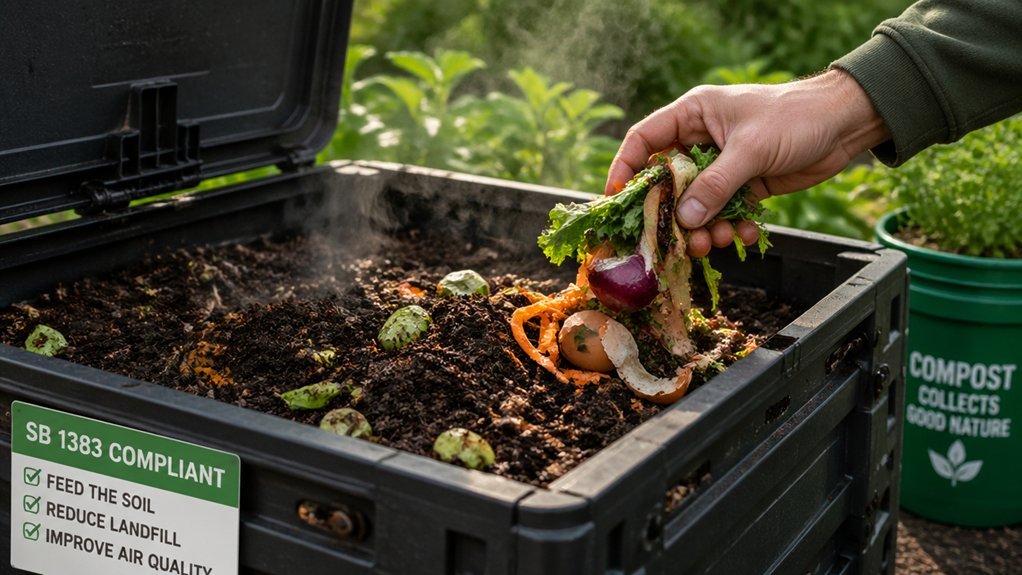
Why does SB 1383 matter for legal composting? It forces you to divert food scraps and yard waste from landfills, cutting methane that fuels climate change. Starting January 1, 2022, the law makes proper organics disposal a legal duty, so you must follow the mandated composting program. Compliance isn’t just paperwork; it translates into tangible benefits. The diverted material becomes nutrient‑rich compost that boosts soil health, improves water retention, and slashes reliance on synthetic fertilizers. Cities back you up with curbside green bins or local drop‑off sites, making it easy to stay compliant. By meeting SB 1383, you help lower greenhouse gases, support sustainable agriculture, and avoid fines for illegal waste disposal. Compliance benefits include streamlined collection schedules and clearer guidance for proper disposal, helping households maintain consistent practices year‑round.
Pick a Legal Composting Container
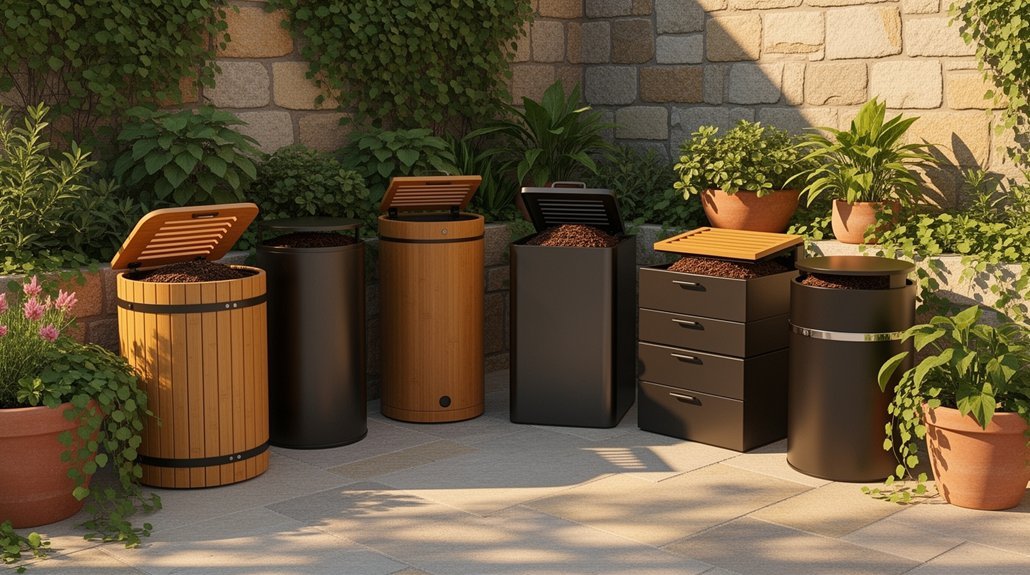
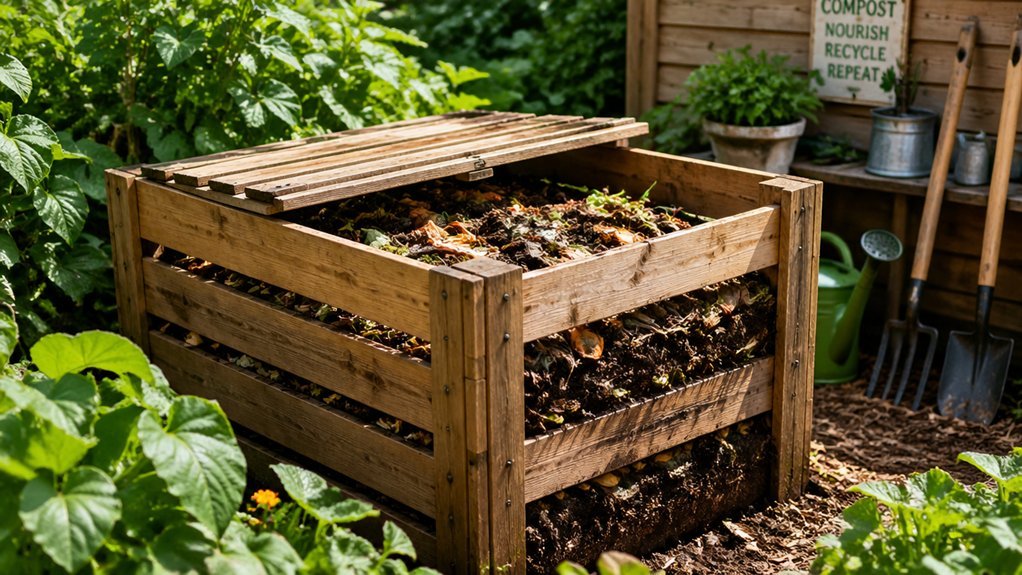
Which container will keep your compost odor‑free and pest‑proof while staying legal? Choose an enclosed compost bin like a tumbler, a pallet‑bin system lined with hardware cloth, or an in‑ground trench with a lid. Make sure it’s easy to access for weekly feeding and can be emptied into your green bin without hassle. Line the interior with paper or BPI‑certified compostable bags to trap smells; avoid regular plastic that municipal carts reject. If you dig a trench, keep it deep and narrow, covering scraps with browns each time. Position the bin under shelter, away from rain and wildlife, and schedule regular turning to keep aerobic decomposition humming. A 1‑gal to 1.7‑gal crock option may align with modest weekly scraps for households seeking compact solutions, but be mindful of odor control and filter maintenance to stay compliant with local guidelines. Odor-control considerations and reliable lids further support legal, hygienic operation.
Line and Fill Your Countertop Pail Correctly
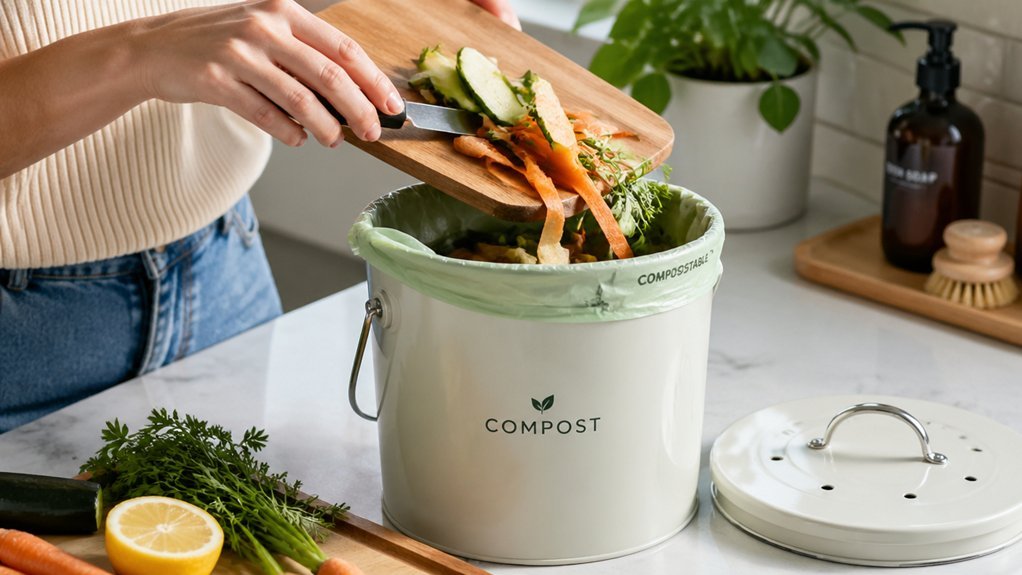
After picking a sealed, pest‑proof bin, the next step is to line and fill your countertop pail correctly. Choose a 2‑3‑gallon container that empties easily—think a large yogurt tub or Tupperware with a lid. Slip a sheet of paper or a BPI‑certified compostable bag inside, making sure the bag fits snugly to prevent leaks. Drop food scraps into the lined pail, but don’t let them sit for days; transfer them to the outdoor green bin before odors build. Keep compost bin cleanliness top‑of‑mind by washing the container weekly with soap or in the dishwasher. This routine cuts smells, stops pests, and keeps your kitchen fresh while you compost legally, and using a mountable, odor‑blocking bin can help maintain a cleaner setup in compact spaces odor control.
Empty the Pail Into the City Green Bin
You should place the pail near the curbside green bin before the collection day, checking your city’s schedule for exact pickup times. Emptying it once a week, preferably in the morning, keeps odors low and prevents pests. Use a newspaper liner or paper bag to contain scraps and seal the bin tightly until Recology arrives. Regularly rinsing or draining the pail between uses helps maintain a cleaner bin environment and supports sustainable waste practices renewable agriculture.
Ping Location Tips
Where should you dump the compost pail to keep odors at bay? Aim for the city green bin placed in a shaded, well‑ventilated spot away from doors and windows.
Position the bin near a wall or fence to block wind that could scatter smells.
Keep the lid tightly closed after each drop‑off, and make sure the bin’s lid seals properly to trap composting bin odours.
If the bin sits on a concrete slab, place a thin rubber mat underneath to reduce vibrations that might loosen the lid.
Check the bin’s location weekly; move it if you notice animal activity or water pooling. 360° rotation
Frequency and Timing Guidance
Any weekly dump of the kitchen pail into the city’s green bin keeps odors low and deters pests.
Aim for at least one empty per week; if the pail overfits or holds liquid, drain it first to avoid sloshing smells.
Line the pail with paper or a compostable bag, and freeze particularly smelly scraps until collection day for extra control.
Coordinate with your city’s Recology or local green‑bin system so only accepted materials go in, preventing rejected bags from cluttering the compost bin.
After each emptying, rinse and dry the pail thoroughly to stop microbial growth that could attract pests.
Consistent green‑bin management and timely drainage keep your composting legal, odor‑free, and pest‑free. Compostability standards
Legal‑Compost Odor‑Prevention Tips
You should line your compost pail with paper, then rinse it regularly and empty it often to keep smells at bay. This simple habit creates a barrier that absorbs liquid and prevents odor‑causing buildup. By staying consistent, you’ll keep your compost fresh and your home odor‑free. Regular cleaning with dishwasher-safe tools and choosing durable, easy‑to‑maintain tampers can further support long‑term odor control, especially when using wide‑mouth and regular‑mouth jars for related fermentation tasks jar compatibility and easy cleaning.
Line Pail With Paper
Ever wondered how a simple paper liner can keep your compost pail smelling fresh? You’ll line the pail with newspaper or paper bags, which soak up moisture and trap odors before they escape. Choose plain, uncoated paper—no glossy or waxed types—so the material breaks down quickly in the municipal system. Avoid compostable or regular plastic bags; they’re not accepted in residential carts and can trap smells. After each use, toss the soiled liner into the bin and replace it with a fresh sheet. If a lingering scent persists, freeze spoiled foods until collection day to suppress odors temporarily.
| Material | Benefits | Tips |
|---|---|---|
| Newspaper | High absorbency, cheap | Tear into strips for even coverage |
| Paper bags | Strong, easy to remove | Use grocery‑store bags, not plastic |
| Uncoated paper | Biodegradable, no chemicals | Avoid glossy finishes |
| Cardboard pieces | Adds structure, absorbs | Shred before lining |
Regularly Empty and Rinse
Keeping the paper liner clean is only half the battle; now you need to empty and rinse the pail regularly. Schedule a weekly composting routine that aligns with your collection day, and stick to it. When you empty the pail, scrape out any remaining bits, then wash the container with warm water and a mild soap. Rinse thoroughly to avoid soap residue, which can attract pests. If you notice a smell, freeze spoiled foods until the next pick‑up to keep odors from seeping into the bin. Cover fresh greens with a layer of browns, and use newspaper or paper bags instead of plastic. Consistent cleaning and proper containment keep your compost odor‑free and legally compliant.
Legal‑Compost Pest‑Control Practices
A solid pest‑control routine starts with regular emptying of the compost pail and keeping the green bin tightly closed. You boost compost bin cleanliness by lining the system with hardware cloth or using a tumbler, then covering fresh scraps with two to three large scoops of brown material. Remove bird feeders from March to December, secure trash, and avoid sweet‑smelling fruit between March and July to deter bears and wildlife. If dogs sniff the pile, switch to enclosed bins or pallets lined with hardware cloth and monitor neighbor piles for spillover. Should a bear appear, halt home composting, move scraps to a drop‑off site, and consider an electric or bait fence per wildlife authority guidance.
| Action | Tool | Timing |
|---|---|---|
| Empty pail | Hands / shovel | Weekly |
| Line bin | Hardware cloth | At setup |
| Cover scraps | Brown material | Each addition |
Allowed Compost Materials: Greens, Browns, Yard Waste
You can start by mixing kitchen scraps like fruit peels and coffee grounds with dry leaves to balance nitrogen and carbon.
Adding shredded paper or cardboard as extra browns helps control odors and improves aeration.
Keep the ratio roughly one part greens to three parts browns, and you’ll keep pests at bay while your compost breaks down efficiently.
Greens: Kitchen Scraps
What’s the best way to turn your kitchen scraps into nutrient‑rich compost? Gather fruit and vegetable leftovers, coffee grounds, tea bags, and fresh grass clippings—these nitrogen‑rich greens jump‑start composting. Chop larger pieces so they break down faster, and mix them with carbon‑heavy browns to keep the pile balanced. Aim for roughly one part greens to three parts browns; this ratio controls moisture and odor. Keep the pile as damp as a wrung‑out sponge, then turn it every few days to introduce air and speed decomposition. Add a handful of yard waste like small plant clippings for extra bulk, but avoid overloading with greens, which can make the mixture soggy and smelly. Regular turning and proper moisture will give you a healthy, odor‑free compost heap.
Browns: Dry Leaves
Ever wonder why dry leaves make such a powerful brown in your compost? You’ll find that browns, especially dry leaves, supply the carbon you need to balance kitchen scraps. Keep them dry, then sprinkle a generous layer over your greens. Aim for a 1–3‑to‑1 ratio: one part greens to three parts browns. This mix creates air pockets, improves aeration, and prevents compaction that fuels foul smells. When you layer, think lasagna—alternating greens and browns to keep moisture in check. Dry leaves also deter pests and help control odor, as long as you avoid plastics or metals. By maintaining proper browns, you’ll keep your pile healthy, odor‑free, and legally compliant.
Common Smell‑Causing Mistakes & Fixes
Why do some compost piles reek while others stay fresh? You’re likely adding meat, bones, fish, shellfish, fats, grease, or too much dairy—these heavy odor sources drive fermentation and attract pests, creating composting odors. To fix it, stop feeding those items and stick to kitchen scraps and coffee grounds. Aerate the pile regularly by turning or mixing; this breaks up compacted zones, introduces oxygen, and curbs stink. Layer browns—dry leaves, straw, wood shavings—over greens to filter odors and absorb excess moisture. Empty and clean the container weekly, rinsing with soap and water to prevent lingering smells. If a whiff persists, cover exposed scraps with several inches of browns and consider an enclosed bin or tumbler to limit scent diffusion.
Troubleshooting Stink and Pests in Small Spaces
Ever notice the sour whiff and tiny critters popping up in a tiny kitchen bin? You can fix it with smart compost bin odor management and pest control. First, keep meat, bones, fish, fats, and heavy dairy out—those attract flies and cause rancid smells. Second, turn the pile daily and bury fresh scraps under a few inches of dry leaves or wood shavings; this aerates and masks odors. Third, line the bin with hardware cloth or use a tumbler to block animals, and regularly stir to speed decomposition. Fourth, if flies appear, cover exposed bits with browns, store scraps in the fridge, and avoid sweet fruit during high‑risk months. These steps keep your small‑space compost fresh and pest‑free.
Harvest Finished Compost and Reduce Your Carbon Footprint
Harvesting your finished compost is the final step that turns kitchen scraps into a soil‑boosting, carbon‑locking amendment, and it’s easier than you think. When the pile stops heating, smells earthy, and looks dark, crumbly, and mulch‑like, you’ve reached maturity. Scoop the humus‑like material into a bin or bag, then spread it thinly over garden beds, lawns, or potted plants. This adds organic matter, improves water retention, and boosts nutrient availability, cutting your reliance on synthetic fertilizers.
Frequently Asked Questions
Can You Compost Without Smell?
Yes, you can keep compost odor‑free by aerating regularly, layering dry browns, burying fresh scraps, avoiding meat and dairy, and maintaining a moist‑but‑not‑soggy texture with a tight cover.
How Do the Amish Make Compost?
You’ll see the Amish layer greens and browns in shallow pits, bury kitchen scraps, cover with straw or leaves, turn only when needed, and let natural microbes and worms do the rest.
Do Potato Peelings in Compost Attract Rats?
You won’t attract rats just by adding potato peels if you balance them with browns, keep the pile moist, turn it regularly, and cover scraps. Proper management prevents odors that draw rodents.
Can I Put Toilet Paper Rolls in My Compost?
Yes, you can add toilet‑paper rolls to your compost as long as they’re free of plastic cores, ink, or glitter. Shred them, mix with browns, keep moisture balanced, and follow local guidelines.
In Summary
By mastering SB 1383 rules, picking the right container, and sealing each layer properly, you’ll keep your countertop compost odor‑free and pest‑free. Stick to approved greens, browns, and yard waste, and follow the odor‑prevention tips to avoid common mistakes. When the pail’s full, transfer it to the city green bin, then reap the rewards of finished compost while shrinking your carbon footprint.