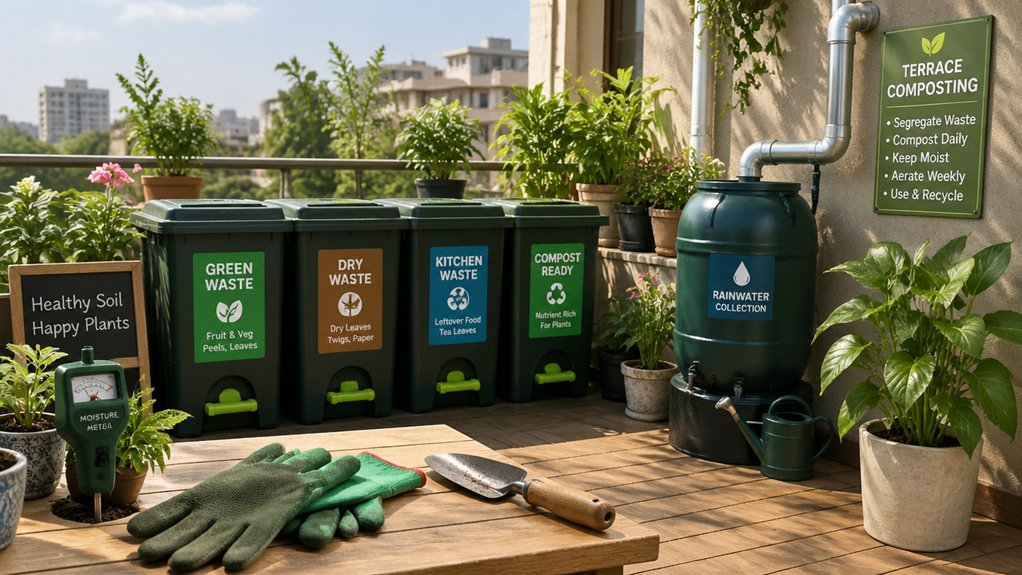
First, check that local zoning permits terrace composting and that your building’s bylaws explicitly allow on‑site bins. Then determine whether a municipal or county permit is required and, if so, submit the proper application with site plans and pest‑control measures. Register with the state environmental agency if it’s mandated, and design a fire‑safe, odor‑controlled bin that meets code. Install secondary containment to keep runoff out of storm‑water drains, post clear signage with prohibited items and emergency contacts, conduct regular self‑inspections with detailed records, and set up a grievance‑resolution process for neighbors. Keep reading to discover the remaining steps.
Identify Terrace Composting Activities Allowed by Local Zoning
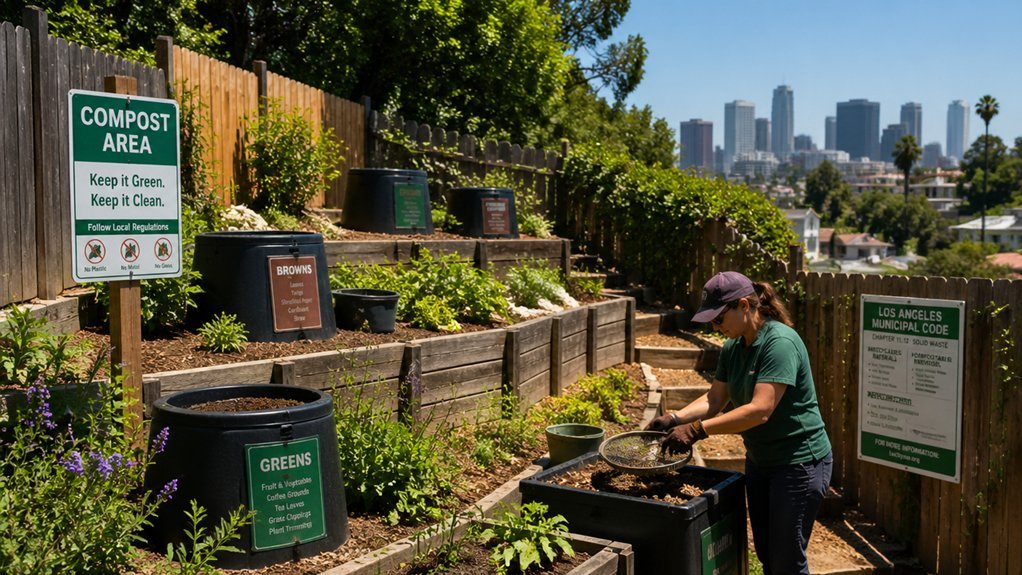
If your city’s zoning code classifies terrace composting as an accessory use, you can usually proceed once you secure the required land‑use or accessory‑use permit. Local zoning determines which activities you may conduct on a balcony or roof terrace. Typically, you’re allowed to collect kitchen scraps, maintain a small, sealed bin, and turn the material into nutrient‑rich soil. Zoning ordinances often restrict you to residential districts or specific urban‑agriculture overlays, and they may demand a Special Exception or Conditional Use Permit for larger setups. You must ensure proper containment—using rodent‑proof containers with openings no larger than ¼ inch—and careful siting away from property lines, windows, and neighbor dwellings. Planning staff will review these details before approving the permit. A compact, airtight design helps with odor control and aligns with small-space operation guidelines odor-control features.
Verify That Your Building’s Bylaws Permit On‑Site Terrace Composting
After the zoning confirmation, confirm that the building bylaws explicitly permit on-site terrace composting and identify any related permit requirements. Verify that the bylaws address nuisance restrictions such as odor, pests, or noise and confirm that the composting method is exempt from those limits. Document the exact passage that authorizes the activity, including permitted feedstocks, bin types, and enclosure standards. If the bylaws are silent or ambiguous, request an amendment or clarification before you install any containers, ensuring compliance and avoiding future disputes. This process should align with the clarified on-site terrace composting permissions and any applicable zoning approvals.
Determine If a Municipal or County Permit Is Required for Terrace Composting
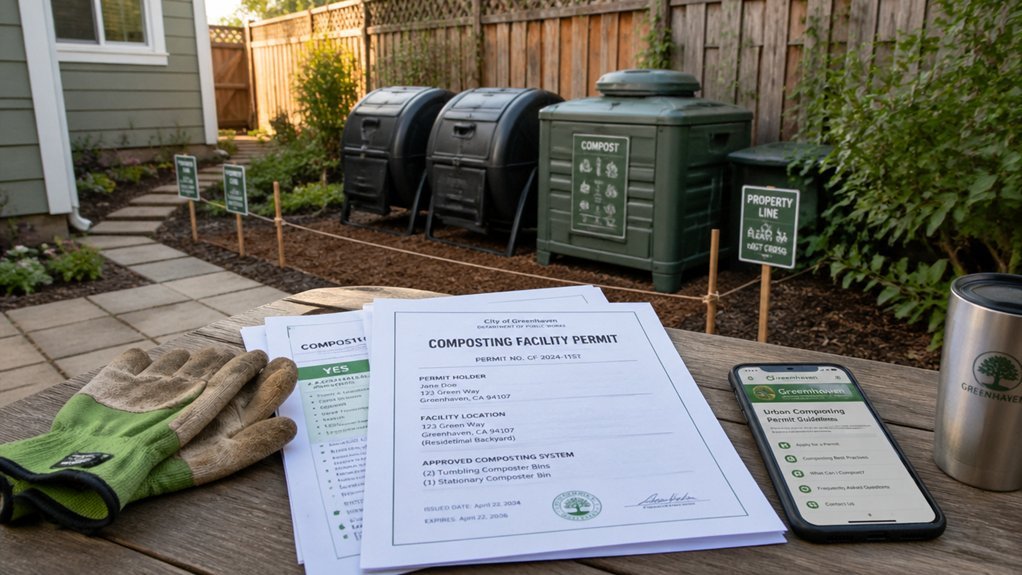
You’ll need to identify which agency—city planning, county health, or environmental services—has authority over waste‑management activities on your terrace.
Check the jurisdictional thresholds to see if your project’s size, zoning classification, or intended use triggers a permit requirement.
Then gather the necessary application documentation, such as site plans, setback calculations, and pest‑control measures, before you submit air circulation tools for consideration.
Permit Authority
Because permit authority for terrace composting depends on local rules, you’ll need to check whether your city or county requires a specific permit. Start by visiting the municipal planning office’s website; look for local zoning guidelines that mention CUPs or special exceptions. Those documents often outline when a permit is needed and which regulatory authority oversees it. If the zoning department flags your project, contact the environmental health division to confirm whether a separate environmental health permit applies.
Some counties issue a single permit that covers both zoning and waste management, while others separate them. Keep records of all communications, and note any hearing dates or public comment periods, so you stay compliant throughout the approval process. A careful review should also consider how activated carbon filters for odor control might interplay with indoor air quality standards in municipal codes. odor control
Jurisdictional Thresholds
Permit authority tells you who to contact; the next step is figuring out whether your terrace composting falls under a municipal or county jurisdiction. First, check local waste‑management definitions. If your setup resembles a Class I or II facility, Colorado demands a certificate of designation, while California’s Title 14 may require a CalRecycle permit. Those thresholds trigger permit requirements and often require zoning approvals such as a conditional use permit or variance. In Alaska, a beneficial‑use approval or department authorization is mandatory before any non‑traditional composting begins. Compare your city’s zoning map with county regulations; many residential zones prohibit waste‑management activities without a special permit. By confirming which regulatory thresholds apply, you secure terrace composting legality and avoid costly compliance gaps. Important regulation may further shape whether a permit is required or if a waiver is possible, depending on local definitions and siting rules.
Application Documentation
If your terrace composting project sits within a city or county that regulates waste‑management activities, you’ll need to gather the specific application documents that the local authority requires before any state permit can be pursued. Start by checking permit requirements for zoning approval, then prepare a design and site plan that meets local approvals. Include a site‑layout sketch, waste‑handling description, and any required public‑works coordination forms. Verify whether a conditional use permit or variance is needed, and confirm that your submission satisfies regulatory compliance standards. Ventilation guidance Ensure that you select a kit with a powerful air pump rated at least 714 GPH to maintain proper aeration and odor control in limited spaces.
Register the Terrace Composting System With the State Environmental Agency (If Required)
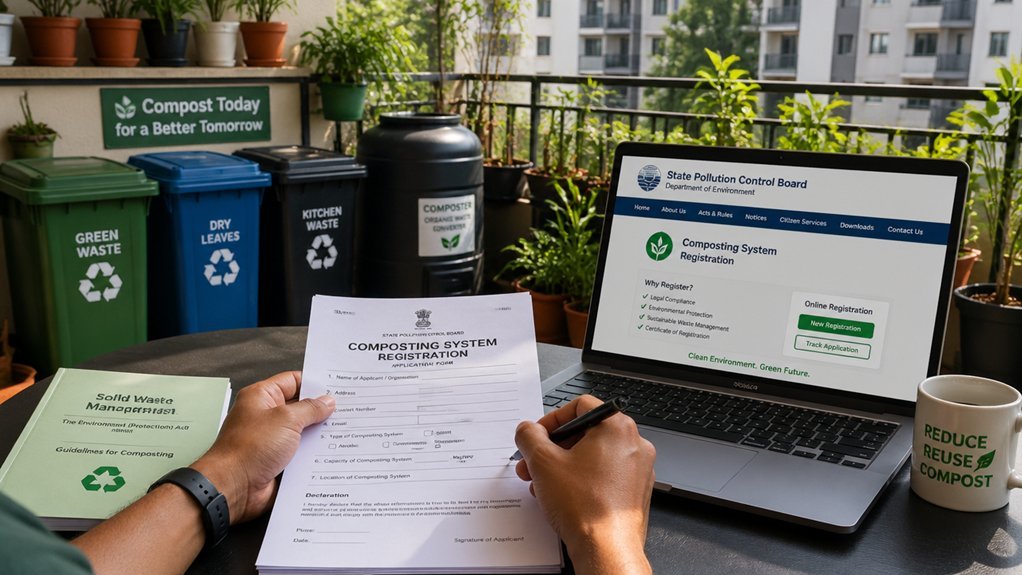
When your terrace composting system falls under state solid‑waste rules, you’ll need to check whether registration with the environmental agency is required. First, identify if your state—like Alaska, California, or Colorado—has permit requirements for small‑scale composting. In Alaska, rule 18 AAC 60.007 mandates department approval before beneficial use of materials, effectively a registering step. California’s Title 14, § 17854 outlines a formal notification or permit process for composting facilities. Colorado distinguishes between exempt and permit‑required classes, so you must verify which category your terrace composting fits. Gather the necessary forms, submit them to the state environmental agency, and retain proof of compliance. Failure to register when required can trigger fines, shutdown orders, or loss of eligibility for waste‑reduction incentives. For many urban terrace setups, proactive registration can simplify ongoing compliance and make future expansion smoother state regulation.
Design a Fire‑Safe, Odor‑Controlled Compost Bin That Meets Building‑Code Standards
After confirming whether your terrace composting system needs state registration, the next step is to build a bin that’s both fire‑safe and odor‑controlled while complying with building codes. Choose a solid, non‑combustible frame—metal or heavy‑duty polymer—and line the bottom with a fine mesh screen to block heat transfer and pests. Seal the lid with a tight‑fitting, rodent‑proof gasket and install a carbon‑filter vent for odor control. Keep the bin at least the code‑specified distance from walls, ceilings, and ignition sources, and provide ventilation openings no larger than ¼ inch.
Add an interior divider and a staged turning mechanism to maintain thermophilic conditions and prevent hotspots. This compost bin design meets fire safety, odor control, and building‑code standards for terrace composting.
Create a Waste‑Segregation Plan With Moisture and Temperature Limits for Terrace Composting
How do you keep your terrace compost healthy, odor‑free, and compliant? Start with a waste‑segregation plan that separates green, nitrogen‑rich scraps from brown, carbon‑rich material, aiming for a 2–3:1 brown‑to‑green volume ratio. Apply moisture management by checking that the mix feels like a wrung‑out sponge; add water or dry leaves to stay within that range, preventing soggy pockets that trigger odor control issues. Implement temperature monitoring: record the pile’s heat rise during the thermophilic stage, ensuring it reaches pathogen‑killing levels, then track cooling as it cures. Use rodent‑resistant bins with ≤¼‑inch openings and screen‑lined bottoms, turn the compost regularly, and assign clear responsibilities to residents and building staff for ongoing compliance.
Install Secondary Containment to Keep Runoff Out of Storm‑Water Drains
If you don’t install a reliable secondary containment system, runoff from your terrace compost can slip into storm‑water drains and pollute local waterways.
Choose an impermeable liner that can hold the entire volume of a worst‑case spill, including rain, and ensure it’s non‑reactive with leachate.
Build sturdy walls around the compost bins, seal all seams, and inspect them weekly for cracks or erosion.
Document any breach and repair it immediately to keep storm‑water runoff out of the municipal system.
Develop a spill response plan that outlines on‑site cleanup steps, reporting procedures, and proper disposal of contaminated water.
Post Clear Signage That Lists Prohibited Items and Emergency Contacts for Terrace Composting
Ever wondered why clear signage is essential for terrace composting? You need bold, weather‑proof Signage that lists prohibited items—meat, dairy, oils/fats, bones, litter, diseased plant material—so every resident knows what not to drop into the bin. Include emergency contacts: a phone number and email for the building manager or local environmental health office, ready for spills, odors, or vermin issues. Follow the regulatory guidance from state solid‑waste rules to ensure the list matches permitted feedstocks and banned materials. Position the sign where the collection area is visible from a distance, and keep it legible for both residents and maintenance staff. Update the sign promptly whenever policies or fines change, protecting compliance and avoiding penalties.
Conduct Regular Self‑Inspections and Keep Records to Satisfy State Reporting Requirements
Regularly conducting self‑inspections and keeping meticulous records is essential for meeting state reporting requirements and demonstrating that your terrace composting operation stays within legal limits. You should document odor, vector attraction, moisture, aeration, and bin integrity during each self‑inspection, then log feedstock types, quantities, processing dates, turning schedules, and curing progress for recordkeeping. Incident logs must capture spills, leaks, or runoff, plus corrective actions and timelines, to prove regulatory compliance. Store inspection checklists and remediation notes in a centralized system so state reporting can be compiled quickly for audits. Align inspection frequency with permit conditions, and keep all documentation readily available to satisfy water, solid‑waste, and odor and vector management regulations without delay.
Set Up a Grievance‑Resolution Process for Neighbors and Residents About Terrace Composting
Keeping detailed inspection logs is only half the battle; you also need a clear, resident‑focused grievance‑resolution process to address any complaints that arise from terrace composting. First, post a contact person’s name and phone, and a multilingual form that meets accessibility standards. Then, set a timeline: acknowledge within five business days, resolve within twenty. Keep written records at each stage.
- Intake – receive complaints via form, email, or phone.
- Informal mediation – arrange a neighbor communications meeting to discuss odor control and bin containment.
- Formal investigation – document findings, check feedstock compliance, and note any violations.
- Escalation – involve the property manager or housing authority if needed, and issue a final written resolution summary.
Regular updates and clear neighbor communications keep the process transparent and trustworthy.
Frequently Asked Questions
What Are the Rules of Composting?
You must keep a 2‑3 : 1 brown‑to‑green ratio, maintain sponge‑like moisture, turn regularly for aeration, use a sealed bin to control odor, and avoid meat, dairy, or diseased plants.
What Are the Key Elements for Successful Composting?
You need balanced feedstock (2‑3 brown to 1 green), a rodent‑proof bin, regular turning, moisture like a wrung‑out sponge, odor‑control placement, and clear signage to keep contaminants out.
What Three Items Should Not Be Placed in a Compost Pile?
You should keep meat, dairy, and oily foods out of the compost pile; also avoid cat litter or dog feces, and never add treated wood or pressure‑treated yard waste, since they cause odors, pests, and chemical contamination.
What States Have Mandatory Composting?
You’ll find mandatory composting rules in California, Alaska, Arkansas, Arizona, and Colorado; each state enforces specific permits, notifications, or approvals before you can operate a terrace compost system.
In Summary
By following these steps, you’ll stay compliant, keep your terrace compost safe and odor‑free, and avoid costly fines or neighbor complaints. Stay on top of permits, inspections, and signage, and you’ll enjoy a thriving, eco‑friendly garden that meets every local rule.