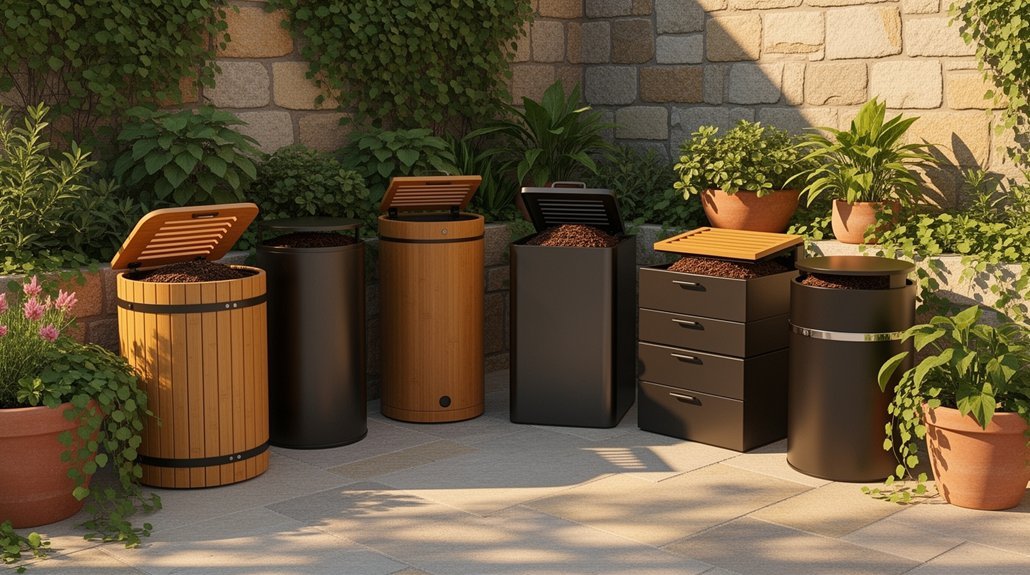
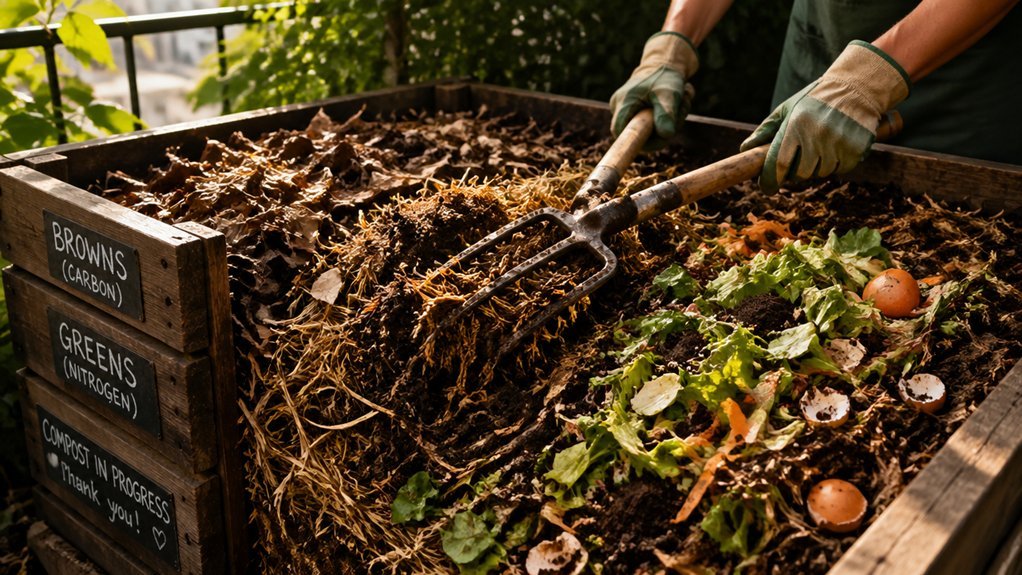
Aim for a 25:1–30:1 carbon‑to‑nitrogen ratio in your urban bin. Mix roughly two‑to‑three parts dry browns (cardboard, shredded leaves, straw) to one part greens (coffee grounds, kitchen scraps) by volume. Keep moisture at 50‑60 %—the squeeze test should feel like a damp sponge. Turn the pile every few days to supply oxygen and maintain thermophilic heat. If it smells sour or gets soggy, add more browns; if it’s cool and sluggish, add greens. Following these tweaks will guide you toward a thriving, odor‑free compost that’s ready for the garden.
Why a 25:1 C:N Ratio Matters for Urban Composters
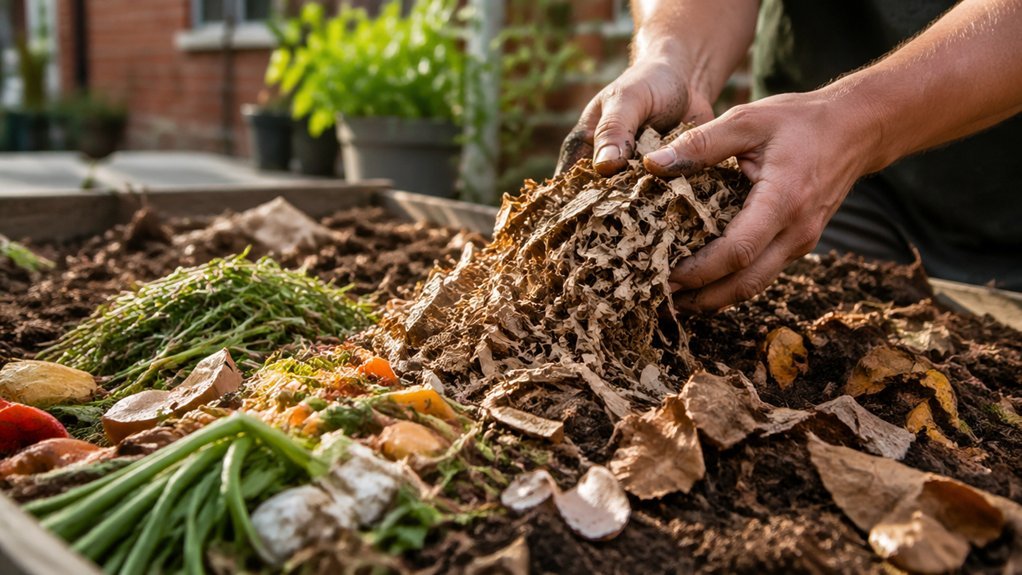
Because a 25:1 carbon‑to‑nitrogen ratio fuels thermophilic microbes, your urban compost heats up quickly to 150 °F or more, accelerating breakdown and keeping the pile alive. That sweet spot gives microbes the energy they need to chew through organic matter fast, while still preserving moisture and airflow. Using activated charcoal filters can help manage odors in compost bins and surrounding spaces odor absorption to maintain a more pleasant environment while the pile heats up. When you aim for a 25:1‑30:1 carbon-to-nitrogen ratio, you avoid the sluggish, dry piles that result from excess carbon and the smelly, soggy piles that come from too much nitrogen. Balancing browns and greens by volume—roughly two to three parts browns to one part greens—gets you into that range without weighing everything. The result is a vigorous, hot compost pile that decomposes waste efficiently, reduces odors, and stays active for weeks.
Estimating C:N of Common Apartment‑Friendly Browns
What carbon-to-nitrogen ratios can you expect from the browns you keep in a city apartment? Shredded cardboard tops at roughly 175:1, so you’ll need a lot of greens to balance it. Dried leaves sit between 40:1 and 80:1, offering a moderate carbon source. Straw leans higher, around 80:1 to 120:1, making it a strong carbon contributor when you have plenty of nitrogen‑rich greens. Sawdust can be extreme, ranging from 200:1 up to 500:1, so mix it sparingly with high‑nitrogen material. Pine needles fall near 70:1 to 100:1, adding bulk without overwhelming the compost. Shredded paper varies widely, often 175:1 to 400:1, demanding careful pairing with greens. By tracking each material’s carbon to nitrogen ratio, you’ll keep your urban pile balanced and active. To maximize odor control in small spaces, pairing browns with greens is essential for steady microbial activity odor control and more efficient decomposition.
Estimating C:N of Common Apartment‑Friendly Greens for Urban Compost
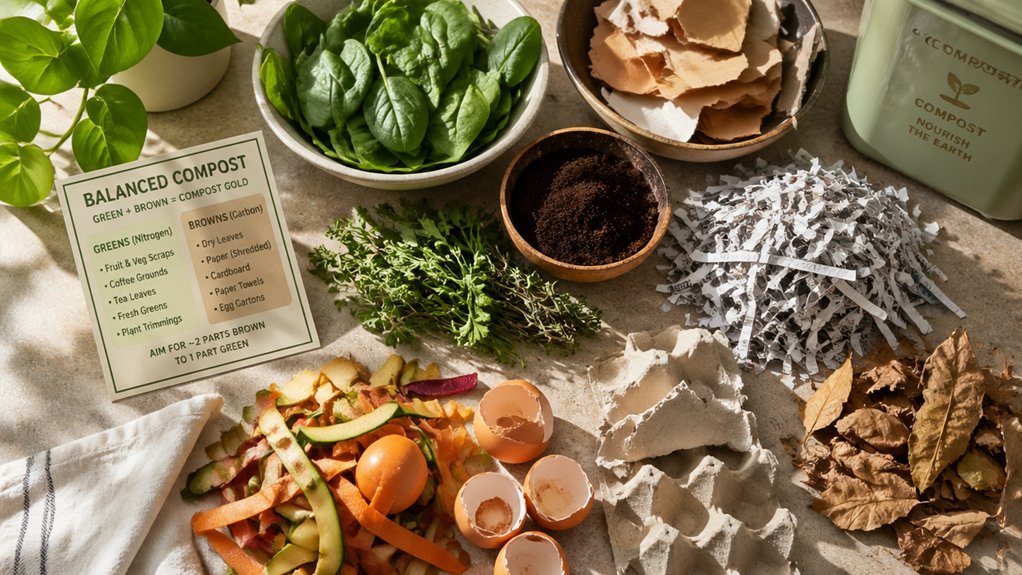
Coffee grounds and Fresh grass clippings also benefit from proper calibration and moisture management to maintain accurate C:N estimates in compact urban bins calibration and accuracy.
Convert Volume Measurements to C:N in Small‑Space Bins
You can estimate the C:N ratio by measuring the volume of browns and greens, then converting those volumes to approximate weights using typical density tables.
This method aligns with practical guidance on maintaining balance and preventing odor in compact, apartment-friendly compost setups, and it complements the idea of monitoring fullness and aeration in small bins density conversions.
Measure Volume to Weight
How can you turn a bin’s volume into a reliable C:N ratio? First, estimate each material’s bulk density. Scoop a cup of cardboard, weigh it, and note the grams per cup; repeat for grass clippings. Those numbers give you a volume‑to‑weight conversion you can apply across the bin. Next, calculate carbon and nitrogen contributions: multiply the weight of each sample by its typical C:N ratio (cardboard ≈175:1, grass ≈20‑25:1). Add the carbon totals, add the nitrogen totals, then divide to get the overall C:N ratio. If the result skews low, add more browns; if it’s high, toss in extra greens. Adjust by feel and moisture, not just strict volume. C:N conversion can help fine‑tune mix accuracy when dealing with compact, urban bins.
Estimate C:N by Volume
Starting with a simple rule of thumb—2–3 parts dry browns to 1 part moist greens by volume—lets you quickly gauge the C:N balance in a small compost bin without weighing anything. A Bokashi-style starter can help jumpstart decomposition when you mix in small amounts of pre-fermented material to improve initial microbial activity EM-1. Measure the space a handful of shredded paper, leaves, or cardboard occupies, then add an equal or slightly larger volume of kitchen scraps, grass clippings, or other greens. Aim for a 2:1 to 3:1 ratio; this roughly translates to a 25:1–30:1 C:N chemistry. If the pile smells or feels soggy, toss in more brown material to boost carbon. If it’s cool and slow, stir in extra greens to drop the ratio. Keep the mixture moist but not dripping, and ensure the bin stays at least a foot deep to retain heat and airflow. This volume‑based approach lets you maintain a balanced C:N without a scale.
Adjust Ratio for Space
Ever wondered how to translate a simple volume rule into an exact C:N ratio for a tiny balcony bin? You can convert 2–3 parts browns and 1 part greens into a 25:1‑30:1 C:N balance by treating each green part as ~20 C:N and each brown part as ~125 C:N. Adjust the mix when the pile smells ammonia (add greens) or gets soggy (add browns). Shred bulky browns, keep moisture at 50‑60 % with the squeeze test, and fine‑tune the C:N ratio by swapping volume for weight. Outdoor benches with a metal top and durable surfaces, noted for weather resistance and easy maintenance, can support garden tool organization while you manage composting tasks storage and organization. Shredded browns reduce mass and improve aeration, while a sturdy potting bench can act as a reliable workspace for mixing amendments and handling compost inputs.
How to Tweak Your C:N When Kitchen Scraps Vary in Nitrogen
You’ll first assess the nitrogen content of your scraps, then balance them with enough carbon‑rich materials, and finally fine‑tune moisture to keep the pile healthy.
If the greens are especially nitrogen‑dense, add extra browns like shredded cardboard or dry leaves to raise the C:N ratio.
Keep an eye on odor and temperature—too much ammonia or sogginess means you need more carbon and less moisture.
Assess Nitrogen Content
How do you keep your compost’s carbon‑to‑nitrogen balance on track when kitchen scraps swing between nitrogen‑rich greens and dry, low‑nitrogen waste? First, gauge nitrogen content by feeling moisture and smell—wet, leafy bits are high, while dried peels and coffee grounds are low. If the pile smells like ammonia, you’ve got excess nitrogen; add carbon-rich browns to restore equilibrium. Use the rule of thumb: 1 part greens to 2–3 parts browns by volume. Adjust gradually, then re‑check odor and temperature.
| Scrap Type | Typical Nitrogen Level |
|---|---|
| Fresh veggie trimmings | High |
| Fruit peels | Moderate |
| Coffee grounds | Low |
| Eggshells | Very low |
Balance Carbon Sources
Wondering how to keep the C:N ratio steady when today’s greens are lush and tomorrow’s peels are dry? You can fine‑tune the balance by swapping in more carbon-rich materials whenever nitrogen-rich greens surge. Aim for a flexible 25:1–30:1 mix, measuring by volume, not weight. If you notice a sharp ammonia scent, add dry browns like shredded cardboard, dried leaves, or straw to push the ratio back toward the sweet spot. Keep an eye on the proportion of fresh trimmings; the richer they are, the more carbon you’ll need to offset them. A steady rhythm of adjustments prevents rapid decomposition and keeps your pile humming.
- Shredded cardboard as a quick carbon boost
- Dried leaves for bulk and texture
- Straw to improve aeration while adding carbon
- Fine wood chips for long‑term carbon release
Adjust Moisture Levels
Ever notice the pile turning soggy after a batch of juicy fruit peels? That’s a moisture warning. Aim for a 50‑70 % range; if it feels like a squeezed sponge, you’re over‑moisturized. Grab dry browns—shredded cardboard, dry leaves—and sprinkle them in to soak up excess water and boost the C:N ratio. When greens vary, follow a 1 part nitrogen‑rich to 2‑3 parts carbon rule, then adjust by odor and heat. If ammonia rises or the heap drips, cut back greens and add more browns. Conversely, a crumbly, dry pile needs a splash of water or a few extra greens like coffee grounds. Use the squeeze test or a moisture meter to keep the balance spot‑on, and your compost will stay active and odor‑free.
Managing Bulk Density and Particle Size in Tight Spaces
Why should you worry about bulk density and particle size when your compost bin barely fits on a balcony? In tight urban setups, dense carbon materials can choke airflow, slowing the carbon‑nitrogen balance and stalling heat generation. By shredding cardboard, leaves, or straw, you create varied particle sizes that hold pockets of oxygen, letting microbes thrive even in a cramped space. Adjust the browns‑to‑greens ratio to about 2–3 : 1 by volume, keeping the pile light enough to stay porous but heavy enough to retain heat.
- Shred browns to ½‑inch pieces for maximum surface area.
- Mix in coarse greens (e.g., kitchen scraps) to break up clumps.
- Periodically flip the bin to prevent compaction.
- Use a small scoop to gauge volume, aiming for a fluffy, not solid, mound.
Keeping Moisture Between 50‑70 % Without a Large Water Source
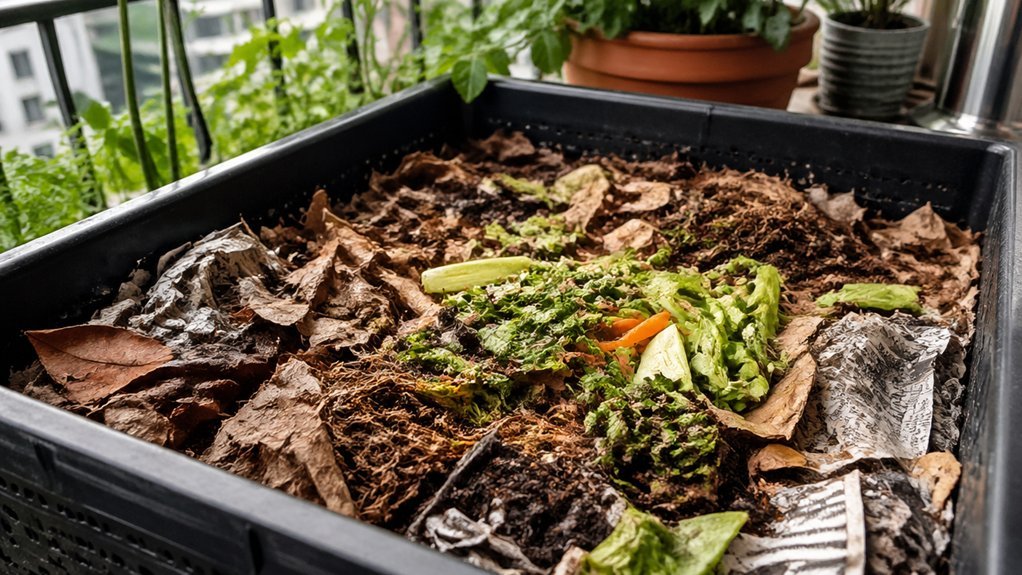
How do you keep your balcony compost at the sweet spot of 50‑70 % moisture when you can’t lug a hose up there? Start with a layer of nitrogen‑rich greens that are naturally wet, then sprinkle a few drops of water with a spray bottle. Test the dampness by squeezing a handful; if you see 1–2 drops, you’re in range. When it feels dry, mist lightly; when it’s soggy, toss in carbon‑rich browns like shredded cardboard to soak up excess. Vary particle size—coarse bark beside fine kitchen scraps—to boost airflow and spread moisture evenly.
| Step | Action | Result |
|---|---|---|
| 1 | Add wet greens | Immediate moisture |
| 2 | Mist with bottle | Fine‑tune humidity |
| 3 | Check wrung‑sponge test | Verify 50‑70 % |
| 4 | Add dry browns if needed | Balance and aeration |
Real‑Time Indicators: When to Add Browns, Greens, or Aerate?
You’ll notice the pile’s heat rise to 55‑65 °C when the carbon‑nitrogen balance is right, so a steady temperature signals it’s time to keep aerating.
If the material feels soggy or smells like ammonia, add dry browns and turn the pile to restore moisture balance.
Conversely, a cool, dry, or sluggish heap means you should toss in fresh greens and a splash of water to kick the process back into gear.
Heat Heat Indicators
A steady, active temperature in the thermophilic range (130–160 °F / 54–71 °C) tells you the mix is balanced, so you can hold off on adding more browns; if the heat slides below 110 °F (43 °C) and odors start to appear, it’s time to aerate, add greens, or boost moisture to reignite microbial activity. Those heat indicators are your compost’s pulse, letting you fine‑tune the carbon‑nitrogen balance without guessing. When the pile stays hot, you’re on track; when it cools, you know exactly what to adjust.
- Add dry browns (straw, cardboard) if ammonia smells dominate.
- Sprinkle nitrogen‑rich greens when temperature drops below 110 °F.
- Turn the pile every 3–7 days to supply oxygen and sustain thermophilic heat.
- Mist lightly if the mix feels dry, aiming for 50–60 % moisture before the next turn.
Moisture Balance Checks
Ever wonder how a quick moisture check can tell you exactly when to add browns, greens, or aerate? You keep the pile at 40–60 % water weight by squeezing a damp sponge; it should drip a few drops, not stream.
When the feel feels dry or crusty, you add high‑moisture greens and mist lightly to lift moisture into the 50–70 % sweet spot, which fuels microbes and preserves the carbon‑nitrogen ratio.
A strong ammonia smell or slime signals excess nitrogen, so you toss dry carbon‑rich browns and boost airflow.
Use a probe or hand feel after each major addition, and turn regularly to spread moisture evenly.
Consistent checks keep the C:N‑balanced moisture stable and the compost thriving.
Aeration Timing Signals
When the compost’s temperature stalls or drops noticeably, it’s a clear sign that oxygen isn’t reaching the microbes fast enough, so you need to aerate. You’ll feel the pile’s heat dip, notice a dull earthy scent, and see moisture pooling—these are real‑time cues that the carbon‑nitrogen balance is off and aeration is overdue. A quick palm‑squeeze test should feel damp, not soggy; turn the pile until it feels crumbly and airy. Keep an eye on temperature spikes; if it climbs past 140 °F, add greens to rebalance nitrogen, then aerate to avoid overheating. Regular turning maintains loose structure, supporting worms and preventing compaction.
- Damp, non‑soggy texture with reduced heat → add browns
- Strong ammonia odor, excess moisture, heat >140 °F → add greens
- Crumbly, airy feel after turning → successful aeration
- Palm‑squeeze moisture test yielding damp but not dripping → optimal moisture for vermicomposting
Compare Vermicomposting C:N Targets to Hot‑Compost Ratios
Why does the C:N ratio matter when you switch from vermicomposting to hot composting?
In vermicomposting you aim for high C:N ratios—50:1 or more—so worms thrive in cooler, moist conditions. The microbes gradually lower the ratio over weeks, turning nitrogen into ammonium and nitrate.
Hot composting, by contrast, needs a tighter C:N range of about 25:1–30:1 to spark thermophilic activity and reach 55–65 °C (131–149 °F). If the ratio stays above 35:1, heat production stalls; below 20:1, you’ll smell ammonia and lose nitrogen.
Keep vermicomposting out of the 25:1–30:1 sweet spot and maintain worm‑friendly moisture and aeration, while hot composting leans on that narrower band for rapid, high‑temperature breakdown.
Track Your Mix With a Spreadsheet or Mobile App – Easy Steps
Do you want a quick way to keep your compost mix on target? Use a spreadsheet or mobile app to log each material’s estimated C:N ratio, weight or volume, and moisture. Enter browns and greens separately, then compute total C and N so you can watch the running mix trend toward 25:1–30:1 for hot compost or 50:1+ for vermicomposting. Update entries whenever you add or remove material, and let the visual indicators flag when you’re within the ideal range.
Log browns and greens, compute C:N, and watch the mix trend toward ideal ratios.
– Record particle size, bulk density, and moisture (50‑70 %).
each-.- or–.- gauge
- Use color‑coded cells or a live ratio gauge for instant feedback.
- Add notes on aeration and material changes to refine future compost tracking.
This simple system keeps your C:N ratio on point without guesswork.
Troubleshooting Common Ratio Problems in Apartment Composters
Switching from logging your mix to fixing it, you’ll notice that a sour smell or soggy texture usually means the C:N balance is off. If the pile smells like ammonia, you’ve got too many greens; toss in dry browns such as shredded cardboard or dried leaves until the odor fades.
A wet, mushy heap signals excess moisture and nitrogen, so add more carbon‑rich browns and give it a good turn to boost aeration.
Keep the ratio around 2–3 parts browns to 1 part greens by volume; this maintains a 25:1‑30:1 C:N target in cramped apartment bins.
Aim for 40–60% moisture, a core mass of at least one cubic foot, and turn regularly to keep the compost healthy.
How to Know Your Urban Compost Is Ready for Garden Use (Stable C:N)
Ever wonder when your urban compost has truly finished its job? You’ll know it’s ready for the garden when the carbon-to-nitrogen balance settles into a stable 10:1‑15:1 range and the pile shows no more heat spikes. Check the texture, moisture, and smell to confirm readiness.
- Dark, crumbly material with an earthy scent, no food chunks or white fungal mats
- Moisture level around 40‑60 %; a firm squeeze releases no water and feels gritty, not soggy
- Stable temperature after turning, no ammonia or slimy patches
- Consistent color and structure through several curing weeks
When these signs appear, your compost is mature, nutrient‑rich, and safe to enrich garden beds.
Frequently Asked Questions
What Is the Best Carbon Nitrogen Ratio for Composting?
You should aim for a 25:1 – 30:1 carbon‑to‑nitrogen ratio, roughly two‑to‑three parts brown material to one part green, to keep the pile hot, active, and odor‑free.
What Is the Optimum Carbon to Nitrogen Ratio for Composting?
You should aim for a 25:1–30:1 carbon‑to‑nitrogen ratio. Mix roughly two to three parts brown, carbon‑rich material with one part green, nitrogen‑rich material, adjusting for odor, moisture, and heat.
What Is the Golden Ratio for Composting?
You should aim for roughly three parts brown material to one part green, which translates to a 25‑30:1 carbon‑to‑nitrogen ratio. This golden ratio keeps microbes active, reduces odors, and speeds decomposition.
How Do the Amish Make Compost?
You’ll layer fresh kitchen scraps with dry leaves, straw, or shredded newspaper, keep the pile moist, turn it regularly, and let the heat and microbes break everything down into dark, crumbly compost.
In Summary
By keeping your mix near that 25:1 carbon‑to‑nitrogen sweet spot, you’ll speed up decomposition, cut smells, and avoid pests—perfect for tight apartments. Adjust with a dash of brown or a handful of green as kitchen scraps change, and watch the pile turn dark, crumbly, and earthy. When it’s stable, with a balanced C:N, you’ve got rich, ready‑to‑use compost for your balcony garden or community plot.