You mix EM‑1, molasses (or sugar/sourdough), and a bit of water to make a starter that erupts with lactic‑acid bacteria. Those microbes instantly acidify the waste, dropping the pH to about 3.8, which kills odor‑producing microbes and pathogens while breaking down sugars. The result is a sour, dough‑like texture and a pleasant, bready smell that shows fermentation’s working. Adding yeast, koji, or PNSB can speed things up, and keeping the bin airtight locks in the anaerobic environment. Keep going and you’ll discover how to fine‑tune the process, harvest the leachate, and reuse the bran for garden nutrition.
Bokashi Starter: Quick Step‑by‑Step Recipe for Kitchen Waste

Want to turn kitchen scraps into nutrient‑rich compost in minutes? You’ll need a bokashi starter, EM‑1, molasses, and a clean airtight bin. First, dissolve one pint of molasses in twenty pints of warm water, then stir in one pint of EM‑1. Let this mixture sit until bubbling stops—your activated starter is ready. Measure about ¼ cup (60 mL) of this starter and mix it with roughly one teaspoon (5 mL) of additional EM per gallon of kitchen waste. Layer the waste in the bin, sprinkle the starter evenly, and press down to squeeze out air. Seal the lid tightly to keep the environment anaerobic. Within a few days, the fermentation will turn the waste into a sour, pickled material that’s primed for soil or compost. The process benefits from proper odor control and maintenance as outlined in typical ceramic crocks and filters. Odor control practices help ensure clean storage while you prepare your next batch.
Bokashi Starter: How Lactic Acid Bacteria Stabilize Food Waste
You’ll notice the waste turns sharply acidic as the lactic acid bacteria break down sugars, dropping the pH and creating a sour, pickle‑like scent.
That acidity gives them a competitive edge, suppressing odor‑producing microbes and slowing spoilage.
As a result, the material stabilizes quickly, ready for burial or composting with minimal smell.
The acidic environment also helps deter spoilage organisms by raising the resistance of the compost mixture to microbial disturbances Spring-loaded bamboo dividers and maintaining structure during processing.
Acidification of Waste
When you add a bokashi starter to kitchen scraps, the lactic acid bacteria it contains instantly begin converting the sugars in the waste into lactic acid, dropping the pH to around 3.8. This rapid acidification creates an environment that halts spoilage, curbs odors, and stabilizes nutrients during anaerobic fermentation. The starter, delivered via bokashi bran or EM‑1, spreads evenly, ensuring each layer experiences consistent pH lowering. You’ll notice a sourdough‑like aroma as lactic acid builds, signaling that the fermentation is on track. Lactic acid fermentation helps maintain odor control and nutrient stabilization by creating an acidic, anaerobic environment.
Microbial Competition Suppression
Usually, the lactic acid bacteria in a bokashi starter flood the waste with acid, dropping the pH to about 3.8–4.0 and instantly making the environment hostile to spoilage microbes and pathogens. You’ll notice the LAB‑driven fermentation creating a sourdough‑like aroma, while the microaerobic conditions keep oxygen low, forcing most aerobic competitors into dormancy. This rapid acidification and competition suppression prevent pathogens from establishing, and the thin white mold that appears signals active LAB growth. When EM consortia join the mix, they reinforce the acidic barrier and add diverse enzymes that further limit rival microbes. As a result, your kitchen waste stabilizes quickly, staying safe until you bury or compost the fermentate spiral airflow and the associated aeration principles support the process.
Bokashi Starter: Add Yeast, PNSB, and Koji to Speed Fermentation

You’ll notice the fermentation spikes when you sprinkle in yeast, because it churns out alcohol and CO₂ that jump‑starts the acidification process. The bokashi setup also relies on tight sealing to control odors during the fermentation cycle, which helps maintain a cleaner kitchen environment, and the spigot system enables effortless harvesting of liquid fertilizer odor control.
Yeast Boosts Fermentation Speed
Ever wondered why a splash of yeast can slash the bokashi fermentation timeline? Yeast pumps up alcohol and CO₂, jump‑starting the microbial dance and lifting fermentation speed. When you blend yeast into a starter culture with EM, sourdough culture, and molasses, you create a nutrient‑rich broth that fuels lactic bacteria early. Keep the fermentation temperature near 100 °F (38 °C) and the microbes multiply faster, shrinking the usual 2–3 week wait to just a few days.
| Component | Role | Ideal Condition |
|---|---|---|
| Yeast | Produces CO₂ & alcohol | Warm, moist |
| EM (effective microorganisms) | Balances community | 100 °F |
| Sourdough culture | Supplies lactobacilli | Warm |
| Molasses | Energy source | Dissolved |
| Fermentation temperature | Drives growth rate | 38 °C |
Add these ingredients, stir, and watch the bokashi transform quickly. A deeper look into how each component influences microbial balance can help tailor your mix for faster results and more consistent fermentation.
PNSB Neutralizes Odor Compounds
When you add PNSB to your bokashi starter, the bacteria instantly start breaking down ammonia and hydrogen sulfide, cutting the foul smells that normally linger during fermentation. Their metabolism converts those odor compounds into harmless acids, giving you cleaner, more pleasant fermentation. pH reduction supports faster acidification and a more stable starter, further enhancing odor control.
Koji Supplies Starch‑Digesting Enzymes
Why not let Koji do the heavy lifting on starches? When you sprinkle koji spores into your bokashi starters, Aspergillus oryzae releases amylase and other starch‑digesting enzymes that turn stubborn carbs into simple sugars. Those sugars feed the EM cultures and accelerate lactic‑acid bacteria growth, cutting the usual 2–3 week fermentation window.
Adding koji alongside yeast and PNSB boosts enzymatic activity, improving substrate breakdown and texture uniformity. The pre‑digested starch also lessens grit, giving a smoother crumb and richer, sourdough‑like flavor.
Bokashi Starter: Choose Sugar, Molasses, or Sourdough as Food Source

Which food source you pick—sugar, molasses, or sourdough—will shape the speed and aroma of your bokashi fermentation. Sugar gives EM cultures a quick boost, driving rapid lactic acid production and a clean, tangy scent. Molasses, mixed with spent grains, supplies a steady stream of fermentable sugars, supporting robust LAB growth and a deeper, earthy aroma. A sourdough starter introduces lactobacilli and yeasts, creating a bready, sour note while still feeding the EM blend. Balance is key: aim for the recommended inoculation ratio of at least ¼ cup active starter and 1 teaspoon EM per gallon of grain mix. Adjust based on texture, moisture, and desired scent intensity.
- Sugar accelerates EM activity, yielding fast fermentation.
- Molasses pairs with spent grains for sustained lactic acid development.
- Sourdough starter adds complex microbes and a bready aroma.
- Inoculation ratio ensures consistent results across batches.
Bokashi Starter: Set Up the Ideal Anaerobic Environment in an Apartment Bin
Ever wondered how to turn a tiny apartment bin into a powerhouse fermenter? First, pick a sturdy bokashi bin with a bottom drain tap and seal it tightly; this creates the anaerobic environment you need. Layer kitchen scraps with bokashi bran, a splash of molasses, and a pinch of EM‑1 to seed the microbes. Keep the fermentation temperature between 90–110 °F (32–43 °C) for 2–3 weeks, checking weekly. Drain the liquid from the tap every few days, then snap the lid back on to maintain the airtight container.
| Step | Action |
|---|---|
| 1 | Seal the bin tightly |
| 2 | Add waste + bokashi bran + EM‑1 |
| 3 | Monitor fermentation temperature |
| 4 | Drain juice regularly |
Follow these steps for the ideal setup and watch waste turn into nutrient‑rich compost.
Bokashi Starter: Spotting Success – Smell, Mold, and Texture Cues
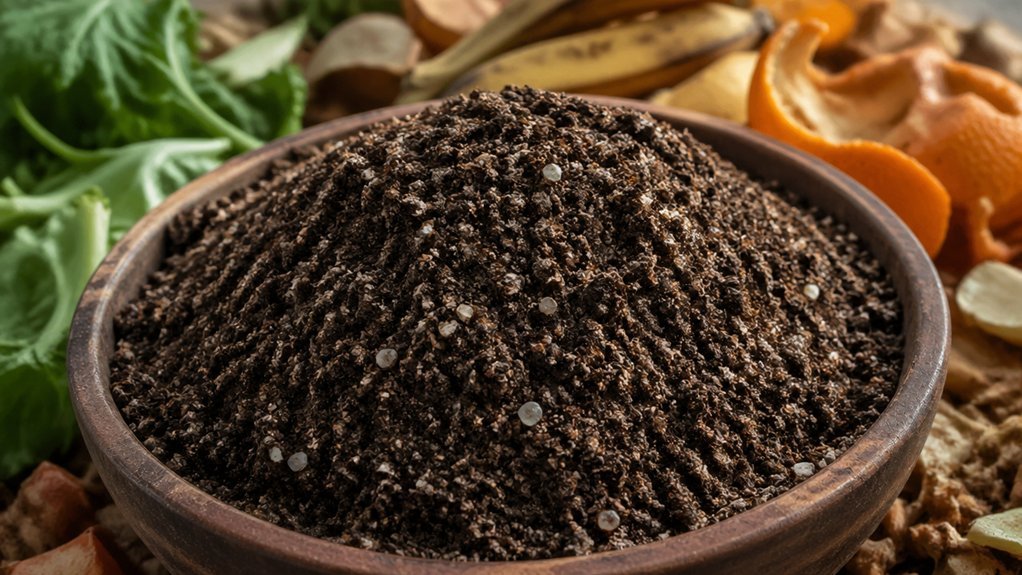
How do you know your bokashi starter is thriving? You’ll notice a pleasant fermentation smell—tart, bready, slightly sour—while the grain feels denser and less watery.
A thin white mold spreads across the surface, and a subtle white film may appear on top.
Dig in and you should sense a uniform sourdough‑like texture and aroma throughout, confirming even fermentation.
The mixture’s pH will sit between 3.8 and 4.0, reinforcing those success cues.
- Fermentation smell: tart, bready, lactic, no rot.
- White mold: fine, powdery, covering the surface.
- Sourdough‑like texture: firm, slightly gritty, consistent throughout.
- pH 3.8–4.0: acidic, confirming proper microbial activity.
Bokashi Starter: Apply Finished Bran and Leachate to Your Garden
Now that you’ve confirmed the starter’s health through smell, mold, and texture, you can put the finished bokashi bran and its leachate to work in your garden.
Sprinkle the finished bran around planting beds as a soil amendment; its EM (effective microorganisms) and lactic acid bacteria will jump‑start fermentation‑like activity in the earth, suppressing pests and reducing odors.
Dilute the leachate to one part water to three parts garden water, then water it in during the early morning or late evening to avoid leaf burn.
This garden application delivers nutrients and beneficial microbes directly to the root zone, enriching soil structure and accelerating composting cycles.
Reusing the bran also inoculates future bokashi batches, keeping your waste loop efficient and sustainable.
Frequently Asked Questions
What Is the Main Problem With Bokashi Composting?
You’ll find that managing odors and pests is the biggest hurdle; you must keep the bin airtight, compress waste, and drain the liquid to prevent air ingress and foul smells.
Can I Put Eggshells in Bokashi?
Yes, you can add eggshells to bokashi—just crush and dry them first, then mix them with other waste. This speeds calcium, buffers pH, and integrates into the final pre‑compost without extra steps.
What Are Three Items That You Should Never Put Into the Compost Bin?
You should never put meat, dairy, or oily foods into the compost bin, because they attract pests, create foul odors, and disrupt the anaerobic fermentation process that bokashi relies on.
How to Reduce Food Waste in Bokashi?
You’ll cut waste by chopping scraps finely, layering each cup with a tablespoon of bokashi bran, pressing tightly, and sealing the bin daily; then dilute the runoff tea as fertilizer instead of discarding it.
In Summary
By now you’ve seen how a simple mix of lactic‑acid bacteria, yeast, PNSB, and koji turns kitchen scraps into nutrient‑rich compost. The right sugar source fuels the microbes, while an airtight bin creates the perfect anaerobic zone. When the aroma turns pleasantly sour, mold stays at bay, and the texture softens, you know the fermentation’s complete. Spread the finished bran and leachate in your garden, and watch your plants thrive on this low‑cost, high‑impact bokashi boost.