Keep your compost thriving by balancing the C:N ratio at roughly 25‑30:1—use about three parts browns to one part greens— and chopping everything into small pieces. Keep the pile moist like a wrung‑out sponge, misting or adding browns when it’s too wet. Turn it regularly to supply oxygen and prevent compaction, and aim for thermophilic temperatures (130‑160 °F) for a few days to kill weeds and pathogens. If you keep these steps in check, you’ll discover even more tricks to boost the microbes.
Why Home Composting Matters: Benefits for Your Garden and the Planet

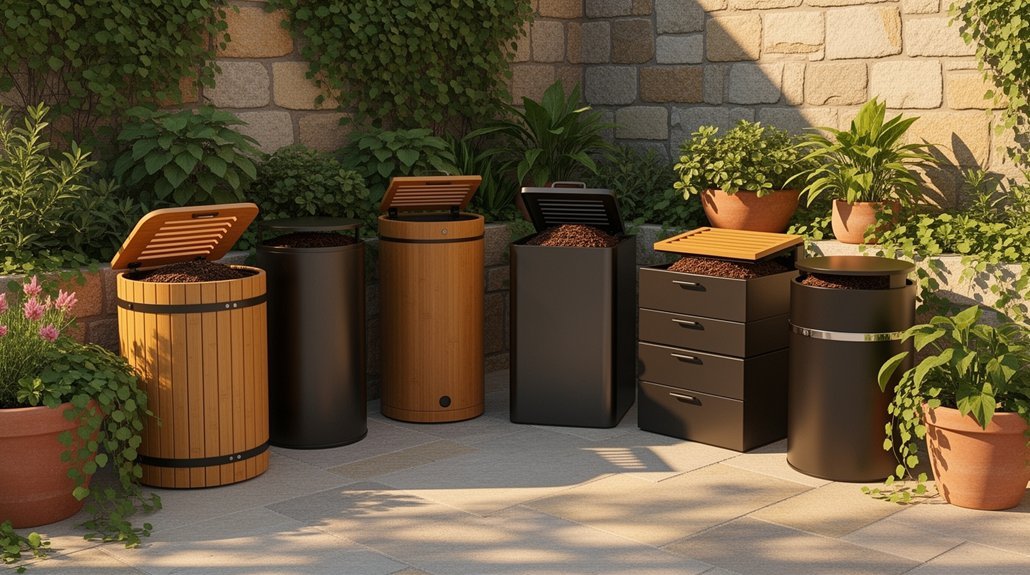
Why does home composting matter? You boost your garden’s fertility while cutting waste, turning kitchen scraps into nutrient‑rich soil. By balancing browns and greens, you hit the optimal carbon-to-nitrogen ratio, feeding microbial activity that breaks down organic matter. Regular aeration keeps the pile oxygenated, preventing foul odors and encouraging faster decomposition. As microbes work, they generate heat that destroys weed seeds and pathogens, delivering a safe, disease‑free amendment. When the pile cools and you see dark, crumbly texture, you’ve reached finished compost, which improves soil structure, water retention, and plant vigor. In short, your composting effort enriches the garden, reduces landfill load, and supports a healthier planet. Odor control helps maintain a pleasant indoor process and reflects how filtration and containment are used in kitchen compost systems to manage emissions.
The Four Essentials of Home Composting: Carbon, Nitrogen, Oxygen, and Moisture
You’ll need to keep the carbon‑to‑nitrogen ratio around 25:1–30:1, add enough water to feel like a wrung‑out sponge, and turn the pile regularly for oxygen.
Balancing these three factors lets microbes work efficiently and prevents foul smells.
When you manage the ratio, moisture, and aeration together, the compost heats up and breaks down quickly.
Balance Ratio Balance Carbon:Nitrogen Ratio
Ever wondered how the right carbon‑to‑nitrogen mix turns a kitchen scrap pile into a thriving compost heap? You need a C:N ratio of about 25:1–30:1, which translates to roughly 3 parts browns for every 1 part greens by weight. Browns—dead leaves, twigs, paper, cardboard—supply carbon, while greens—grass clippings, food scraps, coffee grounds—provide nitrogen. This balance fuels heat generation, keeping microbes active and the pile hot enough to break down material quickly. Too many greens and you’ll get foul odors and pests; too many browns stalls the process. Keep the mix steady, monitor the moisture to a wrung‑out‑sponge feel, and you’ll maintain proper aeration while the microbes do their work. Proper moisture balance also supports odor control through steady microbial activity activated carbon filters and airflow.
Moisture and Aeration Management
How do you keep a compost heap both moist enough for microbes and airy enough for oxygen? Aim for a moisture level that feels like a wrung‑out sponge—damp but not dripping. Balance browns and greens so the pile stays porous, and turn it regularly to inject fresh aeration. If it dries out, sprinkle water and add more brown materials; if it gets soggy, break up clumps and introduce coarse straw or shredded paper. Monitoring these two factors keeps microbial activity high and odor low.
- Sprinkle water until the mix feels like a wrung‑out sponge.
- Layer brown materials with greens to create channels for aeration.
- Turn the pile every few days to prevent compaction.
- Add coarse browns when moisture spikes to restore airflow.
Smart composters can further optimize this process by using built‑in sensors to maintain ideal moisture and aeration levels, enhancing microbial efficiency and odor control.
Setting the Ideal C:N Ratio (25:1‑30:1) for a Thriving Bacterial Community

Why is the C:N ratio so essential for a thriving bacterial community? You need a 25:1‑30:1 balance to fuel microbes without choking them. Browns give carbon, structure, and aeration; greens supply nitrogen, heat, and rapid microbial activity. Keep the mix loose, check moisture, and adjust layers to stay in range. Activated carbon filtration can help manage odors from the bin and keep the environment more stable for microbial activity odor control while you balance inputs.
How to Keep Your Compost Moist Like a Wrung‑Out Sponge
Mist with a spray bottle, then blend in dry leaves or straw. Outdoor durability can guide how you protect the pile in open-air setups while maintaining moisture.
How to Turn and Aerate Your Home Compost for Maximum Oxygen?

Ever wondered why a well‑aerated pile stays hot and odor‑free? You keep oxygen flowing by turning the compost pile every few days. Use a pitchfork or compost aerator to lift material from the bottom and drop it on top, breaking up compacted zones. This simple turning creates aerobic conditions, preventing anaerobic microbes from taking over. If you have a longer row, practice windrow management: spread the pile into a narrow trench, turn each section, then reshape it into a uniform ridge. Aim for a moist, sponge‑like texture; too dry blocks oxygen, too wet blocks airflow. Consistent aeration supplies the microbes with the oxygen they need, accelerating decomposition and keeping the pile healthy. Regular monitoring helps you maintain the right balance of moisture and air, ensuring steady microbial activity and a thriving compost batch. aeration strategy
Temperature Targets: Moving From Mesophilic to Thermophilic Phases
When the pile’s temperature climbs past 40 °C, you shift from the mesophilic stage to the thermophilic phase, where heat-loving Bacillus bacteria take over and break down tough cellulose and lignin. In this window the microbial community spikes, and decomposition accelerates dramatically. Airtight lid remains essential to maintain an anaerobic environment during transition and prevent odor leaks while heat builds. Aim for a temperature around 54–60 °C (130–140 °F) and keep it there for several days to a few weeks. The heat kills weed seeds and pathogens, while Bacillus spp. shred complex organics. As the food source dwindles, the pile cools, allowing mesophilic microbes to return and finish the process.
- Monitor temperature daily with a probe.
- Adjust aeration and moisture to sustain 54–60 °C.
- Add balanced greens and browns to fuel thermophilic activity.
- Turn the pile when temperature drops below 50 °C to reignite microbial heat.
Choosing Greens vs. Browns: The Best Fuel for Home Compost Bacteria
After the thermophilic surge subsides, the pile’s next challenge is feeding the bacteria with the right mix of greens and browns. You’ll want a carbon‑to‑nitrogen ratio around 25:1‑30:1, which means roughly three parts browns to one part greens. Greens—kitchen scraps, fresh grass, coffee grounds—supply the nitrogen that jump‑starts mesophilic bacteria. Browns—dead leaves, paper, cardboard, sawdust—add carbon, structure, and porosity, keeping aeration strong and preventing compaction. If you tip the balance toward too many browns, decomposition slows and odors appear; too many greens can drown oxygen and stall thermophilic bacteria. Regularly turning the pile preserves airflow, letting mesophilic bacteria finish their work before thermophilic bacteria take over for a clean, fast finish.
Layering, Size, and Placement Tips for an Efficient Home Compost Bin
How do you keep a home compost bin humming efficiently? Start by alternating thin layers of greens and browns, ending with a brown cap to lock in a carbon‑nitrogen ratio around 25:1‑30:1. Keep the pile about three feet tall; chopping larger pieces reduces particle size and boosts aeration. Aim for sponge‑wet moisture—about 40‑70%—and turn the bin regularly to feed oxygen. Choose a dry, shaded spot, but keep a water source nearby for quick adjustments.
- Layering: thin, alternating greens/browns for balanced C:N.
- Particle size: chop to small bits for better airflow and faster breakdown.
- Aeration: maintain openings or pipes; turn weekly (summer) or every 3‑4 weeks (winter).
- Placement: shaded, dry area with easy water access to control moisture.
Common Mistakes That Kill Bacterial Activity and How to Fix Them
A well‑balanced C:N ratio and proper aeration keep your compost humming, but a few common slip‑ups can shut down the bacterial engine. Over‑loading greens spikes moisture, creates soggy spots, and invites foul odors; balance them with enough browns to restore aeration and the wrung‑out‑sponge feel.
Compact piles choke oxygen—regular turning re‑introduces air, prevents anaerobic zones, and distributes heat evenly.
Ignoring temperature management lets the pile cool too fast or overheat, killing mesophilic microbes; monitor the core and adjust pile size or add fresh material to stay near 130–140 °F.
Finally, neglecting the C:N ratio throws the system off‑balance; aim for 25:1–30:1 by mixing 2–4 parts browns per green, and you’ll keep bacterial activity thriving.
Boost Thermophilic Bacteria With Bacillus & Thermus Additions
When the compost reaches the thermophilic window of 130–160 °F, inoculating it with Bacillus and Thermus strains can jump‑start the high‑temperature phase, speeding up cellulose and lignin breakdown while suppressing pathogens. You’ll notice the compost temperature rise faster, and the thermophilic activity will dominate, driving pathogen reduction and faster decomposition. Choose a high‑quality inoculant that lists both Bacillus and Thermus species, then mix it evenly into the core of the pile. Keep the pile moist and aerated; the endospores of Bacillus will survive brief cooling, while Thermus thrives at the hottest spots, ensuring a robust thermophilic community.
Add Bacillus‑Thermus inoculant at 130 °F, mix evenly, keep moist, and maintain 130‑160 °F for rapid, pathogen‑free composting.
- Add inoculants when temperature hits 130 °F
- Mix thoroughly for even distribution
- Maintain moisture ~50‑60 % and turn regularly
- Monitor temperature to stay within 130‑160 °F range
Integrating Actinomycetes and Fungi Into Your Home Compost
After the thermophilic burst from Bacillus and Thermus, you’ll start seeing gray, spider‑web‑like filaments—those are actinomycetes—alongside the fuzzy colonies of fungi that begin to colonize the cooler, curing phase. Actinomycetes and fungi each fill gaps left by the fast‑growing thermophilic bacteria, tackling cellulose, lignin, chitin, and proteins that survive the initial heat. To encourage them, keep the pile moist but not soggy, turn it gently every few days, and add a handful of shredded straw or wood chips for extra carbon.
This balanced environment fuels a diverse microbial community, accelerates decomposition of resistant material, and drives compost maturation. You’ll notice a richer, earthier smell and a crumbly texture as the actinomycetes‑fungi partnership stabilizes the final product.
Harvesting Mature Compost and Re‑Introducing Beneficial Microbes to Your Garden
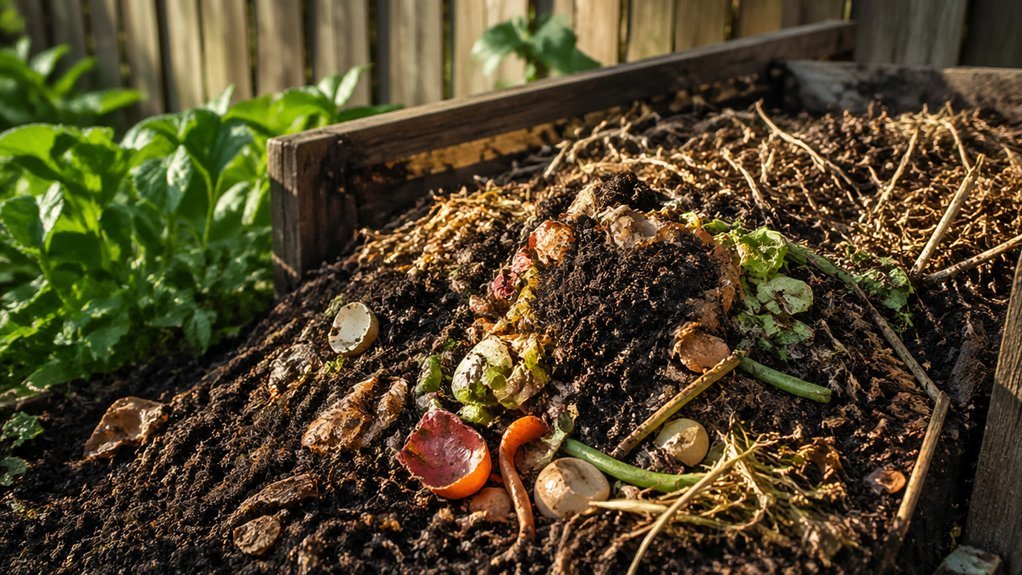
Ready to reap the rewards of a thriving compost heap? When the pile cools, smells earthy, and feels dark and crumbly, you’ve got mature compost. Scoop it out, spread a 1–2‑inch layer over beds, and watch soil health surge. To boost beneficial microbes, brew compost tea or apply inoculants, delivering diverse bacteria and fungi that enhance structure, water retention, and disease suppression. Test seed germination; a healthy sprout confirms phytotoxic compounds are gone and the microbial community is balanced.
- Check C:N ratio (10:1‑15:1) for true maturity.
- Use compost tea for rapid microbial colonization.
- Apply inoculants to seed‑rich zones for targeted benefits.
- Monitor seed germination to gauge soil health.
Frequently Asked Questions
What Is the Best Bacteria for Composting?
You’ll get the best results using a mix of mesophilic Bacillus and thermophilic Bacillus species, plus a few Thermus strains; they thrive in moist, aerated piles and speed up decomposition.
What Three Items Should Not Be Placed in a Compost Pile?
You should avoid meat scraps, dairy products, and oily foods; they attract pests, create foul odors, and slow bacterial activity, disrupting the compost’s balance and temperature control.
Do Potato Peelings in Compost Attract Rats?
You won’t attract rats if you bury potato peelings under a thick layer of brown material, keep the bin sealed, and turn regularly; the anaerobic scent they love stays out.
How Do the Amish Make Compost?
You’ll gather kitchen scraps, garden waste, and wood chips, layer them with a 25:1 carbon‑to‑nitrogen mix, keep the pile moist, turn it regularly for airflow, and let nature’s bacteria break it down.
In Summary
By balancing carbon, nitrogen, oxygen, and moisture, you’ll create a thriving bacterial ecosystem that turns kitchen scraps into garden gold. Keep the mix damp like a wrung‑out sponge, turn it regularly for airflow, and watch thermophilic microbes break down material fast. Avoid common pitfalls—over‑wetness, compacting, or wrong ratios—to keep the bacteria humming. Harvest the dark, crumbly compost, and re‑introduce its beneficial microbes to boost soil health and keep your garden flourishing.