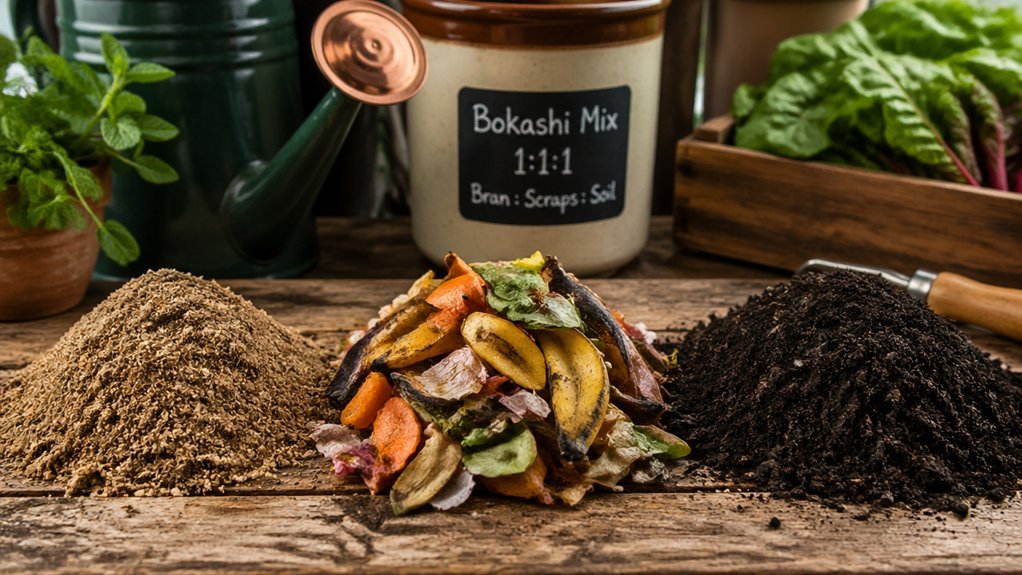
Cut your kitchen scraps into bite‑size, uniform pieces so the bokashi bran spreads evenly and won’t clog the bin. Sprinkle 1–2 Tbsp of bran per 6 cm layer—use 1 Tbsp for wet, dense waste and 2 Tbsp for drier piles—and press the layer down before adding the next. Seal the container tightly, keep it in darkness, and open the spigot every 2–3 days to drain the liquid. Follow these steps and you’ll master the mix, plus there’s more to discover.
Cut Food Into Uniform Pieces for a Better Bokashi Mix
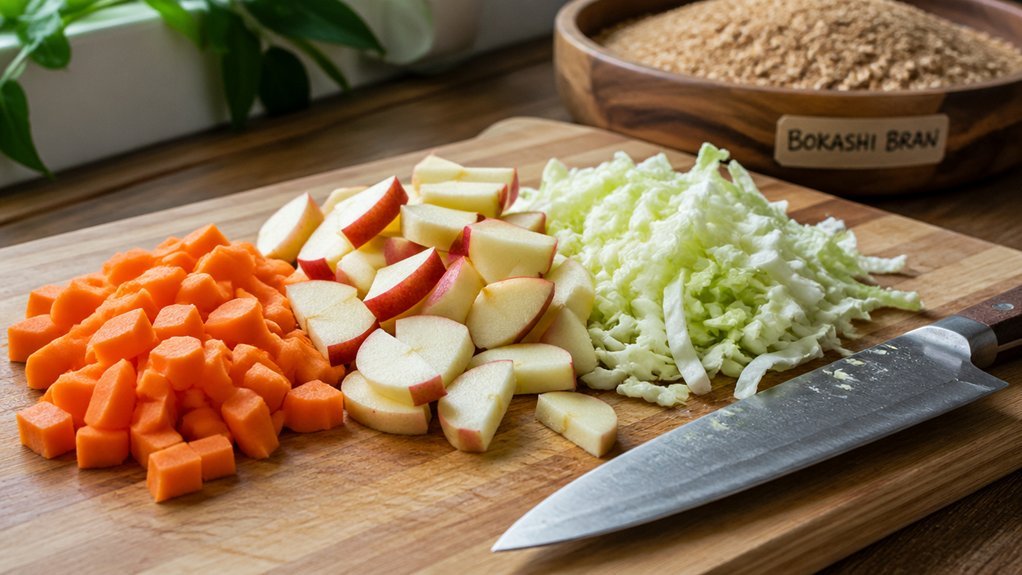
Cut Food Into Uniform Pieces for a Better Bokashi Mix.
Uniform pieces let bokashi bran spread evenly, reducing clogging and odor. OK Compost HOME standards and other certifications indicate that compostable bags and materials are assessed for home and industrial conditions, which helps ensure your scraps break down smoothly when using proper pre-processing.
Add 1–2 Tbsp Bokashi Bran per 6 Cm of Food and Sprinkle Evenly
Ever wondered how to keep your bokashi fermenting smoothly? You’ll want to add 1–2 Tbsp bokashi bran per 6 cm layer of food scraps and sprinkle it evenly before you press the layer down. This ratio preserves moisture balance, guarantees microbial contact, and drives anaerobic fermentation inside a sealed container. If the waste feels dense or wet, stick to 1 Tbsp; for drier piles, use 2 Tbsp. Re-apply bran each time you add a new composting layer so the microbes stay active and the process stays consistent. The bran should be distributed evenly across the surface to maximize contact with the waste odor-control measures.
Seal the Bin, Keep It Dark, and Drain Liquid to Finish the Bokashi Mix
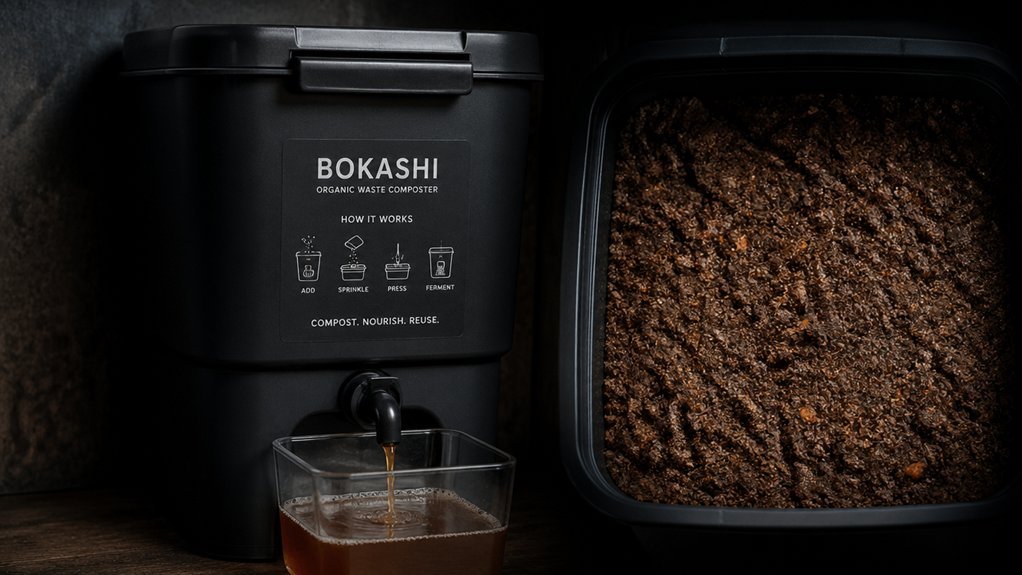
After you’ve sprinkled the bran evenly, seal the bin tightly and store it in a dark spot. The bokashi bin now needs an airtight seal to keep it dark and maintain anaerobic conditions essential for fermentation. Open the spigot or bottom bucket every 2–3 days to drain liquid, preventing buildup and odor. Each time you add waste, top it with bokashi bran to sustain microbial activity throughout the fermentation period, which typically lasts 10–14 days. Keep the lid closed, the environment dark, and the seal intact until the pre‑compost finish is reached. Once fermentation ends and the liquid is fully drained, bury the bokashi pre‑compost in soil or add it to a traditional compost pile to complete decomposition. Jar accessibility remains an important consideration for overall process usability and compatibility with your chosen bokashi tools.
Frequently Asked Questions
What Are Three Items That You Should Never Put Into the Compost Bin?
You should never put meat, dairy, or oily foods into the compost bin; also avoid diseased or moldy produce, and never add pet waste or glossy‑coated paper, metals, plastics, or bones.
What Is the Golden Ratio for Composting?
You’ll use roughly one part greens, two parts browns, and three parts water by weight. This 1:2:3 ratio keeps moisture balanced, fuels microbes, and prevents odors during composting.
What Are Common Bokashi Mistakes?
You often forget to seal the bucket tightly, overfill it, skip bran layers, neglect to collect leachate, or use waste without EM‑1, leading to odors, slow fermentation, and failed bokashi.
Can I Put Eggshells in Bokashi?
Yes, you can add eggshells to bokashi, but crush or grind them first. Mix them well with the bran and other scraps so they break down, release calcium, and don’t hinder fermentation.
In Summary
By cutting food into uniform pieces, you give the microbes a head start. Adding 1–2 Tbsp of bokashi bran for every 6 cm of food ensures the right carbon‑nitrogen balance, and sprinkling it evenly spreads the inoculant. Finally, seal the bin, keep it dark, and drain any liquid to finish the mix. Follow these steps, and your bokashi will break down waste quickly, safely, and odor‑free.