
Aim for roughly three parts brown material to one part green food scraps. Mix shredded paper, cardboard, or dry leaves with kitchen peels, veggie cores, coffee grounds, and a pinch of eggshells. Keep the pile as moist as a wrung‑out sponge—add more browns if it feels soggy, more greens if it’s dry. This 1:2‑1:3 green‑to‑brown ratio balances moisture, airflow, and odor, and the next sections will show you how to fine‑tune it.
What Greens and Browns Can You Use in Apartment Compost?

What greens can you toss into a balcony bin?
You’ll load kitchen scraps, fruit and veggie peels, coffee grounds, and a handful of eggshells for calcium.
A few fresh grass clippings work too, but keep them minimal to stop matting.
Pair those greens with browns that absorb moisture and keep airflow steady: shredded paper, torn cardboard, dried leaves, and a pinch of sawdust.
Aim for a mix that feels like a wrung‑out sponge—moist but not soggy.
Add browns whenever the pile looks wet, and avoid meat, dairy, or oily foods that could sour the bin.
With the right greens‑browns balance, your apartment compost stays fresh, odor‑free, and ready to enrich your indoor plants a balanced ratio.
Why a 1:2‑1:3 Green‑to‑Brown Ratio Matters for Apartment Compost
You’ll notice that keeping greens at roughly one part for every two to three parts of browns steadies the microrogen balance, so microbes stay active without overheating. Odor control also improves when browns help absorb excess moisture and keep the bin cleaner.
Optimize Microrogen Balance
Why does a 1:2‑to‑1:3 green‑to‑brown ratio matter for apartment compost? It gives microroganisms the right nitrogen‑carbon mix to stay active without drowning. When you add kitchen scraps, coffee grounds, or fresh plant material (greens), they fuel heat and breakdown. Pair them with shredded paper, cardboard, or leaves (browns) that soak up excess moisture and keep air flowing. Aim for a ratio where greens make up one‑third to one‑half of the volume; then your pile feels like a wrung‑out sponge—moist but not soggy. If the heap stays cool, toss in a few more greens; if it gets wet, layer extra browns. Regularly check moisture, odor, and temperature, adjusting the balance to keep the microroganism community thriving in a compact apartment bin. In addition, using compostable liners or bags that align with home composting standards can help manage waste input more cleanly and reduce moisture issues home compostability standards.
Odor Control Strategy
Because a 1:2‑to‑1:3 green‑to‑brown ratio keeps the bin drier and better aerated, it prevents the anaerobic conditions that cause foul smells in a small apartment, and using EM-1 enriched bokashi starter can further accelerate odor suppression during early layering. odor control
Pre‑Mix Greens and Browns Before Adding to Your Bin

Ever wonder how to keep your apartment compost from turning into a smelly mess? Pre‑mixing your greens and browns in a bucket lets you lock in a 2:1–3:1 browns‑to‑greens ratio before anything hits the bin. Toss kitchen scraps with shredded paper, cardboard, or dried leaves, then crush them together. The extra surface area speeds microbial action, while the mix prevents clumps and uneven moisture that choke aeration. Adjust the blend by adding a few more browns if it feels soggy, or a pinch more greens if it’s dry. This simple step keeps the pile balanced, maintains steady heat, and curbs odor in tight apartment spaces. The method aligns with compact bokashi and small-space guidance, which emphasize odor control, airtight design, and regular maintenance to minimize smells while handling meat and dairy in urban setups. Odor management helps explain why sealed, bran-rich layers reduce odors during fermentation, reinforcing why your pre-mixed greens-and-browns approach supports a cleaner, more manageable bin.
Test Moisture: The ‘Wrung‑Out Sponge’ Method
After mixing greens and browns, you’ll want to check the moisture before the pile settles. Grab a handful of compost, squeeze it gently, and compare the feel to a wrung‑out sponge—damp but not dripping. If it feels soggy, you’ll need more browns; if it’s dry, add a few extra greens. This quick test keeps your bin aerobic and odor‑free. Include a moisture check as part of your routine to ensure consistent aeration and proper degradation certifications ensure you’re using approved bags.
- Take a small sample.
- Squeeze it in your hand.
- Assess whether it drips (too wet) or crumbles (too dry).
- Adjust the greens‑to‑browns balance accordingly.
When Your Apartment Compost Is Too Wet – Add More Browns

If your compost feels soggy, toss in dry carbon materials like shredded paper, cardboard, or leaves to soak up the excess moisture. These browns not only absorb liquid but also improve aeration, turning a slimy mess into a fluffy, sponge‑like texture. Five-foot stalks and other dried plant matter can add structure and help balance moisture in compact spaces.
Balance Moisture With Browns
Why does your apartment compost turn into a soggy mess?
When moisture overwhelms the bin, the pile becomes anaerobic, smells, and collapses. You can fix it by adding browns that soak up excess liquid and restore airflow. Think of the ideal texture as a lightly wrung‑out sponge—wet enough for microbes but not dripping.
- Measure the current greens‑to‑browns ratio.
- Add dry browns (shredded paper, cardboard, leaves) at a 2:1–3:1 proportion.
- Mix thoroughly to distribute moisture evenly.
- Monitor the feel; if it’s still soggy, cut back greens and turn more often.
Use Dry Carbon Materials
When the pile feels soggy, reach for dry carbon materials—shredded paper, cardboard, or dry leaves—to soak up the excess liquid. Toss a handful of these brown items over the top of your kitchen scraps, then mix them in thoroughly. Aim for a browns‑to‑greens ratio of about 3:1 or 4:1 by volume when moisture spikes; the extra browns restore airflow and give the compost structure. After each addition, squeeze a handful of the mixture—if it drips, keep adding browns until it feels like a barely wrung‑out sponge.
Turn the pile often; frequent aeration speeds evaporation, curbs odors, and prevents anaerobic pockets. By balancing dry carbon with greens, you keep your apartment compost active and odor‑free.
When Your Apartment Compost Won’t Heat – Add More Greens
Ever notice your apartment compost staying cool despite regular turn‑overs? That means you need more greens. Nitrogen‑rich scraps fire up microbes, and a cooler pile signals a nitrogen deficit. Aim for roughly 1 part browns to 2–3 parts greens, tweaking for moisture and smell. Shred or chop greens finely and mix them well; this boosts aeration and speeds heating in tight bins. Keep an eye on sogginess—if it gets too wet or smelly, add a touch more browns.
Cool compost? Add more greens, shred finely, mix well, and balance browns to keep it warm.
- Add fresh kitchen scraps (vegetable peels, coffee grounds).
- Shred them to increase surface area.
- Mix thoroughly with existing browns.
- Monitor temperature and odor, adjusting ratios as needed.
Balancing greens and browns restores warmth and accelerates decomposition.
Choosing Apartment‑Friendly Browns: Paper, Cardboard, Dry Leaves
You’ll want to shred paper into tiny strips so air can flow and the pile stays loose.
Dry leaves add bulk without soaking up too much moisture, keeping the balance right for microbes.
Together they create a light, airy base that prevents matting and odor in your apartment compost.
Shredded Paper for Aeration
Why not turn shredded paper into the perfect aerating brown for your apartment compost? You’ll boost airflow, keep the pile lightweight, and hit a solid browns‑to‑greens ratio without cluttering your kitchen.
- Shred small – tear paper into bite‑size strips; more surface area speeds breakdown and stops matting.
- Mix wisely – combine shredded paper with cardboard or dry leaves to stay near a 3:1–4:1 browns‑to‑greens balance.
- Choose wisely – use tea‑bag pulp, printer paper, and paper towels; skip glossy or ink‑heavy sheets.
- Layer strategically – place a thin paper layer, then greens, repeat; this creates a sponge‑like moisture level and prevents odor.
Dry Leaves for Bulk
Shredded paper gives you a quick‑acting aerator, but when you need bulk carbon for a stable compost, dry leaves are the go‑to brown.
In a small kitchen bin, layer thin pockets of clean, untreated dry leaves between your food scraps and occasional shredded cardboard. This keeps the brown materials from compacting and lets air flow, which is essential for avoiding odor.
Aim for a 50:1 to 80:1 leaf‑to‑greens ratio, but you can relax to a 30:1–60:1 balance by adding more greens as you turn the pile.
Shred or tear the leaves to speed decomposition, and turn the compost weekly to mix greens and browns.
Skip glossy or bagged leaves—they can introduce chemicals and slow the process.
Choosing Apartment‑Friendly Greens: Kitchen Scraps, Coffee Grounds, Herbs
Ever wondered which kitchen scraps keep a small compost bin lively without stinking up your apartment? You can keep the mix balanced by treating every green as a source of nitrogen and pairing it with plenty of browns. Here’s a quick guide to apartment‑friendly greens:
- Vegetable peels & cores – chop them small; they decompose fast and boost heat.
- Coffee grounds – rich in nitrogen; toss the paper filter in too for extra texture.
- Fresh herbs – add sparingly, finely chopped, to avoid clumping and improve aeration.
- Fruit scraps – use in moderation, especially softer pieces, to keep moisture in check.
Aim for a browns‑to‑greens ratio of about 3:1 or 4:1. Adjust if the pile feels soggy or starts to smell, and skip meat, dairy, or fats altogether.
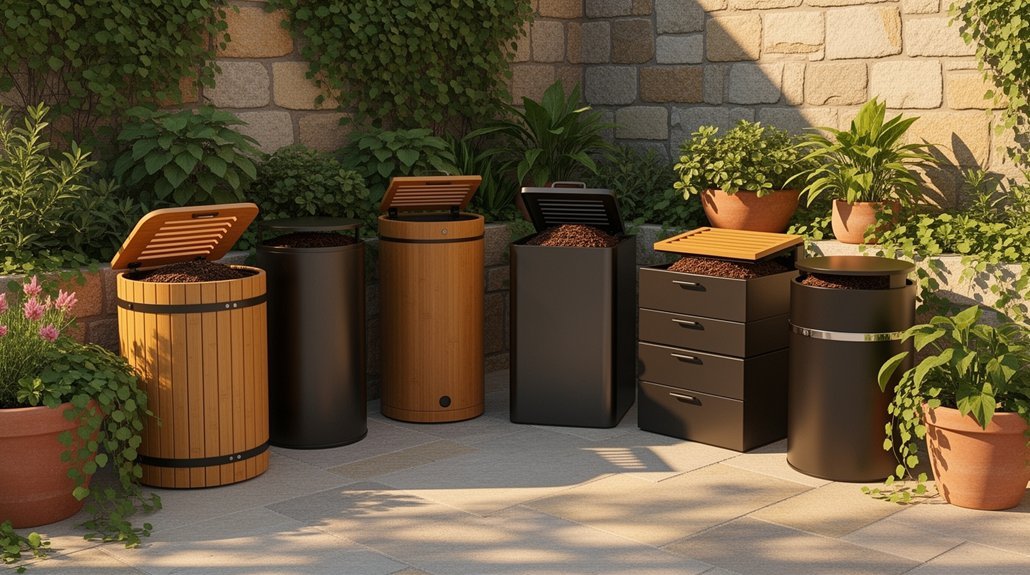
Compact Tools for Apartment Compost Ratio: Tumblers, Worm Bins, Electric Units
How can you keep composting efficient in a cramped apartment? Choose a compact tumbler that fits under a counter and seal it tight; the airtight design stops pests and traps heat, so your Compost breaks down faster. Rotate the mix of Browns and Greens a few times a week, then let it sit for two to three weeks, turning every few days once it’s full. If you prefer odorless, low‑maintenance options, set up a worm bin with shredded paper bedding and about a pound of red wigglers per square foot; the worms handle kitchen scraps without smell. For high‑tech convenience, a countertop electric unit shreds and heats waste, accepting even meat and dairy, though it draws power and costs more. Pair two tumblers to separate active from finished Compost for better space, odor, and harvesting control.
Quick FAQ: Common Ratio Questions for Apartment Composters
Choosing the right browns‑to‑greens ratio keeps your apartment compost humming, whether you’re using a tumbler, worm bin, or electric unit. You’ll often hear the 3:1 – 4:1 guideline, but real‑world tweaks depend on moisture and odor. Here’s a quick FAQ to keep your compost pile balanced:
A 3:1 – 4:1 browns‑to‑greens ratio keeps apartment compost humming, balancing moisture and odor.
- What ratio should I start with? Aim for 3 parts browns to 1 part greens by volume.
- Why does my pile smell? Too many greens or excess moisture—add more browns.
- Why isn’t it heating up? Not enough greens—mix in fresh kitchen scraps.
- How do I prep materials? Pre‑mix greens and browns in a bag before layering; keep the mix as damp as a wrung‑out sponge.
Follow these steps, and your Brown to Green balance will stay on point, preventing soggy, smelly conditions while promoting active decomposition.
Frequently Asked Questions
What Is the Best Ratio of Brown to Green for Composting?
You should aim for roughly three parts brown to one part green, about a 3:1 ratio. Mix, chop, and adjust as needed, keeping the pile moist but not soggy for optimal decomposition.
Which Method Is Best for Composting in Small Apartments?
You should choose a compact vermicomposting bin; it fits countertops, runs odor‑free, handles daily food scraps, and needs only occasional feeding and moisture adjustments, making it ideal for small apartments.
Do Coffee Grounds Count as Browns for Compost?
You should treat coffee grounds as greens, not browns. They’re nitrogen‑rich, so mix them with plenty of carbon‑heavy browns like shredded paper or dry leaves to keep your apartment compost balanced and odor‑free.
How Do the Amish Make Compost?
You make compost by mixing kitchen scraps with straw, leaves, or grass; add animal manure if available; turn the pile regularly with a pitchfork; keep it moist and airy, and let microbes do the rest.
In Summary
Keep the 1:2‑1:3 green‑to‑brown balance, pre‑mix, and check moisture with the wrung‑out sponge test. If it feels soggy, toss in more paper, cardboard, or dry leaves. Choose compact bins or worm farms that fit your space, and you’ll turn kitchen scraps into rich compost without a mess. Stick to the ratio, stay mindful of moisture, and your apartment compost will thrive.