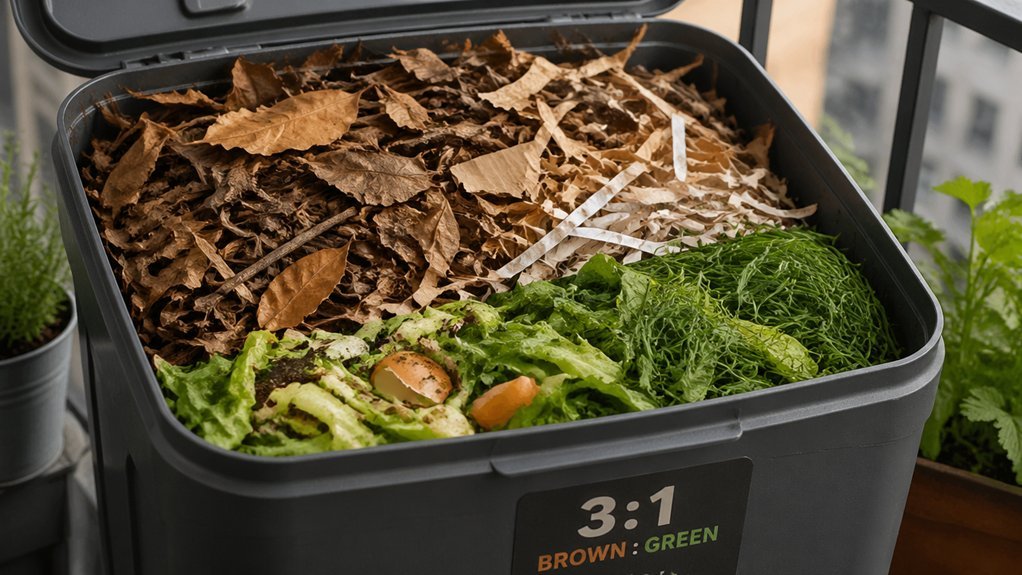
You need a 3:1 brown‑green ratio in small‑space composting because the extra carbon‑rich browns act like a sponge and scaffold, soaking up excess moisture, creating air pockets, and muffling odors while still feeding microbes enough nitrogen to stay warm and active. Browns bulk up the pile, keep it breathable, and prevent ammonia smells that a cramped bin would otherwise trap. This balance maintains heat, reduces wet spots, and keeps the compost healthy—continue and you’ll discover the exact steps to measure, turn, and troubleshoot the mix.
Why a 3:1 Brown‑Green Ratio Works Better in Small Bins

Because small bins trap moisture quickly, a 3:1 brown‑to‑green mix lets you absorb excess liquid and keep air flowing, preventing soggy piles. You’ll notice that the 3:1 ratio gives browns the bulk they need to create channels for aeration, while greens supply the nitrogen that fuels microbes.
In a cramped bin, too many greens overwhelm the system, causing ammonia smells and compaction. By loading more browns—dry leaves, shredded paper, or cardboard—you improve drainage and maintain composting balance. The carbon‑rich material also buffers temperature spikes, so the pile heats faster without overcooling.
Adjust the mix as you go: if the pile feels wet, add another layer of browns; if it smells sour, increase greens slightly. This simple tweak keeps moisture control tight and the compost healthy. Brown‑Green balance supports steady airflow and helps maintain the pile’s structure even in limited space.
Choosing the Right Browns and Greens for an Apartment
You’ll want compact greens like fruit scraps, veggie peels, and coffee grounds that fit snugly in a small bin. Pair them with bulk carbon sources such as shredded paper, cardboard, or dried leaves that pack tightly and absorb excess moisture. Additionally, look for a container with a tight-sealing lid to help maintain a clean, odor-free kitchen environment Charcoal filter.
Compact Green Sources
Looking for the best greens to keep your apartment compost thriving? In a small‑space composting system, you need nitrogen‑rich, low‑moisture green sources that won’t drown the pile. Chop vegetable scraps, coffee grounds, and herb stems into bite‑size pieces; this boosts surface area and speeds decomposition while keeping the bin odor‑free. Pair them with compact, carbon‑dense browns like shredded newspaper or cardboard to hit the 3:1 brown‑to‑green ratio. By shredding both browns and greens, you maximize airflow and keep the compost active in a tiny bin. 5-tray expandability
Bulk Carbon Options
When space is limited, pick bulk carbon sources that stay dry and add structure—shredded newspaper, cardboard strips, brown paper bags, and dried leaves work best. You’ll layer these browns around the occasional greens, like coffee grounds or fruit scraps, to keep the compost pile airy and odor‑free. Aim for a 3:1 ratio by volume, using a generous handful of bulk carbon for every cup of greens. The dry browns soak up excess moisture, while the shredded texture creates channels for aeration. Toss in tea bags (staple‑free) and crushed eggshells for extra carbon and minerals without crowding the bin. Turn the pile weekly; the bulk carbon maintains structure, promotes airflow, and speeds decomposition in your apartment setup. Regularly inspect seals and maintain anaerobic conditions to minimize odors during indoor use odor control and ensure the bokashi mix remains effective for quick fermentation.
How 3:1 Balances Moisture and Airflow in Compact Bins
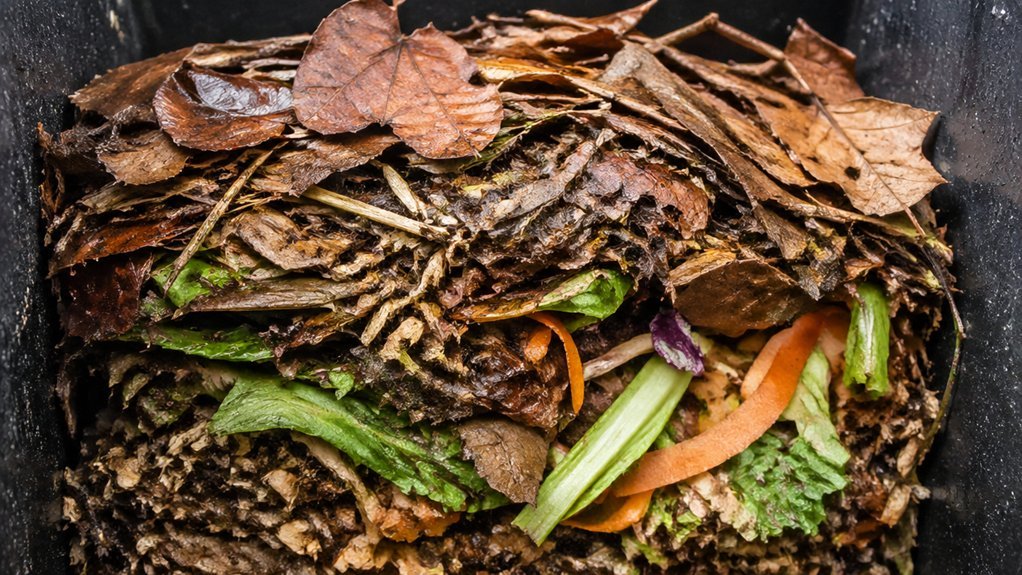
You’ll notice that a 3:1 mix lets the browns soak up extra water, keeping the pile from turning soggy.
Those dry carbon strips also create pockets of air, so oxygen can flow freely through the tight bin.
The result is a balanced moisture level and steady airflow that fuels aerobic microbes without the foul smell, and sustainable coir options support renewable agriculture while reducing waste from the coconut industry renewable agriculture.
Balanced Moisture Retention
How does a 3:1 brown‑to‑green mix keep moisture in check while still letting air flow? You’ll notice that the ratio acts like a sponge‑filter: browns soak up the extra liquid that greens release, while their fibrous structure creates pockets for aeration. In a compact compost bin, this balance mimics potting‑soil moisture, preventing soggy clumps and foul odors. By layering shredded browns with greens, you keep the pile fluffy, promote healthy microbial activity, and avoid compaction.
- Browns absorb excess water from greens.
- Carbon‑rich browns form air gaps for aeration.
- The 3:1 ratio maintains potting‑soil‑like moisture.
- Regular browns to greens additions curb humidity spikes.
- Proper layering speeds heating and prevents anaerobic pockets.
Optimized Airflow Channels
The moisture‑balanced 3:1 mix also creates natural airflow channels that keep a compact bin from choking. By stacking carbon‑rich browns with moist greens, you generate porous pockets that form aeration paths. Shredded browns boost porosity, while regular turning keeps those channels open, preventing anaerobic zones. In tight spaces the 3:1 brown‑green ratio absorbs excess water, so air can flow freely through 2–4 cm gaps, sustaining thermophilic microbes and rapid decomposition. Browns contribute to porosity and odor control, while greens help maintain steady moisture levels within the confined bin. balance principles support sustainable composting in limited zones.
Step‑by‑Step: Measuring a 3:1 Ratio by Volume
Ever wondered how to nail a 3:1 brown‑to‑green ratio by volume without guessing? Grab a bucket, measure three scoops of brown material, then one scoop of greens. Keep the pile balanced, and you’ll avoid soggy spots or dry clumps. Incorporate observations from small-space bokashi practices to ensure consistent moisture and aeration as you layer, so your composting process remains efficient in tight outdoor areas. Brown-to-Green
Typical 3:1 Ratio Errors (Too Wet, Too Dry, Smelly) and Fixes
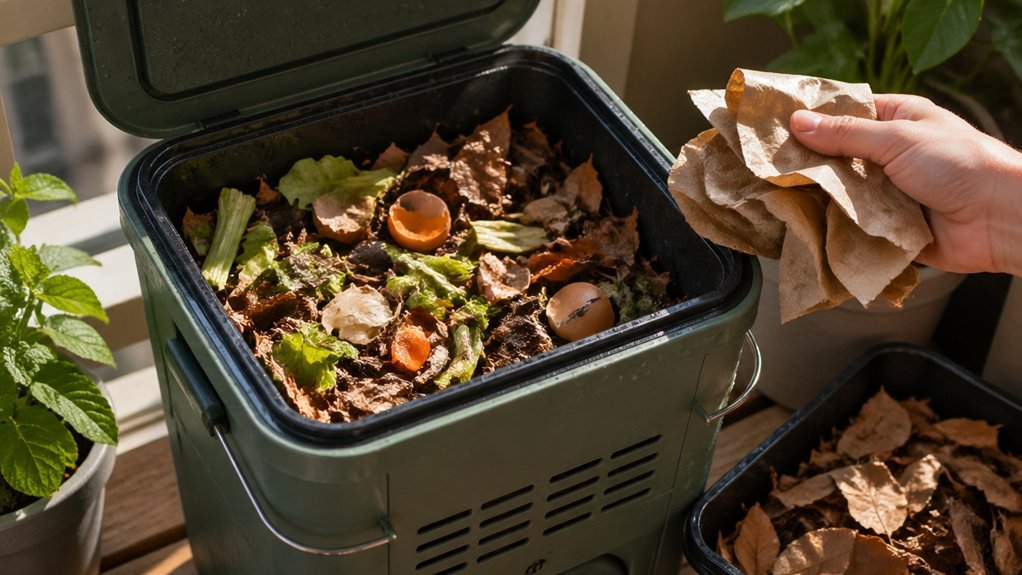
After measuring the 3:1 ratio, you’ll often notice the pile drifting into three common problems: it can become too dry, too wet, or start smelling. A dry compost pile means browns dominate, so add greens or a splash of water and turn for aeration.
If it’s wet, greens have overloaded the browns; mix in extra brown material, stir to introduce oxygen, and let excess moisture drain.
When putrefactive odors appear, the pile is overly wet and under‑aerated—add dry browns, fluff the mass, and increase turning to boost aeration.
In each case, watch moisture levels, keep the brown‑to‑green ratio balanced, and maintain good airflow to restore a healthy, odor‑free composting process.
How to Turn and Monitor a 3:1 Compost Pile
Wondering how to keep a 3:1 compost pile healthy? In small-space composting you’ll turn and monitor the pile weekly to maintain aeration, moisture balance, and a crumbly pile texture. Aim for a wrung‑out‑sponge feel; if it’s soggy, add more browns, if it’s dry, toss in greens. Keep the stack compact (2–3 ft tall and wide) so each turn mixes the 3:1 brown‑green ratio evenly.
- Flip the pile with a pitchfork or compost turner every 7‑10 days.
- Check texture by squeezing a handful; it should drip a few drops.
- Add shredded cardboard or dry leaves when it feels too wet.
- Sprinkle fresh kitchen scraps if it’s too dry.
- Record temperature and odor after each turn to spot problems early.
Quick FAQ: 3:1 Ratio Problems & Solutions (Smell, Wetness, Heat)
Why does a 3:1 compost pile sometimes smell, get soggy, or stay cool? In a small‑space setup, excess greens flood the pile with nitrogen, creating ammonia‑like odor and soggy texture.
To fix it, toss in more brown material until you regain the 3:1 ratio; browns soak up moisture, improve aeration, and mute odor.
If the pile stays cool, you likely lack enough bulk for air pockets—add shredded newspaper or dry leaves to increase the brown fraction and promote heat‑generating microbial activity.
When moisture spikes, sprinkle additional browns and turn the compost pile to redistribute wet spots.
Maintaining the proper balance of browns and greens keeps your small‑space compost healthy, odor‑free, and warm.
Frequently Asked Questions
What Is the Ideal Ratio of Brown to Green in Compost?
You should aim for roughly a three‑to‑one brown‑to‑green volume ratio. That balance keeps moisture in check, supplies enough carbon, and lets microbes break down scraps efficiently.
What Are Common Composting Mistakes?
You often add too many greens, making the pile soggy and smelly, or overload browns, slowing decay. You skip regular turning, forget to chop scraps, over‑ or under‑water, and include meat or dairy, inviting pests.
What Is a Good Ratio for Composting?
You should aim for roughly three parts brown material to one part green material. This 3:1 ratio balances carbon and nitrogen, keeps moisture right, and speeds decomposition without foul odors.
Can You Have Too Much Browns in Compost?
Yes, you can have too many browns. They’ll slow down microbes, keep the pile cool and dry, and hinder heat buildup, making decomposition sluggish and increasing the risk of a crumbly, inert compost.
In Summary
By keeping a 3:1 brown‑green mix, you give your small bin the carbon, nitrogen, moisture, and airflow it needs to decompose quickly without stinking. The extra browns soak up excess liquid, while the greens supply the food microbes love. Stick to the ratio, turn it often, and you’ll get a tidy, odor‑free compost that’s ready to enrich your plants in no time.