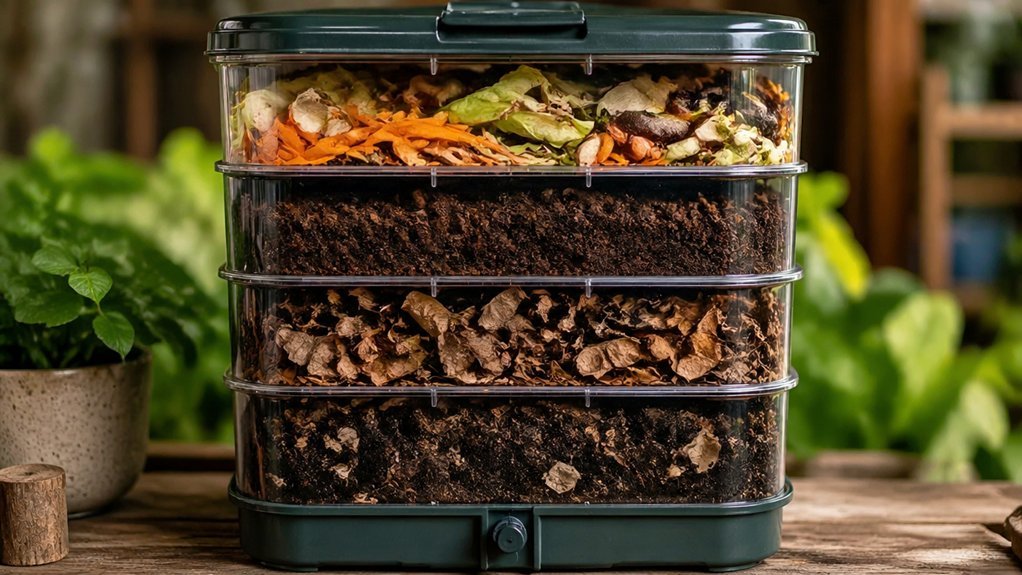
Pick a sunny‑ish spot on your balcony or kitchen nook and use a bin about three feet wide and deep, or a compact vermicomposting unit. Start with a six‑inch base of coarse twigs or straw, then add a three‑to‑four‑inch layer of dry browns like shredded newspaper or cardboard. Next, spread a two‑to‑three‑inch green layer of kitchen scraps, keeping a roughly 3:1 brown‑to‑green ratio, and finish with a four‑to‑six‑inch brown top for odor control. Turn the pile monthly, checking that it feels like a wrung‑out sponge, and you’ll keep it healthy and active.
Pick the Spot and Bin Size for Small‑Space Compost
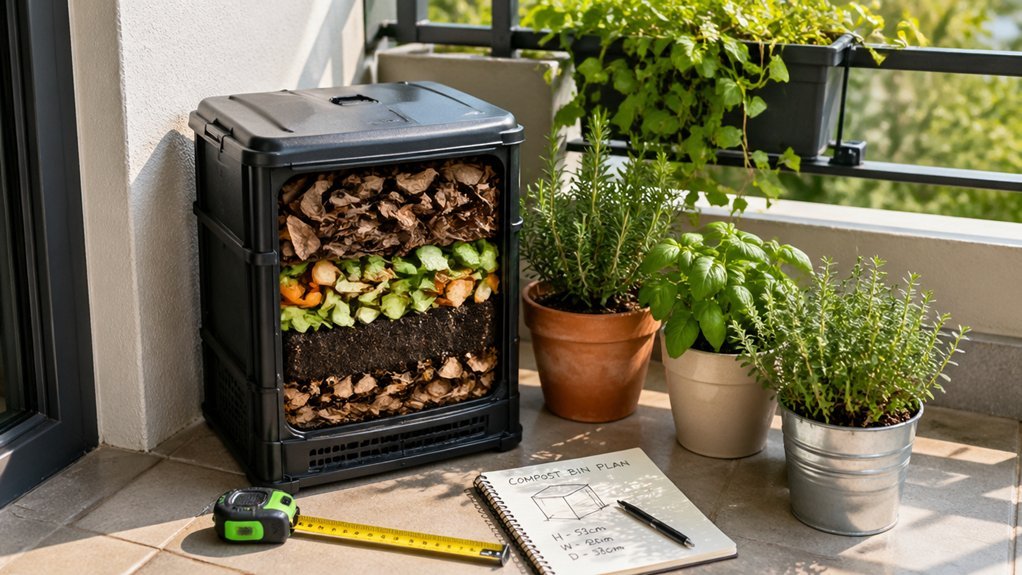
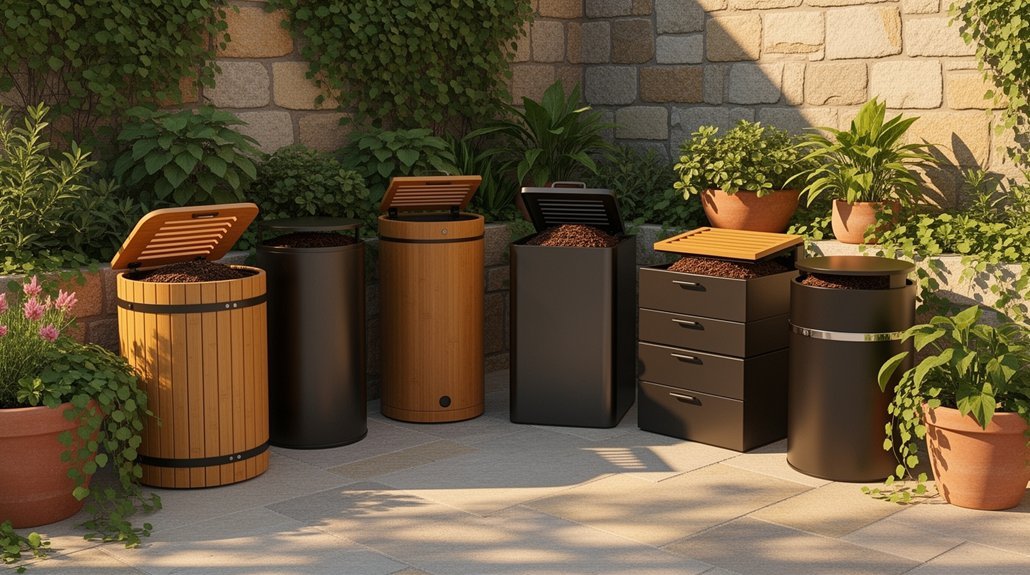
Where should you place your small‑space compost bin? Choose a partly shaded spot that still catches some sun, giving the compost pile enough heat while protecting it from extreme temperature swings. Position it where you can easily add brown materials and green materials, and keep a water source nearby for moisture control. For small spaces, pick a vermicomposting unit, tabletop bin, or balcony‑friendly container that fits a minimum bin size of about three feet wide and deep; this volume boosts heat retention and reduces surface‑to‑volume losses. Use an enclosed or semi‑enclosed design—cement blocks, wood, barrel, or three‑chamber system—to improve aeration, keep oxygen flowing, and deter pests. The right location and bin size ensure consistent moisture, oxygen, and temperature for efficient composting. In addition, using a dedicated ceramic or metal bin with odor controls can help maintain a tidy kitchen environment while you manage scraps. odor-control
Layer Browns, Greens, and Base for Small‑Space Compost
How do you build a thriving small‑space compost? Start with a base layer of coarse, air‑friendly material—twigs, small branches, or straw—about six inches thick. This base layer boosts aeration and drainage, letting microbes breathe. Add a brown layer of dry leaves, shredded newspaper, cardboard, or wood chips, three to four inches deep, to soak up excess moisture and give structure. Then spread a green layer of kitchen scraps, grass clippings, or coffee grounds, two to three inches thick, to feed microbes and generate heat. Keep alternating brown and green layers, aiming for a roughly 3:1 browns to greens ratio by volume. Finish with a four‑to‑six‑inch brown top layer for odor control and moisture management, ensuring the compost stays as damp as a wrung‑out sponge. Layering guidance
Turn, Water, and Aerate Your Small‑Space Compost
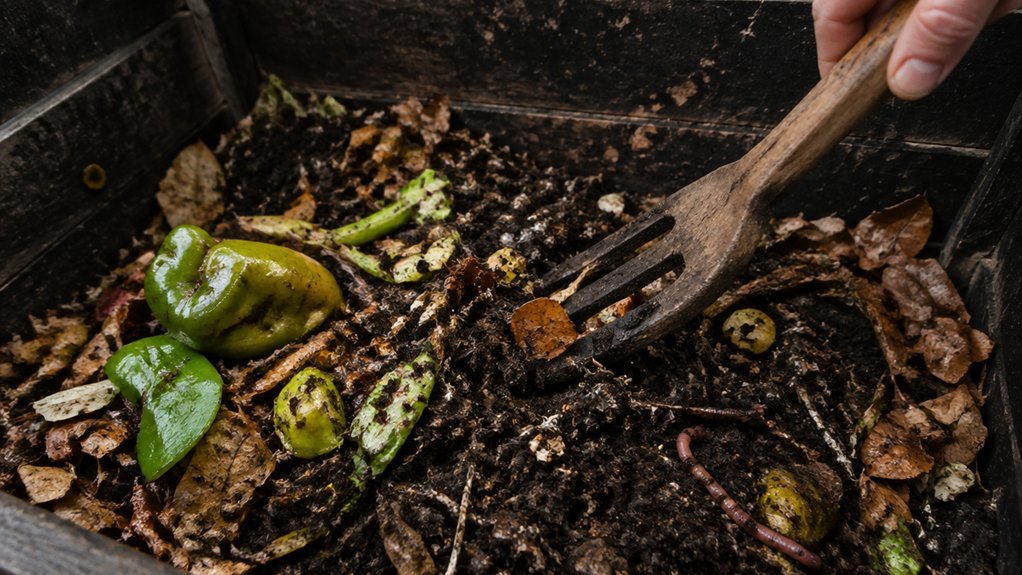
By rotating the pile every few weeks, you inject fresh oxygen, speed up microbial activity, and keep odors at bay. In a small‑space composting system, aim to turn the bin once or twice a month; a sturdy fork or hand trowel lets you lift and flip layers without spilling. As you turn, check moisture: the mix should feel like a wrung‑out sponge. If it’s dry, sprinkle water; if it’s soggy, add more brown materials to absorb excess. Using long‑reach aeration tools can help access deeper layers without bending, improving overall aeration and reducing the need for frequent full disassembly long‑reach aeration tools. The layered approach—alternating brown materials and green materials—helps maintain oxygen flow and balanced carbon‑nitrogen ratios. Proper compost bin management keeps the pile aerated, moist, and compact, ensuring efficient decomposition in limited space.
Frequently Asked Questions
How to Compost With Minimal Space?
You compost in tiny spaces by stacking a 6‑inch coarse base, then alternating 3‑inch brown and 2‑inch green layers, keeping a 3:1 ratio, and topping with a thick brown cover to control odor.
What Three Items Should Not Be Placed in a Compost Pile?
You should keep meat, dairy, and oily foods out of your compost, avoid pet waste and treated wood, and never add whole eggs or large bones, because they attract pests, cause odors, and decompose slowly.
How Often Should I Pee on Compost?
You should add urine sparingly—once or twice a week—diluted with water and mixed into the green layer, then balance with browns and turn regularly to keep the pile aerobic and odor‑free.
Should Compost Be Layered or Mixed?
You should layer if you want low‑maintenance, slower compost; mix if you crave faster breakdown and fewer odors. Layering needs less turning, while mixing adds oxygen, speeds decomposition, and reduces smell.
In Summary
Now you’ve got the perfect spot, the right bin size, and the proper layers of browns, greens, and a solid base, keep turning, watering, and aerating. By following these steps, you’ll turn limited space into a thriving compost system that produces rich, nutrient‑dense soil for your garden. Happy composting!