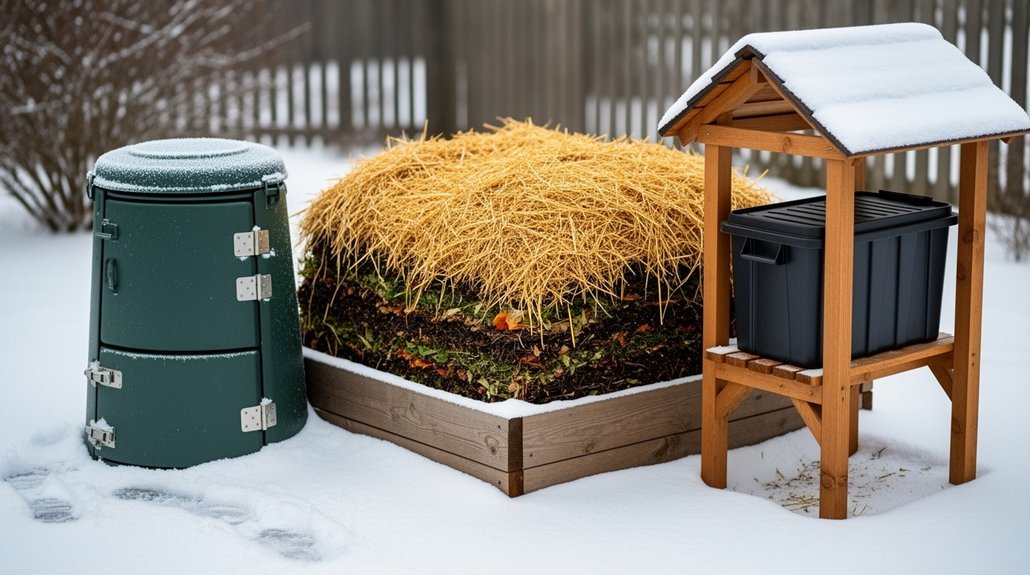
You can maintain active composting through winter by building an insulated lidded bin with balanced browns and greens, keeping your tumbler warm with reflective wrap and dark coverings in sunny spots, and batch-feeding frozen kitchen scraps that thaw and decompose faster. These methods sustain microbial activity when temperatures drop. Each approach offers specific advantages for your compact system, and there’s plenty more insight into optimizing your winter composting success.
Build an Insulated Lidded Bin With Layered Browns and Greens
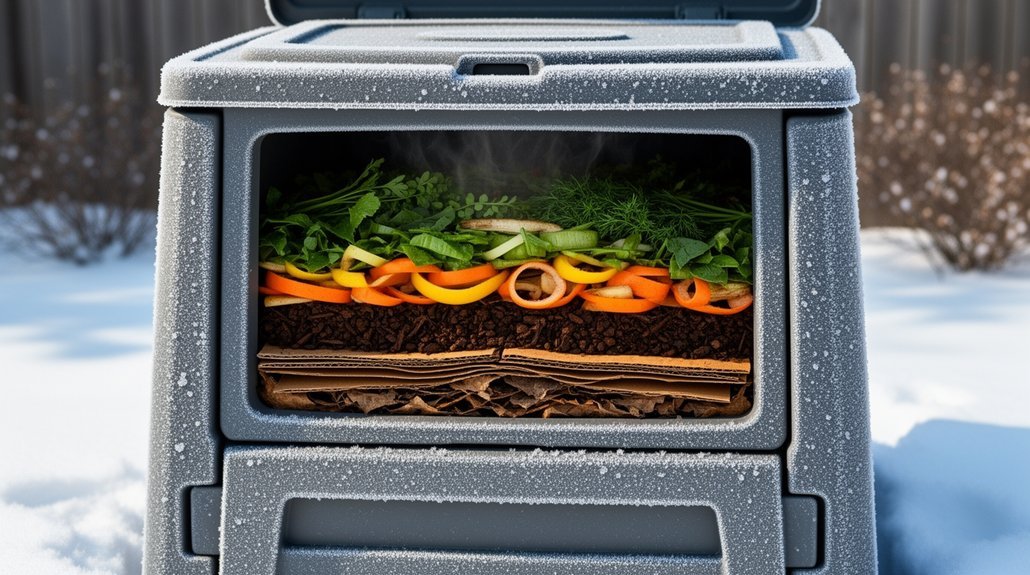
How can you keep your compost active when temperatures plummet? Build an insulated lidded bin with a minimum volume of one cubic metre to maintain critical mass. Start by layering browns and greens in a 50:50 ratio—use leaves, cardboard, or straw for browns, and food scraps or fresh garden waste for greens. Pre-mix your materials before loading to ensure even decomposition in cold weather.
Top your bin with an insulated lid built from boards sandwiched around loft insulation. This prevents heat from escaping upward. Position your bin in full sun on a sheltered site to maximize external warmth and minimize wind exposure. Corrugated cardboard offers superior insulation due to trapped air pockets within its structure. The combination of proper size, insulation, balanced materials, and strategic placement keeps your winter compost productive when outdoor temperatures drop significantly. For optimal results, choose a turning fork with ergonomic grip to regularly aerate your pile and accelerate decomposition during cold months.
Keep Your Tumbler Warm and Turning All Winter
Compost tumblers can stay active through winter if you’ve got the right strategy—but they’ll cool faster than ground bins because cold air surrounds them on all sides. You’ll want to insulate your tumbler with reflective bubble wrap, old moving blankets, or straw bales around the base. Dark coverings like black plastic absorb sunlight and raise internal temperatures. Don’t neglect the lid—heat escapes upward, so insulating it matters.
Turn your tumbler every few days to introduce oxygen and prevent frozen clumps. Weekly rotation maintains microbial activity and redistributes warm pockets throughout. Position your tumbler in winter sun and away from harsh wind. A south-facing wall provides passive warmth. Keep materials adequately moist but not soggy, and maintain a solid green-to-brown ratio for sustained core heating. Chopping kitchen scraps and yard waste into smaller pieces increases surface area for microbes to break down, accelerating decomposition even in cold conditions. Using compostable bags can help extend your container’s life while managing winter moisture levels.
Batch-Feed Frozen Kitchen Scraps for Easier Winter Feeding
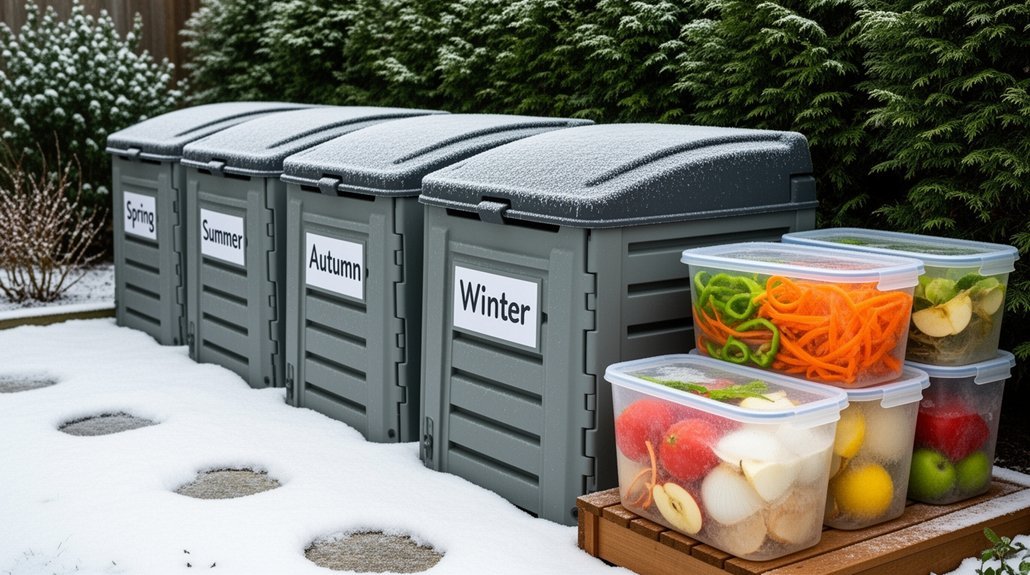
Freezing your kitchen scraps is one of the smartest winter batch-feeding strategies you can adopt. You’ll collect daily scraps in a freezer-safe container until you’ve accumulated enough to transfer to your outdoor bin. This approach eliminates daily trips outside and prevents odors and fruit flies from bothering you.
When you’re ready, add your frozen batch to your compost system and cover it generously with browns like leaves or shredded cardboard. The ice crystals that formed during freezing rupture plant cell walls, actually accelerating decomposition once thawed. For optimal results, chop or blend scraps before freezing to further increase surface area and speed up the breakdown process. Mini bokashi systems offer an excellent alternative for winter composting, allowing you to ferment all food waste types including bones, meat, and dairy indoors before transferring to outdoor bins.
Come spring, transfer any remaining frozen material into your actively composting mass, where warmer temperatures will complete the breakdown process efficiently.
Frequently Asked Questions
How Do I Prevent My Winter Compost Batch From Becoming Waterlogged by Snow and Rain?
You’ll prevent waterlogging by covering your pile with a tarp or three-sided roof, building it on elevated or well-drained ground, layering thicker brown materials, and turning it regularly to release trapped water and reintroduce oxygen.
What Carbon-To-Nitrogen Ratio Should I Maintain When Composting With Frozen Kitchen Scraps?
You should maintain a carbon-to-nitrogen ratio of 25:1 to 30:1 when composting frozen kitchen scraps. Aim for 30:1 in winter since cold slows decomposition. You’ll need extra carbon materials to balance the nitrogen-rich scraps.
Can I Store Fall Leaves Long-Term for Use as Winter Insulation and Browns?
Yes, you can store fall leaves long-term for both purposes. You’ll want to keep them dry and airy using breathable containers like mesh bags or wire cages. Shredded leaves store more predictably than whole leaves.
How Does Freeze-Thaw Cycling Affect Decomposition Rates in Winter Batch Composting Systems?
You’ll find that freeze-thaw cycling slows decomposition initially, but it mechanically fragments your feedstock, increasing surface area. Once spring warmth arrives, you’ll see faster breakdown as microbes access newly exposed materials and resumed metabolic activity.
What Moisture Level Indicates My Winter Compost Batch Is Too Wet or Too Dry?
You’ll know your batch is too dry below 40% moisture—it’ll crumble dusty when you squeeze it. It’s too wet above 60%—water’ll stream out, and you’ll smell sour or rotten odors.
In Summary
You’ve now got three solid winter composting strategies to keep your pile productive when temperatures drop. Whether you’re building an insulated bin, maintaining a tumbler, or batch-feeding frozen scraps, you’ll find the method that works best for your space and lifestyle. Pick one approach, stick with it, and you’ll have rich compost ready come spring.