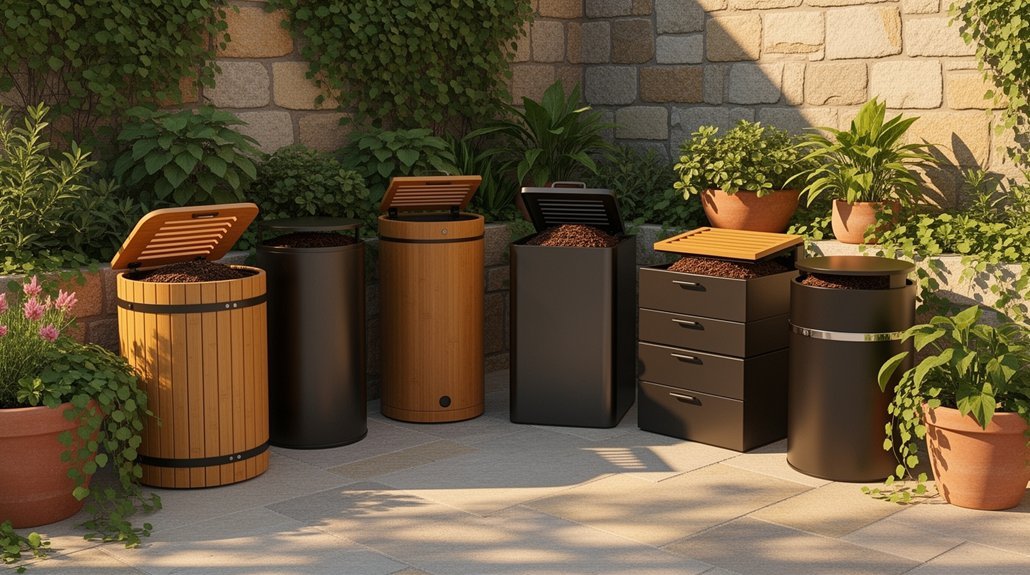

You’ll turn your cramped kitchen into a tidy, eco‑friendly hub by using a sleek countertop vermicomposter that fits your décor and locks smells inside with sealed lids and charcoal filters. The compact system runs year‑round, turning scraps into nutrient‑rich worm tea and vermicompost without a backyard. Proper moisture balance, dry browns, and regular aeration keep odors at bay, while the stylish container frees up cabinet space. Keep going and discover how to harvest and use the compost efficiently.
Choose the Right Countertop Compost Container for Apartments

Why settle for a bulky kitchen gadget when a sleek countertop compost container can fit right on your apartment sill? You’ll want a Smart Kitchen Vermicomposter that blends into your décor while handling indoor composting efficiently. Look for a countertop unit with sealed lids and built‑in odor control; this keeps smells locked away in a closed living space. Choose an apartment‑friendly design that offers compact dimensions and color options—green, ivory, brown, or anthracite—to match your interior. Verify that the system uses worms to transform scraps into nutrient‑rich vermicompost and worm tea, giving you fresh fertilizer without a garden. Prioritize models that boast award‑winning design and easy maintenance, so you can keep your tiny kitchen tidy and sustainable. Additionally, using compostable bags with home compost certification ensures your waste breaks down effectively indoors without harmful residues.
Why Indoor Composting Is a Great Fit for Tiny Kitchens
Ever wondered how you can turn a cramped countertop into a sustainable mini‑farm? Indoor composting fits tiny kitchens because it works year‑round in a temperature‑stable spot, so you never need a backyard. Vermicomposting and Bokashi systems are compact, stylish, and built for odor control, letting you process scraps without a stink. The Smart Kitchen Vermicomposter even doubles as a décor piece, turning waste into nutrient‑rich vermicompost and worm tea while earning design awards. By keeping the bin inside, you avoid pests and outdoor bins, maintaining a closed‑loop system that dramatically cuts landfill waste. With these sleek, low‑maintenance options, your limited counter space becomes a powerful, eco‑friendly hub. Selecting bins with integrated charcoal filter systems enhances odor control and makes indoor composting even more convenient.
Set Up a Low‑Odor, Space‑Saving Indoor Bin
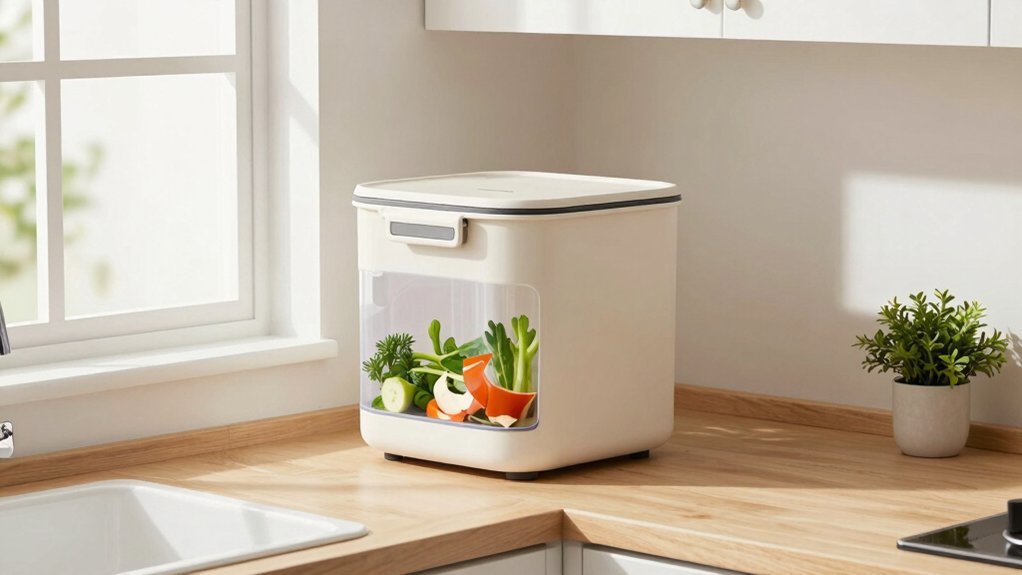
After seeing how a tiny kitchen can host a full‑scale compost system, the next step is getting a bin that stays fresh and fits the space. Choose a low‑odor indoor composting unit that seals tight—Bokashi buckets work great because you add a fermenting starter and then close the lid, trapping smells. If you prefer vermicomposting, pick a compact worm bin with a built‑in charcoal filter and a double‑wall design that blocks odor while keeping worms happy. Look for space‑saving models that slot onto a countertop or tuck under a cabinet; many have sleek, stackable trays that maximize vertical room. Position the bin away from direct heat and ensure the lid closes securely, and you’ll enjoy a clean, efficient kitchen garden without any unwelcome aromas. Using pH-neutral coconut coir bedding in your worm bin helps maintain moisture and aeration for a healthy composting environment.
How to Keep Your Indoor Bin Just the Right Moisture
You’ll want your bin to feel like a damp sponge—moist enough for microbes but not soggy enough to stink. If it gets too wet, toss in dry brown stuff like shredded cardboard or leaves to soak up excess liquid.
When it’s dry, spray a little water while you turn the pile, and keep mixing to spread moisture evenly. Using containers with airtight silicone gaskets can help maintain the right moisture balance in your composting materials.
Moisture Balance Tips
Wondering how to keep your indoor compost from turning into a soggy mess? Master moisture management by aiming for a damp sponge‑like texture. Mix kitchen scraps (greens) with plenty of dry browns—shredded newspaper, leaf litter, wood chips—to achieve balanced moisture.
When the pile feels wet, sprinkle extra browns and give it a good turn; this boosts aeration and pulls excess water away.
If it’s dry, lightly spray water while stirring, letting the moisture soak into the material.
A quick squeeze test helps: the contents should clump but release only a few drops.
Rotate the bin every few days to keep oxygen flowing, prevent anaerobic spots, and keep your compost happy and productive.
Using an indoor composter with a carbon filter system can also help manage odors while maintaining optimal moisture levels.
Odor‑Free Maintenance
How can you keep your indoor compost smelling fresh while maintaining the perfect moisture balance? Keep the bin damp like a sponge—enough water for microbes but not soggy. When it gets too wet, toss in dry brown material such as shredded cardboard, leaves, or wood chips to restore moisture balance. If it feels dry, spray water while you turn the pile, then mix well to rehydrate.
Regular turning boosts aeration, letting aerobic microbes work efficiently and preventing odor buildup.
Choose a sealed container—bokashi or vermicomposting units are ideal—for strong odor control and a stable microenvironment. Incorporating an airtight lid with activated-charcoal filter can further help control odors and maintain freshness.
Fix Common Indoor Compost Problems Quickly
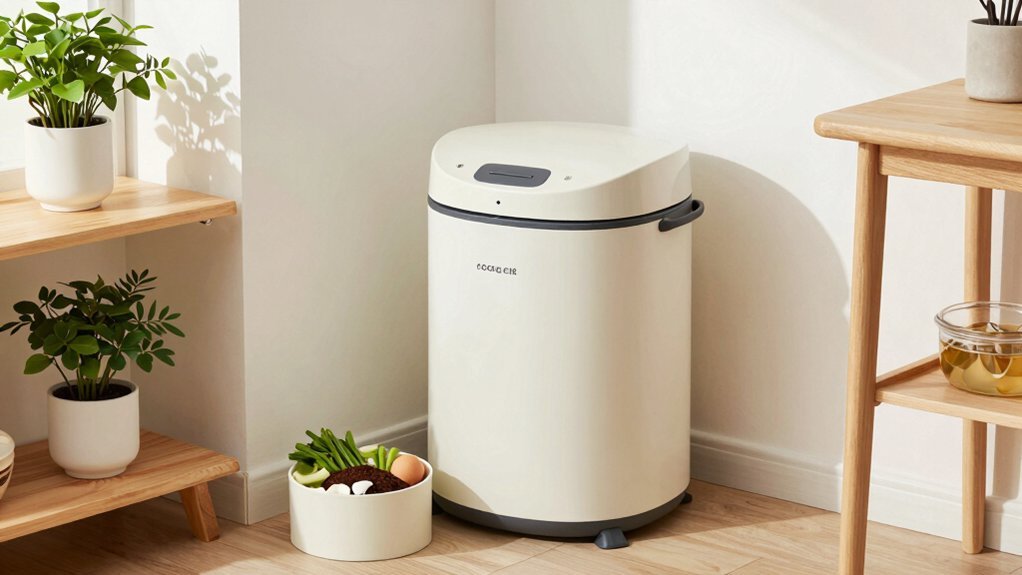
Ever noticed a sour smell or sluggish breakdown in your kitchen bin? You can fix it fast by tweaking kitchen waste handling, indoor composting setup, and moisture management. Keep the C:N ratio near 30:1 and use odor control tricks to stay fresh.
- Turn and aerate – stir the pile every few days to boost aerobic microbes and speed breakdown.
- Balance moisture – if it’s soggy, sprinkle shredded paper or dry leaves; if dry, mist with water while turning.
- Adjust C:N ratio – add more carbon‑rich material when scraps are too nitrogen‑heavy, or vice‑versa, to hit the 25‑30:1 sweet spot.
- Seal and contain – use a covered bin or Bokashi‑style container to lock in odors and keep pests out.
These steps restore rapid decomposition and keep your tiny kitchen smelling clean. For best results, consider using an indoor compost crock with a charcoal filter to control odors effectively.
Harvest Compost for Garden Use and Cut Fertilizer Costs
After fixing the smell and speed of your indoor bin, the next step is to put that finished compost to work in your garden. You’ll scoop the dark, crumbly soil amendment straight from your kitchen scraps pile and spread it over beds, pots, or raised beds. The nutrient‑rich soil boosts water retention, improves structure, and fuels microbial life, so plants grow stronger while you slash synthetic fertilizer purchases. Regular harvest closes the nutrient loop, turning waste into cost‑cutting, sustainable gardening.
| Benefit | How it works |
|---|---|
| Soil amendment | Adds organic matter, improves texture |
| Nutrient‑rich soil | Supplies N‑P‑K, calcium, trace minerals |
| Fertilizer savings | Reduces need for commercial products |
| Waste reduction | Turns kitchen scraps into garden gold |
Frequently Asked Questions
Do Potato Peelings in Compost Attract Rats?
Yes, they can if you leave them exposed, but sealing the peels in a closed bin, balancing them with dry browns, and keeping the pile moist yet not soggy will keep rats away.
How Do Amish Compost?
You follow Amish composting by layering greens and browns, keeping the mix damp, turning it regularly, monitoring temperature, and shielding it from pests; the pile decomposes aerobically into dark, crumbly soil.
What Kitchen Scraps Should You Not Compost?
You shouldn’t compost meat, dairy, oily foods, heavily processed items, or large piles from one source—these attract pests, cause odors, and slow down decomposition in a small indoor system.
What Are 5 Disadvantages of Composting?
You’ll face odor issues, pest attraction, high energy consumption, limited capacity in tiny spaces, and often incomplete nutrient recycling because many indoor units produce dehydrated waste rather than true compost.
In Summary
By picking a compact, low‑odor bin and keeping moisture in check, you turn your tiny kitchen into a sustainable hub. Quick fixes for common issues keep the process smooth, while the finished compost fuels your garden and slashes fertilizer bills. Embrace indoor composting, and watch your small space make a big environmental impact.