
You stop kitchen odors by sealing your countertop compost bin airtight, which cuts off oxygen and forces microbes into low‑odor anaerobic pathways. The tight lid also traps volatile gases, while a carbon filter absorbs any remaining smells. Balancing moisture with dry browns prevents fermentative odors, and keeping the lid closed limits airflow that fruit flies need. If you keep these steps in mind, you’ll discover even more tricks for a truly odor‑free kitchen.
Stop Odor‑Creating Bacteria in an Airtight Countertop Compost Bin

Why let kitchen smells linger when you can lock them away? You stop odor‑creating bacteria by using an airtight bin with a sealed lid and a charcoal filter. The tight seal limits oxygen, shifting microbes from aerobic to slower anaerobic pathways that emit fewer foul compounds. Moisture management is key: remove wet scraps promptly and add dry browns for balance, preventing the soggy environment that fuels odor‑causing bacteria. The charcoal filter further traps volatile gases, while carbon filters can be added for extra odor control if needed. Countertop composting stays clean when you keep the lid closed, monitor moisture, and practice browns and scraps management. This simple routine curbs sour aromas and keeps your kitchen fresh. Choosing a compost bin with a charcoal filter lifespan
Choose Moisture‑Control Over Carbon Filters for an Airtight Countertop Compost Bin
Locking the lid is only half the battle; the real secret to a odor‑free countertop bin is keeping the waste dry. Moisture control beats carbon filters because excess liquid creates anaerobic fermentation and spikes odor suppression. Aim for moisture content around 50‑60 % before you add scraps; this cuts bacterial activity by half. Layer dry browns, shredded paper, or an absorbent liner at the bottom and between wet pieces to soak up juices. The liners also preserve airflow, preventing pockets where smells linger. In an airtight counterop bin, proper moisture management outperforms any seal‑only or carbon‑only strategy, keeping fermentation in check and your kitchen smelling fresh. Using tools with rust- and corrosion-resistant steel composition helps maintain hygiene and efficiency when turning composted materials.
Block Fruit Flies by Restricting Airflow in an Airtight Countertop Compost Bin
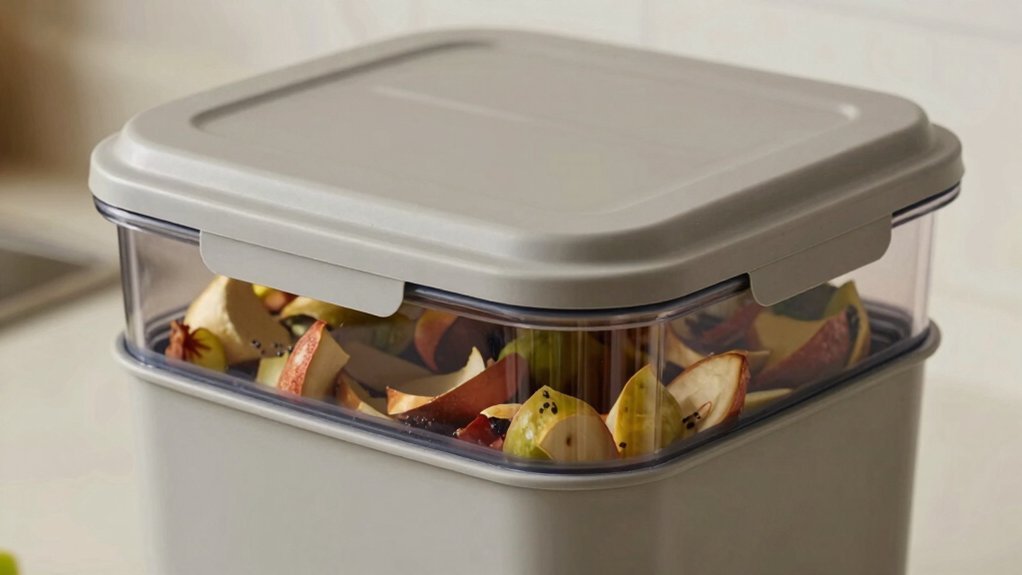
When you seal the bin tightly, you cut off the oxygen fruit flies need to locate fermenting scraps, so they can’t follow scent cues into your kitchen. The airtight lid creates a sealed container that limits airflow restriction, which in turn curbs aerobic activity and reduces moisture buildup. With fewer scent trails, fruit flies lose the pull of odor containment, and filters on the countertop bin keep any volatile smells from escaping. Pair this with periodic emptying, and you’ll notice a dramatic drop in fly presence.
- Use a tight‑fitting airtight lid with built‑in filters for odor containment.
- Maintain moisture control by minimizing air exchange and wiping excess liquid.
- Perform periodic emptying to interrupt any remaining aerobic activity.
Selecting a compost bin with UV-protected materials enhances durability and helps maintain airtight integrity over time.
Set Up a Zero‑Odor Countertop Compost Bin in 5 Simple Steps
Sealing the bin tightly already cuts off fruit flies, so the next step is to set up a zero‑odor countertop compost system you can keep running hassle‑free. First, choose a countertop compost bin with an airtight lid and a built‑in carbon filter for odor control.
Second, place a removable inner bucket inside; this makes cleaning easy and prevents residue buildup.
Third, add kitchen waste in small amounts and balance it with dry browns like shredded paper for moisture management.
Fourth, keep the bin out of direct heat and near prep zones, then sprinkle extra dry browns on top after each addition.
Finally, practice regular emptying every 2–4 days to maintain pest prevention and fresh‑smelling compost.
For optimal maintenance, select bins with replaceable charcoal filters to sustain effective odor control over time.
Avoid Common Airtight‑Seal Mistakes That Cause Odor
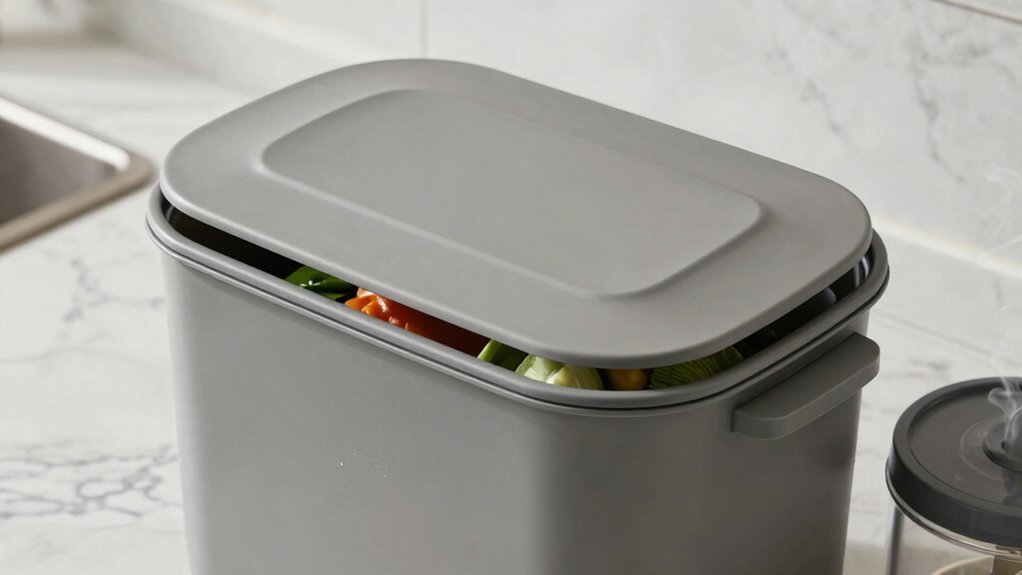
Why do you still smell compost even with a tight lid? A perfect airtight seal won’t stop odor if moisture builds up, airflow is blocked, or browns are missing. Your kitchen bin needs moisture management and a balance between wet scraps and dry material. Without that, anaerobic microbes release sulfides and acids, and fruit flies are attracted to the damp mess.
- Don’t trap moisture: line the bin with a breathable sheet and add enough browns to soak up liquid.
- Replace carbon filters: they saturate quickly; a fresh filter restores airflow and odor prevention.
- Ensure ventilation: a tiny vent or periodic lid lift creates airflow, keeping the compost aerobic and the smell at bay.
Using organic additives like alfalfa meal pellets can enhance compost nutrient balance and reduce odors effectively.
Fix Persistent Odor in Your Airtight Countertop Compost Bin
You can curb a lingering smell by balancing moisture—add dry browns like shredded paper and stir to spread dampness evenly.
Then, improve airflow without breaking the seal by gently shaking the bin to redistribute contents and checking that the charcoal filter isn’t clogged.
Finally, keep a routine of emptying every few days and rinsing the bin with warm vinegar water to prevent odor buildup.
Consider also using a quality activated charcoal filter to adsorb odors effectively within your compost bin.
Moisture Management Tips
When moisture builds up in your airtight countertop compost bin, it creates anaerobic pockets that release sour, swampy odors. To keep odor reduction on track, focus on moisture control and maintain a healthy moisture balance. Add dry browns—shredded paper, torn cardboard, or dry shredded paper—to absorb excess liquid from damp scraps and create airflow pockets. Lightly stir the glossy sludgy contents after each addition to boost aeration and prevent stagnant zones. Refresh charcoal filters regularly, but remember that the key to fighting composting odors lies in layering greens with browns and avoiding liquid pooling.
- Sprinkle a generous layer of dry browns each time you add wet greens.
- Use dry shredded paper to soak up excess moisture before it turns the mix glossy.
- Stir gently after every addition to form airflow pockets and restore aeration.
Using bins with a charcoal filter system can significantly enhance odor control by absorbing persistent smells inside your compost bucket.
Airflow Optimization Strategies
Moisture control only works when fresh gets enough oxygen, so the next step is optimizing airflow. In your airtight bin, add a few ventilation holes or a tiny fan to create constant air exchange; this boosts aeration and stops moisture buildup that fuels odor.
When you layer greens and browns, sprinkle dry browns after each wet addition to form pockets that let oxygen reach the whole mix, promoting aerobic decomposition.
Stir or turn the pile gently every 1–2 weeks; the motion spreads moisture evenly and prevents anaerobic spots that release smells.
If you notice excess dampness, add more dry browns and empty the bin every 2–4 days. These simple airflow strategies keep odor prevention on track.
Frequently Asked Questions
Do Countertop Composters Smell?
Yes, they can smell if you neglect balance and airflow, but using an airtight lid, carbon filter, and proper browns‑to‑greens ratio keeps odors at bay, so your kitchen stays fresh.
What Countertop Compost Bin Doesn T Smell Bad?
You’ll want a sealed countertop bin with a carbon filter, moisture‑balancing layers, and easy‑clean design; those features keep odors locked inside, so your kitchen stays fresh.
What Can I Put in My Kitchen Bin to Stop It From Smelling?
You should add lots of dry browns—shredded newspaper, cardboard, or straw—covering every wet green. Sprinkle coffee grounds or charcoal, and keep the lid sealed with a filter for fresh, odor‑free compost.
How to Keep Compost From Smelling in the Kitchen?
Seal the bin, add a carbon‑filter lid, and layer each addition with dry browns like shredded paper. Keep it dry, empty it every few days, and avoid meat, dairy, or greasy scraps.
In Summary
By sealing your compost, you shut out the bacteria that cause smells, keep moisture in check without relying on carbon filters, and block fruit flies by limiting airflow. Follow the five‑step setup, avoid common sealing errors, and troubleshoot any lingering odor with the tips above. The result? A clean, odor‑free countertop that turns food scraps into rich soil without compromising your kitchen’s fresh atmosphere.