
Remove the old deodorizer, then cut a 6.7‑inch‑by‑0.2‑inch activated‑carbon sheet to fit your lid’s opening; trim any flower‑shaped edges if needed. Press the flat sheet into the deodorant compartment or onto the adhesive area until it’s snug, and check it monthly—replace it every 1–3 months or sooner if odors return. Store extra sheets in a cool, dry place, sealed in their original packaging, and you’ll keep your kitchen air fresh while learning more about ideal filter maintenance.
Install the Charcoal Filter in Your Compost Lid

How do you get your compost lid smelling fresh?
First, take out the old deodorizer from your countertop compost bin.
Grab the new activated carbon charcoal filter—usually 6.7 inches across and 0.2 inches thick—and line it flat against the lid opening.
If your lid is smaller, trim the flower‑shaped sheets so they still cover the interior fully.
Slide the filter into the deodorant compartment or press it onto the adhesive area, making sure it sits securely.
This lid installation creates a barrier that traps unpleasant smells, enhancing odor control.
Remember to check the filter monthly and perform a filter replacement every 1–3 months, or sooner if odors return, to keep your compost bin fresh.
To maintain optimal composting conditions, consider monitoring the temperature using an indoor compost thermometer to ensure efficient decomposition and reduce odors.
Why a Charcoal Filter Is Essential for Odor‑Free Countertop Composting
Installing the filter is only half the battle; the real benefit comes from what the charcoal actually does. Activated carbon’s porous microstructure gives it massive surface area, letting it trap VOCs, ammonia, and sulfur compounds before they drift out of your countertop compost pail. This VOC adsorption delivers true odor elimination, not just masking, and it boosts indoor air quality where you prepare food.
Activated carbon’s porous microstructure traps VOCs, ammonia, and sulfur, delivering true odor elimination and fresher indoor air.
- Surface area – more pores mean more molecules captured.
- VOC adsorption – neutralizes smells at the source.
- Fit and quality – a well‑matched filter maximizes contact and prolongs effectiveness.
Replace charcoal filters every 2‑6 months to keep pores clear and your kitchen fresh. For optimal results, use standard 5.625-inch filters compatible with most ceramic compost crocks.
Select the Correct Size and Shape for Your Compost Bin
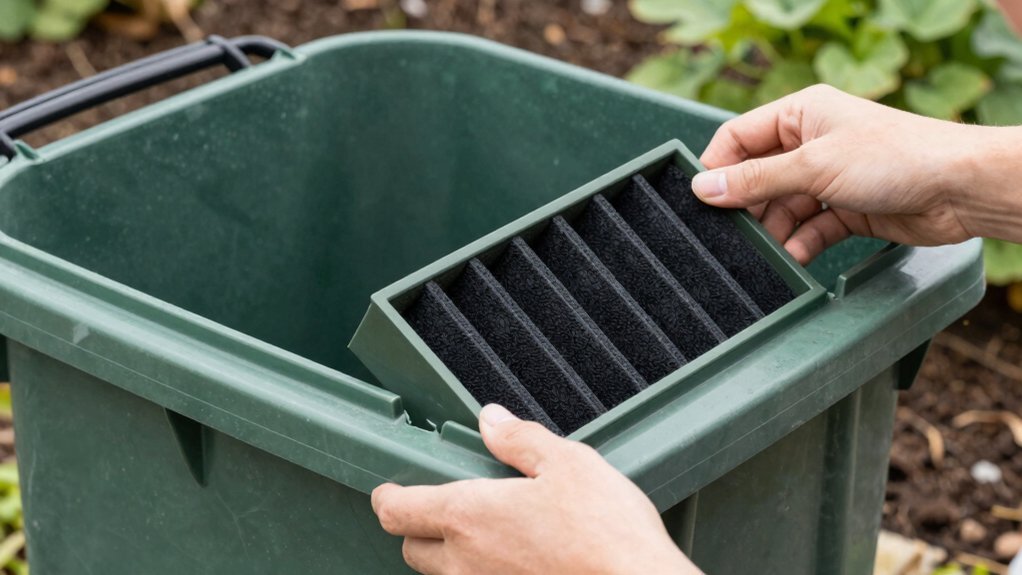
Choosing the right charcoal filter size and shape is essential for a leak‑proof, odor‑free compost bin. First, measure your compost bin’s lid diameter and thickness; most indoor compost units use a 6.7‑inch diameter and 0.2‑inch thick opening. Then, match those dimensions with an activated charcoal filter that fits snugly—no gaps, no overhangs. Check the bin’s manual or manufacturer notes for model‑specific replacement filters; some compact bins require plate‑style sheets, while others accept pellet cartridges. If a pre‑cut filter is too large, trim it carefully with scissors to achieve a perfect fit. Confirm that the filter size aligns with your indoor compost setup, ensuring a tight seal and optimal odor control. Many popular options such as 7.2-inch flower-shaped filters offer double-sided adhesive for easy installation and effective odor absorption.
Store, Trim, and Clean Your Charcoal Filter for Longevity
Now that your filter fits perfectly, keep it in a cool, dry spot and its original packaging when you’re not using it. Proper storage protects the activated carbon, preserves odor control, and extends the life of your charcoal filter.
When you need to replace a filter in your countertop bin, follow these quick steps:
- Trim – Cut away any frayed edges with scissors to maintain a snug fit and prevent dust leakage.
- Clean – Gently brush the surface with a soft brush to remove loose particles; avoid water, which can degrade the carbon.
- Store – Place the trimmed filter in a sealed bag or its original box, label it by model, and keep it in a dry drawer away from strong smells.
Regular maintenance and organized storage ensure reliable odor control and easy replacement.
Frequently Asked Questions
How to Fix Compost That Smells Bad?
You should balance greens and browns, keep the bin moist but not soggy, add a layer of newspaper, sprinkle baking soda, and replace the activated‑charcoal filter every few months to trap lingering odors.
How Often Should I Change the Charcoal Filter in My Compost Bin?
You should swap the charcoal filter roughly every three to four months, but check for odors, discoloration, or reduced airflow and adjust to two months for heavy use or up to six months if you run it lightly.
Does a Charcoal Filter Remove Smells?
Yes, a charcoal filter removes smells by adsorbing odor‑causing gases onto its porous surface. You’ll notice fresher air when the filter fits tightly, stays dry, and you replace it before the pores saturate.
How to Make a Homemade Charcoal Filter?
You’ll cut a lid‑sized piece of breathable fabric, stuff it with coconut‑shell activated carbon, seal the edges, then trim to fit. Keep it dry, replace every few months, and position it directly in the airflow.
In Summary
Now that you’ve installed the charcoal filter, your kitchen compost will stay fresh and odor‑free. The right size and shape keep airflow optimal, while regular trimming and cleaning extend the filter’s life. Keep the lid sealed, replace the filter when it’s spent, and you’ll enjoy hassle‑free, sustainable waste management without the smell.