
You’ll keep your indoor worm bin thriving by using three proven airflow tricks: fit a lid‑mounted screen vent stack to pull fresh air in and push stale air out, add adjustable lid spacers so the lid sits just high enough for circulation without letting moisture build up, and install a fine‑mesh bottom screen that lets oxygen in while keeping worms contained. These steps balance moisture, oxygen, and odor, and the next section shows how to fine‑tune each method.
Understanding Airflow Challenges in Indoor Worm Bins
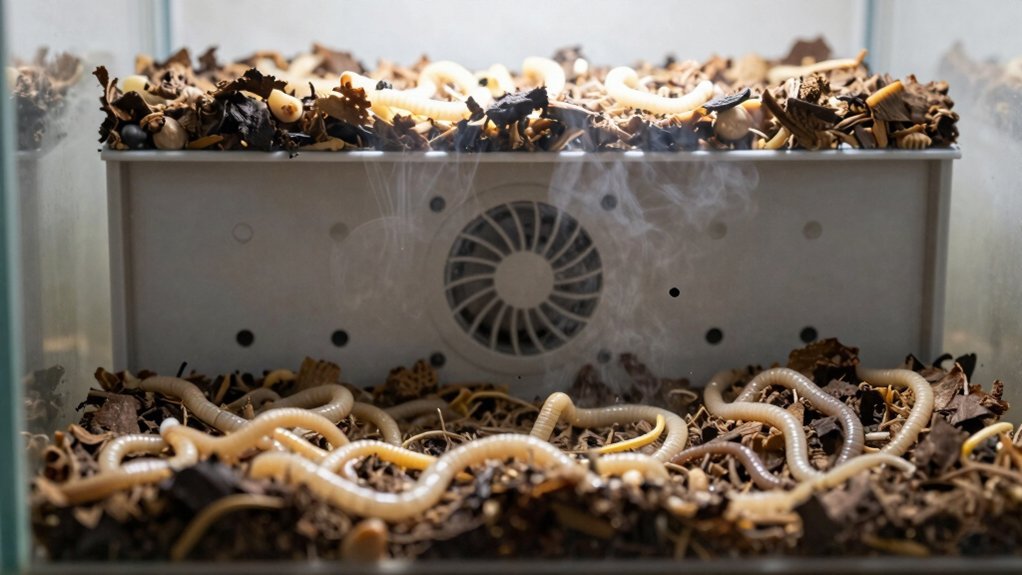
Ever wondered why your indoor worm bin sometimes smells stale or the worms seem sluggish? You’re probably battling poor airflow. In indoor worm farming, ventilation hinges on lid design and the balance of carbon‑rich bedding, not on drilling air holes that let worms escape. A recessed lid can choke edge air flow, while a raised lid or spacers lifts food away, letting fresh air circulate through the fluffy, moist coco coir and other carbon material. Proper moisture management keeps the bedding airy; too wet clogs pores, too dry dries out worms. Watch humidity, odor, and worm activity—if the bin feels stagnant, tweak bedding and moisture before adding more openings. This way you maintain healthy oxygen levels without compromising containment. Effective odor control and airflow management can be enhanced by using compost bins with carbon filters designed to reduce smells and improve ventilation.
Create a Simple Vent Stack Using Lid‑Mounted Screens
How can you boost airflow without drilling holes? You can add a vent stack by attaching lid‑mounted screens to your indoor worm bins. The screen ventilation lets fresh air in and stale air out while keeping composting worms safely contained. This simple worm bin design improves airflow efficiency without permanent modifications.
- Cut a window screen to fit the lid’s interior rim.
- Secure the screen with silicone or zip ties, ensuring a tight seal.
- Position the lid slightly raised using a spacer block for extra clearance.
- Check that the screen’s mesh size blocks worm escape but allows air passage.
- Monitor humidity and adjust the lid height if airflow feels sluggish.
For added odor control and durability, consider using bins with an airtight lid design that complements airflow improvements.
Add Bottom Screens & Adjustable Lid Spacers for Balanced Airflow & Moisture
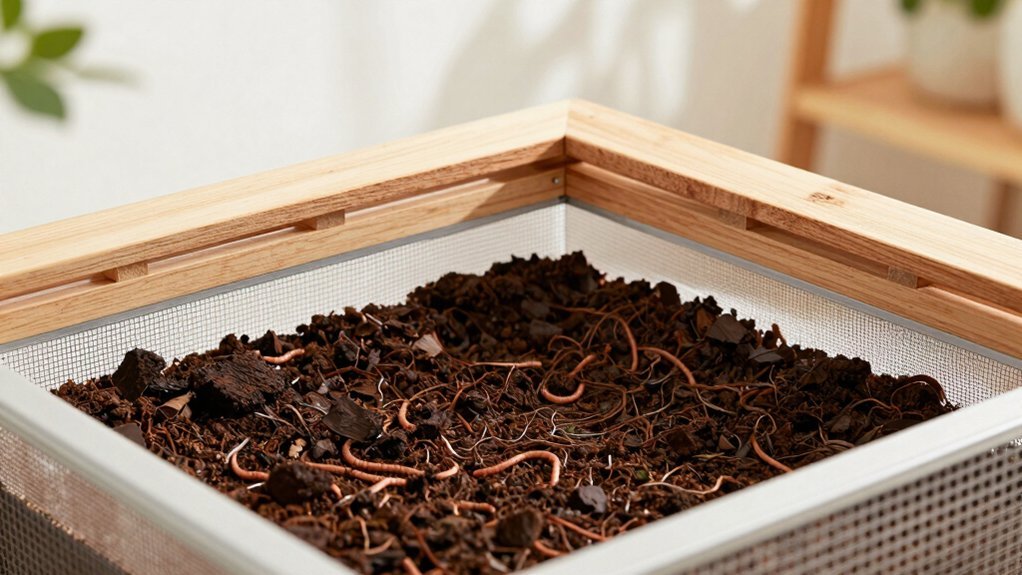
Looking for a simple way to keep your worm bin well‑ventilated while preventing escapes? Install a bottom screen to let fresh air in, keep worms inside, and aid moisture control. Pair it with adjustable lid spacers so you can fine‑tune lid spacing without sealing the indoor worm bin bin This DIY worm bin setup balances worm bin ventilation and moisture, letting you raise the lid when the pile gets wet and lower it when it dries out. The result is steady airflow, reduced condensation, and a safer environment for worm farming. Using bottom screens with fine mesh also helps maintain optimal oxygen levels critical for worm health.
| Feature | Benefit | Tip |
|---|---|---|
| Bottom screen | Prevents worm escape | Use fine mesh |
| Adjustable lid spacers | Controls lid spacing | Try 1‑2 cm gaps |
| Airflow | Improves oxygen | Check daily |
| Moisture control | Avoids soggy bins | Adjust lid height |
| DIY worm bin | Easy to modify | No drilling needed |
Frequently Asked Questions
What Are the 5 Mistakes That People Commonly Make When Composting With Worms?
You often overfeed, keep bedding too wet, use non‑browable scraps, neglect ventilation, and let the bin get too hot; each mistake starves or stresses your worms and slows composting.
How to Aerate a Worm Bin?
You aerate the bin by inserting a drill‑bit or thin pipe, stirring the bedding gently every few days, and keeping the vent holes clear; also, lift the lid slightly to let fresh air in.
Do Worm Bins Need Ventilation?
Yes, you need ventilation; it supplies oxygen, prevents anaerobic smells, and keeps worms active. Use lids with holes or screens, keep bedding fluffy, and watch for odor or moisture changes to adjust airflow.
What Do Worms Hate the Most?
You’ll hate stagnant, oxygen‑poor air the most—worms can’t survive anaerobic conditions, so they’ll quickly become sluggish, emit foul odors, and even die if you don’t keep ventilation steady.
In Summary
By mastering airflow, you’ll keep your indoor worm bin healthy and productive. The lid‑mounted screens let fresh air in while keeping pests out, and the bottom screens with adjustable spacers balance oxygen and moisture. Together, these methods prevent odors, promote vigorous worm activity, and make maintenance a breeze. With proper ventilation, your bin will thrive year‑round, delivering rich compost for your garden.