You’ll eliminate apartment compost odor by layering dry browns like shredded paper over food scraps to absorb moisture and block smells. Stick to fruit and veggie scraps—skip meat and dairy entirely. Store your bin cool and dark under the sink with a tight-fitting lid. Empty it weekly at half-full and stir regularly to maintain aerobic conditions. Freezing scraps before transfer locks in freshness and prevents decomposition odors. The real secret? Understanding how moisture control and material selection work together.
Stop Apartment Compost Smell With Layers of Browns

How can you keep your indoor compost bin from smelling? Layer browns on top of your food scraps.
Browns are dry, carbon-rich materials like shredded paper, cardboard, and sawdust. When you add a thin brown layer over your kitchen scraps, it absorbs excess moisture—the primary odor culprit. This covering also blocks smells from escaping when you open the lid and reduces exposed food that attracts flies and pests.
Think of it like making lasagna: alternate greens and browns until your bin reaches a comfortable height. The dry carbon layer maintains better balance with nitrogen-rich kitchen scraps, filters odors, and slows decomposition. Keep a reserve of browns under your sink, and add more whenever your bin starts to smell. For apartment dwellers, consider using shredded paper from document shredders as a convenient brown layer source. For best results, empty your bin weekly to prevent buildup and maintain odor control. Regular layering prevents foul smells before they develop.
Stick to Fruit, Veggie Scraps: Skip Meat and Dairy
Since you’re already layering browns to control odors, the next step is choosing what scraps you put in your bin. Stick to fruit and vegetable scraps, coffee grounds, and tea leaves—skip meat and dairy entirely. Here’s why: produce breaks down readily without generating strong odors, while high-protein and high-fat foods decompose into foul-smelling compounds, especially in warm indoor conditions.
Meat and dairy also attract pests more aggressively than plant matter does. By keeping your compost stream produce-only, you’ll dramatically reduce smell development, pest problems, and the overall mess in your kitchen. This simple restriction makes apartment composting manageable and keeps your space fresh without constant odor management. Kiln-dried hardwood pellets with low moisture content can also help stabilize your compost environment. If you do accidentally include meat or dairy, consider using pine pellets to absorb moisture and mask resulting odors.
Choose Bokashi or Electric for Sealed, Odor-Free Processing

You’ve got two proven options for keeping apartment composting smell-free: bokashi fermentation seals odors through anaerobic processing in a tight container, while electric composters speed up breakdown inside an enclosed unit with built-in filtration.
Bokashi works best if you’re composting meat and dairy alongside scraps, though you’ll need to drain liquid every few days and finish the product in soil later. The fermentation process typically takes about two weeks before the pre-compost is ready for burial, then another four weeks in soil to reach finished compost. With proper bran application, you can sprinkle 1-2 tablespoons per inch of waste to ensure effective fermentation and odor control.
Electric units give you faster results and more hands-off convenience, but they require a higher upfront investment and produce compost-like material directly from the machine.
Bokashi Fermentation Seals Odors
Unlike traditional composting that relies on open-air decomposition, bokashi fermentation happens inside an airtight bucket where microbes pickle your kitchen waste instead of letting it rot. The sealed environment is your secret weapon against odors.
| Factor | Benefit |
|---|---|
| Airtight containment | Limits oxygen and slows putrefaction |
| Lactic acid bacteria | Outcompetes odor-producing organisms |
| Fermentation acidity | Suppresses pathogens and emissions |
| White mold growth | Indicates successful fermentation |
You’ll notice a sour, vinegar-like smell—not stink. Compress scraps to remove air pockets, keep the lid sealed between additions, and monitor moisture levels. Add extra bokashi bran if funky smells emerge. Store in shade to protect microbes. Consider using airtight lid designs like those found in compact kitchen compost bins to maximize odor containment. Drain bokashi tea every day or two to limit spoilage and prevent the bucket from accumulating excess moisture that can cause putrid odors. Your apartment stays fresh while fermentation happens quietly beneath your sink.
Electric Composters Speed Breakdown
What if you could process a day’s worth of food scraps in hours instead of weeks? Electric composters make this possible. These countertop appliances use heat and aeration to break down organic matter in 3 to 8 hours, reducing volume by 85% to 95% per cycle.
You’ll benefit from faster breakdown that limits odor buildup from produce, coffee grounds, and leftovers. The sealed design traps smells inside, while activated carbon filters or built-in deodorization systems contain remaining odors. Most units operate largely odor-free during normal cycles. Typical electricity use ranges from 0.80 to 1 kWh per cycle, making them energy-efficient for daily kitchen use.
Keep in mind that electric composters produce dehydrated food residue rather than finished compost. The output differs nutritionally from traditional compost since microbial activity is minimal. For comparison, ceramic compost crocks with charcoal filters offer a complementary low-energy storage solution while you accumulate scraps for larger composting systems. Despite this distinction, the convenience and speed make apartment composting practical for your space.
Store Your Bin Cool, Dark, and Under the Sink
Where should you store your apartment compost bin to minimize odors? You’ll find that cool, dark, under-sink storage offers the ideal environment for odor control. Lower temperatures slow microbial activity and reduce decomposition rates, while darkness prevents heat buildup that attracts pests.
Store your bin strategically by considering these key factors:
- Keep the bin away from heat sources like ovens, windows, or radiators that accelerate decomposition
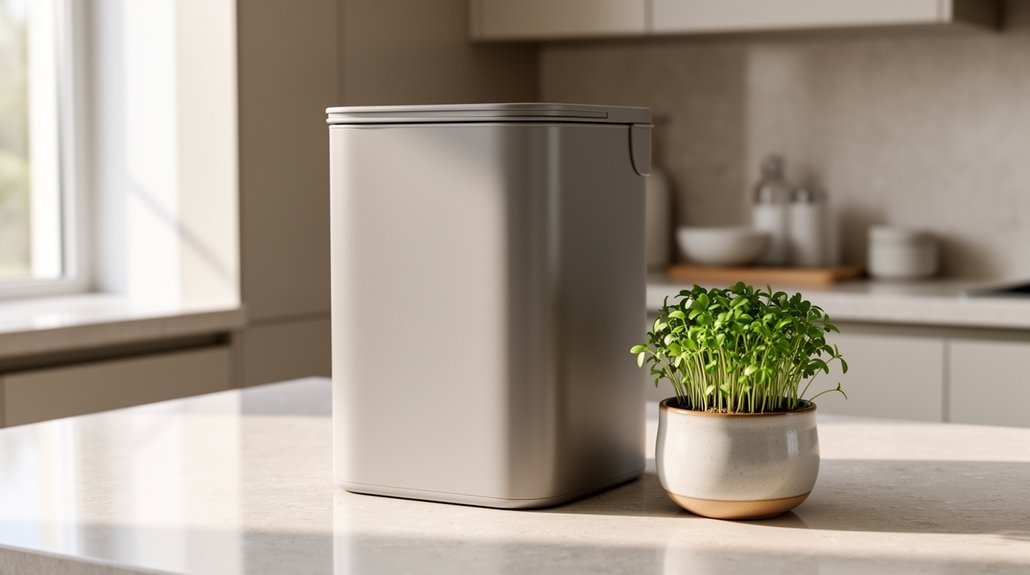
- Choose a sealed container with a tight-fitting lid and activated charcoal filter to trap smells
- Maintain dry conditions inside the cabinet to prevent damp environments that intensify odors
- Balance moisture with absorbent dry material like shredded paper to control decomposition
Under-sink placement conceals scraps from living spaces and food-prep areas while providing a stable, temperature-controlled environment. Regular bin cleaning prevents residue buildup, ensuring your apartment stays fresh. Punching holes in the container allows airflow to circulate through the compost and reduce anaerobic conditions that cause foul smells.
Mix Weekly and Empty When Half Full

You’ll prevent foul odors by stirring your bin weekly, which introduces oxygen that supports aerobic decomposition instead of the sour-smelling anaerobic breakdown.
Emptying when you’re at the half-full mark stops moisture and gases from building up and compressing your scraps into an odor-producing mess.
Together, these two habits create a simple routine that keeps your apartment compost fresh and discreet. The browns and greens balance matters too—aim for roughly twice as many dry materials as food scraps to maintain proper airflow and prevent excess moisture from creating anaerobic conditions. Bokashi bran can absorb excess liquid and minimize odors in your bin, providing an additional layer of odor control during the composting process.
Stirring Prevents Anaerobic Breakdown
The secret to odor-free apartment composting lies in oxygen replenishment—and stirring’s your main tool for delivering it. When you mix your bin weekly, you’re actively fighting anaerobic breakdown—the culprit behind foul smells.
Here’s what happens when you stir regularly:
- You break up compacted layers that trap moisture and block airflow
- You redistribute material, preventing dense, oxygen-starved zones from forming
- You keep oxygen concentration above the 5% threshold where anaerobic regions develop
- You support aerobic bacteria, which stabilize feedstock faster and eliminate stink
Emptying your bin when it reaches half-full amplifies these benefits. Fresh additions mixed into partly emptied bins reduce layered anaerobic pockets. For apartment composting, kitchen compost bins with patented airflow systems can help maintain odor control between manual stirring sessions. Consistent stirring plus adequate browns keeps aerobic decomposition dominant, ensuring your apartment stays fresh and odor-free. Smaller composting systems benefit from insulation to maintain the heat necessary for thermophilic microbes to thrive and decompose organic matter efficiently.
Timely Emptying Stops Odor Buildup
How long can you safely leave scraps in your bin before odor takes over? Most indoor compost smells stem from one issue: scraps sitting too long in warm containers. Decomposition releases moisture and gases that create sour, rotten, or sulfur-like odors.
You’ll prevent buildup by emptying your bin weekly—the baseline standard for cooler indoor conditions. If you generate high food waste, empty every 4–5 days instead. Don’t wait for strong smells to appear; consistency matters more than timing by odor alone.
Empty at the half-full mark rather than waiting for capacity. Smaller countertop bins fill quickly, and half-full emptying stops compacted, wet layers from developing. This threshold works especially well with moisture-heavy scraps like produce peels. Models with integrated ventilation slits help manage excess moisture while you maintain this emptying schedule. Store your bin in a cool spot away from heat sources to slow decomposition and extend the time between emptying cycles. Pair weekly emptying with rinsing your bin to eliminate residual food bits that linger and decompose.
Freeze Scraps Before Transfer to Lock in Freshness
Because freezing halts decomposition, you’ll stop odors from developing in your apartment while storing food waste. When you freeze scraps, you’re essentially putting decomposition on pause, keeping your space fresh and manageable.
Freezing offers several practical benefits:
- Pest deterrence: Cold temperatures prevent fruit fly eggs and larvae from developing, reducing pest attraction in small spaces
- Flexible scheduling: You’ll accumulate scraps until a convenient community drop-off time arrives
- Faster breakdown later: Freezing ruptures cell walls, allowing thawed scraps to decompose more quickly in your compost pile
- Reduced maintenance: You’ll eliminate frequent bin washing since frozen scraps won’t produce odors
Store your frozen scraps in sealed containers or freezer bags to manage volume efficiently. This straightforward method transforms apartment composting into a low-effort, odor-free practice that supports your zero-waste goals. For apartment dwellers without outdoor space, activated carbon filters in electric composters offer an alternative odor control solution when you’re ready to process your waste. You can keep scraps in the freezer to prevent odors until temperatures warm up in spring, making winter storage stress-free.
Frequently Asked Questions
How Do I Remove Lingering Odors From My Compost Bin After Emptying It?
You’ll remove lingering odors by rinsing your bin with hot water and dish soap, then soaking it in a vinegar-and-water solution. Sprinkle baking soda inside and let it sit before rinsing. Dry completely.
Can I Compost Citrus Peels, Onions, and Garlic in Apartment Composting Systems?
Yes, you can compost citrus peels, onions, and garlic in apartment systems. You’ll want to add them gradually in small amounts, chop them finely, and mix them deeply into browns to prevent odors and maintain balance.
What Should I Do if My Compost Bin Becomes Too Wet and Smelly?
You should add dry browns like shredded paper or cardboard to absorb moisture and rebalance your greens-to-browns ratio. Stir your bin regularly to improve airflow, then empty food scraps more frequently to prevent future odor problems.
How Long Does Finished Compost Need to Cure Before It’s Safe to Use?
You’ll need to cure your finished compost for 2 to 6 weeks, though longer periods improve stability. It’s safe when it smells earthy, feels crumbly, and shows no recognizable food scraps or heat generation.
Are Compost Starter Products Necessary for Reducing Odors in Apartment Bins?
You don’t need starter products. Instead, you’ll manage odors by balancing greens and browns, controlling moisture, ensuring airflow, and emptying your bin regularly. These fundamentals eliminate smells naturally.
In Summary
You’ve got the tools to keep your compost fresh and odor-free. By layering browns, sticking to fruit and veggie scraps, and choosing sealed systems like Bokashi or electric composters, you’re preventing smell before it starts. Store your bin cool and dark, mix it weekly, and freeze scraps before adding them. You’ll enjoy nutrient-rich compost without the stench—proving that apartment composting doesn’t have to compromise your living space.