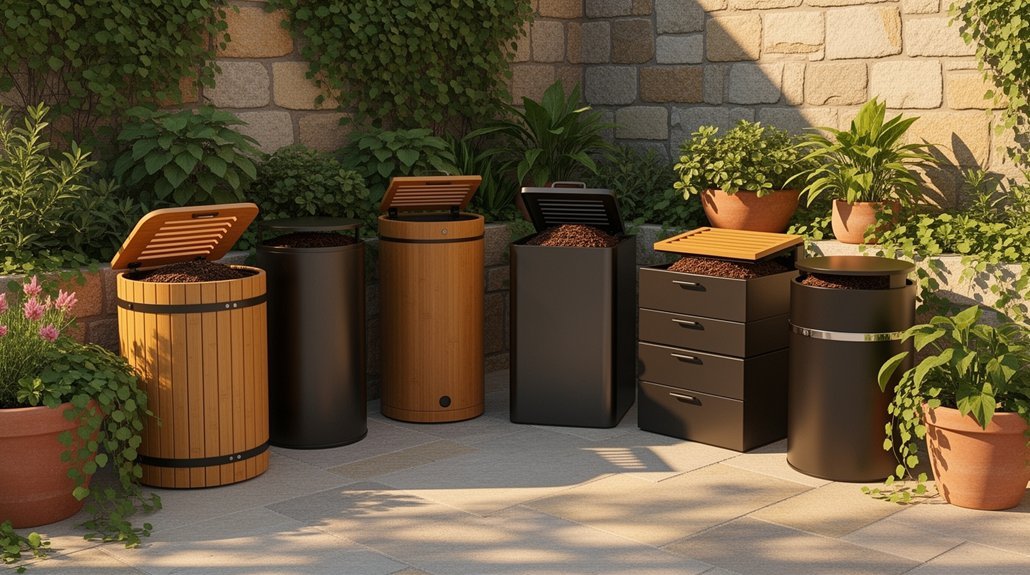
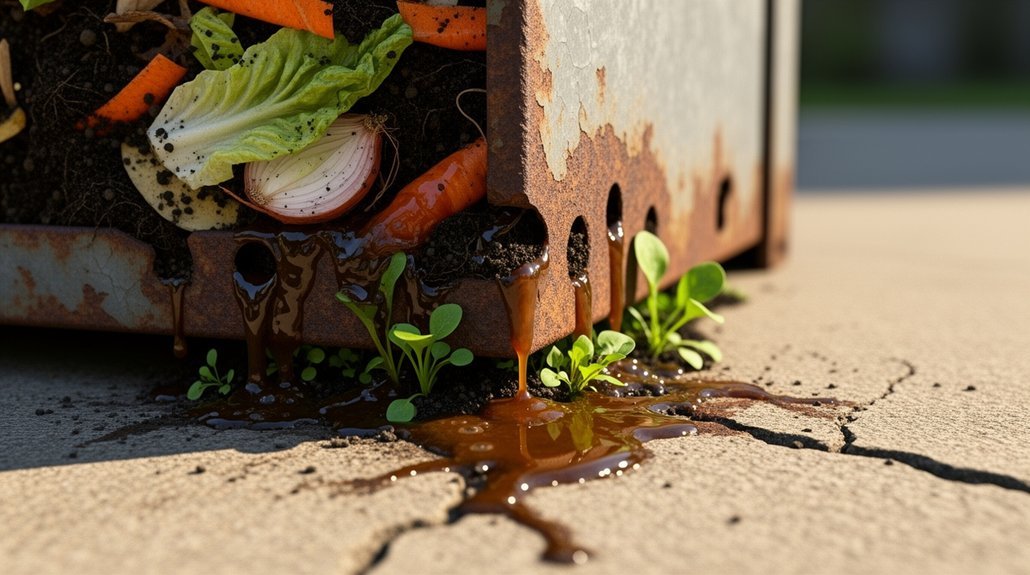
Your compost bin leaks when excess moisture builds up—usually from too many wet greens, rainwater, or soggy food scraps that saturate the pile and block airflow. An imbalanced green‑to‑brown ratio means there aren’t enough dry, carbon‑rich materials to soak up the liquid, while compaction and matting trap water and create anaerobic spots that drip. Poor bin design, gaps, or lack of drainage also let leachate escape. Keep reading to discover how to fix each problem.
Excess Moisture – Why Your Compost Bin Drips
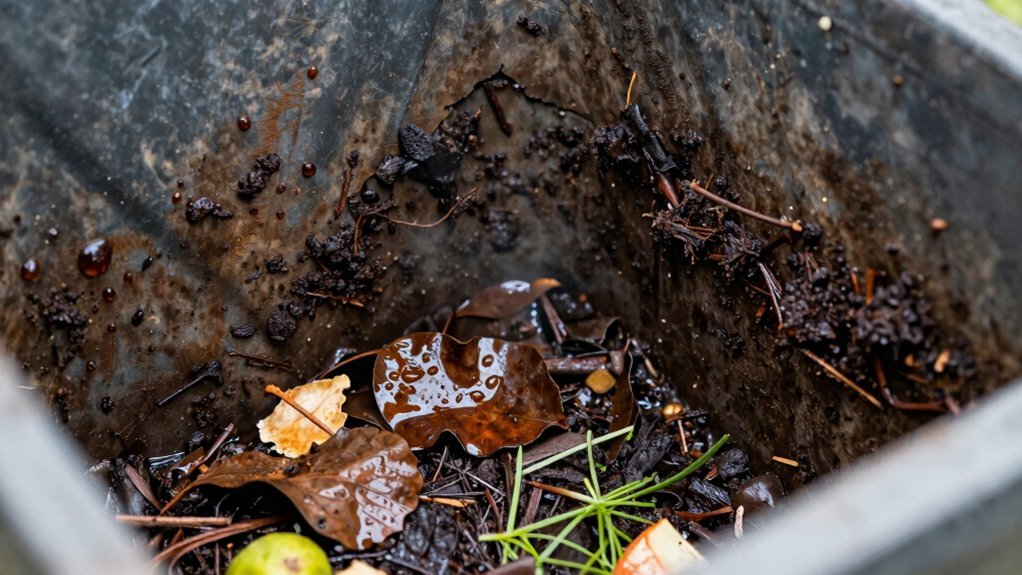
Why does your compost bin drip? Excess moisture creates leachate that escapes the bin because the pile can’t absorb more water than its material allows. When you add wet food scraps, fresh grass, or rainwater, the compost becomes soggy, filling pore spaces and blocking airflow. This saturation forces microbes into anaerobic conditions, producing foul odors and slimy texture while the excess liquid pools at the base and drips out. Poor covering or lid vents let rain infiltrate, adding to the problem. If a hand‑squeeze test yields water, the pile is too wet—ideal moisture feels like a wrung‑out sponge, not a dripping mess. To achieve the proper 40-60% moisture level, you can layer brown materials like shredded paper or sawdust into the compost when it becomes too wet.
Fix the drip by balancing dry absorbents, turning the pile, and protecting it from external water. The drippings are actually compost tea, a nutrient‑rich liquid that can be collected and used as fertilizer.
Imbalanced Green‑to‑Brown Ratio – Why Your Compost Bin Drips
A common cause of a dripping compost bin is an imbalanced green‑to‑brown ratio, where too many nitrogen‑rich greens overwhelm the carbon‑rich browns. When you dump excess food scraps or fresh grass clippings, the pile swells with moisture and nitrogen, turning slimy and releasing ammonia‑like odor. Without enough dry leaves, straw, shredded cardboard, or wood chips, the free liquid has nowhere to soak, so it pools and drips out. Aim for roughly two to three parts brown to one part green by volume, adjusting until the texture feels damp, not soggy. Mix browns throughout, not just on top, and turn the pile regularly to distribute moisture. Adding more bulk dry material will absorb excess liquid, restore aeration, and stop the leaks. Carbon‑rich browns act as a sponge, soaking up the excess moisture generated by the greens. Maintaining moisture levels between 50–60% will help achieve the ideal balance for optimal decomposition without excessive drainage.
Poor Airflow & Compaction – Compost Bin Moisture Build‑Up
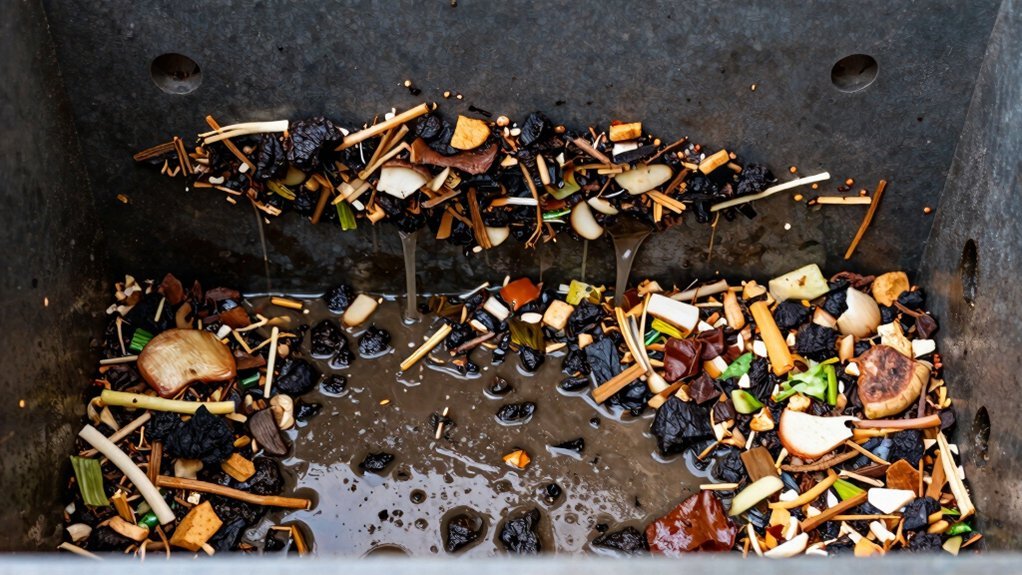
Ever notice how a compacted, air‑starved compost bin suddenly starts dripping? When you crush the pile, you close the tiny pores that let oxygen in and water out. Aerobic microbes slow down, moisture lingers, and anaerobic zones produce slime and foul smells. Grass clippings and long‑standing dense layers act like a sponge, blocking drainage pathways and trapping rainwater or excess kitchen juice. The pile stays saturated instead of holding a wrung‑out‑sponge level, so condensation builds and leaks out. Fix it by turning or fluffing the heap regularly, adding dry browns, and breaking up matting. Restoring airflow re‑opens channels, lets heat escape, and keeps moisture where it belongs—inside the compost, not on your floor. Add wood chip when adding moisture‑heavy waste to improve drainage.
Bin Design Flaws – How Your Compost Bin Leaks
Ever notice water pooling around the base of your compost bin? Imperfect seals and lid gaps let rain and leachate slip through seams, especially when lids fit loosely or shift over time. If your bin lacks a proper drainage system, liquid pools at the bottom and escapes, staining floors. Look for a tap, tray, or elevated design that captures runoff; solid‑bottom bins without internal routes simply overflow. Oversized ventilation holes or low‑side perforations become drip points when wet material presses against them, so proper vent placement matters. Materials can degrade—acidic, nutrient‑rich liquids weaken plastic walls, cracks, and warped seams, creating chronic leaks. Finally, front doors, hatches, and access panels often have loose latches or warped edges that let moisture escape, so tight gaskets and raised thresholds are essential. Ceramic compost crocks with stainless steel handles and properly fitted lids offer more reliable sealing than poorly constructed alternatives. Using certified compostable bags can reduce moisture buildup and prevent leaks.
Overfilling & Poor Management – Compost Bin Seepage
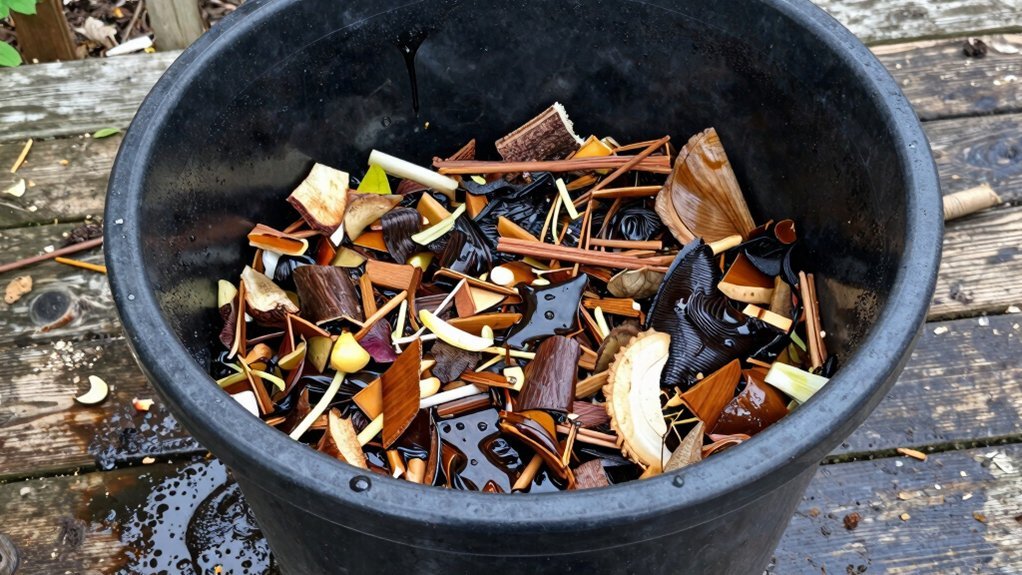
Why do your compost piles suddenly start leaking? Overfilling the bin forces fresh, wet materials into a compact mass, squeezing liquid out of the pile. Adding large loads of fruit peels, vegetable scraps, or grass clippings raises moisture quickly, while a lack of brown absorbents leaves no buffer for the excess water. The result is a soggy, leaky heap that drips onto the floor. Proper moisture control integration through ventilation systems can help manage excess liquid and prevent waterlogging.
| Issue | Effect |
|---|---|
| Too much green feedstock | Rapid moisture surge |
| Insufficient brown material | No absorbent buffer |
| Bulk dumping | Compaction, reduced airflow |
| Poor mixing | Dense pockets trap water |
| Inadequate turning | Persistent seepage |
Keep additions small, balance greens with browns, and turn regularly to maintain porosity and prevent runoff.
Leachate can contain pathogenic microbes that may spread disease if not managed properly.
Leachate Damage to Your Compost Bin – Repair & Prevention
What happens when leachate pools at the base of your compost bin? The liquid softens plastic, warps metal, stains wood, and can corrode seams, turning your bin into a soggy mess. It clogs drainage, keeps lower layers saturated, and fuels anaerobic microbes that smell and decay faster.
To fix it, clear every hole, spigot, and outlet, then repair cracked panels or warped lids. Elevate the bin on bricks or a stand so air circulates beneath, and place a catch container under the drains. Add bulking material—twigs, shredded cardboard—to improve aeration. Choose a rain‑shedding, moisture‑resistant bin with a lined base, and keep moisture balanced by mixing wet greens with dry browns. For added protection, consider using compostable bin liners to line your container and reduce direct leachate contact with bin surfaces. Inspect drains regularly, block stormwater, and monitor sogginess and odor to prevent future leaks. Use large tarps over windrows to keep rain off the base.
Frequently Asked Questions
Can Temperature Affect Compost Bin Leakage?
Yes, temperature drives condensation and moisture shifts in your bin. Warm days vaporize water, cooling walls cause drips; cold nights slow breakdown, trapping wet material that leaks out. Adjust airflow and insulation.
Do Seasonal Rainfalls Increase Bin Seepage?
Yes, seasonal rainfalls boost seepage. Heavy rain overwhelms your bin’s drainage, saturates the pile, and forces water through seams, vents, or holes. Add dry carbon, improve drainage, and cover the bin.
Should I Use a Liner to Prevent Leaks?
You should use a liner if it fits snugly and is thick enough for your waste, but also balance moisture, add dry bulking material, and keep the bin level to prevent leaks.
Can Pests Cause Unexpected Moisture?
Yes, pests signal excess moisture. Maggots and flies thrive in soggy scraps, and their activity often means you’ve added too many greens or covered food. Balance browns, aerate, and cover waste.
Is Black Mold a Sign of Bin Leakage?
Yes, black mold usually means your bin’s leaking or isn’t sealed properly. Moisture builds up, oxygen sneaks in, and the mold thrives, indicating a seal or drainage problem you need to fix.
In Summary
By keeping the moisture balance right, maintaining a proper green‑to‑brown mix, ensuring good airflow, and avoiding overfilling, you’ll stop the leaks before they start. Choose a bin with a solid design, fix any cracks promptly, and manage leachate to protect both your compost and the surrounding area. With these steps, your compost will stay healthy, dry, and odor‑free.