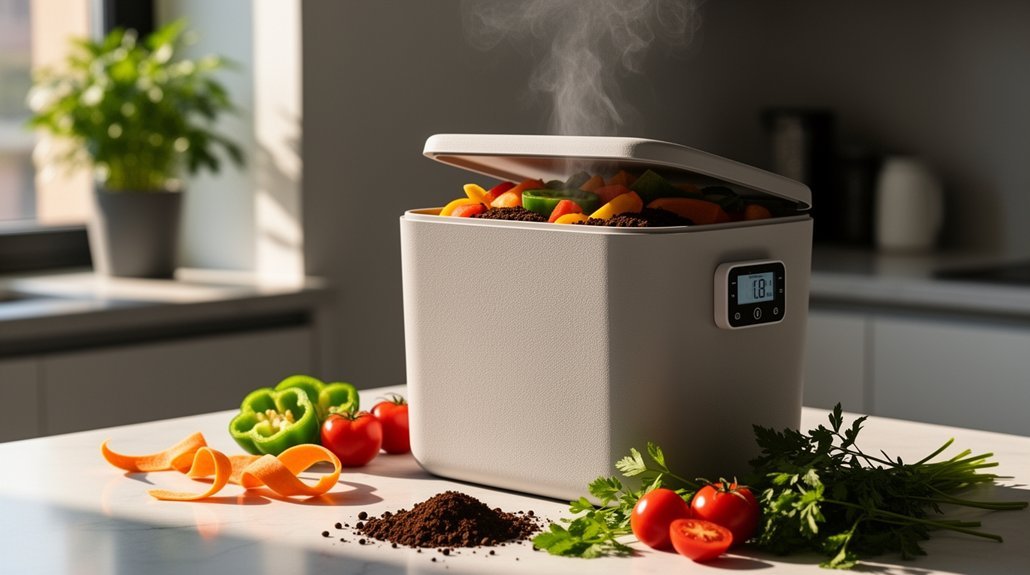
Pick a compact, insulated bin with a tight‑fitting lid and keep it near a warm kitchen wall or low‑heat appliance. Aim for a core temperature of about 130‑150 °F; use a simple thermometer to check the middle spot daily. Keep moisture at a wrung‑out‑sponge level (40‑60 %) and balance greens with shredded browns. Turn the pile every few days to feed oxygen without dumping heat. If it overheats, spread the material thinner or add more dry carbon; if it cools, add nitrogen‑rich scraps and a bit of water. Continue for more tips on fine‑tuning your compost.
Apartment Compost Temperature: Choose the Right Bin
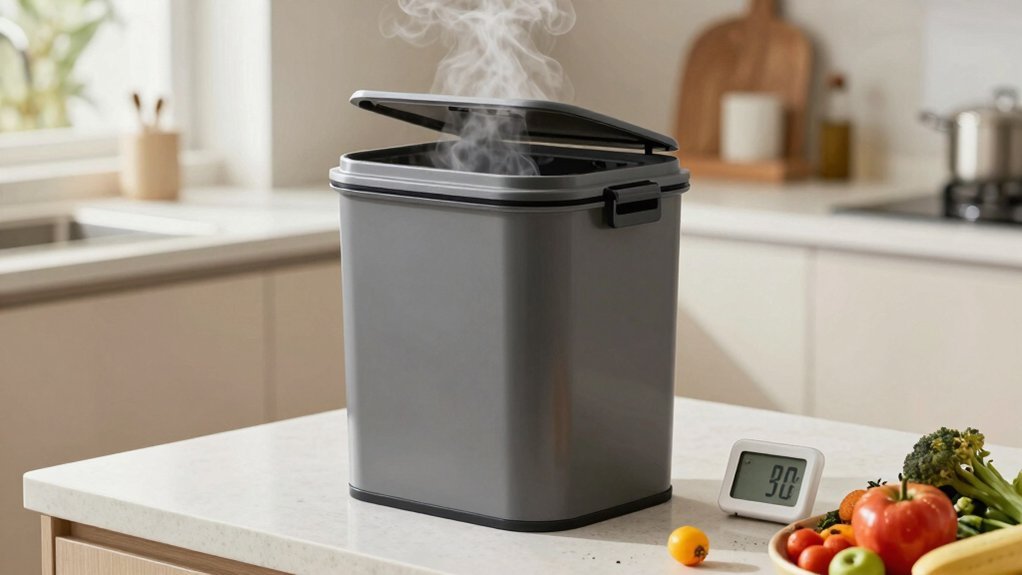
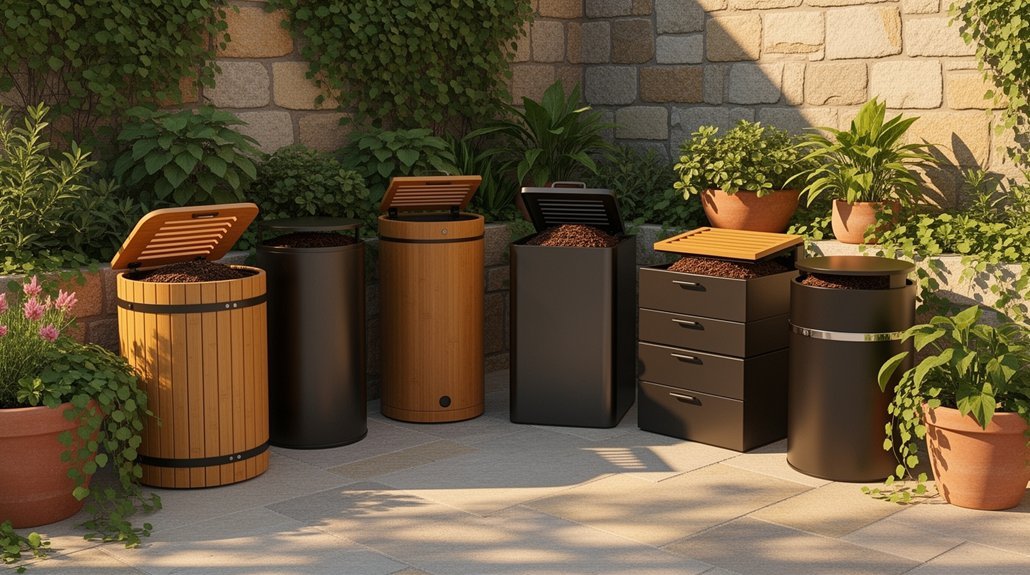
What size and insulation should your apartment compost bin have? Aim for roughly 3 ft × 3 ft × 3 ft; this volume keeps heat longer than a smaller, high‑surface‑area container. Choose a freestanding, insulated bin with a solid lid—closed designs trap warmth better than open tops. If space allows, use a multi‑bin or stackable system; the tighter the material, the less heat escapes. Avoid thin‑walled pots or open‑air setups, as they cool quickly and hinder thermophilic activity. Balance insulation with airflow: vent holes, slotted sides, or an aerated bottom supply oxygen without flushing out all the heat. For small kitchen setups, consider using compostable trash bags as bin liners to contain moisture and heat while maintaining proper drainage. A well‑sealed, insulated, lidded bin gives you a stable, warm environment for active composting. Cool temperatures can slow bacterial activity and increase contamination risk cool temperatures.
Apartment Compost Temperature: Ideal Range for Small Bins
You’ll want to keep your small bin between roughly 131 °F and 149 °F to stay in the sweet spot for active microbes. Balancing moisture and aeration is key—too wet and the temperature will drop, too dry and the microbes will stall. Regular checks let you adjust turning or add nitrogen‑rich scraps before the bin overheats or cools off. The thermophilic phase is essential for rapid decomposition and pathogen kill. Ensure your precise-fitting lid contains odors while maintaining adequate airflow to support microbial activity.
Ideal Temperature Range
Ever wonder what temperature keeps your apartment compost bin humming efficiently? Aim for the 131 °F‑155 °F window, with 141 °F‑155 °F often cited as the sweet spot for rapid breakdown. Around 150 °F gives a balanced target, while staying above 135 °F helps reduce pathogens. Keep the heat below 160 °F—exceeding this can stall microbes and stall the pile. Small bins lose heat quickly, so monitor frequently; a sudden spike may mean you need to turn or aerate. If you dip below 90 °F, decomposition slows dramatically, and dropping under 70 °F signals the active phase is ending. For compact kitchen systems, consider using dry leaves or straw as insulating layers to help maintain consistent temperatures. Maintaining this range maximizes efficiency without overheating your active bin stage is typically between 10°C and 45°C, and staying within this range supports consistent microbial activity.
Moisture and Aeration Balance
How do you keep a compact compost bin both moist enough for microbes and airy enough to avoid foul odors? Aim for a moisture level that feels like a wrung‑out sponge—about 50‑60 % water. Test it by squeezing a handful; if it drips, you’re too wet. Add dry browns—shredded paper, cardboard, or leaves—to absorb excess liquid and improve structure. Turn the pile every few days to restore oxygen and break up compacted zones. Use a bin with a drainage hole or a raised liner to prevent pooling at the bottom. Consider selecting containers with removable inner buckets to facilitate easier emptying and maintenance. If the mix feels dry, mist lightly; if it’s soggy, sprinkle more dry material. Monitor odors—sour smells mean you need more aeration or less moisture. Small, frequent adjustments keep the balance stable. Target moisture should be roughly 40 to 60 percent.
Apartment Compost Temperature: How to Use a Thermometer
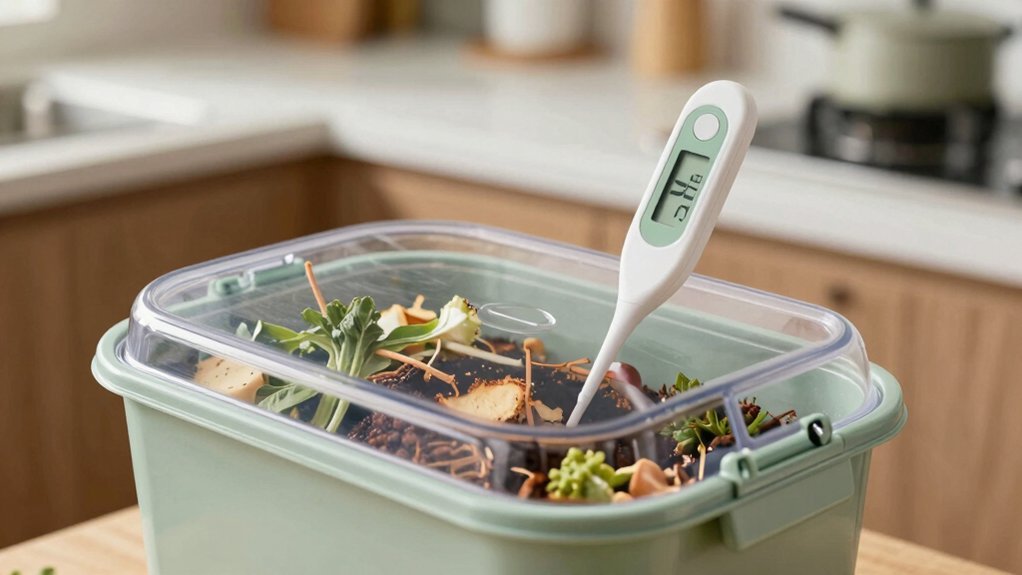
Wondering why a compost thermometer matters in your apartment bin? It tells you if the pile sits in the active range for fast breakdown and pathogen kill, cutting guesswork. Choose a probe that fits your bin depth—long enough to reach the core but not so long it hits the walls. A dual‑scale dial or digital display reduces reading errors, and a sturdy build survives frequent handling. To measure, push the probe into the middle, avoid sides or bottom, and wait a few minutes for a stable reading. Record the temperature at the same spot each time; trends reveal when to turn, add moisture, or cool a hot bin. Keeping readings below about 150 °F protects beneficial microbes while still driving decomposition. A compost thermometer can also help you avoid temperature extremes that could kill beneficial microbes. For storage of your compost bin materials, consider protecting them from moisture exposure similar to how natural dried corn stalks require protection from weather to maintain quality and durability.
Apartment Compost Temperature: Warm‑Up Tips for Cool Bins
Why does your apartment compost stay cool? Small bins lose heat fast through sides and top, and a lack of volume limits core temperature. First, choose a compact but adequately sized container—aim for at least a 3‑ft cube if space allows—to trap heat. Cover the bin with a lid or tarp and shield it from drafts on a balcony or near a window. Balance your feedstock: add nitrogen‑rich greens like coffee grounds, food scraps, and fresh plant waste, and shred browns to increase surface area. Keep moisture between 50 % and 65 %—a wrung‑out sponge feels right; water dry spots, but avoid sogginess. Turn the pile every few days and create ventilation holes or a mesh chimney to supply oxygen. For deeper aeration in larger bins, consider using aerator tools designed to penetrate dense materials and accelerate decomposition. Adjust one factor at a time, and you’ll see the temperature climb toward the 120‑150 °F hot‑compost range. Aeration is essential for aerobic microbes to generate heat.
Apartment Compost Temperature: Cool‑Down Fixes for Overheat
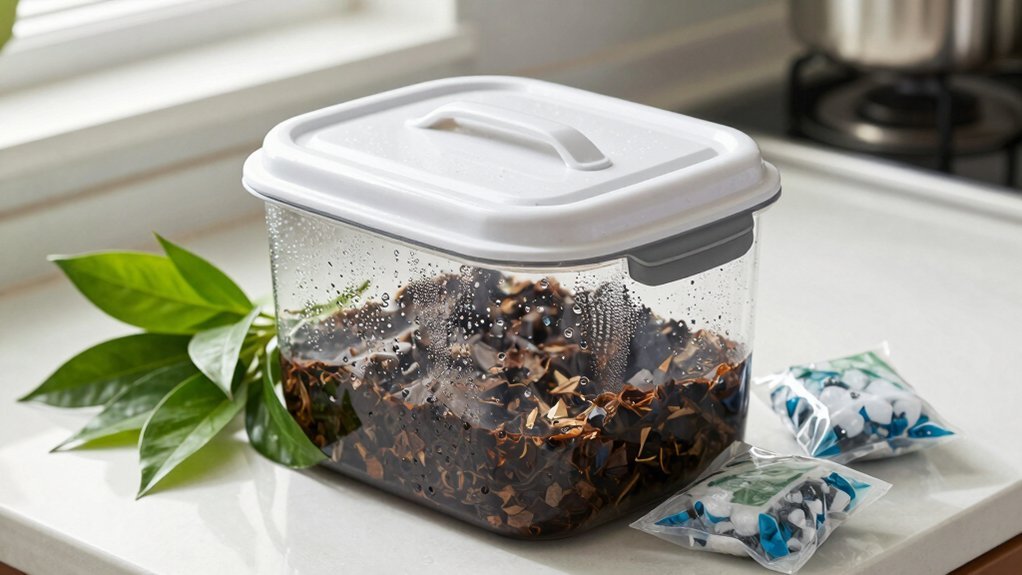
Ever notice your compost bin steaming up and smells like a sauna? Reduce the pile’s size and insulation. Trim the height, spread material thin, and cut excess volume so heat escapes through the sides and top. Add dry carbon like newspaper or straw; they absorb moisture, lower microbial activity, and dry out hot pockets. Turn the bin more often, using an “inside‑out, outside‑in” pattern to push warm core material outward and bring cooler outer layers inward. Boost airflow with mesh chimneys or small gaps, but keep oxygen flowing to avoid anaerobic odors. For apartment composters, consider that wooden tampers and tools designed for fermentation can also help aerate and turn smaller compost batches when space is limited. Finally, pause fresh additions; let the microbes calm down and the pile cure. These steps quickly drop temperature without halting decomposition. Incorporate straw and shredded paper as amendments to help balance moisture and temperature.
Apartment Compost Temperature: Balance Moisture & Aeration
You’ll keep your microbes thriving by maintaining a damp‑but‑not‑soggy pile, because water fuels their heat‑producing activity.
Regularly turn or shake the bin to introduce fresh oxygen, which prevents anaerobic spots and helps the temperature stay in the optimal range. Adding a mix of greens and browns ensures the carbon‑to‑nitrogen ratio supports steady heat generation. When your compost lacks sufficient nitrogen, consider supplementing with nitrogen boosters to accelerate microbial decomposition.
Moisture Balance for Microbes
Balancing moisture and aeration is the key to keeping your apartment compost bin hot and active; aim for a “wrung‑sponge” feel—about 50‑60 % moisture—so microbes stay hydrated while oxygen can still flow through the pores. When you hit that sweet spot, microbes churn heat, and the pile stays lively. Too dry and they slow, too wet and they gasp for air, producing odor and cooling the bin. Check moisture daily; a quick squeeze tells you if you’re in range. Adjust with a spray bottle or a handful of dry leaves, and you’ll keep the microbial team thriving. Products like bokashi bran formulations can accelerate fermentation and help manage moisture levels while reducing odors simultaneously.
- Feel the sponge: firm but moist.
- Spot standing liquid: drain excess.
- Smell for sourness: indicates over‑wetness.
- Watch worms: they flee when it’s too soggy.
Thin water film should cover particles without filling air pores.
Aeration Techniques for Heat Control
How can you keep your apartment compost bin hot enough for microbes yet cool enough to avoid overheating? Boost airflow with short bursts—30 seconds on, 30 minutes off—using a small fan or hand‑held aerator. Open a few vent holes, but keep them modest to preserve insulation. When temperatures climb above 158 °F, reverse airflow to pull cool air through the core and push hot material outward. Monitor moisture; too much aeration dries the pile and slows decomposition. Use wood chips or a thin chimney pipe to spread air evenly and prevent dry spots. Consider installing 360-degree rotation mechanisms with deep fins to enhance oxygen distribution without manual intervention. Adjust timing based on temperature feedback, balancing oxygen supply with heat retention. Maintaining the pile within the thermophilic range ensures optimal microbial activity.
| Method | Typical Use |
|---|---|
| Passive vents | Small openings for gentle airflow |
| Hand aerator | Redistribute material without turning |
| Fan‑forced (positive) | Push fresh air in for cooling |
| Reversing airflow | Alternate pull/push for uniform temps |
Apartment Compost Temperature: Turn & Mix in Tight Spaces
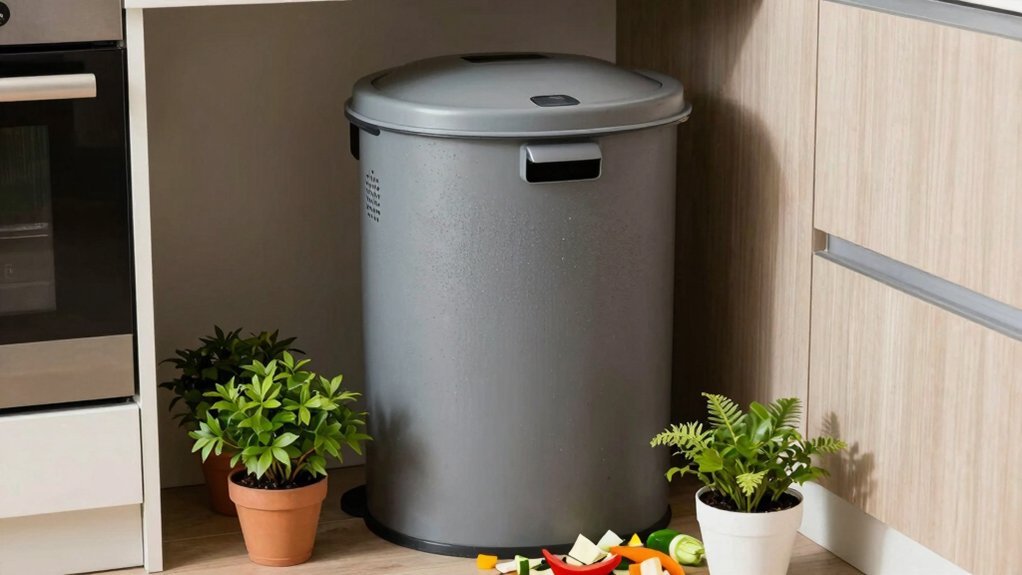
Ever wonder why a tiny apartment compost bin can swing from a slow, smelly mess to a hot, fast‑acting furnace? You need to turn and mix often to keep oxygen flowing, heat rising, and odors down. In a cramped bin, a quick shake can revive microbes and push temperatures back into the 90°‑140°F sweet spot. Here’s a simple routine:
Turn, mix, and keep it moist to revive microbes and maintain 90‑140°F for fast, odor‑free compost.
- Check the thermometer; if it’s below 70°F or above 160°F, turn immediately.
- Add a splash of water if the mix feels dry, then stir to distribute moisture.
- Flip the pile every 2‑3 days, aiming for at least five turnings in two weeks.
- Keep the bin at least three‑quarters full to retain mass without crushing the material.
These steps keep aerobic activity high, prevent anaerobic smells, and maintain steady heat for rapid decomposition.
Apartment Compost Temperature: Safe Kitchen Heat Hacks
You can boost your bin’s activity by positioning it near a warm kitchen wall or a low‑heat appliance, but keep it away from direct flames or radiators.
Insulating the bin’s exterior helps retain that gentle heat while you monitor moisture to avoid soggy, odor‑prone conditions.
A simple thermometer probe will let you fine‑tune the balance, keeping temperatures in the 90‑130 °F sweet spot without overheating.
Kitchen Heat Sources
Looking for a reliable way to keep your apartment compost bin warm without overheating? You can tap the kitchen’s ambient heat while staying safe. Place the bin near the back of the fridge or a water heater where warm air drifts, but keep ventilation open. Tuck it in an insulated cabinet to smooth out temperature swings. Avoid direct contact with stovetops, ovens, or radiators—those can push the compost above 160 °F and kill microbes.
- Near‑appliance zone – gentle, steady warmth.
- Above refrigerator – passive heat, easy access.
- Insulated pantry spot – reduces cool drafts.
- Appliance exhaust area – only if the bin stays clear of hot surfaces.
Monitor with a compost thermometer and aim for 100‑130 °F for active breakdown. The mesophilic phase occurs between 50 and 105°F (10 and 41°C), providing optimal conditions for early microbial activity.
Moisture‑Temperature Balance
Keeping your compost bin in a warm spot is only half the battle; the right moisture level is what actually lets the heat stay useful. Aim for 50‑60 % moisture—feel a firm, squeezed clump with only a few drops escaping. Below 30 % the microbes go dormant, and above 65 % you risk anaerobic pockets and odor. Check moisture at every turn; add water in small increments until the material feels damp, not soggy. In warm indoor conditions a 60 % start buys you about a week before you need to re‑wet.
Place the bin in a shady location to reduce evaporation. Turn before the pile hits 140 °F to avoid overheating, and space aeration to limit evaporation. High‑carbon add‑ins like dry leaves demand extra water, while a cold, dry, smelly bin signals you’re out of balance.
Apartment Compost Temperature: Add Browns to Prevent Spikes
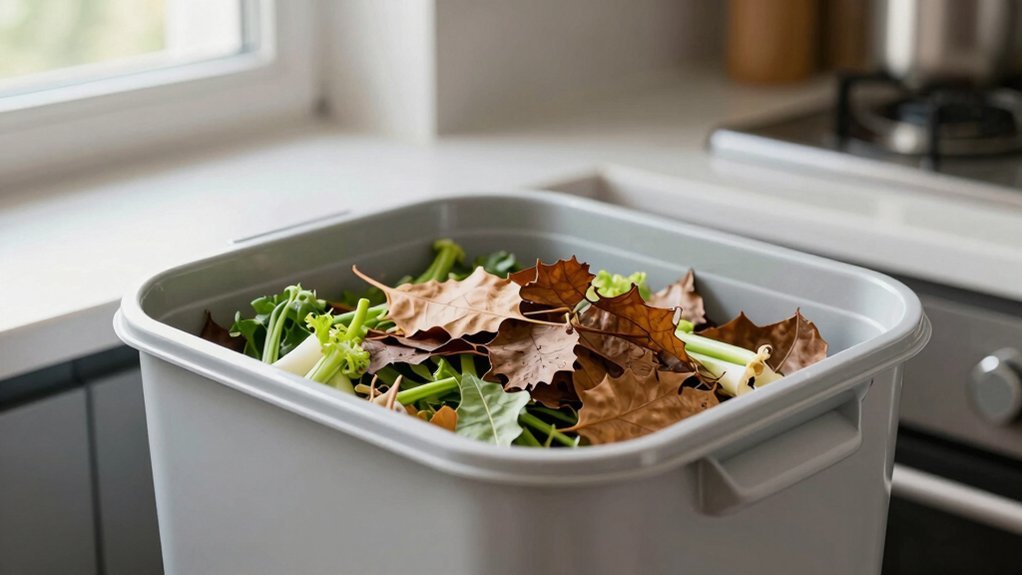
Ever wonder why a handful of shredded paper or cardboard can keep your compost bin from turning into a sauna? Browns are your secret weapon. They soak up excess moisture, slow the fastest nitrogen‑rich breakdown, and keep airflow steady, preventing hot, oxygen‑poor pockets. When you add a layer of dry carbon after a batch of kitchen scraps, you’re essentially giving the microbes a cooling break.
- Shred office paper or cardboard into bite‑size strips.
- Sprinkle a generous handful over the wet layer.
- Toss in a few crumbled dry leaves for texture.
- Mix gently to distribute air and heat evenly.
Doing this routine keeps the pile moist but not soggy, stabilizes temperature, and eliminates nasty odors—making your apartment compost a calm, efficient system.
Apartment Compost Temperature: Troubleshoot Common Issues
A compost pile that stays cool usually signals a moisture, nitrogen, size, or aeration problem, and each of these factors can be tweaked to kick the heat back into gear. Check the feel—if it’s dry, spray water; if it’s soggy, add shredded newspaper. Boost nitrogen with kitchen scraps or fresh grass clippings, and avoid too much carbon‑heavy material. Make the bin bulkier; a larger mass holds warmth better. Finally, turn the pile regularly to break up compaction and restore airflow. If you notice a rotten smell, it means the pile has become anaerobic and needs more oxygen. | Issue | Quick Fix | Why It Works |
| ——- | ———– | ————– |
|---|---|---|
| Dry | Mist with water | Restores microbial moisture |
| Wet | Add dry browns | Improves aeration |
| Low nitrogen | Toss food scraps | Fuels microbes |
| Small pile | Add bulk material | Increases thermal mass |
| Compacted | Turn pile | Re‑introduces oxygen |
Frequently Asked Questions
Can I Use a Coffee‑Maker Heating Element to Raise Bin Temperature?
No, you shouldn’t use a coffee‑maker heating element. It risks overheating, fire, and electrical shock. Instead, balance nitrogen, moisture, and aeration, and insulate the bin to boost microbial heat safely.
Will a Small Indoor Bin Emit Unpleasant Odors if It Gets Too Hot?
Yes, it will. When the bin overheats, microbes race, producing sulfur and rot smells faster. Moisture traps gases, and without airflow the odor spreads quickly, especially in small apartments.
How Does Seasonal Indoor Humidity Affect Compost Temperature Stability?
Seasonal indoor humidity shifts your bin’s moisture, so humid air keeps the pile damp and buffers temperature swings, while dry winter air dries the mix, causing rapid cooling and less stable heat during composting.
Can I Safely Add Fresh Fruit Scraps Without Causing Temperature Spikes?
Yes, you can add fresh fruit scraps safely if you feed them in thin layers, cover with dry browns, and monitor moisture; this prevents sudden microbial bursts and keeps temperature stable.
Is a Digital Infrared Thermometer Reliable for Measuring Bin Temperature?
You’ll find a digital infrared thermometer isn’t reliable for true bin temperature; it only reads surface heat, which can differ wildly from the core where microbes actually work. Use a probe instead.
In Summary
By keeping your compost bin at the right temperature, you’ll speed up decomposition, curb odors, and avoid pests—all without sacrificing your apartment space. Use a simple thermometer, mix regularly, and balance greens with browns to stay within the ideal range. If it gets too hot or too cool, apply the quick hacks we covered. With these easy steps, your kitchen waste turns into rich, ready‑to‑use compost in no time.