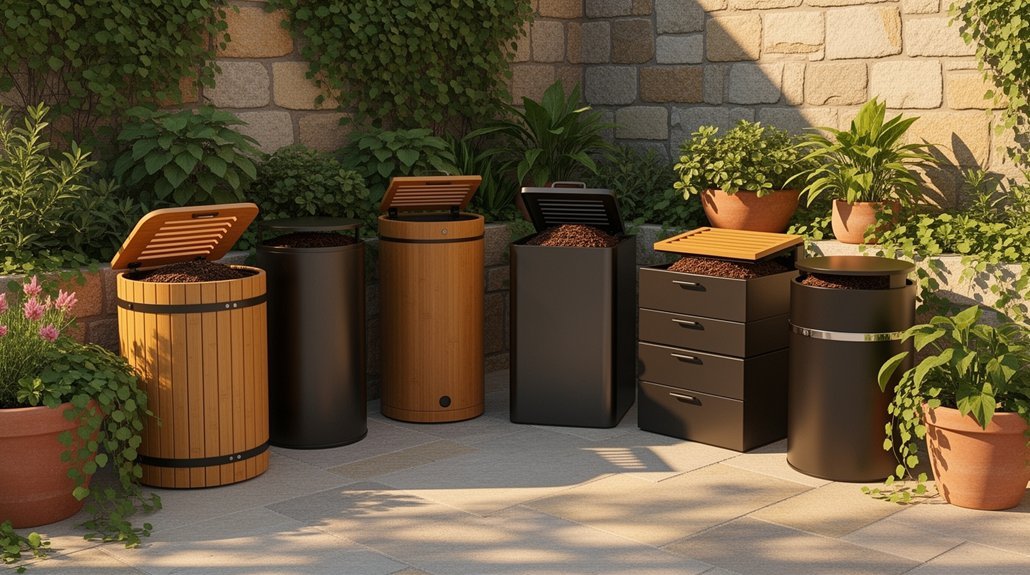
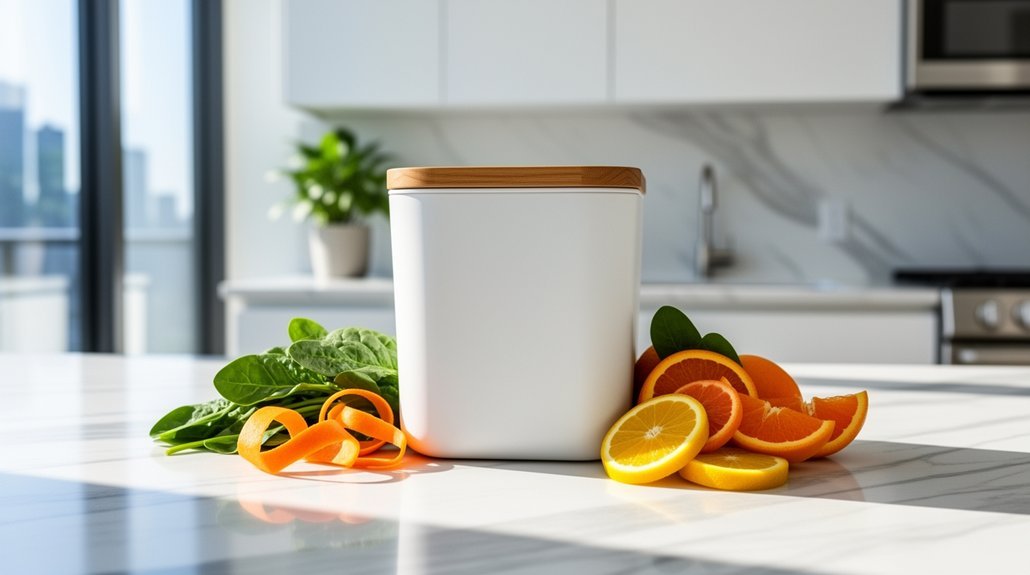
You can compost inside your condo using bokashi or vermicomposting—both compact, low-odor methods perfect for apartments. You’ll compost fruit and vegetable scraps, coffee grounds, tea leaves, and shredded paper. Avoid meat, dairy, oils, and greasy foods in open systems since they attract pests and smell. Check your building’s rules first, as some HOAs restrict container storage. Frozen storage between pickups also minimizes odors. The specific method you choose dramatically impacts what materials work best in your space.
Know Your Building’s Composting Rules and Collection Options
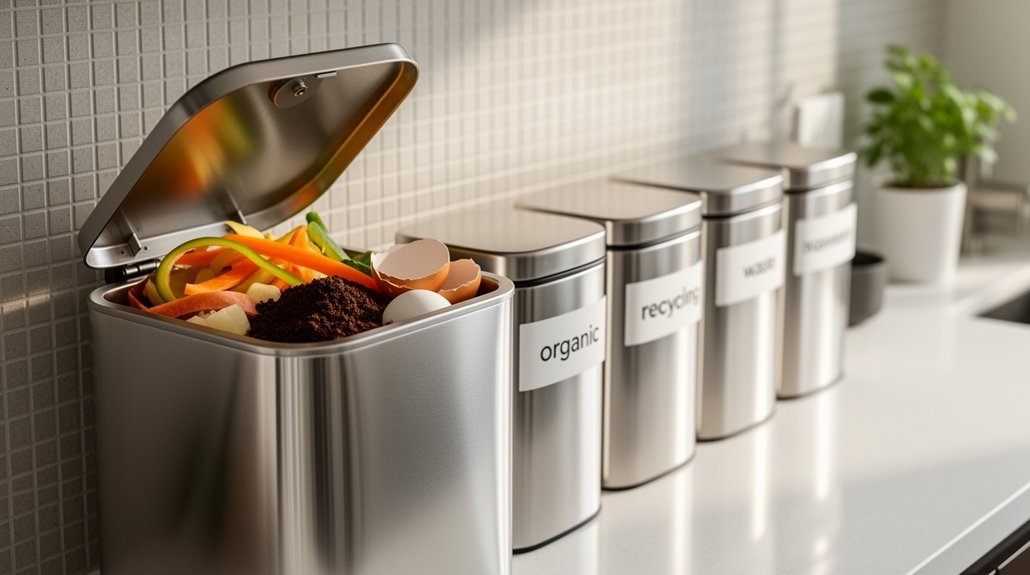
Before you start composting in your condo, you’ll need to understand what your building allows. Your condo association or HOA may have specific rules about where you can store organics containers—whether on your balcony, in hallways, or in shared trash rooms. These restrictions typically address odor control and pest prevention in common spaces.
Next, check your building’s collection system. Some buildings provide centralized green carts in shared pickup areas, while others work with private haulers on set schedules. Municipal programs may also require organics collection at your property. Contact your property manager or board to learn your building’s accepted materials list, collection frequency, and container sizes. Understanding these details ensures you’ll compost correctly from day one. Sealed containers will help you prevent odors and pests while storing scraps in your unit before collection day. Consider using airtight food storage containers with silicone gasket seals to keep your compost scraps secure and odor-free between collection cycles.
The Best Composting Methods for Condo Living
You’ll find that vermicomposting, bokashi systems, and municipal drop-off programs each offer distinct advantages depending on your space and lifestyle. Worm bins handle fruit and vegetable scraps efficiently in compact areas, while bokashi fermentation accepts a wider range of materials including meat and dairy in an airtight setup. If you’d rather skip the maintenance altogether, many cities now offer community collection points where you can drop off your scraps for professional composting. The bokashi system’s sealed bin design prevents foul odors and pests, making it particularly considerate of neighbors in higher-density housing. For condo dwellers seeking organic amendments after composting, alfalfa meal fertilizers offer nutrient-rich options in various package sizes suitable for balcony gardens and container plants.
Vermicomposting For Small Spaces
Since traditional composting demands space and outdoor access that condos simply don’t offer, vermicomposting provides a practical alternative that works within your limited square footage. You can set up a compact worm bin in your closet, under the sink, or on your balcony using just a lidded plastic tote or purpose-built vertical system.
Red wigglers thrive in indoor temperatures, making year-round composting feasible. You’ll feed your bin fruit and vegetable scraps, coffee grounds, tea leaves, and shredded paper while maintaining proper moisture and airflow. Bury food under bedding to minimize odor and pests. The Worm Factory 360 is a popular compact option that uses multiple trays for easier harvesting and requires minimal maintenance.
With regular monitoring and balanced feeding, your worm bin continuously converts kitchen waste into nutrient-rich castings. You’ll create fertilizer for houseplants while diverting trash from landfills—all without leaving your apartment. For those seeking an alternative bokashi approach, consider leak prevention and sealing techniques to ensure your composting system remains contained and odor-free in shared living spaces.
Bokashi Systems And Fermentation
What if you could compost meat, fish, and dairy—foods that traditional methods reject—without odor or pests? Bokashi systems make this possible through fermentation rather than aerobic decomposition. You’ll layer food waste with inoculated bran in a sealed container, creating anaerobic conditions that pickle your scraps within 7 to 14 days.
The process works beautifully in condos because it’s compact, odorless, and pest-proof. You’ll drain nutrient-rich liquid periodically to dilute and use as plant feed. Once fermentation completes, you’ll bury the material in soil—either in a balcony planter or container—for final curing within two to four weeks. To maintain effectiveness and odor control, you should sprinkle fresh bran with each addition of scraps rather than replacing the entire contents. The Bokashi system is 10 times faster than other composting methods, making it an ideal solution for apartment dwellers who want efficient waste management. The result: nutrient-dense soil amendment ready for your plants.
Municipal Programs And Drop-Offs
Most municipalities now offer compost drop-off programs designed specifically for residents who can’t maintain backyard systems—making them ideal for condo dwellers. You’ll find designated bins at convenient locations where you drop off food scraps without needing storage space or building permission complications.
| Feature | Details |
|---|---|
| Accepted Materials | Food scraps, kitchen waste |
| Access Requirements | Property manager approval |
| Typical Capacity | 320 pounds per location |
| User Base | 1,200+ regular participants |
| Cost Structure | Low-cost municipal operation |
Durham’s pilot program demonstrates feasibility with multiple drop-off sites serving hundreds of residents. You simply collect scraps in a container, transport them to the designated location, and let the city handle industrial composting. For those interested in alternative approaches, worm tea collection systems offer nutrient-rich liquid fertilizer from food waste processing. This approach diverts organic waste from landfills while eliminating your composting responsibilities entirely. For condo residents seeking additional convenience, centralized container options like ReCo’s Purple Bin service provide weekly pickup directly from your community, eliminating the need to transport materials yourself.
Odor-Free Storage Strategies for Indoor Scraps
You’ll find that sealed containers and tight-fitting lids are your first line of defense against odors escaping into your condo.
For households that can’t empty their bins frequently, freezing scraps in a reusable bag or sealed vessel stops decomposition and eliminates smell before it starts.
Combining these two strategies—freezing between pickups and storing in airtight containers—gives you reliable odor control without requiring daily maintenance. Adding a thin layer of dry browns on top of your scraps absorbs excess moisture and blocks odors, making this approach even more effective during longer storage periods. For those seeking additional odor management, charcoal filters in ceramic compost crocks provide continuous odor prevention beyond freezing and layering methods.
Sealed Containers And Lids
How do you keep food scraps from smelling up your condo kitchen? Sealed containers with tight-fitting lids are your best short-term solution. They effectively block odors and prevent pest access, making them ideal for holding scraps before you transfer them to outdoor composting or a municipal drop-off.
However, sealed storage has a trade-off. When you keep scraps in airtight conditions at room temperature, they can ferment and create anaerobic conditions that actually intensify odors once you open the lid. That’s why sealed containers work best as temporary holding strategies—not permanent solutions. For enhanced odor control, consider containers with patented air flow designs that reduce odors while allowing ventilation. Alternatively, bokashi bins with tight-fitting lids and rubber seals offer superior odor management compared to standard sealed containers by using fermentation to actively suppress smells rather than simply trapping them.
For true odor control, think of the lid as a barrier rather than a ventilation system. It won’t improve decomposition inside the container, but it’ll definitely contain the smell until you empty it.
Freezing Scraps Between Pickups
Freezing food waste stops microbial activity at its source, preventing the decomposition process that creates odors in the first place. You’ll find that frozen scraps produce far less smell than room-temperature waste, making your freezer an ideal temporary holding space between pickups.
Store vegetable peels, fruit scraps, coffee grounds, and eggshells in reusable containers or plastic bags. Keep scraps compact to maximize freezer space and minimize thawing during handling. Avoid freezing meat, dairy, oils, and sauce-heavy foods—they’re the worst odor culprits. Lining your storage container with brown material like torn paper or cardboard can further absorb residual moisture and bacteria. For countertop pre-collection staging, a small-scale countertop solution can hold thawed scraps briefly before transfer to your main freezer storage.
Empty your collection weekly to prevent mold and bacterial growth. Leave scraps frozen until nearly collection time to avoid thaw-related smells. This approach dramatically reduces fly attraction and pest issues while eliminating the need for frequent rinsing compared to room-temperature storage.
What Food Scraps Can You Compost Indoors?
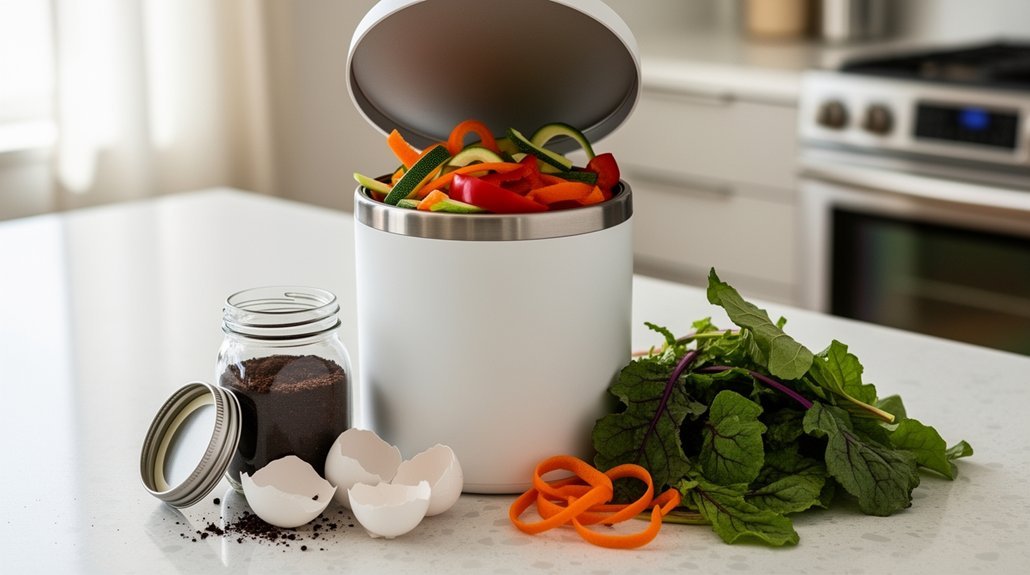
If you’re wondering what’s safe to toss into your indoor compost bin, fruit and vegetable scraps are your best starting point. Banana peels, apple cores, carrot tops, and lettuce leaves all work well. Chop these materials smaller to speed breakdown. You can also add rinsed, crushed eggshells for calcium and coffee grounds for nitrogen. Tea leaves and compostable tea bags are acceptable too. For tea bags specifically, ensure they use food-grade nylon mesh to avoid introducing synthetic materials into your compost system.
Avoid meat, bones, and dairy products—they’ll create odor and pest problems in confined spaces. Skip oily and greasy foods as well. Large amounts of acidic materials like citrus can be problematic in worm bins. Including compost starter can help accelerate the decomposition process and improve results in your indoor system.
The key to success is balancing nitrogen-rich kitchen scraps with carbon-rich browns like shredded paper or cardboard. This balance controls odors and keeps your bin healthy.
Apartment-Friendly Organics: Plants, Paper, and Dishes
Beyond kitchen scraps, you’ve got plenty of apartment-friendly materials to add to your indoor compost system.
Beyond kitchen scraps, your indoor compost system welcomes houseplant clippings, paper products, and certified compostable tableware for apartment living.
Healthy houseplant clippings, wilted flowers, and spent leaves work well when disease-free and pesticide-free. Vermicomposting handles soft plant matter efficiently, though you should chop thick stems into small pieces or skip them entirely in compact bins. For apartment dwellers with limited space, countertop compost bins with airtight lids offer an odor-free solution for processing these materials.
Paper products also balance your compost nicely:
- Shredded plain paper, uncoated cardboard, and egg cartons supply essential carbon
- Tear materials into strips to speed decomposition and prevent matting
- Skip glossy magazines, thermal receipts, and laminated products due to inks and coatings
Compostable tableware made from bagasse, bamboo, or wheat straw can work, but verify certification labels like BPI or TUV. Avoid plates with plastic or wax linings—they won’t break down. When used in vermicomposting systems, worm castings from decomposed compostable dishes create a biologically-active soil amendment for your indoor plants. Check your building’s rules before adding these materials to your system.
When Your Method Matters: Meat, Dairy, and High-Oil Foods
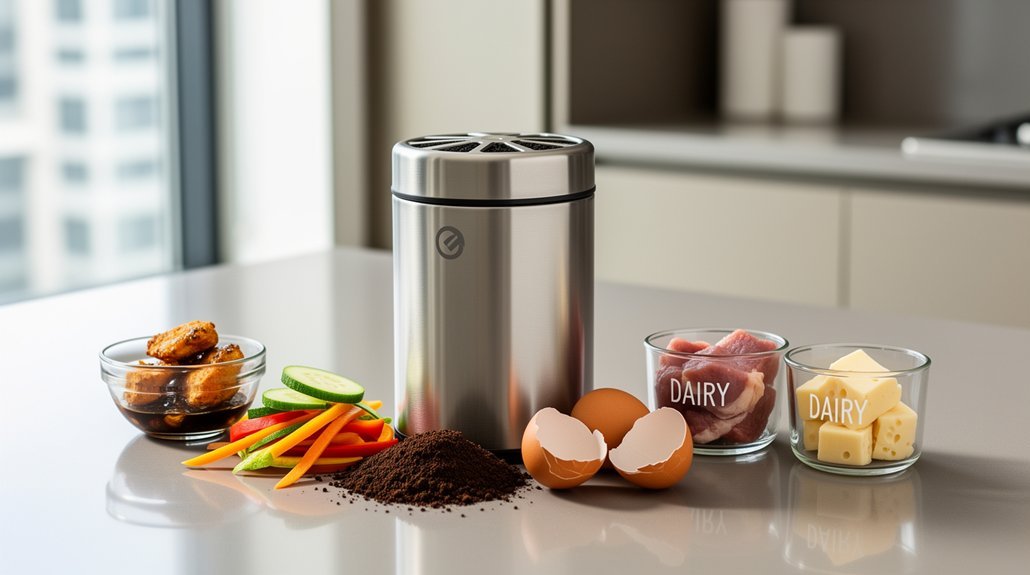
While houseplant trimmings and shredded paper work reliably in most condo systems, meat, dairy, and high-oil foods operate under different rules.
Your composting method determines what you can safely add. Traditional open bins struggle with animal products because they attract pests and create odors in confined spaces. Bokashi systems and electric composters, however, handle meat, bones, and dairy effectively through fermentation or controlled processing. Fats and oils slow composting by creating water-resistant barriers that displace water and reduce air flow, making them particularly problematic in standard systems.
| Material | Open Bin | Bokashi | Electric Composter |
|---|---|---|---|
| Meat | No | Yes | Yes |
| Dairy | No | Yes | Yes |
| Cooking Oil | No | Minimal | Yes |
| Bones | No | Yes | Yes |
| Cooked Food | No | Yes | Yes |
Keep animal scraps minimal in any system. Oil especially interferes with airflow and decomposition. Match your inputs to your equipment, not the other way around.
What Should You Never Put in Your Condo Compost?
What doesn’t belong in your condo compost? You’ll want to avoid three major categories of materials:
- Inorganic and synthetic items—plastic, styrofoam, metal, glass, and rubber bands won’t break down and will contaminate your finished compost. Even certified compostable plastics often require industrial conditions to decompose.
- Chemically treated materials—treated wood, pesticide-laden yard waste, coal ash, and synthetic soaps introduce harmful residues that’ll compromise your compost’s safety.
- Problem foods and materials—large wood pieces, oils, excessive salt-preserved foods, and liquid-heavy additions create moisture problems, slow decomposition, or attract pests in compact systems. Meat and dairy products should never be added to your condo compost, as they rot and create unpleasant odors that can draw scavengers to your space.
Keep these items out, and you’ll maintain a functional, clean condo compost system that actually produces usable results.
Start Composting: Pick Your Method and Set Your First Bin
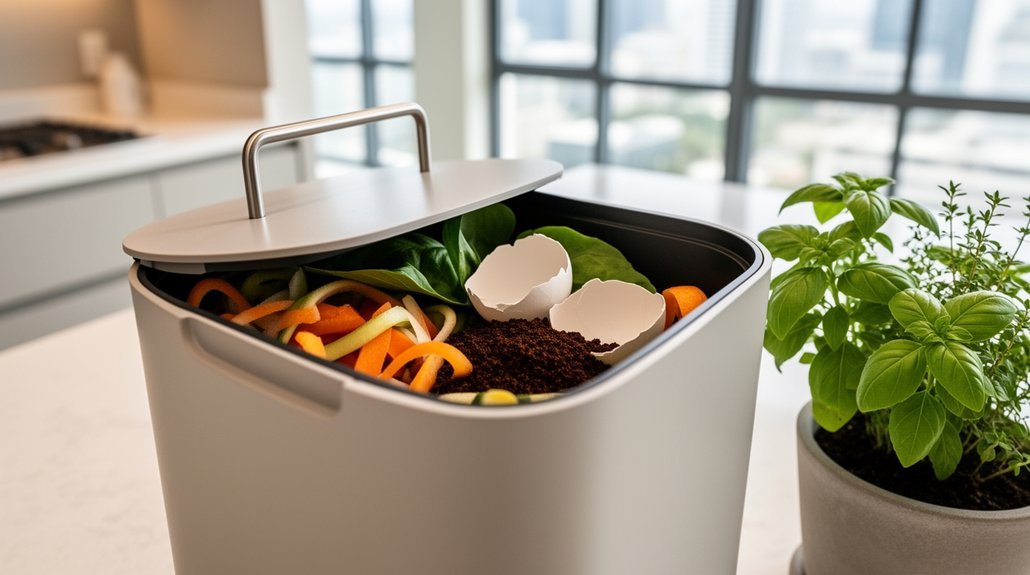
Now that you know what to keep out of your condo compost, you’re ready to choose a method and build your first bin. Bokashi and vermicomposting are your best indoor options—both compact and low-odor. Bokashi requires two airtight bins and inoculated bran, while vermicomposting needs only a ventilated container with bedding. If you’ve got balcony space, a tumbler handles larger volumes. Electric composters offer hands-off convenience but cost more.
Once you’ve picked your method, set up your bin in an accessible location sized to your kitchen waste. For Bokashi, layer scraps with bran. For vermicomposting, prepare paper bedding. Then establish a simple routine: add scraps regularly, close your bin properly, and monitor moisture and airflow. Consistency keeps your system productive. Proper management minimizes odors when you maintain the right balance of materials and ensure sufficient air for efficient decomposition.
Frequently Asked Questions
Can I Use Non-Certified Compostable Liners in My Condo Compost Bin?
You shouldn’t use non-certified compostable liners in your condo bin. They’ll likely contaminate the batch or get rejected at pickup. Check your building’s rules first, then use only certified liners or no liner at all.
What’s the Ideal Carbon-To-Nitrogen Ratio for Indoor Compost Tumblers?
You’ll want to maintain a 25–30:1 carbon-to-nitrogen ratio in your indoor tumbler. This balance fuels microbial activity, generates heat, controls odors, and prevents excess moisture. Aim for roughly three parts browns to one part greens by volume.
How Do Paper Products Break Down Differently Across Composting Methods?
You’ll find paper breaks down fastest in hot composting through regular turning and microbial heat, moderately in vermicomposting when shredded and pre-moistened, and most slowly in passive home piles without aeration or nitrogen-rich materials mixed in.
Are Tea Bag Staples Required to Be Removed Before Composting?
You don’t need to remove tea bag staples for backyard compost since they’ll rust quickly. However, you should remove them in condo settings to prevent contamination and sorting issues in shared bins.
What Size Storage Area Do NYC Buildings With Four Units Need?
You don’t need a specific storage area size. You’re required to provide a reasonably accessible designated area with a sufficient number of 55-gallon or smaller labeled bins that have secure lids for residents’ pre-collection storage.
In Summary
You’re ready to start composting in your condo. You’ve learned what you can and can’t compost, explored your building’s rules, and discovered methods that work for apartment living. Now you’ll pick the right system for your space, set up your first bin, and begin reducing waste. You’ll find that indoor composting isn’t complicated—it just requires you to stay consistent and mindful about what goes in.