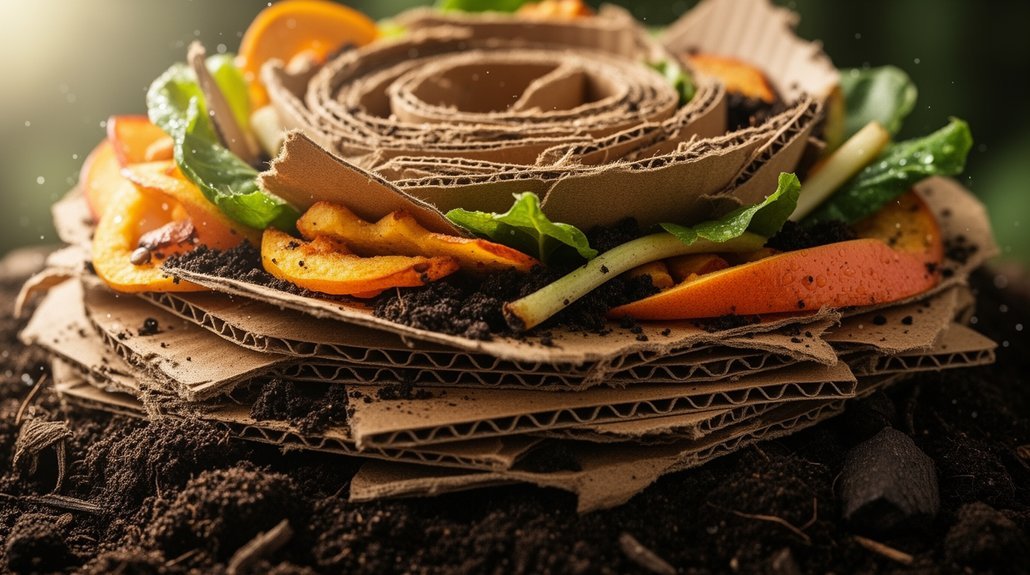
Aim for a 3:1–4:1 browns‑to‑greens mix, using dry shredded cardboard as the carbon backbone and fresh food scraps as the nitrogen source. Make sure every green pocket touches a brown layer, and keep the pile as moist as a wrung‑out sponge—add more cardboard if it’s soggy or mist with water if it’s dry. Turn the heap every few days to keep air flowing, and cover each addition with a thin brown layer to block odors and flies. Follow these steps and you’ll discover even smoother results.
Choose the Right Browns‑to‑Greens Ratio for Apartment Compost
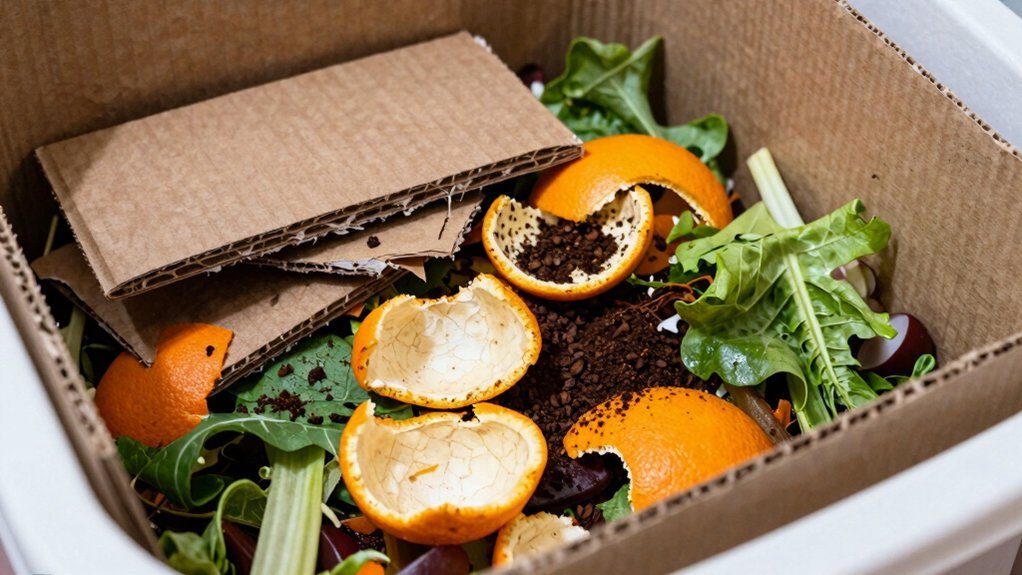
How do you keep your apartment compost from turning into a smelly, soggy mess? Start with a browns‑to‑greens volume of about 3 : 1 or 4 : 1, leaning toward browns because food scraps are wet and nitrogen‑rich. Use coffee grounds, fruit peels, and fresh clippings as greens; add shredded cardboard, paper, dried leaves, or wood bedding as browns. Ensure every green pocket contacts a brown layer to soak up moisture. If the pile smells rotten or feels slimy, toss in more browns; if it’s dry and slow, sprinkle extra greens and a splash of water. Keep the mix as moist as a wrung‑out sponge, stir occasionally for airflow, and cover the surface with browns after each addition to block flies and odors. Most ceramic compost crocks use charcoal filters with a typical lifespan of 4–6 months to manage odors during the decomposition process. Adjust gradually until the bin stays moist, aerated, and odor‑free. Greens provide nitrogen for microbial growth.
Prepare and Shred Cardboard for Fast, Aerobic Decomposition
A good start is to strip the cardboard of tape, stickers, plastic windows, foam, and any metal fasteners, then flatten the boxes so every surface is exposed. Soak the sheets for a day or two; the fibers soften and you can tear or cut them with scissors, a box cutter, or garden shears. Aim for thin strips or small pieces—uniform size lets microbes colonize evenly and keeps airflow high. For thick corrugated boxes, pre‑cut into manageable sections before shredding to reduce strain on tools. Store the shredded material dry until you add it to the pile, mixing it with nitrogen‑rich scraps and a thin top layer of soil or finished compost. Turn the heap regularly to redistribute the cardboard and maintain aerobic conditions, which support beneficial microbes and prevent pest attraction through proper oxygen circulation. Adding a layer of brown material helps balance carbon and nitrogen, speeding up decomposition.
Balance Moisture Between Wet Food Scraps and Dry Cardboard
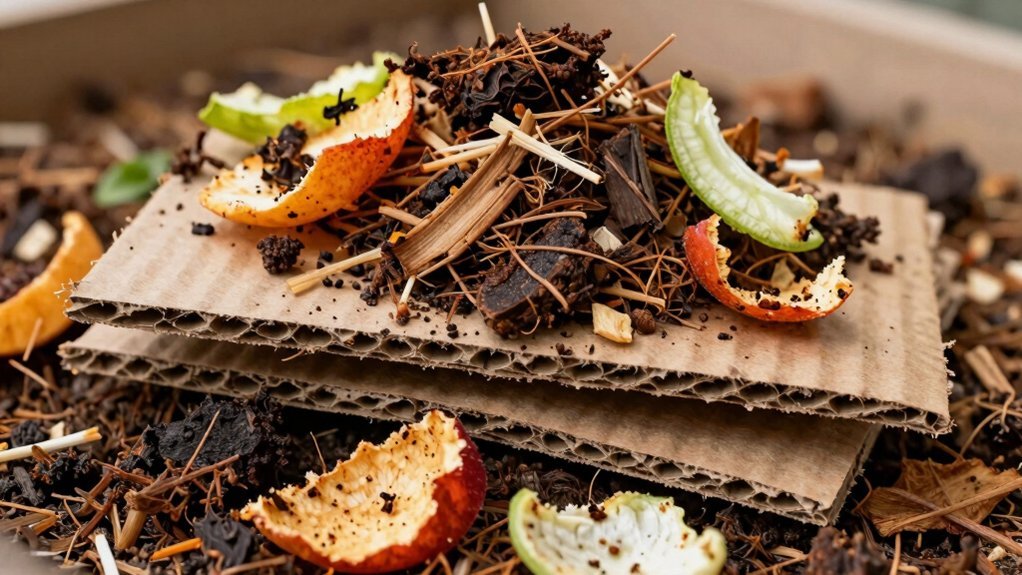
Balancing moisture in a compost bin hinges on matching the wetness of kitchen scraps with the absorbent power of dry cardboard. Your goal is roughly 50 % moisture—think “wrung‑out sponge.” Wet food supplies water; shredded cardboard so up excess, keeping the pile airy and preventing anaerobic odors. Use small pieces and layer them for even distribution, and perform the squeeze test: a handful should feel damp, not dripping. If you see pooling liquid, sour smells, or slimy texture, add more cardboard. If the pile feels dusty or decomposes slowly, toss in extra wet scraps or mist lightly. For optimal results, consider using compostable liners to contain your food scraps before adding them to the cardboard layer. Maintaining the right balance also supports the microbial activity essential for rapid decomposition.
| Situation | Quick Fix |
|---|---|
| Too wet | Add shredded cardboard, mix well |
| Too dry | Add moist scraps or mist |
| Balanced | Maintain 40‑60 % moisture, regular squeeze test |
Turn Your Apartment Compost Regularly for Better Aeration
Ever wonder why your apartment compost seems sluggish? You’re probably not turning it enough. Aerobic microbes need oxygen, and each turn pulls fresh air into the pile while moving outer scraps inward. Aim for a turn every three to four days, or at least once a week if you’re busy. If you notice the temperature dropping below 104 °F, give it a quick mix; hotter piles consume oxygen faster and benefit from more frequent aeration. Use a garden fork, hand tool, or rotate a tumbler—just enough to redistribute material without overcooling. After adding new food scraps, stir them in to integrate with the active core. Consistent turning keeps the pile loose, prevents anaerobic spots, and speeds up the breakdown, delivering richer compost in less time. Bulking materials like shredded newspaper or straw create free air space, reducing the need for frequent turning.
Troubleshoot Common Apartment Compost Issues: Odor, Pests, Slow Breakdown
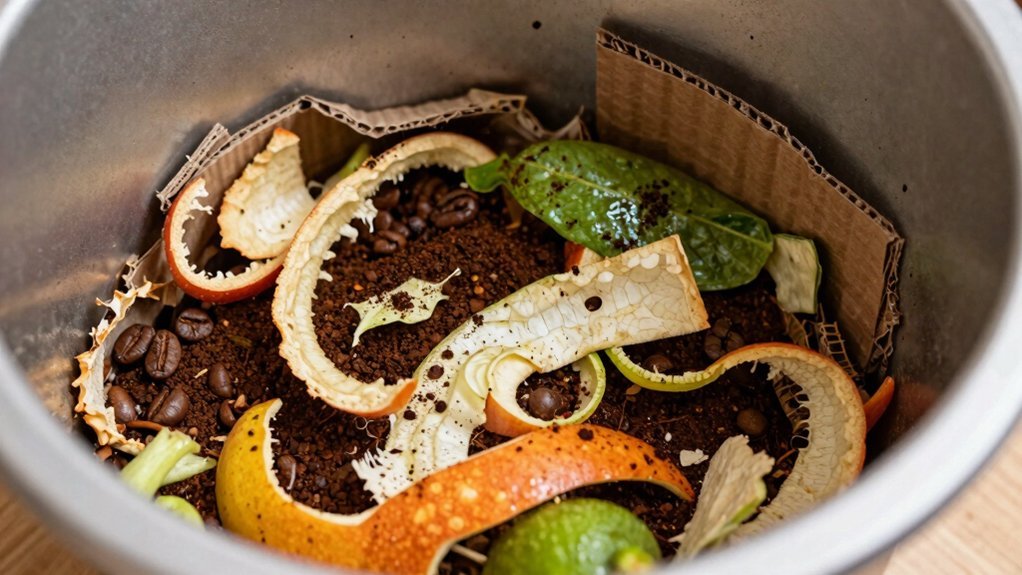
Why does your apartment compost suddenly smell, attract pests, or stall? You’re probably dealing with moisture, carbon‑nitrogen balance, or food‑scrap exposure. First, check moisture: excess water creates anaerobic conditions that emit rotten‑egg or sewer odors and compacts the pile. Add dry browns like cardboard or shredded paper to absorb liquid. Second, balance greens and browns; too many greens give ammonia, too many browns produce a stale, “old wood” smell. Chop scraps and sprinkle browns to restore equilibrium. Third, seal the bin and chill food before adding it; this cuts off flies, rodents, and mice. Consider installing charcoal filters to manage odors that may persist even after moisture and balance adjustments.
- Moisture control – add dry material, avoid waterlogged scraps.
- Carbon‑nitrogen ratio – aim for roughly 30:1 C:N, mix greens and browns.
- Pest prevention – use sealed containers, freeze scraps, keep meat/dairy out.
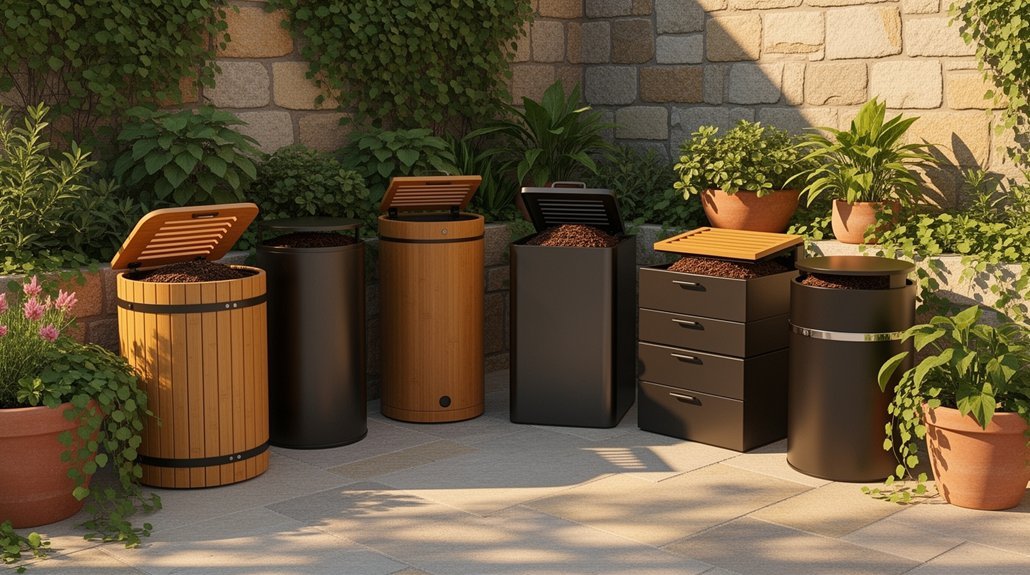
Use a specialized kitchen composter to keep the process efficient in limited spaces.
Frequently Asked Questions
Can I Compost Glossy or Coated Cardboard?
Yes, you can compost glossy cardboard only if it’s clay‑mineral coated and lightly soiled; plastic, wax, or foil laminations shouldn’t go in the bin, and shredding speeds breakdown.
What Temperature Should My Compost Reach for Safe Food Waste Breakdown?
You should keep the pile between 131‑149 °F (55‑65 °C) for several days. That range kills pathogens, speeds breakdown, and avoids overheating that kills beneficial microbes or risks combustion.
Do I Need to Add Any Microbes or Starter Cultures?
You don’t need to add microbes or starter cultures; just mix shredded cardboard with food scraps, keep the carbon‑nitrogen ratio around 30:1, maintain moisture, and turn for oxygen.
How Long Can I Store Shredded Cardboard Before Using It?
You can store shredded cardboard for up to six months if you keep it dry, cool, and off the ground; just watch for musty smells, soft spots, or mold, and use it sooner if those appear.
Is It Safe to Compost Pet Waste With Cardboard and Food Scraps?
No, you shouldn’t mix pet waste with cardboard and food scraps for garden compost. Pathogens stay alive, so keep a separate bin, or discard the waste to avoid contaminating edible plants.
In Summary
By keeping the browns‑to‑greens ratio right, shredding cardboard, balancing moisture, and turning your bin often, you’ll get a fast, odor‑free compost even in a tiny apartment. Stay on top of moisture and aeration, and any pests or slow breakdown will disappear. Your kitchen waste will turn into rich soil, ready to feed houseplants or a community garden, all while cutting down on landfill trash.