Seal your compost in a tight‑seal bin and keep it cool, dark, and away from stoves or radiators. Aim for a 2:1‑3:1 brown‑to‑green ratio, adding a dry layer of shredded paper, leaves, or cardboard after each green addition to lock moisture and block odors. Check moisture with a squeeze test; it should feel like a wrung‑out sponge. Turn the pile regularly to keep oxygen above 13% and prevent anaerobic heat. Freeze smelly scraps until you’re ready to add them, and never put meat, dairy, or oil in the bin. If you follow these steps, you’ll discover even more tricks to keep your compost fresh and cool.
Stop Compost Odors Fast: Choose a Tight‑Seal Bin
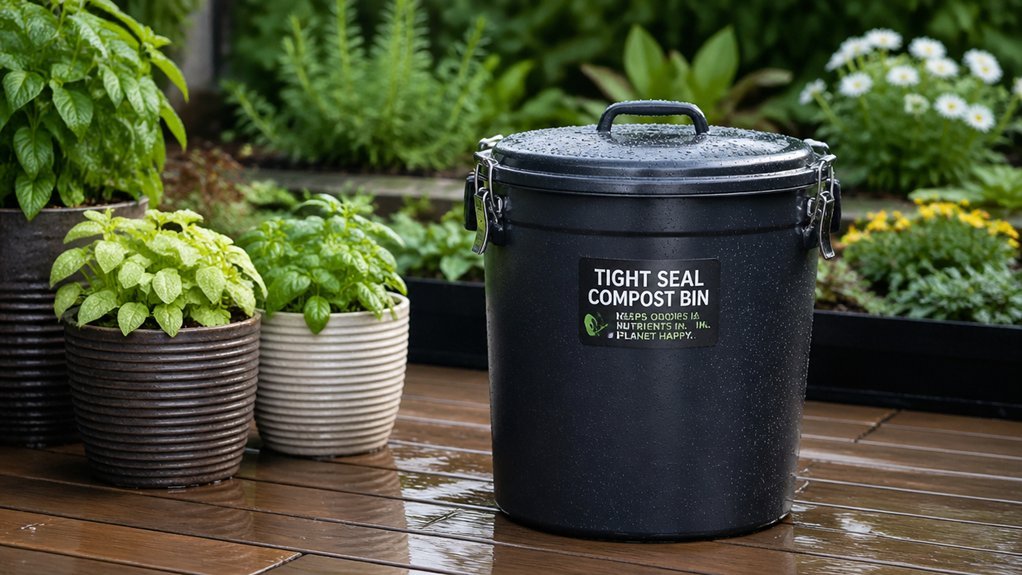
A tight‑seal bin is the single most effective weapon against indoor compost odors. You’ll notice that a tight-seal bin with a fully closing lid blocks the escape of gas, so you never have to tolerate lingering smells. Choose a model that snaps shut and stays shut; activated‑charcoal filters are nice, but the lid the heavy lifting. Keep the bin in a cool, dark spot, away from stoves or windows, to slow odor formation. Avoid tossing meat, dairy, oil, or sauces inside—those compounds boost odor risk. If you still detect a whiff, freeze scraps first or use the freezer method, then move them outdoors when ready. Empty the bin weekly, and layer dry browns on top to soak up moisture and keep odors at bay. Regularly inspect the seal and replace worn gaskets to maintain odor control tight‑seal design and overall bin effectiveness.
Keep the Bin Cool and Away From Heat Sources
After sealing the lid, move the bin to a cool, dark spot away from stoves, radiators, or sunny windows. A cooler environment slows microbial activity, keeping the compost bin from generating excess heat that fuels odor. Position it under a kitchen sink or in a basement corner where ambient temperature stays low. Ensure airflow by leaving a small gap between the bin and the wall, and avoid stacking piles too high, which traps heat. Regularly stir the mix to release trapped warmth and maintain even cooling. To maintain odor control over time, replace odor filters every 4–6 months as needed for continued effectiveness in conjunction with proper placement filtration system.
Aim for a 2:1‑3:1 Browns‑to‑Greens Ratio
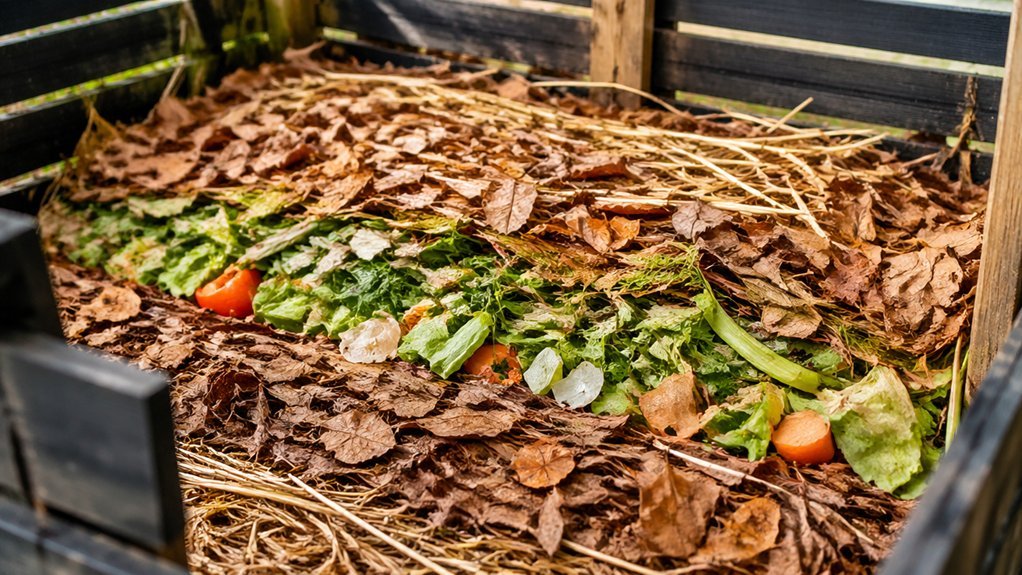
Keep an eye on your carbon‑to‑nitrogen balance by aiming for roughly two to three parts browns for every part greens. If you notice the pile getting soggy or smelly, add more dry leaves, shredded paper, or wood chips to restore the ratio. Regularly monitor pH and moisture to maintain an aerobic, odor‑free, and cool compost system, and consider using a certified organic compost mix to support nutrient balance pH range 6.0–7.0.
Maintain Proper Ratio
Wondering how to keep your compost from stinking and overheating? Aim for a 2:1‑3:1 browns‑to‑greens ratio and you’ll strike the right balance between carbon and nitrogen. Start by layering dry leaves, shredded newspaper, or wood chips (browns) with kitchen scraps, coffee grounds, or grass clippings (greens). Keep the pile loose; each turn should mix the materials so air can circulate. If you notice a sour smell, add more browns to soak up excess moisture and restore porosity. A simple routine—add a handful of browns, then a handful of greens, and turn every few days—keeps the ratio steady and prevents anaerobic hotspots. Consistent layering and turning maintain proper aeration, keeping odors at bay and heat under control. Aeration and heat management help maintain optimal conditions for continuous fermentation and odor control in compact bokashi setups.
Adjust As Needed
How often should you tweak your compost mix? You should check it every week, especially after adding a batch of greens. If the pile smells sour or feels soggy, it’s time to add more brown material. Aim for a 2:1‑3:1 brown‑to‑greens ratio to keep aeration high and moisture low. Turn the pile to mix in fresh air and redistribute nutrients. When you notice excess moisture, sprinkle shredded newspaper, dry leaves, or wood chips. If the pile looks dry, add a handful of food scraps or coffee grounds. Regular adjustments keep the compost active, odor‑free, and thermally stable. Aeration benefits Regularly turning the pile aids in maintaining a steady temperature and prevents odor buildup, especially in apartment-friendly BSF setups.
| Issue | Quick Fix |
|---|---|
| Sour odor | Add more brown |
| Soggy texture | Mix in coarse brown |
| Dry pile | Toss in greens |
| Slow heating | Turn and rebalance |
Top Each Load With a Dry Layer to Lock in Moisture
You start each batch with a thin dry layer, then pile on bulky browns to keep the moisture sealed in. This carbon‑rich cap absorbs excess water, blocks odors, and improves aeration. If the smell lingers, just add more dry browns and boost airflow to restore balance. Regularly replace filters every 2-3 months to maintain odor control and maximize bin performance odor control cadence.
Dry Layer First
Ever notice how a fresh layer of dry brown material on top of each load instantly locks in moisture and curbs odors? You should start every addition with a blanket of dry leaves, shredded paper, straw, or cardboard. This top coat acts like a sponge‑squeezing lid, absorbing excess water while keeping the pile’s overall moisture around the ideal 60‑65 % range. By cushioning the wet interior, it blocks the scent that attracts flies and reduces the chance of anaerobic pockets that cause foul smells. The dry layer also improves aeration, letting oxygen flow through and preventing heat spikes. Regular turning and proper moisture checks help maintain the right balance, while using a dry top layer can complement sustainable packaging practices and reduce the need for additional additives. Pair this step with regular turning and proper moisture checks, and you’ll keep your compost smelling fresh and staying at a healthy temperature.
Cover With Bulky Browns
After the dry‑material blanket locks in moisture, add a thick layer of carbon‑rich browns on top of each new load. This dry, bulky cover absorbs excess water, preventing the soggy conditions that spark sulfurous smells and heat spikes. Choose shredded leaves, paper, straw, cardboard, or sawdust—materials that stay dry and block flies. By keeping the surface dry, you also promote aeration; the loose browns discourage compaction and let oxygen flow into the pile. Aim for a layer about 2–3 inches deep, and refresh it each time you add fresh kitchen scraps. Consistently topping with browns maintains oxygen levels above 13 %, keeping the compost healthy, odor‑free, and temperature‑stable.
Seal To Lock Moisture
A thin, dry cap of shredded paper, straw, or dry leaves placed on each load acts like a seal, locking in the right amount of moisture while keeping the surface breathable.
You should spread a bulky, dry layer over every addition of kitchen scraps, letting it absorb excess liquid and keep the pile from becoming soggy. This top layer maintains a moisture balance around 60‑65 %, which is ideal for aerobic breakdown and prevents the anaerobic conditions that cause compost smells.
When rain falls, the cap slows water infiltration, preserving heat‑stable, odor‑free conditions.
Check the pile after each layer; if it feels soppy, add more dry browns to restore a breathable, odor‑reducing surface.
This simple habit keeps your compost healthy and pleasant.
Check Moisture by Squeezing the Pile – Aim for a Wrung‑Out Sponge
Wondering how to tell if your compost is too wet? Grab a handful of material and give it a firm squeeze. If a few drops drip out, the pile is soggy; if it holds together like a wrung‑out sponge, you’ve hit the sweet spot. Aim for that damp, not soaking, feel to keep aerobic microbes thriving and avoid sulfurous odors. When the squeeze releases excess water, sprinkle dry browns—shredded paper, leaves, or cardboard—to soak up moisture and boost aeration. Check after rain or when you add kitchen scraps, adjusting with dry amendments as needed. Maintaining this balance curbs heat spikes and keeps the compost smelling fresh.
How Often to Turn or Aerate Your Indoor Compost (Oxygen >13%)?
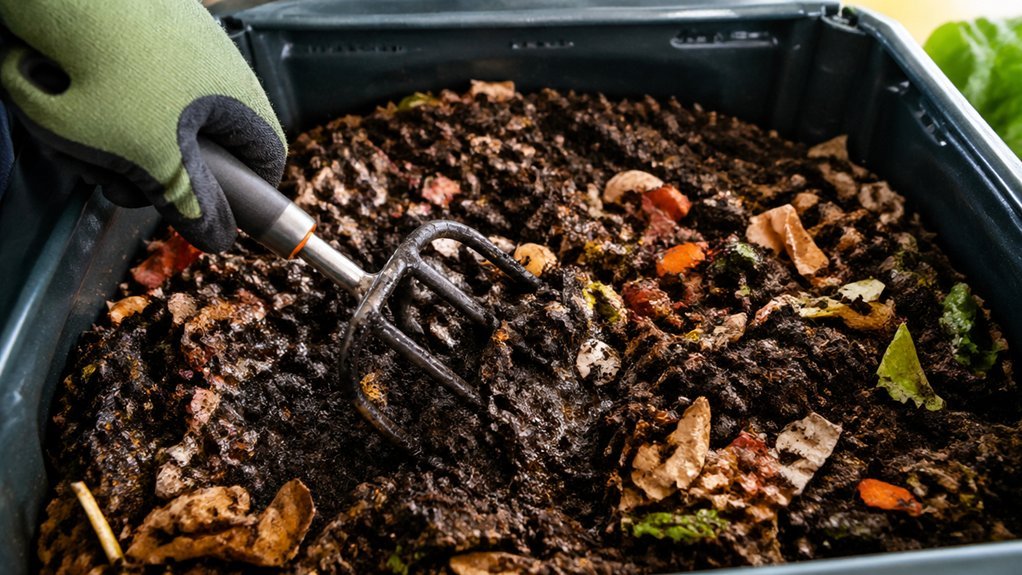
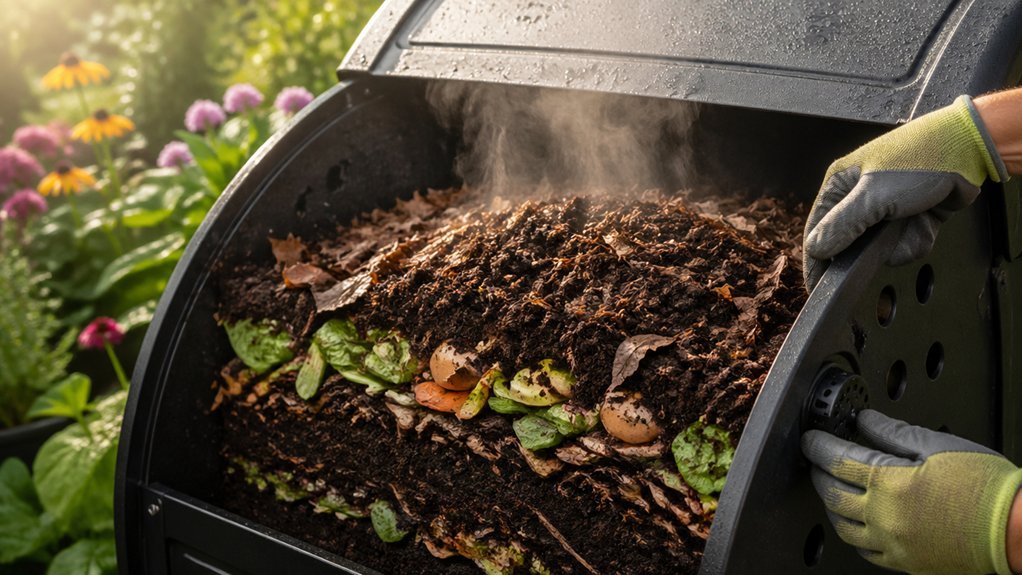
How often should you turn or aerate your indoor compost to keep oxygen above 13%? In the first one to two weeks, aim for a turn every 12‑24 hours because microbial activity spikes and consumes oxygen quickly. After that, reduce frequency to once every 48‑72 hours, watching the pile’s temperature and smell. If you notice a rise above the design range or a sour odor, increase aeration immediately. Use a small fan or a manual turner to inject fresh air and maintain the 13% threshold. Consistent aeration prevents anaerobic pockets, keeps the compost cool, and speeds up decomposition.
- Turn daily for the first 48 hours.
- Switch to a 48‑hour schedule after two weeks.
- Add a fan delivering up to 5 CFM per cubic yard if the pile is deep.
- Monitor temperature with a probe; adjust airflow if it climbs.
- Increase turning when the pile smells sour or feels hot.
Freeze Smelly Scraps Until You’re Ready to Compost
Ever notice how kitchen scraps turn your indoor bin into a smelly, steamy mess? You can halt that process by freeze scraps in a sturdy container or reusable freezer bag. The low temperature stops microbial activity, so odors never develop while you wait to empty the bin. Choose bags that won’t melt or release chemicals—avoid regular plastic or meat‑based compostable bags, which can break down too quickly. When you’re ready to compost, simply thaw the frozen pile and transfer it straight to your outdoor compost bin or drop‑off site. This trick works especially well if you empty your kitchen bin only once a week or have limited indoor odor‑control options. By freezing first, you keep your kitchen fresh and your compost ready when you are.
Fix Persistent Compost Odor With Extra Browns & More Frequent Emptying
- Toss shredded paper or cardboard into the mix.
- Sprinkle dry leaves or straw after each green addition.
- Empty the bin every few days if the pile feels soggy.
- Turn the pile weekly to introduce oxygen.
- Check moisture with a hand‑squeeze test; add browns if it feels wet.
Keep Pests Out by Excluding Animal‑Based Materials
Why let rodents and raccoons raid your compost? Excluding animal‑based materials is your first line of defense. Pests sniff out meat, fish, dairy, oil, bread, grains and bones, so keep those out and stick to grass clippings, leaves, plant stalks, vines and seed‑free weeds.
Bury fresh scraps deep in the early‑decomposition zone to discourage burrowing, and wrap the bin in hardware cloth for a physical barrier.
If you must manage odorous inputs, sprinkle a thin layer of activated charcoal to absorb smells that attract wildlife.
When wildlife persists, eliminate animal‑based materials completely and consider community composting or alternative disposal.
This approach cuts attract, reduces heat spikes, and keeps your pile pest‑free.
Frequently Asked Questions
How Do I Stop My Compost From Smelling?
You stop the smell by keeping the pile aerobic: turn it often, add dry browns, keep moisture at 60‑65%, exclude meat/dairy, use a tight‑lid bin, and store it cool and dark.
What Are Two Mistakes That We Should Avoid When We Prepare Compost?
You should avoid adding meat, dairy, oil, or sauces, and don’t let the pile get too deep or compacted. Both mistakes cause foul smells and excess heat, ruining your indoor compost.
How Do the Amish Compost?
You’ll layer greens and browns, turn the pile regularly for oxygen, keep meat‑free feedstock, use bulky carbon to soak excess moisture, and monitor the pile so it stays airy, cool, and odor‑free.
What to Put in a Compost Bin to Keep From Smelling and Prevent Meal Worms?
Fill your bin with green scraps, dry browns, and a pinch of garden soil; keep it moist but not soggy, turn it weekly, and add shredded newspaper to absorb odors and deter meal worms.
In Summary
By sealing your bin, keeping it cool, balancing browns and greens, and topping each load with a dry layer, you’ll curb odors and heat. Monitor moisture with the sponge test, turn the pile often enough to stay above 13 % oxygen, and freeze smelly scraps until you’re ready. If smells persist, add more browns and empty more frequently. Exclude animal‑based waste to keep pests out, and your indoor compost will stay fresh and odor‑free.