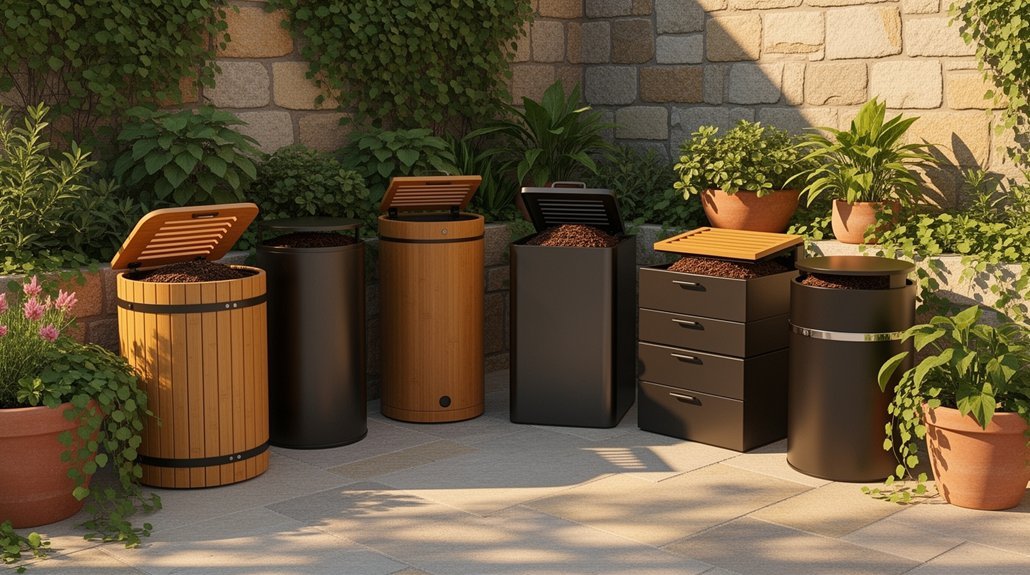
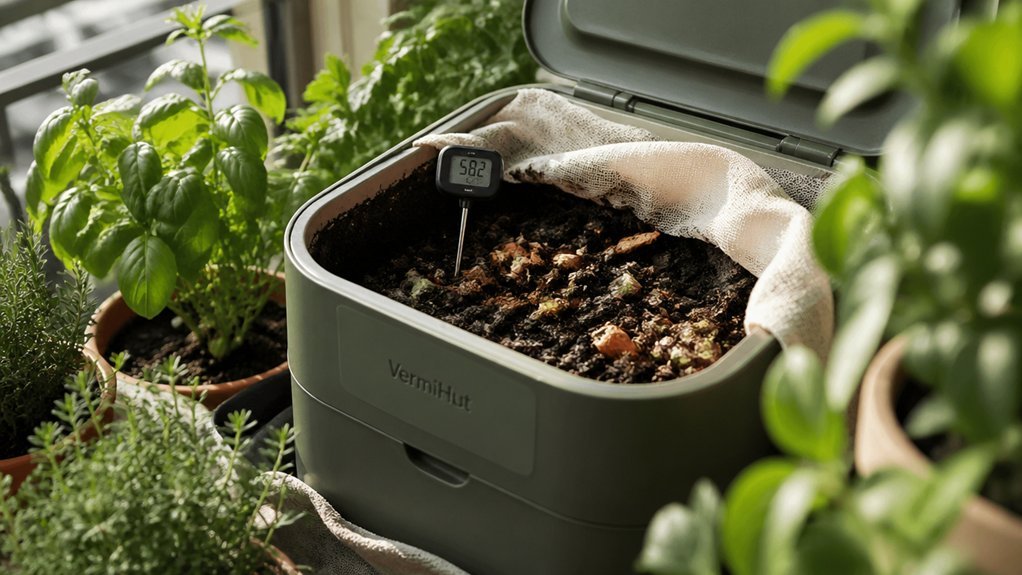
Stick a thermometer into your balcony bin and check it each morning, aiming for 131–170 °F to trigger turning. Keep the pile at 55–150 °F, with the sweet spot around 135–160 °F, by balancing nitrogen‑rich greens and carbon‑rich browns, and maintaining 60–80 % humidity. Turn the compost every few days to inject oxygen and spread heat, and use shade cloths or portable insulation panels to prevent overheating or freezing. Adjust moisture like a wrung‑out sponge to fine‑tune temperature, and you’ll discover more tricks ahead.
Monitor Balcony Compost Temperature With a Simple Thermometer
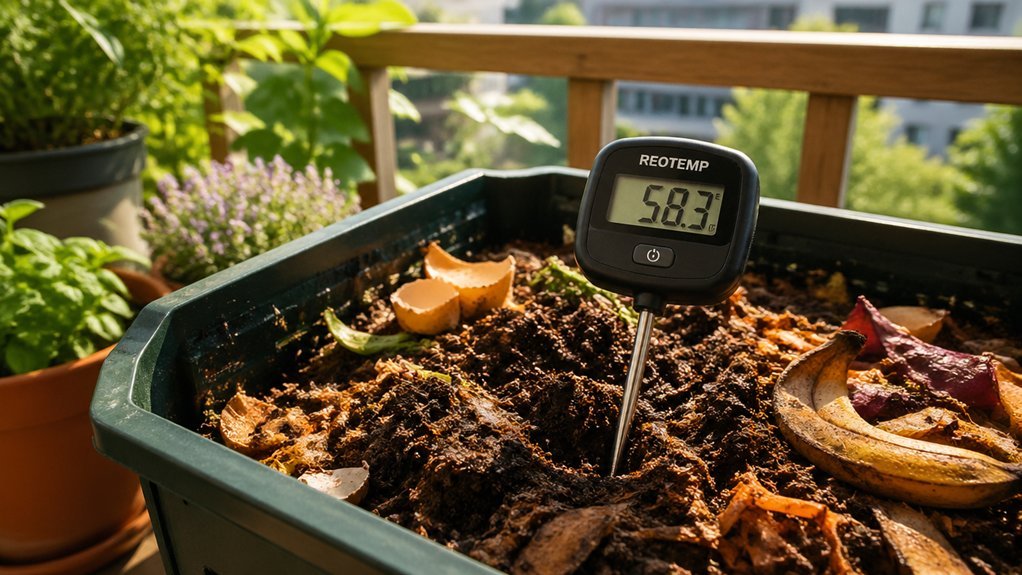
How can you keep your balcony compost humming without constantly guessing its heat? Slip a thermometer into the pile or tuck a probe nearby, then check the temperature each morning. When the reading hits 131–170 °F, turn the pile to inject oxygen and keep aerobic conditions thriving. If it stays too high or drops, adjust moisture and remix browns and greens to balance heat management. Record each reading so you spot trends and know exactly when to stir. This simple routine lets you control balcony composting without guesswork, ensuring microbes stay active and your compost stays healthy. Regularly monitoring also helps you optimize for steady outputs, especially with compact tumblers like the 18.5-gallon and HOTFROG half-size models that are popular for small outdoor spaces. Temperature monitoring helps you maintain optimal microbial activity and prevents odor issues by keeping aeration steady.
What Is the Ideal Temperature Range for Balcony Compost?
What temperature should you aim for to keep your balcony compost thriving? Active microbial breakdown works best between 55 °F (13 °C) and 150 °F (66 °C), with the most vigorous activity—and pathogen‑killing power—occurring around 135–160 °F (57–71 °C). Stay within that band to keep aerobic decomposition humming. In cool months, use insulation—like a straw blanket or a wooden box—to trap heat and prevent the temperature from dropping below 55 °F. When the sun beats down, provide shade and boost aeration by turning the pile, which also stops overheating past 150 °F. Regularly check the temperature; a quick turn at 160 °F signals peak microbial activity and keeps the community healthy. Balancing insulation and aeration lets you maintain the ideal temperature for robust balcony composting. Activated charcoal can help moderate odors in small spaces where balcony composting occurs, complementing proper turning and insulation practices.
Mix Greens & Browns for a Stable 55‑65 °F Compost
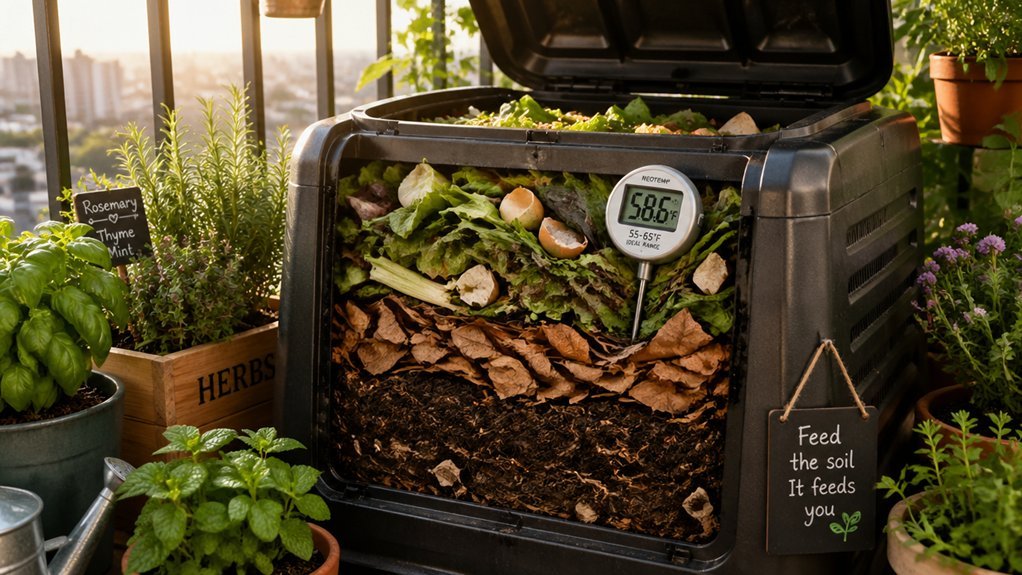
Ever wondered why your balcony bin stays cool? You keep the in-bin temperature in the 55‑65 °F sweet spot by balancing greens and browns. Greens supply nitrogen, while browns provide carbon and structure. Aim for roughly 60–80 % humidity and 20–40 % dry browns to prevent excess moisture that spikes heat. Add leafy kitchen scraps (greens) and shredded newspaper or dry leaves (browns) in alternating layers. If the thermometer climbs toward the upper limit, toss in more browns; if it drops, boost greens. Good moisture management and regular turning/oxygenation keep microbes active but not overheated, preserving a stable temperature without extra effort. This simple mix lets your balcony compost stay cool and efficient temperature control concepts.
Turn and Aerate Your Balcony Compost to Control Heat
Why let heat build up in your balcony bin when a simple turn can keep it in check? Turning your balcony compost every few days injects fresh oxygen, balances temperature, and prevents hotspots. Each stir redistributes moisture and microbes, boosting aeration and stabilizing heat management. When the pile hits a crash point or spikes near 160 °F, a quick turn restores oxygen levels and keeps microbial activity thriving. In colder months, maintain aeration while wrapping the barrel to reduce heat loss. Use a hand fork or a small turner; aim for even mixing of greens and browns to sustain 60‑80 % humidity and a steady temperature range. A 33.4‑inch compost aerator tool can be used for tall bins to reach deeper layers enhanced aeration.
Insulate, Shade, and Relocate to Avoid Over‑Heating or Freezing
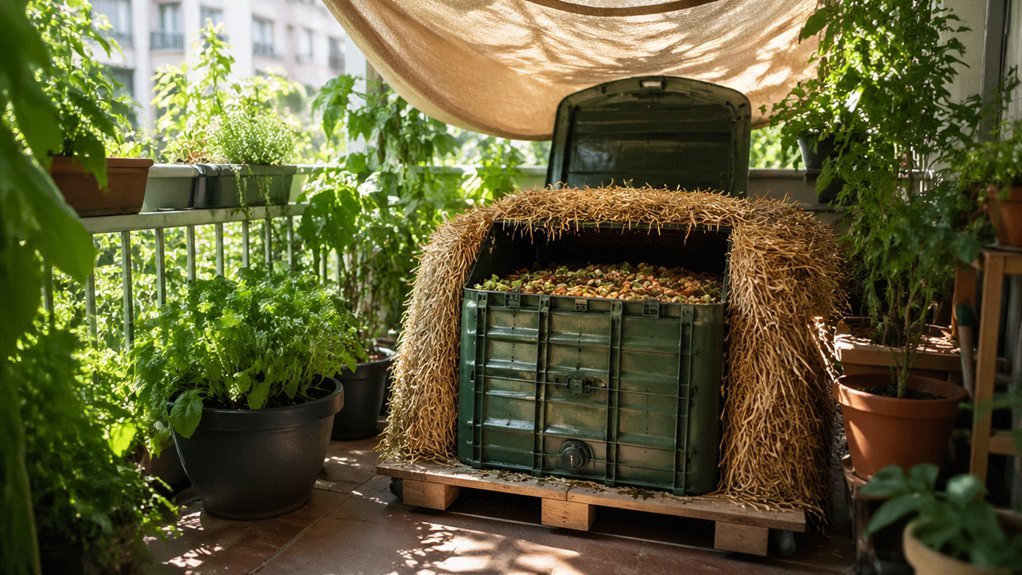
You can hang a reflective‑fabric shade over the bin to bounce sunlight away and keep it cool. Bamboo storage also offers durability and aesthetics that help maintain a tidy, temperature-stable setup. Adding portable insulation panels lets you trap warmth on chilly nights without overheating in the day.
Shade With Reflective Fabric
How can a simple piece of reflective fabric keep your balcony compost from overheating or freezing? By adding a lightweight, reflective blanket you create instant shade, deflect sun, and smooth temperature swings. The fabric bounces heat away, which stabilizes the interior climate for balcony composting, improves heat management, and boosts moisture retention. It also works as a thin insulator in winter, trapping residual warmth and preventing freezing.
- Hang the fabric over the bin, securing edges with clips or Velcro.
- Choose a partially shaded, wind‑protected spot to minimize drafts and direct sun.
- Adjust the cover daily—fold it back on cool evenings and re‑tension it during hot afternoons.
Use Portable Insulation Panels
Portable insulation panels give you a quick, flexible way to keep your balcony compost bin in the sweet spot between 55 °F and 77 °F. By surrounding the bin with lightweight, weather-resistant panels, you cut heat gain on scorching days and limit heat loss when nights drop. Additionally, using a wraparound or top-side design for the panels helps create a more stable microclimate around the container, which supports microbial activity and odor control. Pair the panels with adjustable shade management—slide a cloth or umbrella over the bin during midday sun, then pull it back in cooler evenings. This creates a stable microclimate that supports microbial activity and reliable temperature control.
Because the panels are portable, you can relocate them seasonally: move them to shade in summer, then shift them closer to light with added protection in winter. The result is efficient heat regulation without permanent installations. Temperature regulation can be optimized by coordinating panel placement with shade management to maintain consistent conditions for decomposition.
Adjust Moisture in Your Balcony Compost to Stabilize Temperature
Ever wondered why your balcony compost sometimes feels like a sauna or a desert? You can steady temperature by managing moisture. Aim for a wrung‑out‑sponge feel; too wet fuels odor and slows heat, too dry stalls microbes and lets temperature spike. Balance greens and browns to keep 60‑80 % humidity and 20‑40 % dry material, which buffers heat. Regular turning injects aeration, prevents anaerobic hotspots, and spreads moisture evenly. Daily checks help you maintain that balance, especially when using a bokashi approach that can accelerate decomposition while controlling odors. Moisture management is key to sustaining steady temperatures across balcony bins.
Frequently Asked Questions
How Do I Compost on My Balcony?
You set up a compact worm or Bokashi bin, keep it shaded, add moist bedding, layer greens and browns, feed scraps a few times weekly, and guarantee ventilation so odors stay low.
How Can I Reduce the Heat on My Balcony?
You can lower balcony heat by adding shade cloth, planting vines, using reflective awnings, and placing water‑filled trays. Keep surfaces cool with light‑colored mats, and ventilate regularly with fans.
What Is a Natural Accelerator for Compost?
Add dry brown stuff—leaves, twigs, shredded paper—to your pile. It balances moisture, boosts aeration, and fuels microbes, speeding decomposition naturally while keeping the temperature stable.
How Do the Amish Compost?
You’ll see the Amish use simple wooden bins, balance greens and browns, keep moisture sponge‑like, turn occasionally for aeration, shade or expose to sun as needed, and inoculate with finished compost.
In Summary
By keeping an eye on the thermometer, balancing greens and browns, turning regularly, and tweaking moisture, you’ll maintain a steady 55‑65 °F on your balcony. Insulate or shade when it gets too hot, and relocate or add a blanket when it drops. With these simple steps, your compost stays healthy, odor‑free, and ready to turn kitchen scraps into rich soil for your plants.