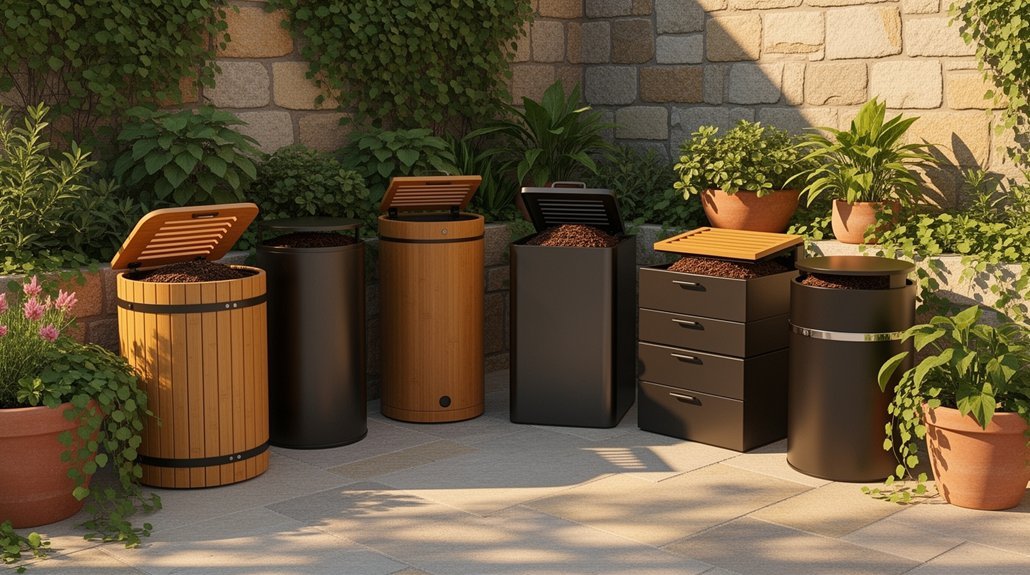

You’ll notice a small compost bin feels hot because the aerobic microbes inside turn organic material into heat, and the compact, three‑foot‑wide shape acts like a blanket that traps that heat. Keeping the mix moist (50‑65 % moisture) and balanced at roughly a 30:1 carbon‑to‑nitrogen ratio fuels the microbes, while regular turning or perforated ventilation supplies oxygen and prevents cool, anaerobic spots. The dense pile’s low surface‑to‑volume ratio slows heat loss, and a south‑facing spot or simple insulation can boost temperature further, so if you keep these basics in mind you’ll discover even more ways to maintain a warm, fast‑acting bin.
Generating Heat: How Microbial Metabolism Works in Small Bins

Ignite the process by remembering that aerobic bacteria are the heat engines of your compost bin. You feed them carbon‑rich greens, moisture, and oxygen, and they fire up cellular respiration, releasing energy as heat. As the temperature climbs past 113 °F, mesophiles give way to thermophilic activity, which runs even faster and generates more warmth. In a small bin, keep the pile moist and turn it regularly; each turn boosts aeration, flooding microbes with fresh oxygen and accelerating metabolism. The geometry—roughly three feet on a side—helps retain that heat, letting thermophiles sustain a hot core. By maintaining steady aeration and moisture, you ensure the microbes stay active, and the bin stays surprisingly warm aeration design.
Why a Compact Volume Traps Heat for Hot Compost
You’ll notice that a tightly packed bin acts like a blanket, with dense material insulating the inner core. The microbes keep generating heat, and because the volume is compact, that warmth stays trapped instead of escaping. In addition, the 360° ventilation system found in some compact designs helps sustain an internal microclimate that supports ongoing thermophilic activity. ventilation design
Insulation From Dense Materials
Why does a cramped, dense compost bin stay so warm? You’re packing the pile with dense materials that act like a blanket, creating natural insulation. The compact shape reduces the surface‑to‑volume ratio, so heat that microbes generate can’t escape easily. Those inner layers shield the microbial community from outside temperature swings, letting mesophilic and thermophilic organisms thrive longer. When you keep moisture and aeration balanced, even a small, well‑insulated heap can climb above 113 °F. Green, nitrogen‑rich scraps distributed evenly feed the core, accelerating heat buildup. Because the outer edges act as a self‑insulating barrier, the pile retains its warmth, sustaining the rapid decomposition you’re after. Dual carbon filters help maintain odor control, which supports a more stable internal environment for microbial activity.
Microbial Heat Retention
The dense, blanket‑like insulation you just described doesn’t just keep cold out—it also traps the heat microbes generate inside a compact pile. When you keep the C:N ratio near 25, aerobic microbes work at peak efficiency, turning greens and manure into a steady stream of thermal energy. Because the pile’s surface area is low relative to its mass, that energy stays inside longer, sustaining thermophilic activity. You’ll see steam and a warm glow as proof that the microbes are thriving, not just lounging. Proper moisture (50‑65%) lets microbes stay active without creating anaerobic zones. This balance is facilitated by using appropriately sized, compact crocks or bins that minimize heat loss while supporting efficient microbial turnover. Heat retention and careful filter-like odor management in some ceramic designs can also help maintain a stable internal microclimate.
Minimal Air Exchange Benefits
Ever wondered how a tiny compost bin can stay hotter than a larger pile? You’ll find that a compact volume traps heat because its reduced surface area and tighter insulation limit loss, letting temperature climb quickly. Heat retention is also aided by the airtight, anaerobic environment that reduces heat loss through ventilation. Minimal air exchange then slows cooling; the aerobic microbes you heat, and that warmth lingers longer inside the small container. Even with limited oxygen, the inner core can hit thermophilic ranges while the outer layer stays cooler, so you don’t need perforated pipes or frequent turning. Balanced green material and moisture keep microbial activity high, and observations show such bins still reach heat retention thresholds of 120–160 °F. In short, the sealed‑in environment of a modest compost pile maximizes heat retention and accelerates the breakdown process.
Aeration and Turning for Hot Compost
Where does the heat in your compost come from? It’s the aerobic microbes breaking down organics, and they need oxygen to stay hot. You boost that oxygen by aeration and turning. Good aeration keeps the microbes breathing, while turning redistributes material, exposing fresh pockets to air and reviving dying hotspots.
Aerobic microbes generate compost heat; aeration and turning supply oxygen, keeping the pile hot and active.
- Aeration: use perforated pipes or poke holes to inject fresh air, especially in static piles.
- Turning: mix the heap every few days; this spreads heat and prevents anaerobic zones.
- Result: consistent oxygen flow sustains high temperatures, speeds decomposition, and prevents the pile from stalling.
If you skip either step, the pile cools, microbes slow, and your compost stays lukewarm. Keep both processes active, and the bin will stay surprisingly warm. Aeration improves oxygen delivery, while regular turning prevents hot spots from dying out.
Achieving the Right C:N Ratio for Fast Hot Compost
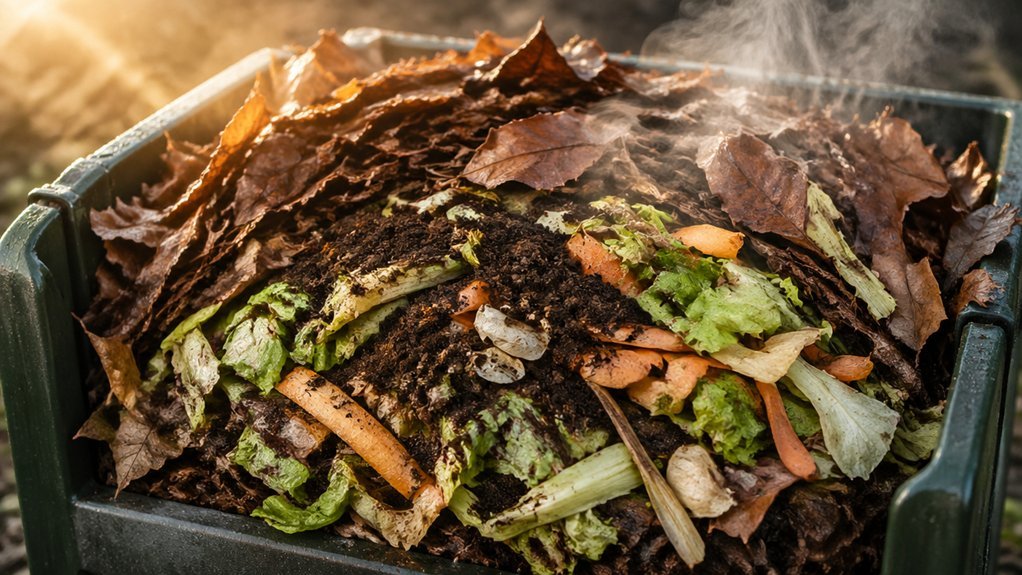
You’ll want to keep your greens and browns roughly equal so the pile hits the sweet spot of a 30:1 C:N ratio. Incorporating a small amount of manure—about ten percent of the volume—pushes the nitrogen level up without overwhelming the carbon. This balance fuels the thermophilic microbes that crank up the heat quickly, while using a compost bin with a secure, airtight design helps contain odors and manage moisture odor control.
Balancing Green and Brown
How can you keep a small compost bin blazing hot? By balancing green material and brown material so the pile stays thermophilic without stalling. Aim for roughly a 50/50 volume split, adjusting for texture and moisture. Too many greens spark rapid heat but can smell if they mat; too many browns slow the process and waste carbon. Keep the mix medium‑dense, turning occasionally to preserve airflow.
- Green material: fresh grass clippings, kitchen scraps, manure – high nitrogen, quick heat boost.
- Brown material: shredded leaves, straw, cardboard – carbon source, absorbs excess moisture.
- Mix tip: layer greens and browns alternately, then fluff the surface to avoid compaction.
This ratio sustains steady, high temperatures while preventing ammonia odors and ensuring rapid decomposition.
Targeting 30:1 Ratio
Balancing greens and browns gets you close, but hitting a 30:1 carbon‑to‑nitrogen ratio locks in the heat you need for fast, hot compost. You achieve that C:N ratio by measuring the mass of greens (nitrogen‑rich) and browns (carbon‑rich) before you toss them in. A kitchen scrap of lettuce might weigh a few ounces, but a handful of shredded newspaper adds the bulk carbon you need. Mix until the pile feels like a damp sponge; if it’s too wet, add more browns, if it’s dry, add a few more greens. Keep a simple tally—say, three parts browns to one part greens—to stay near 30:1.
Regularly turning the bin redistributes moisture and oxygen, sustaining thermophilic microbes and keeping temperatures high.
Adjusting With Manure Additives
Ever wondered how a handful of manure can turn a sluggish pile into a thermophilic furnace? You can hit the sweet spot by mixing nitrogen‑rich manure with your brown material to chase a C:N ratio near 25:1. Aim for a 50/50 green‑to‑brown split, then sprinkle cow, rabbit, alpaca, or chicken manure when greens run low. The extra nitrogen fuels microbes, spiking core heat and keeping the bin humming. Just remember to turn regularly and watch for pathogens—proper aeration and timing keep the process safe.
- Add 1 part manure to 2 parts dry leaves or straw.
- Keep the pile moist but not soggy; a wrung‑out sponge feels right.
- Turn every 2–3 days to distribute heat and oxygen evenly.
Moisture Management for Hot Compost

Ever wonder why a compost pile can feel like a furnace? Because the right moisture level fuels the heat‑producing microbes. Keep the mix between 50 % and 65 % moisture; above that, air pockets close and the pile cools, below that, decomposition stalls. Check the feel daily—squeeze a handful of material; it should feel like a damp sponge, not dripping or bone‑dry. If you notice dry patches, sprinkle water lightly and stir to re‑wet the fibers. When rain adds water, let excess drain to avoid oversaturation. Balance green and brown inputs so water spreads evenly, preventing anaerobic spots. By monitoring and adjusting moisture intermittently, you maintain aerobic activity and sustain the thermophilic heat that makes your small bin stay warm.
Using Sunlight to Boost Hot Compost in Indoor Bins
Can sunlight turn your indoor compost bin into a mini‑heater? Absolutely. Position the bin where south‑facing windows soak up the day’s rays, and you’ll notice ambient heat rise quickly. A simple thermometer will show the core temperature climbing toward thermophilic levels, confirming that the solar boost is working. Sunlight also dries surface layers, improving airflow and letting microbes fire up more efficiently. Just keep your green‑to‑brown mix balanced and moisture steady, or the heat will fade once the sun sets.
Sunlight‑heated indoor compost boosts thermophilic activity, drying surfaces and increasing airflow for efficient microbial fire.
- Place the bin near a south‑facing window for maximum exposure.
- Use a compost thermometer to track temperature gains.
- Keep material ratios and moisture in check to sustain the heat.
Insulating Your Bin for Hot Compost
You can line your bin with cheap passive insulators—old blankets, straw, or cardboard—to trap the heat your microbes generate. Keep the material damp but not soggy, and add a thin layer of water‑absorbing mulch on top to regulate moisture. This simple combo lets the core stay warm for days without extra turning.
Passive Materials Materials
How can you keep a tiny compost bin hot enough for thermophilic microbes? You create a heat‑focused core and surround it with passive materials that act as natural insulation.
The bird‑nest design uses a hollow center filled with nitrogen‑rich “hot” matter—manure, wood pellets, or coffee grounds—then adds a splash of water to keep the core moist. As the outer heap expands, a heavy pail or thick straw blankets trap the warmth, letting the central temperature rise and radiate outward. Position the bin south‑facing, keep it compact, and let the sun do the heavy lifting.
- Heavy cardboard or plywood panels wrapped around the bin
- Thick straw, shredded newspaper, or wood chips as a loose blanket
- A sturdy metal pail lid that seals the top while allowing occasional aeration
Moisture Management Strategies
Wondering why your tiny compost bin loses heat despite a hot core? You can lock in temperature by insulating the sides with straw, cardboard, or a foam blanket, then focus on moisture. Aim for a 50–65 % moisture level; too dry stalls microbes, too wet creates anaerobic pockets that cool the pile. After each green addition, spray lukewarm water to raise moisture just enough to keep the thermophilic community thriving.
Place the bin where sunlight hits and protect it from wind, which helps the insulation work harder. Check a compost thermometer daily—if the reading drops, add a splash of water and tighten the insulating layer. Adjusting moisture and insulation together sustains a hot, active bin.
Common Signs a Small Bin Isn’t Heating (and Fixes)
Ever wondered why your compost bin feels more like a lukewarm pantry than a hot furnace? If the temperature stays near ambient, the pile isn’t thermophilic and heating stalls. You’ll notice little steam, a damp clumpy texture, and minimal volume loss. Those signs mean microbes are idle, often because moisture swings or compaction choke airflow.
Your compost feels lukewarm because microbes are idle—moisture swings or compaction choke airflow.
- Thermometer reads under 100 °F (38 °C) for days → add nitrogen‑rich greens and turn more often.
- Material stays damp and clumpy → adjust moisture to 50–65 % and break up compacted spots.
- No odor change or shrinkage → increase pile size to at least 3 × 3 × 3 ft and ensure good aeration.
Fixes focus on balancing moisture, boosting nitrogen, and turning the heap to revive microbial activity and raise the temperature.
Seasonal Adjustments to Keep Hot Compost Warm
When seasons shift, you can keep your small compost bin hot by tweaking inputs and insulation to match the weather. In spring, add fresh greens and a splash of water to raise moisture to about 55 %, then cover the bin with a breathable tarp to trap solar heat.
Summer’s higher ambient temperature lets you reduce the cover and focus on aeration—turn the pile every few days to feed thermophilic microbes.
Fall calls for a thicker insulating layer of straw or cardboard and a brief soak to counter cooling nights.
In winter, position the bin south‑facing, add a thin foam blanket, and keep moisture steady; a quick mist after each turn prevents drying out while aeration maintains oxygen flow.
These seasonal tweaks sustain a warm, active compost.
Simple Tools to Track Hot Compost Temperature
If you want to know whether your small compost bin is truly hot, a simple compost thermometer is your best friend; it lets you see the temperature rise into the thermophilic range above 113 °F and track the shift from mesophilic to thermophilic activity.
Take readings every few hours, especially after adding fresh greens, and jot them down in temperature logs. Over days you’ll spot trends, see how moisture and feed changes affect heat, and catch the moment steam appears, signaling a thermophilic surge.
Take hourly readings, log temperature, moisture, and additions to spot trends and steam‑signaled thermophilic surges.
A quick log of ambient temperature, pile temperature, moisture level, and recent additions turns raw data into actionable insight, letting you fine‑tune conditions for a consistently hot bin.
- Use a long‑probe compost thermometer for accurate core readings.
- Record each reading in a simple spreadsheet or notebook.
- Note moisture, ambient temperature, and recent material additions alongside the temperature.
Frequently Asked Questions
Why Is My Compost Bin Hot?
You’re feeling heat because aerobic microbes are breaking down nitrogen‑rich organics, generating metabolic heat; a sufficiently large, well‑aerated pile traps that heat, pushing temperatures into the thermophilic range.
How Do the Amish Compost?
You build a dense, nitrogen‑rich core, keep it damp, add occasional water, and loosely aerate with stakes. Surround it with insulating material, maintain a hollow cavity, and let microbes generate heat.
What Three Items Should Not Be Placed in a Compost Pile?
You shouldn’t put meat or dairy, oily foods, or pet feces in your compost pile—these attract pests, create foul smells, and introduce pathogens that can’t be safely broken down.
Do Potato Peelings in Compost Attract Rats?
You won’t attract rats just by adding potato peels, but if the bin stays damp, unsealed, and piled with exposed scraps, rodents will be drawn in. Keep it covered, turn regularly, and avoid loose food.
In Summary
By now you’ve seen how a tiny bin can stay to: microbes metabolize, the compact space traps their heat, and proper aeration, C:N balance, moisture, and insulation keep the reaction going. Watch for cooling signs, tweak the mix, and adjust for the season. With a simple thermometer and a bit of attention, your small compost will stay hot, fast, and ready to turn waste into rich soil.