Use a 2:1 blend of cured compost to potting soil for most indoor containers; this gives balanced porosity, drainage, and a stable nitrogen supply that keeps odor down. If your plants are heavy feeders, switch to a 3:1 ratio when you notice lingering ammonia, rapid drying, or sluggish growth, and keep turning the mix for aeration. Avoid pure compost in small pots—mix one part compost with two to three parts potting mix and flush periodically to prevent excess salts and anaerobic pockets. The next section shows how to fine‑tune greens and browns for prime results.
Best Compost Ratio for Indoor Containers (2:1 Cured Compost + Potting Soil)

Ever wondered how to keep indoor containers thriving without the hassle of foul odors or nutrient imbalances? You’ll find that a 2:1 ratio of cured compost to potting soil hits the sweet spot. The 5-mesh sifter and stainless-steel odor-control bins from apartment-friendly options help maintain clean, aerated inputs for this blend, especially when filtering materials before mixing odor control and ensuring consistent particle size. Cured compost brings a lower C:N ratio and stable nitrogen content, so you avoid drawdown and smell. Mixing two parts compost with one part soil boosts soil porosity and drainage, letting roots breathe while holding enough moisture. This balance supports plant health, especially in tighter indoor containers where excess moisture can cause problems. If you notice stress signs, tweak the blend by adding more potting soil or using compost separately, never pushing the mix to a pure 1:1 or higher compost concentration.
When to Move to a 3:1 Ratio for Heavy‑Feeding Houseplants
If a 2:1 blend keeps most indoor containers stable, you’ll start seeing a need for more nitrogen when your houseplants are heavy feeders. Notice a lingering ammonia odor, rapid moisture loss, or sluggish growth, and it’s time to switch to a 3:1 ratio. This green‑to‑brown balance boosts nitrogen‑rich material while keeping carbon‑rich material in check, speeding decomposition for indoor container composting. Adding frequent turning can further improve aeration and help maintain a warm, odor‑free mix aeration benefits.
- Add more greens – kitchen scraps, fresh herbs, or veggie trimmings to raise the green fraction.
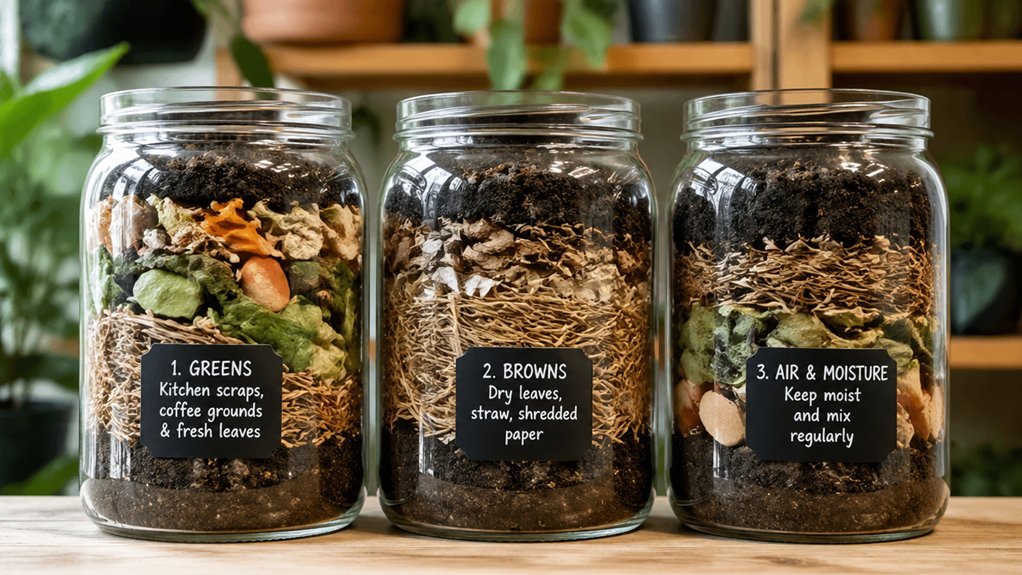
- Trim browns – dry leaves, shredded paper, or cardboard to keep the ratio at three greens for every brown.
- Watch the mix – ensure it stays warm, moist, and odor‑free; adjust if ammonia appears or heat spikes.
Using 100% Compost in Small Pots: Moisture & Aeration Tips

A pot filled entirely with compost can quickly become a nutrient‑dense, poorly draining environment, so you’ll want to balance it with a lighter medium. To keep moisture in check, aim for a damp‑sponge feel—never soggy, never bone‑dry.
Mix one part cured compost with two to three parts potting mix for indoor containers; the added carbon from the mix improves aeration and prevents soil scorch. Curing reduces nitrogen spikes, but you still need enough air pockets to avoid anaerobic pockets that produce ammonia odor.
After watering, let excess drain, then check the surface; if it feels too wet, add more dry mix. Periodically flush the pot to leach excess salts and keep the root zone healthy.
Frequently Asked Questions
What Is the Golden Ratio for Composting?
You’ll want a C:N ratio around 25:1‑30:1, so aim for roughly two to three parts brown material to one part green. This balance fuels microbes, reduces odor, and keeps the pile active.
What Is the Best Compost Mix for Houseplants?
You should mix one part cured compost with three to four parts potting soil, keeping the blend airy and well‑draining; this balances nutrients, prevents root burn, and promotes healthy houseplant growth.
What Three Items Should Not Be Placed in a Compost Pile?
You shouldn’t put meat, dairy, or fats in your compost pile; avoid glossy, ink‑heavy or coated paper; and never add pet waste, because each attracts pests, contaminates microbes, or spreads pathogens.
How Do the Amish Make Compost?
You’ll see the Amish layer browns—leaves, straw, crop residues—with greens like kitchen scraps and manure, keep the pile moist, turn it regularly for air, and let it decompose slowly until it turns dark, crumbly, and earthy.
In Summary
You’ve learned that a 2:1 mix of cured compost and potting soil gives indoor containers a solid foundation, while a 3:1 ratio fuels heavy‑feeding plants without overwhelming them. When space is tight, pure compost can work—just watch moisture and keep the soil airy. By tailoring these ratios to your plants’ needs, you’ll boost growth, health, and overall container success.