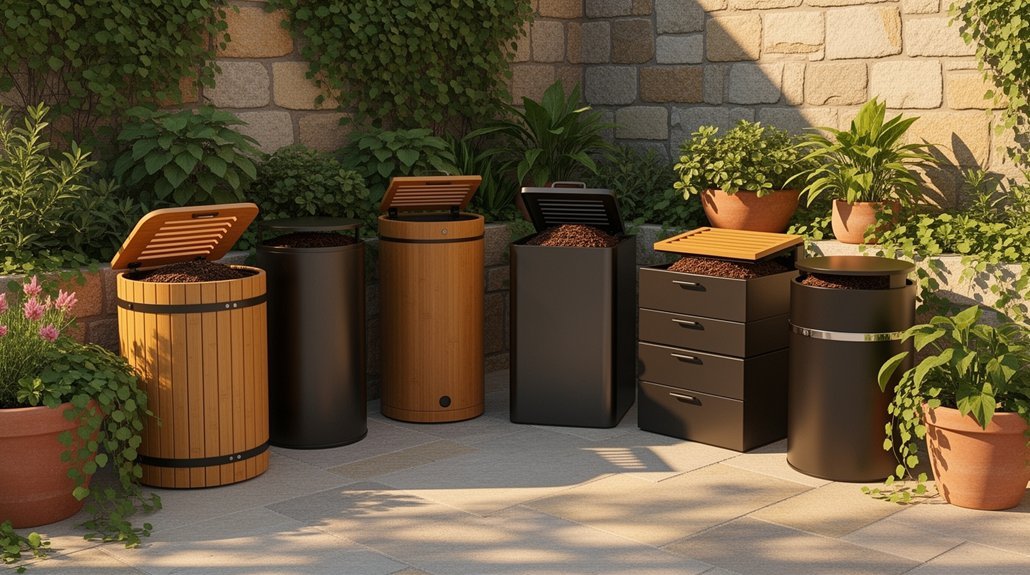

You’ll find a tumbling composter beats a fixed bin when you need speed, odor control, and space efficiency on a balcony. A tumbler’s rotating drum mixes greens and browns continuously, cutting batch time in half and keeping smells sealed, while a fixed bin sits idle and can get soggy or smelly. Tumblers also let you harvest finished compost without stopping the rest of the load, and their sturdy, pest‑proof design handles wind and movement. Keep reading to discover which model best fits your balcony size and budget.
Size the Right Compost Tumbler for Your Balcony

What size should you pick for a balcony tumbler? For balcony composting you’ll want a compact tumbler that balances capacity with space efficiency. Aim for a tumbler size of about 4–9 cubic feet; this fits most railings and planters while still letting you turn the compost regularly. If you anticipate frequent feeds, consider a horizontal‑axis model in the 4.5–14.2 cubic‑foot range—its design keeps spin easy even when fuller. When selecting, choose a heavier, sturdy unit with solid legs and a reinforced central axis to prevent wobbling on a narrow balcony. Look for sealed, pest‑proof containers and weather‑resistant materials to avoid odors and leaks. When space is extremely tight, dual‑compartment or smaller single‑chamber designs can still rotate smoothly without sacrificing functionality. pest‑proof designs help keep critters out while you manage moisture and odors on a balcony.
Fit a Fixed Compost Bin on Your Balcony Without Blocking Traffic
You’ll want a compact, box‑style bin that fits your balcony’s dimensions while leaving room for foot traffic.
Choose a secure mounting system—like wall brackets or a sturdy rail—so the bin stays steady during wind or movement.
Finally, ensure proper airflow with vented lids and a drainage tray to keep odors and moisture under control.
To ensure stable performance on a balcony, select a model with made-in-USA components or reputable brand backing for consistent durability.
Size Selection
Wondering how to fit a fixed compost bin on your balcony without tripping over it? Your size selection hinges on balancing compost bins capacity with balcony composting space. Aim for a footprint that respects foot traffic and leaves a clear path for adding scraps and removing finished material. Here’s a quick guide:
- Box‑style (60–120 gal) – maximizes volume, perfect if you have a wider balcony and can keep a few feet of clearance.
- Barrel‑style (22–65 gal) – smaller footprint, easier to maneuver, ideal for tighter spaces.
- Hybrid approach – choose a compact box with a low profile or a slim barrel that fits under a railing. barrel-style capacity
Secure Mounting Options
Ever wondered how to keep a fixed compost bin steady on a balcony without turning the walkway into an obstacle course? Start by placing the bin on a non‑slip mat or a heavy‑duty base that spreads weight across the floor. If your railing permits, use brackets to bolt the unit, but keep the footprint low‑profile—around 60–120 gallons—to preserve balcony stability. Choose a model with a front‑access door so you can pull out finished compost without shifting the whole bin. Add pest‑proofing seals and a drip‑catch tray for moisture management, preventing leaks onto neighbors. For a tumler‑style option, consider a sturdy frame with lockable wheels, but remember that fixed setups rely on solid anchoring rather than tumbler mounting. A wall‑mounted or door‑hanging option can further save balcony space while maintaining accessible odor control. front‑access door
Airflow Flow Management
Secure mounting keeps the bin steady, but you also need space for air and movement. On a balcony, give the compost box 1–2 feet clearance on all sides; this room fuels airflow management and lets you reach the lid without blocking traffic. Choose a low-profile, pest-resistant bin with venting slots and a removable tray for leachate drainage. Mix greens and browns to a sponge-like texture, then turn or agitate the pile regularly to boost aeration and prevent compaction. Keep the lid firmly closed when not in use to deter pests and maintain airflow airflow management.
Choose Pest‑Proof Composters for Small Balconies
Looking for a pest‑proof composter that fits a tiny balcony? Choose a compact, two‑chamber design that stays sealed while you rotate batches. Tumblers give you a 100 % pest‑proof barrier because the whole unit is enclosed, keeping mice, rats, and insects out. An elevated sealed unit further blocks ground‑based nesting and adds airflow under the container. Pick durable, weather‑resistant material—thick plastic or metal—so UV and cold won’t crack the seal. The design should let you pull out finished compost without breaking the lid, preserving tight seals in limited‑space environments. By combining a two‑chamber tumbler with an elevated, sealed base, you get a balcony composter that stays clean, quiet, and pest‑free. Best Value for choosing among compact solutions can help you balance cost and durability when selecting a pest‑proof system.
Balcony Compost Tumbler Odor Control Tips

Where do you start when you want a fresh‑smelling balcony compost tumbler? First, keep the sealed drum tight; a good seal stops smells from escaping onto the balcony. Next, spin the tumbler every few days to boost aeration—oxygen‑rich conditions curb anaerobic odors. Finally, watch moisture balance: aim for a wrung‑out sponge feel by mixing greens and browns evenly.
- Seal check – Inspect gaskets weekly; replace any cracked parts.
- Spin schedule – Rotate for 1‑2 minutes, 2–3 times a week.
- Moisture test – Squeeze a handful; it should drip lightly, not drip heavily.
For long‑term odor control, choose a system with low salt content in the bedding materials and ensure the coir or alternative media you use is pre‑rinsed and neutral in pH to help maintain stable moisture and airflow low EC and pH neutrality.
Balcony Compost Tumbler vs. Stationary Bin: Speed vs. Effort
Which option lets you compost faster without turning your balcony into a workout room? A tumbling composter spins, so you mix aeration and heat with a simple crank, often cutting decomposition time compared to fixed bins. You’ll notice quicker breakdown when you turn the drum regularly, but the drum’s sealed design also means you control moisture and odors better. Fixed bins usually sit idle; you must stir manually or wait for microbes, which can be slower but requires less mechanical effort. A tumbler’s smaller footprint fits tight balconies, yet its limited capacity may force more frequent batches. In contrast, a larger stationary bin can hold more material, reducing the number of loads but demanding more patience for speed. Choose based on whether you prioritize speed or minimal effort in balcony composting.
What Materials Hold Up on a Frequently Moved Balcony?

A sturdy, weather‑resistant container is essential when your balcony gets moved often. Choose balcony‑friendly materials that survive sun, rain, and frequent handling. Galvanized steel offers rust resistance, while high‑density recycled plastic stays light and weather‑resistant. A sealed design prevents spills and keeps pests out, making relocation smoother.
- Galvanized steel bins – strong, rust‑proof, and can be fitted with wheels for portability.
- UV‑stabilized plastic barrels – lightweight, weather‑resistant, and easy to lift or roll.
- Composite lumber containers – durable, moisture‑resistant, and blend with balcony décor.
Avoid open‑bottom designs; they lack ground contact and can tip.
Keep moisture balanced with the “wrung‑out sponge” rule, and rotate the compost regularly to prevent compaction during moves.
This combo of rust‑resistant, sealed, and portable materials lets you compost efficiently no matter where you set up your balcony.
Best Balcony Compost Tumbler Model for Your Lifestyle and Budget
Looking for a compact, efficient compost tumbler that fits your balcony and budget? Choose a model in the 4–15 cu ft range—4.5, 9, or 14.2 cu ft units balance space and throughput while staying easy to spin. A two‑compartment design lets you harvest finished material from one chamber while the other continues faster processing, cutting batch time roughly in half compared to static bins. Heavy‑duty construction and sealed central axis connections boost durability and keep pests out, essential on limited balcony space. Expect to pay about 30 % more than a comparable bin, but the longer‑term durability and low‑maintenance convenience often justify the price. Pick the size that fits your railing, and you’ll have a reliable compost tumbler that matches your lifestyle and budget.
Frequently Asked Questions
What Is the Disadvantage of a Compost Tumbler?
You’ll find that a compost tumbler’s main disadvantage is its limited capacity, which forces you to empty and rotate it often, plus higher cost, potential rust, and moisture‑control issues when overfilled.
Are Rotating Composters Any Good?
You’ll find rotating composters work well if you keep them balanced, turn them regularly, and manage moisture; they speed up decomposition, but they’re pricier, smaller, and can rust if not maintained.
Are Compost Bins or Tumblers Better?
You’ll find tumblers work better if you want faster, hands‑free mixing, but bins save money, give more volume, and need only occasional turning—choose the one that matches your space, budget, and effort level.
Are Tumbling Composters Faster?
Yes, tumblers usually decompose material faster because you’re turning it regularly, which boosts aeration and heat. Just keep the carbon‑nitrogen balance right, and you’ll see quicker, more consistent results.
In Summary
Pick the tumbler if you want quick, low‑effort turning and can handle a bit of movement on your balcony; choose a fixed bin when space is tight, you prefer a stable, pest‑proof setup, and don’t mind a slower composting pace. Match the model to your budget, material durability, and how often you’ll tend it, and you’ll keep your balcony garden thriving without odor or clutter.