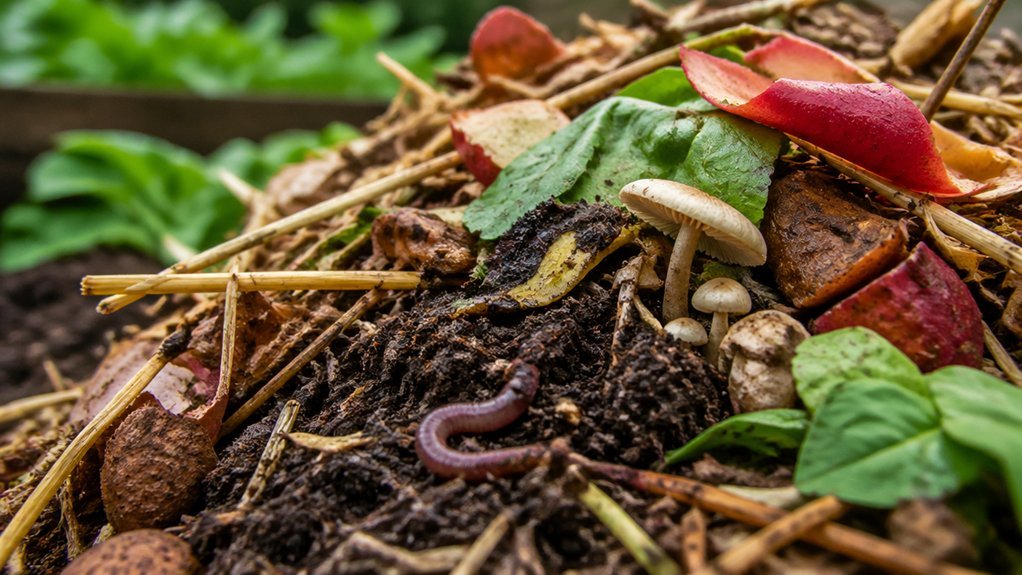
You need a near‑30:1 carbon‑to‑nitrogen ratio because it fuels the microbes that break down waste, keeps the pile aerobic, and prevents the ammonia smell and slime that happen when the balance skews too low or too high. Too many greens (nitrogen) make the pile soggy and smelly; too many browns (carbon) slow the process down. By layering roughly 2–4 parts brown material to 1 part green and keeping moisture like a wrung‑out sponge, you maintain steady, odor‑free decomposition. Keep reading to discover practical tweaks and tools for perfect balance.
The 30:1 C:N Ratio: Why It Matters

A 30:1 carbon‑to‑nitrogen (C:N) ratio is the sweet spot for a thriving compost pile because it supplies just enough nitrogen to fuel microbes while keeping excess carbon to absorb moisture and provide structure. You’ll notice that when the C:N ratio drifts low, ammonia fumes and slime appear, signaling nitrogen loss and a sluggish process. Conversely, a high C:N ratio stalls decomposition because microbes starve for nitrogen. Maintaining a balanced mix helps ensure consistent odor control and easy maintenance Odor Control. Aim for a carbon‑nitrogen balance by mixing two‑to‑four parts browns with one part greens; this ratio roughly hits 30:1 by weight. Smaller particles boost surface area, letting microbes tap both carbon and nitrogen faster, which gradually shifts the pile toward the ideal finish point.
Identifying Greens and Browns for Your Compost C:N Ratio
When the C:N balance slips, you’ll see the symptoms—slime and odor from excess nitrogen or a dry, sluggish heap from too much carbon. To keep the carbon to nitrogen ratio near 30:1, you need to tell greens from browns. Greens are nitrogen‑rich: fresh grass clippings, vegetable scraps, and manure. Browns are carbon‑rich: dried leaves, wood chips, straw, and cardboard. Aim for roughly 2–4 parts browns for every 1 part greens. Start with a fluffy brown base 6–8 inches thick; it soaks up moisture and lets air flow to the greens you layer on top. If the pile turns slimy, add more browns. If it dries out, toss in extra greens. This simple identification keeps your compost thriving. For enhanced aeration, consider using an aerator tool to improve airflow and reduce odors in larger bins air circulation and maintain steady decomposition.
Quick‑Calc Guide: Estimating C:N With Everyday Apartment Scraps

You can spot the most common kitchen scraps—coffee grounds, veggie peels, and newspaper—then count them as greens or browns. Plug those counts into the quick‑calc formula (greens ÷ browns × 2–4) to gauge your C:N balance. This lets you adjust the mix on the fly and keep the pile humming. odors-control Even with careful balancing, choosing a countertop bin with charcoal or carbon filters can help manage smells between batches.
Identify Common Scraps
How can you quickly gauge the C:N balance of your apartment scraps? Start by sorting your waste into two piles: greens and browns. Greens include fresh veggie peels, fruit skins, coffee grounds, and herb stems—these are nitrogen‑rich.
Browns are carbon-heavy items like shredded newspaper, cardboard, dry leaves, and paper towels. Estimate the ratio by counting handfuls: aim for roughly one handful of greens to three handfuls of browns. If you have a lot of greens, add extra browns to avoid ammonia smells and soggy textures.
Conversely, if browns dominate, sprinkle a few more greens to keep microbes active. This simple visual check lets you stay near the ideal 30:1 carbon balance without weighing anything. Additionally, using labeled storage containers can help you track which scraps contribute to your compost mix more accurately.
Apply Simple Ratio Formula
Sorting scraps into greens and browns gives you a visual cue, but turning that cue into a quick calculation helps lock in the 25‑30:1 carbon‑to‑nitrogen balance. To apply the simple ratio formula, measure your greens by volume or weight, then multiply that amount by 2‑4 to get the browns needed. For example, if you have one cup of vegetable scraps (greens), add two to four cups of shredded paper or cardboard (browns). This 1:2‑4 mix yields a C:N ratio close to the target range, promoting a healthy compost balance. Adjust on the fly: if the pile smells sour or feels slimy, add more browns; if it’s dry and slow, toss in extra greens. Keep moisture and aeration in check for optimal breakdown. Remember to consider container choices that manage odors well, such as caddies with effective filters and lids, to maintain kitchen cleanliness while you balance greens and browns. Odor control and easy maintenance can support consistent layering as you scale your composting routine.
How to Fix a Too‑Wet or Too‑Dry Compost While Keeping the C:N Ratio Right
Ever noticed a compost heap that smells like a swamp or feels like a soggy sponge? If it’s too wet, you’re creating anaerobic zones that release foul odors. Start by adding carbon-rich browns—dry leaves, straw, shredded paper—layer them thickly on the outside to buffer moisture swings, then turn the pile to boost aeration. This restores oxygen and nudges the C:N ratio back toward the ideal 30:1. For added guidance, consider monitoring the drainage system and lid seal as part of maintaining an airtight, odor-controlled setup to support optimal fermentation and soil amendment outcomes air-tight lid and charcoal filter options.
Adjusting Ratios When Adding Food Waste or Yard Trimmings

Wondering how to keep your compost balanced when you toss in kitchen scraps or fresh yard trimmings?
Adding food waste or fresh clippings pushes the carbon-to-nitrogen ratio toward greens (nitrogen-rich materials), so you risk dropping below the ideal 30:1.
Counteract this by mixing in browns (carbon-rich materials) like dried leaves, straw, or shredded paper.
Aim for roughly 2–4 parts browns for every 1 part greens to restore the ratio.
After each addition, check texture: the pile should feel like a damp sponge, not soggy or bone‑dry.
If it turns slimy or smells, sprinkle more browns, turn the pile, and let air circulate.
Monitoring moisture and texture each time you add greens keeps decomposition smooth and the C/N ratio on target.
Regularly ensure you have odor-control measures in place, such as using Bokashi or properly aerated composting methods when needed to maintain odor containment.
Common Apartment Compost Ratio Mistakes and Quick Fixes
You probably notice a soggy, smelly pile when you over‑water your greens, and you’ll see slow breakdown if you don’t add enough brown material.
Balance the moisture by sprinkling water only when the mix feels like a wrung‑out sponge, and bulk up the carbon side with shredded newspaper or cardboard.
Adjust the ratio to roughly two‑to‑four parts browns for every part green, and the pile will stay aerobic and decompose faster.
Over‑watering Greens
Why does your compost pile smell sour and feel slimy? Over‑watering greens spikes moisture, choking the carbon-to-nitrogen ratio and killing aeration. The excess water creates anaerobic pockets, slowing decomposition and releasing foul odors. Turn the pile promptly to re‑introduce air, and sprinkle dry brown material—shredded paper, dry leaves—to soak up surplus moisture. Keep the feel like a wrung‑out sponge: damp but not dripping. Monitor each layer, adding only the water needed to maintain balance, and watch the C:N ratio settle near 30:1. These quick fixes restore aerobic activity, eliminate slime, and keep your apartment compost thriving.
- Turn the pile daily to boost aeration
- Add a thin layer of dry browns after each green addition
- Use a moisture test (squeeze a handful) to gauge wetness
- Adjust water input to maintain a wrung‑out sponge feel
- Keep the carbon-to-nitrogen ratio around 30:1 with regular brown inputs
Insufficient Brown Material
Ever notice your apartment compost turning mushy and smelling like ammonia? That’s a classic sign you’ve run low on brown material, pushing the carbon-to-nitrogen ratio above the ideal 25:1–30:1. Too many greens dump excess nitrogen, keeping the pile cool, slimy, and odor‑heavy while inviting pests. Fix it fast by tossing in dry leaves, shredded paper, cardboard, straw, or wood chips. Aim for a thick brown layer over a thin green one; this restores balance and improves aeration, even if you can’t turn the pile often. The added structure absorbs moisture, creates air pockets, and speeds decomposition. In small‑space setups, repeat the layer‑alternating method each week, and you’ll see a drier, faster‑working compost with a much milder scent.
Choosing a Bin That Helps Maintain the Right Compost C:N Ratio
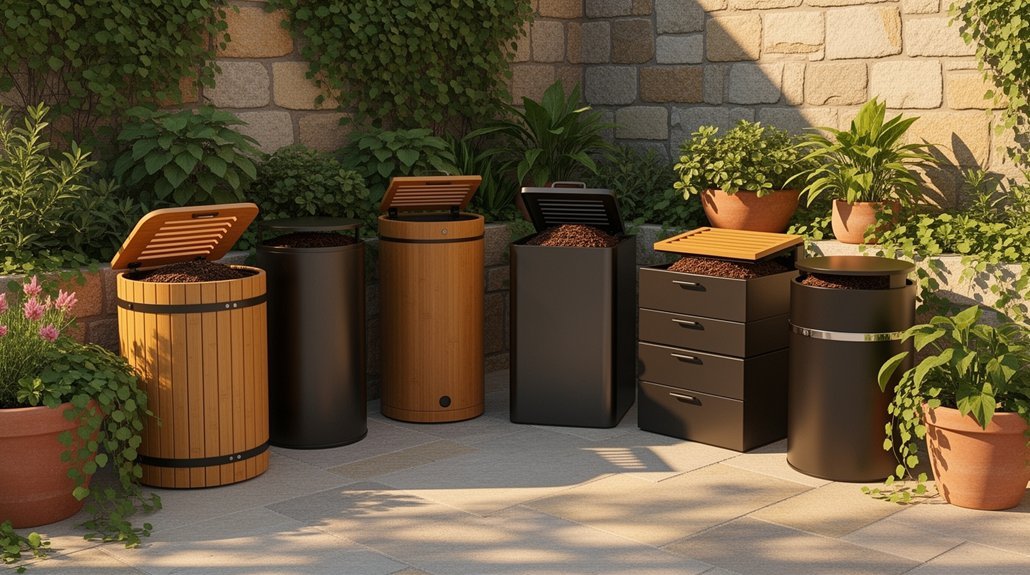
When you pick a compost bin, the design should let you control aeration, moisture, and layering so the C:N ratio stays near the ideal 25:1‑30:1. A well‑ventilated bin lets you tweak bin ventilation to keep oxygen flowing, while a removable lid or side doors make it easy to add browns greens layering in thin, alternating strips. Choose a tumbler if you want effortless mixing; an open‑frame bin works if you prefer manual turning. Both options let you monitor moisture and avoid anaerobic spots that would throw off the c:n ratio.
- Adjustable vent holes for precise bin ventilation
- Removable lid for easy browns greens layering
- Built‑in thermometer to track heat levels
- Sliding or rotating drum for uniform mixing
- Drainage plug to prevent excess moisture
Turn or Not? Managing C:N in a Small Compost Pile
Should you turn your small compost pile or let it sit? The answer hinges on your C:N ratio. Aim for roughly 30:1 by layering thin greens and browns, keeping the mix moist but not soggy. If you notice pockets of excess nitrogen—slimy, foul‑smelling spots—mix in more carbon‑rich browns.
Turning the pile isn’t mandatory when airflow stays good, but a gentle stir every few weeks can redistribute oxygen, blend fresh greens, and nudge the ratio back toward balance.
In a compact bin, avoid over‑turning; too much disturbance can dry out the material and slow microbes. Instead, monitor moisture, add a handful of dry leaves when greens dominate, and turn only when aeration seems limited. This approach keeps decomposition steady without needless effort.
Odor and Slime in Small‑Space Compost: Ratio‑Related Symptoms
If you notice slime forming, it’s a sign your pile’s moisture is off‑balance and you’ve got too many greens.
Those excess greens also release the, ammonia‑like odors that tell you airflow’s limited.
Turning the pile often restores aeration, keeping both slime and smell in check.
Moisture Imbalance Causes Slime
Why does your compost turn slick and smell sour? When moisture climbs past the sweet spot—about 45‑50 % by weight—the pile shifts to anaerobic conditions. Aerobic microbes starve, slime spreads, and the odor turns sour.
You can pull the pile back by restoring balance: add dry browns, aerate, and avoid over‑watering. The key is to keep moisture in check so the ecosystem stays aerobic and the breakdown stays fast.
- Add shredded leaves, straw, or paper to soak up excess water.
- Mix in a handful of dry bark or wood chips for structure.
- Turn the pile every few days to introduce oxygen.
- Use a moisture meter or squeeze test to stay within the 45‑50 % range.
- Keep kitchen scraps modest and layer them under dry materials.
Excess Greens Produce Odor
What happens when you overload a tiny compost bin with too many greens? The nitrogen‑rich greens push the carbon‑to‑nitrogen ratio down, flooding microbes with protein and moisture. They sprint, heat spikes, and release ammonia, creating a sharp odor and a slimy, damp surface. In a confined space the excess moisture blocks airflow, turning the pile anaerobic and amplifying the rotten‑egg smell. Adding dry, carbon‑rich browns sobs moisture, restores a healthier C/N balance, and tames the odor.
| Indicator | Remedy |
|---|---|
| Strong ammonia odor | Add more browns |
| Slimy texture | Mix in dry leaves |
| Rapid heat spikes | Reduce greens |
| Damp surface | Increase aeration |
| Persistent sour smell | Balance C/N ratio |
Turn Frequently to Aerate
Ever notice the slime and sour smell that suddenly appear in a tiny compost bin? That’s a sign your pile’s carbon‑to‑nitrogen ratio is off and oxygen’s scarce. Turning the material regularly injects aeration, breaking up anaerobic pockets where slime thrives. In small‑space setups, each stir distributes moisture, balances temperature, and lets aerobic microbes work faster, cutting odor before it spreads. Pair frequent turning with a quick moisture check, and you’ll keep the mix sponge‑like, not soggy.
- Turn every 2–3 days to maintain airflow.
- Use a pitchfork or compost tumbler for gentle, even mixing.
- Monitor the carbon‑to‑nitrogen ratio; aim for roughly 30:1.
- Add dry browns if the pile feels too wet or slimy.
- Keep the bin loosely packed to avoid compacted zones.
Fast‑Track Your Compost: Using Ash, Coffee Grounds, and Eggshells
Ever wondered how a pinch of ash, a handful of coffee grounds, and some crushed eggshells can jump‑start your compost? Ash is carbon‑rich and alkaline, so sprinkle it sparingly among browns to keep pH in check. Coffee grounds flood the pile with nitrogen, offsetting excess carbon when greens are scarce. Crushed eggshells dump calcium carbonate and micronutrients; grind them first to speed decomposition.
To achieve balance, layer these inputs thinly, then turn the pile to mix and aerate. Keep moisture moderate—like a wrung‑out sponge—to avoid odors and speed breakdown. By integrating ash, coffee grounds, and eggshells in this way, you boost mineral content without overwhelming the carbon‑nitrogen ratio, giving your compost a fast, steady surge toward maturity.
When the Compost C:N Ratio Is “Good Enough” for Busy Apartment Dwellers
How can you keep a small apartment compost thriving without constant monitoring? Aim for a C:N ratio near 30:1, which gives you a stable, low‑odor pile. Use roughly 2–4 parts browns to 1 part greens, and tweak the mix if it feels too wet (add browns) or too dry (add greens).
Infrequent turning supplies oxygen, speeds breakdown, and keeps odors at bay. If greens run low, sprinkle coffee grounds or a pinch of manure to stay on target without overloading the pile.
- Measure volume, not weight, for quick adjustments.
- Keep a small container for browns like shredded paper.
- Store greens in a sealed bin to avoid sogginess.
- Turn the pile once a week with a small garden fork.
- Track the smell; a faint earthy scent means you’re “good enough.”
Frequently Asked Questions
What Is the Ideal Ratio for Compost?
You should aim for roughly a 30:1 carbon‑to‑nitrogen weight ratio—about two to four parts brown material to one part green. This balance fuels microbes, keeps odors down, and speeds decomposition.
What Is the Golden Ratio for Composting?
You should aim for roughly a 30:1 carbon‑to‑nitrogen weight ratio—about two to four parts brown material to one part green—so microbes stay active, heat builds, and odors stay minimal.
What Are Common Composting Mistakes?
You often add too many greens, ignore aeration, over‑ or under‑wet the pile, and dump large woody chunks without shredding. Those mistakes unbalance carbon‑nitrogen ratios, slow decomposition, and cause foul odors.
Do Potato Peelings in Compost Attract Rats?
Yes, they can attract rats if you leave peels exposed, but burying them deep, shredding them, and covering with plenty of brown material will keep rodents away while still composting efficiently.
In Summary
By keeping the C:N ratio near 30:1, you’ll speed up decomposition, cut odors, and avoid soggy messes—even in a tiny apartment bin. Balance greens and browns, tweak moisture, and add a pinch of ash or coffee grounds when needed. Stay flexible, turn when you can, and trust the ratio to guide you. With a little attention, your compost will stay healthy, fast‑acting, and ready for the next batch of kitchen scraps.