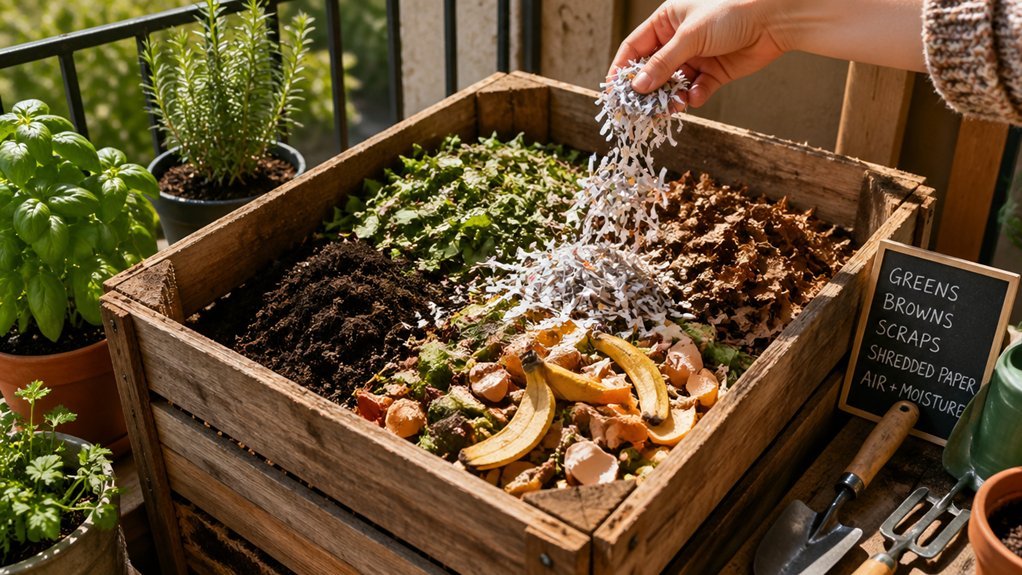
You’ll get perfect balcony compost by aiming for roughly two parts carbon‑rich browns to one part nitrogen‑rich greens by volume, keeping the mix damp but not soggy (the wrung‑sponge test should drip a few drops), and turning the bin weekly to maintain aeration and curb odors. Use shredded paper, thin cardboard, dry leaves, or small twigs for browns, and add chopped kitchen scraps, coffee grounds, or tender grass clippings for greens. If the pile smells sour or feels too wet, sprinkle extra browns and stir; if it’s dry, mist lightly and add more greens. Adjusting to a 3:1 brown‑to‑green ratio can boost heat when decomposition slows, and you’ll discover more fine‑tuning tips ahead.
What the 1:1 Brown‑to‑Green Rule Really Means for Balcony Compost

How does the 1:1 brown‑to‑green rule actually work on a balcony? You start by gathering brown materials—dead leaves, straw, wood chips, shredded paper—and green materials such as grass clippings, kitchen scraps, and fresh plant matter. Then you load your balcony composting bin so that the volume of browns and greens stays roughly equal, creating a 1:1 ratio that balances carbon to nitrogen. This mix keeps the compost pile healthy, preventing foul odors and slowing down decomposition. As you add layers, watch moisture; the pile should feel damp but not soggy, and you need to turn it occasionally for aeration. Adjust the proportions if the pile dries out or becomes too wet, but aim for that simple 50/50 balance. Regularly monitor odor control features like airtight lids or charcoal filters to maintain a pleasant balcony environment odor control.
Translating Volume Ratios Into Practical Balcony Compost Measurements
You’ll want to measure the volume of each component accurately, then add roughly two‑thirds browns to one‑third greens. By keeping the browns‑to‑greens proportion balanced, you maintain the right carbon‑to‑nitrogen mix for a healthy pile. Small, iterative adjustments—adding a bit more brown if it smells or a splash of green if it’s dry—keep the compost on track. The ventilation concepts from the guidance emphasize multi-level airflow and proper moisture management to sustain aerobic activity, which can help you fine‑tune your mix in a balcony setup Multi-Level Airflow Design.
Measure Measure Volume Accurately
| Unit | 3 parts browns : 1 part greens |
|---|---|
| Cups | 3 cups browns, 1 cup greens |
| Quarts | 3 qt browns, 1 qt greens |
| Liters | 3 L browns, 1 L greens |
Balance Browns Greens Proportionally
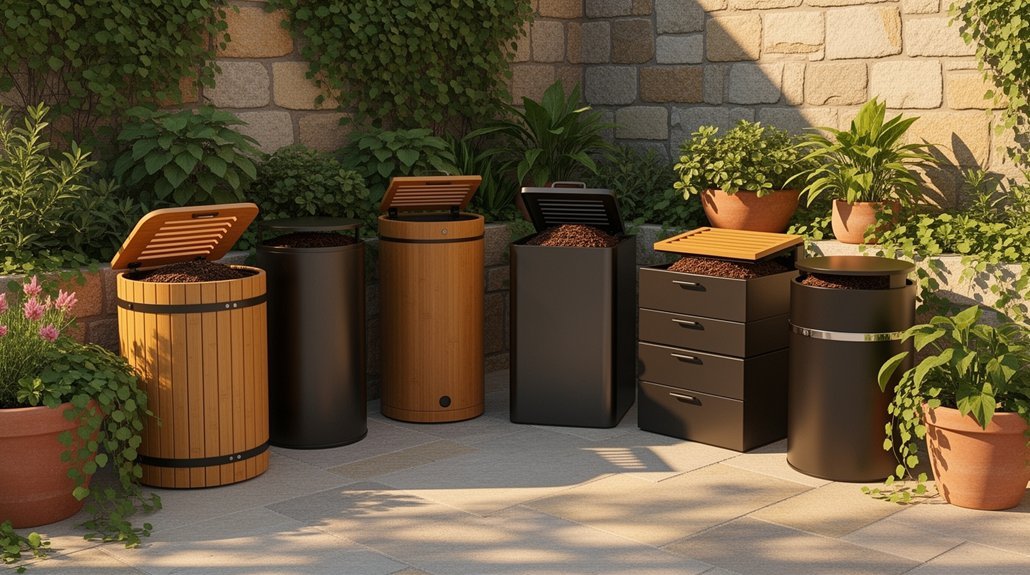
Ever wondered how to turn a simple 3:1 volume ratio into real‑world balcony compost measurements? You’ll start by filling your bin with roughly three parts browns—leaves, straw, shredded paper, wood chips—to one part greens like kitchen scraps or fresh plant cuttings. This proportion nudges the C:N ratio toward the ideal 20:1‑30:1, giving microbes enough carbon for structure and nitrogen for growth. Measure by volume, not weight, and keep the mix loosely packed so air circulates. If the compost pile smells sour, sprinkle extra browns; if it’s dry, mist lightly to restore moisture. Adjusting browns and greens keeps the carbon‑nitrogen balance steady, speeds decomposition, and prevents odors. A 1‑gallon to 1.7‑gallon container range is common for balcony setups to balance space and capacity while maintaining effective odor control. Odor control features and proper filtration help keep the bin discreet on a balcony while you manage browns and greens.
Best Brown Materials for Small Spaces: Carbon‑Rich Options That Fit a Balcony

You’ll find that shredded paper and thin cardboard sheets slip easily into a balcony bin, giving you a quick‑decomposing carbon source.
Dry leaves and small twigs add bulk without weighing the pile down, keeping airflow steady.
Together they let you maintain a light, fluffy compost that fits even the tightest balcony spaces.
Shredded Paper & Cardboard
Looking for a compact, carbon‑rich brown to keep your balcony bin balanced? Shredded paper and cardboard are ideal brown materials for tiny spaces. Shredded paper’s fine particles boost aeration and mix easily with greens, while its absorbent nature tames excess moisture. Cardboard, when shredded thinly, acts as a moisture absorber and carbon source; layer it with greens to stop matting.
Aim for a browns‑dominant ratio of roughly 2–4 parts shredded paper/cardboard to 1 part greens, tweaking for odor and dampness. Skip glossy or heavily printed cardboard—its inks can hinder decomposition or leach metals. Stick to clean, uncoated cardboard, and you’ll keep the compost lively, well‑aerated, and balanced.
Dry Leaves & Twigs
Why not turn those autumn leaves and spare twigs into a balcony‑friendly carbon boost? Dry leaves are the quintessential browns for balcony composting, delivering a carbon-to-nitrogen ratio near 60:1. When you shred them, you increase surface area, accelerating breakdown and preventing soggy clumps. Twigs add structure, improve aeration, and keep the compost mix from compacting in tight spaces.
- Shred dry leaves to bite‑size pieces.
- Chop twigs into 2‑inch fragments.
- Layer browns and greens 3:1 by volume.
- Mist lightly to maintain moisture without soaking.
Low‑Odor Greens and How Much to Add for Balanced Nitrogen
Ever wonder how to keep balcony compost smelling fresh while still feeding microbes? finely‑odor greens—like finely chopped kitchen scraps, coffee grounds, and tender yard clippings—should be added in modest amounts, roughly one part greens to two parts dry browns. By keeping the greens to browns ratio near 1:2 you stay within a C:N ratio of 20:1‑30:1, which prevents an ammonia smell and keeps moisture balanced. Chop greens small, sprinkle them over the pile, then blanket with a generous layer of dry browns to improve aeration and lock in excess moisture. Turn the balcony compost gently every few days so oxygen reaches the microbes, and watch the nitrogen stay in balance without foul odors. This disciplined approach lets you enjoy rapid, low‑odor decomposition on a small balcony. Regular turning aeration benefits help maintain even moisture and prevent anaerobic pockets, further reducing odor.
Balancing Moisture With the Wrung‑Sponge Test on a Balcony

Keeping the 1:2 greens‑to‑browns ratio in check already gives you a solid foundation, but the next step is mastering moisture. On a balcony you can’t rely on rain, so you’ll use the wrung‑out sponge test to gauge moisture balance. Squeeze a handful of compost; it should drip a few drops and hold its shape briefly. If it drips freely, add dry browns; if it crumbles, add moisture‑rich greens. Frequent turning the pile improves aeration and keeps the moisture even, especially in warm weather. Keep pile size around three feet to stay manageable and to help airflow. Properly selecting bagged materials with the right paper weight can help when packaging greens or browns for transport and storage on a balcony eco-friendly options to minimize waste and support sustainable practices.
Master moisture on the balcony: sponge test, adjust greens or browns, turn daily, keep piles under three feet.
- Test moisture with the sponge squeeze.
- Add water or greens when dry.
- Add dry browns when wet.
- Turn the pile daily for aeration.
How to Incorporate Balcony‑Friendly High‑C:N Materials (e.g., Shredded Cardboard)
How can you turn a pile of shredded cardboard into a thriving balcony compost? Start by treating cardboard as a carbon-rich material and balance it with thin greens like kitchen scraps or coffee grounds. Aim for a 1:1 browns‑to‑greens ratio, but keep the overall C:N around 20:1‑30:1 by using more shredded cardboard and a modest amount of greens. Layer a few inches of cardboard, then a light sprinkling of greens, and repeat. Moisture control is key—your mix should feel like a wrung‑out sponge; add a splash of water if it’s dry, or more browns if it’s soggy. Finally, ensure aeration by turning the tumbler every 1–2 weeks, which prevents compaction and keeps balcony composting healthy. airflow features
Quick Fixes for Common Imbalances: Too Wet, Too Dry, or Smelly
Wondering why your balcony bin smells or feels soggy? You can correct three common imbalances in a few minutes. First, check moisture: a wrung‑out sponge is ideal. If it’s soggy, sprinkle browns and mix. If it’s dry, add greens or a splash of water. If odors drift, you likely have excess nitrogen; turn the compost pile and add browns to restore balance.
Quick fixes
- Too wet – add shredded newspaper or cardboard; stir to distribute.
- Too dry – toss kitchen scraps or fresh grass clippings; mist lightly.
- Smelly – turn the pile, then layer browns over the top.
- Regular maintenance – turn every 1–2 weeks in summer, or every 3–4 weeks in winter, to keep moisture, nitrogen, and airflow in harmony. odor control
Maintaining Aeration in Tight Compost Bins or Tumblers
Ever notice how a compact balcony bin turns sluggish and smelly? You can fix that by prioritizing aeration. Mix browns and greens, then layer dry, coarse twigs or straw to keep pathways open. Add bulky carbon inputs like shredded paper to boost porosity and curb excess moisture. In summer, turn the pile weekly; in winter, aim for at least one turn every three to four weeks. If you use a compost tumbler, rotate it regularly so the material stays mixed and oxygen‑rich, speeding decomposition and preventing odor. Watch for ammonia or a slimy surface—signs aeration is poor. When they appear, turn the pile and sprinkle more browns to restore balance and maintain moisture control.
When to Move to a 3:1 Brown‑to‑Green Ratio for Faster Heat Generation?
When you notice your balcony bin heating up slowly or emitting a sour smell, it’s time to shift toward a 3:1 brown‑to‑green ratio. This mix boosts thermophilic activity, improves aeration, and curbs odors, letting you hit the 130–140 °F range faster.
- Assess temperature – use a simple probe; if it stays below 120 °F, add more brown material.
- Check moisture – the mix should feel like a wrung‑out sponge; excess water signals too much green.
- Layer thin greens – shred kitchen scraps and intersperse with brown shreds to keep air channels open.
- Monitor smell – a sour scent means anaerobic conditions; increase brown proportion promptly.
Frequently Asked Questions
What Is the Golden Ratio for Composting?
You’ll hit the golden ratio by aiming for a 20:1‑30:1 carbon‑to‑nitrogen balance, which usually means mixing three parts browns with one part greens, keeping it moist and aerated.
How to Make Compost at Home Balcony?
You start by gathering kitchen scraps and shredded paper, then layer them in a 3‑to‑1 brown‑to‑green ratio, keep the mix damp, turn it weekly, and use a compact tumbler for easy aeration.
What Is the Best Compost Mix Ratio?
You should aim for roughly three parts brown material to one part green, which gives a 20‑30:1 carbon‑to‑nitrogen balance; tweak it with extra browns if you notice a strong ammonia odor.
What Three Items Should Not Be Placed in a Compost Pile?
You should keep meat, dairy, and pet waste out of your compost pile; they attract pests, cause odors, and risk pathogen spreading, especially if you plan to grow edible plants.
In Summary
Now you’ve got the 1:1 brown‑to‑green rule down, know how to measure it in cups or inches, and can spot the right carbon‑rich browns and low‑odor greens for a balcony. Keep the mix damp like a wrung‑out sponge, turn it regularly, and adjust with extra browns or greens if it gets too wet, dry, or smelly. With these tweaks, your compact bin will stay healthy, odor‑free, and ready to turn balcony waste into rich compost.