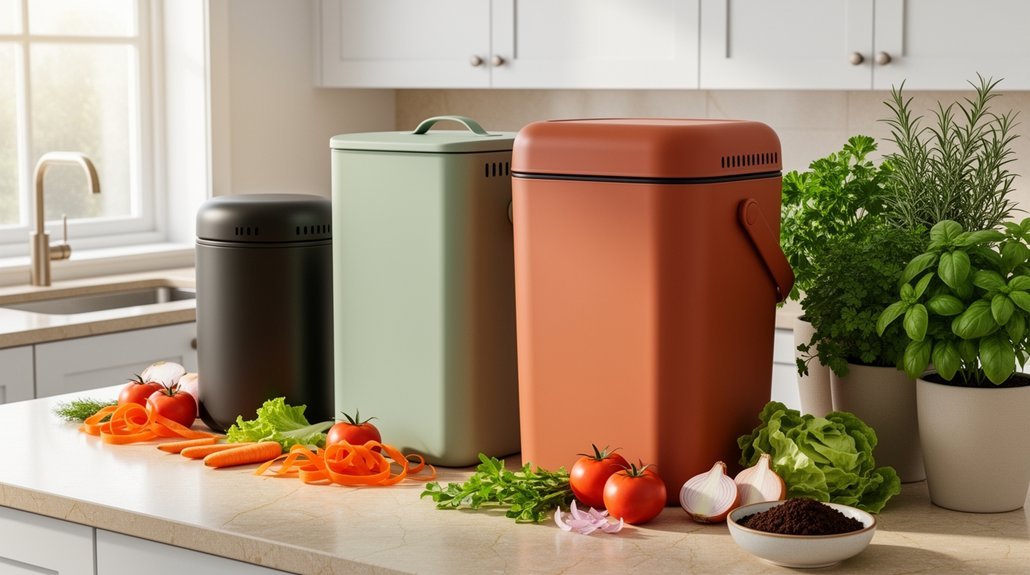
You’ll keep your kitchen fresh and waste‑free by using a compact, airtight countertop compost bin that fits your apartment’s space and lifestyle. Its tight‑fitting lid and activated charcoal filter block odors and fruit flies, while smooth, non‑porous walls and removable parts make cleaning a breeze. Whether you prefer a fast‑processing electric model or a low‑maintenance passive bin, you can match the size to your weekly food waste and empty it weekly to avoid pests. Keep going to discover which five models top the list.
Here Are the 5 Best Countertop Compost Bins for Small Apartments
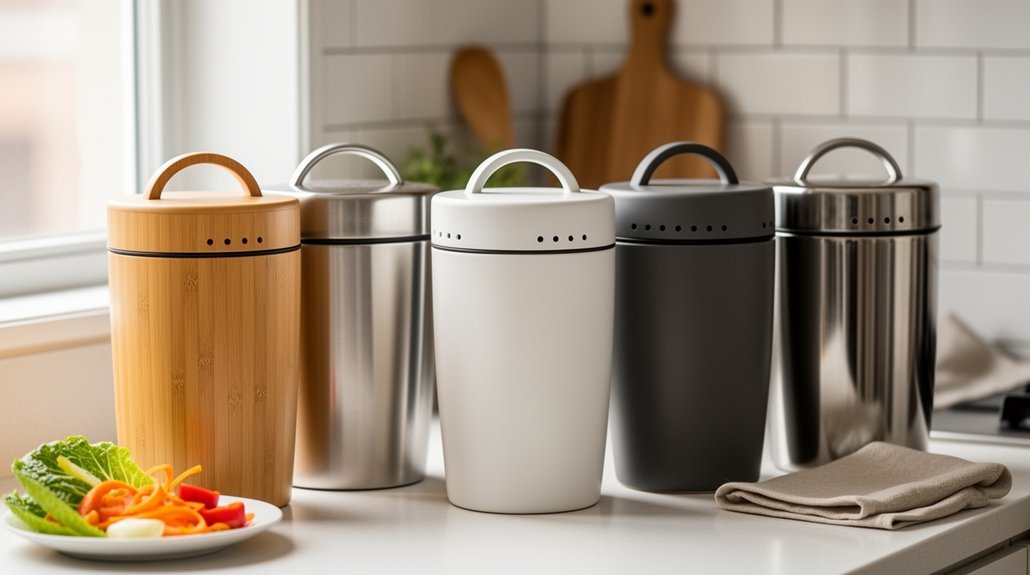
Looking for a compact, odor‑free way to collect kitchen scraps in a tight apartment kitchen? You’ll want a bin that fits your counter, holds enough material for your household size, and stays clean with minimal effort. The Epica Countertop Compost Bin tops the list with its stainless‑steel body, easy‑clean design, and built‑in charcoal filter. Simplehuman’s Compost Caddy offers a sleek, hinged lid that saves space for single‑person kitchens. Typhoon’s Caddy, at 84 oz, is perfect for one‑ or two‑person households, featuring a removable plastic insert for quick rinsing. For larger families, the Exaco Eco 2000 provides a 2.4‑gallon capacity, reducing emptying frequency. All five models boast airtight lids, dishwasher‑safe parts, and modern styling that blends into any apartment kitchen. Most ceramic crocks use standardized charcoal filters that require replacement every 4–6 months based on usage and odor load. Compact tumblers are especially effective for apartments with limited outdoor space.
Countertop Compost Bin Odor‑Control Features: Tight Seals and Charcoal Filters
Ever wonder how a countertop compost bin can stay fresh in a tiny kitchen? You’ll notice that a tight‑fitting lid is the first line of defense. When the seal stays snug, kitchen‑scrap odors stay inside, fruit flies can’t get in, and the bin won’t release a cloud of smell each time you open it. Pair that with an activated charcoal filter, and you add a passive odor‑neutralizer that traps volatile compounds. Thick or double‑layer filters work best, but they need a wash or swap every few months. Some airflow is useful—perforated lids let a little oxygen in, preventing anaerobic fermentation that would otherwise boost stink. Most activated carbon filters provide 6-8 weeks of odor control before requiring replacement or washing. Keep the lid closed between additions, replace or clean the filter regularly, and you’ll enjoy a virtually odor‑free compost experience. Cleaning weekly helps prevent odor buildup and mold growth.
Countertop Compost Bin Easy‑Clean Design Elements
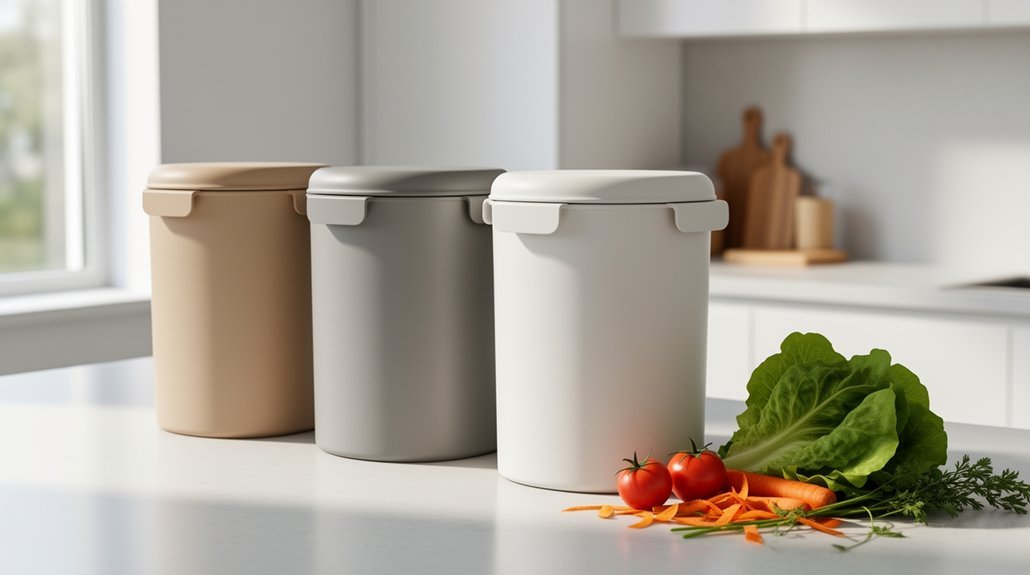
How can you keep a countertop compost bin spotless with minimal effort? Choose a model with smooth, non‑porous walls—stainless steel resists discoloration and bacteria, while single‑material construction eliminates grime‑trapping seams. Look for minimal nooks and a simple bowl shape so food scraps don’t stick. Removable lids and inner buckets let you dump scraps and wash parts in the sink or dishwasher; many designs even have dishwasher‑safe lids that fit snugly. Detachable liners keep direct contact between waste and walls, making swaps quick and mess‑free. Hinged or side handles aid one‑handed transport to an outdoor bin, and ergonomic openings reduce exterior contact. Ventilation features curb moisture, preventing mold and sticky residue. Consider models with replaceable charcoal filters that maintain freshness between emptying cycles. These easy‑clean elements keep your bin fresh and your kitchen tidy. Odor‑free technology further ensures a pleasant kitchen environment.
Countertop Compost Bin Technology: Electric vs. Passive – Which Fits Your Lifestyle?
Want a compost solution that matches your apartment rhythm? Electric countertop bins give you hours‑to‑days processing, enclosed operation, and a tiny footprint, perfect if you need speed and indoor convenience. Passive bins rely on natural microbes, cost nothing to run, and produce fully mature compost, but they need months and careful moisture control. Choose based on how much time, energy, and space you can spare.
Electric bins deliver fast, indoor composting; passive bins offer low‑cost, long‑term, outdoor composting.
- Speed – Electric: 1–7 days; Passive: 3–12 months.
- Energy – Electric: uses electricity; Passive: near‑zero carbon footprint.
- Space & Odor – Electric: compact, sealed, low odor; Passive: small but may need outdoor finishing and occasional turning.
If you value rapid, hassle‑free reduction and have limited outdoor access, go electric. If you prefer low cost, sustainability, and long‑term soil health, stick with passive. For apartment dwellers considering passive options, dual chamber designs enable continuous composting by processing two batches simultaneously, allowing fresh materials to be added while another batch matures.
Microbial culture is maintained in true electric composters, ensuring biologically active output.
Countertop Compost Bin Sizing Guide: Matching Capacity to Weekly Food Waste
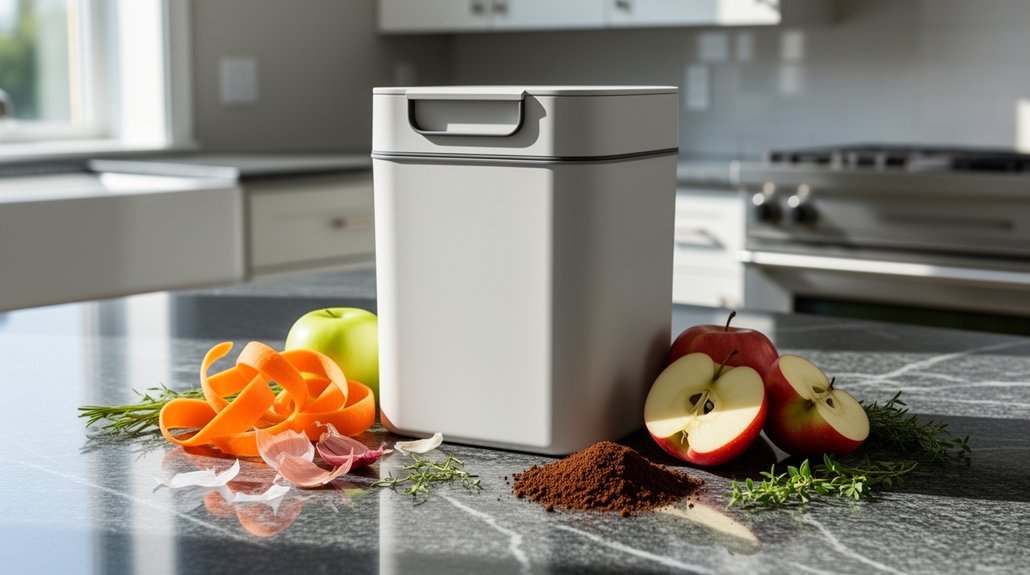
Choosing the right countertop compost bin starts with matching its capacity to how much food waste you generate each week. If you’re a single or couple, a compact 84‑oz (≈1 gal) bin usually covers 3–4 days of scraps. A small family of three to four people finds 120–170 oz (≈1–2 gal) comfortable, while larger households often need a 3‑gal bin to avoid daily trips to the trash. Aim for a size that holds a few days of waste but still fits your counter or under‑sink space, and empty it at least weekly to keep odors and pests at bay. Models with airtight lids and charcoal filters can extend the time between emptying cycles, making them ideal for busy households.
| Household | Recommended Bin Size | Typical Weekly Waste |
|---|---|---|
| 1–2 people | 84 oz – 1 gal | 2–3 gal |
| 3–4 people | 120–170 oz (1–2 gal) | 3–5 gal |
| 5+ people | 3 gal+ | 5–7 gal+ |
| High‑waste kitchen | 2 L (≈68 oz) | 1 gal/day |
ventilation is essential for preventing odors.
Frequently Asked Questions
Can I Compost Meat and Dairy in These Countertop Bins?
You can’t reliably compost meat or dairy in most countertop bins; they’re designed for plant waste, and those foods cause odor, pests, and safety issues unless the unit explicitly supports them.
Do These Bins Require Any Special Liners or Bags?
You don’t need special liners for most bins; just use a reusable paper bag or go liner‑free. If your city requires certified compostable bags, choose BPI‑approved ones, otherwise stick to newspaper or dry leaves.
How Often Should I Replace the Charcoal Filter?
You should replace the charcoal filter every 3‑6 months, depending on usage and odor. If the bin smells sour or odors return despite emptying, swap it out promptly to keep your kitchen fresh.
Will the Bin’s Odor Control Work in a Sealed Kitchen?
Yes, it will work—if you keep the lid sealed, replace the charcoal filter regularly, and empty the bin often. The slight airflow and absorbent liners will prevent strong smells in your sealed kitchen.
Are the Bins Safe for Children and Pets Around?
Yes, they’re safe for kids and pets if you choose models with tight‑fitting lids, lockable closures, and sturdy, high‑sided designs. Keep them out of reach, secure them, and follow proper handling to avoid exposure.
In Summary
By picking the right countertop compost bin, you’ll keep your apartment fresh, tidy, and eco‑friendly. Tight seals and charcoal filters banish odors, while easy‑clean designs save you time. Whether you prefer electric convenience or a simple passive model, there’s a size that matches your weekly waste. Choose one that fits your space and lifestyle, and you’ll turn kitchen scraps into compost without the hassle.



Leave a Reply