
Seal every food drop tightly and sprinkle a tablespoon of bokashi bran per inch of waste to keep the bucket airtight and sour, which blocks flies, ants and rodents. Choose a quiet, temperature‑stable spot like a kitchen cabinet or closet shelf, and use a tray underneath to catch drips. Press the lid firmly, check the gasket, and drain liquid regularly. Layer wet scraps with extra bran, compact gently, and keep the bin separate from regular trash. If you keep these habits, the next sections will show you deeper pest‑proofing tricks.
Why Bokashi Keeps Pests Out of Your Kitchen
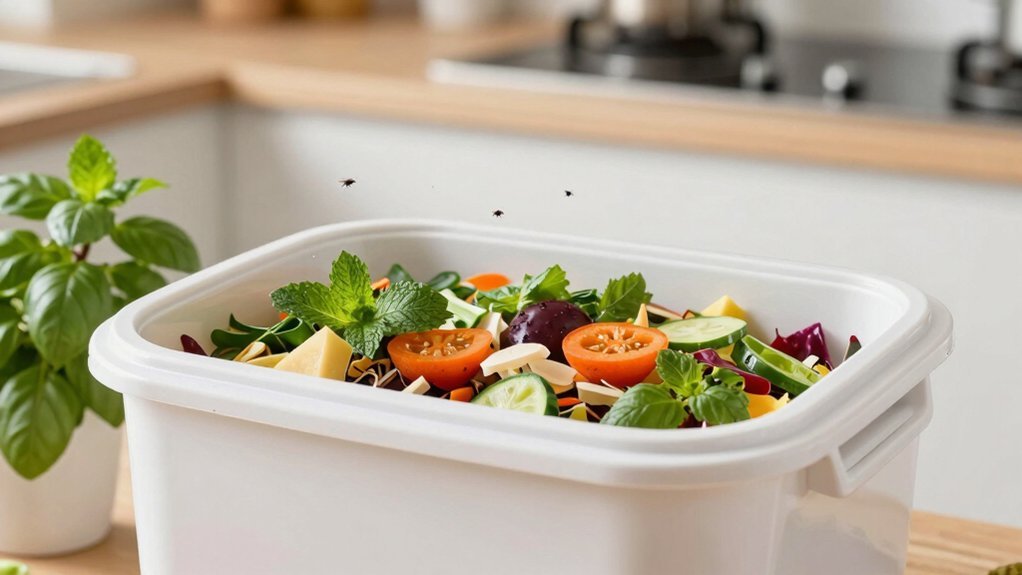
Ever wondered why your kitchen stays pest‑free when you use bokashi? You seal food waste in an airtight bucket, so the anaerobic fermentation “pickles” scraps before they rot. This low‑odor, sour environment eliminates the strong smells that attract flies and rodents. By keeping meat, dairy, bread and cooked leftovers inside the sealed bin, you block direct access and remove the scent trail pests follow. The fermentation finishes in four to six weeks, far quicker than a traditional compost pile that can sit for months, shrinking the window pests have to locate food. Unlike kitchen compost crocks that rely on charcoal filters for odor control, bokashi’s sealed anaerobic system creates an inhospitable environment for pest colonization from the start. Consequently, flies and rodents find nothing recognizable or appealing, and your kitchen remains clean and pest‑free. Bears can also cause havoc with garden compost.
Seal Every Addition: Store the Bokashi Bucket for Maximum Pest Protection
You’ll want to snap the lid on tightly right after every food drop, because a solid seal stops odors from escaping and keeps pests out. Keep an eye on the gasket and rim to make certain the closure stays airtight, and wipe away any residue that could create gaps. Checking the seal regularly guarantees the bucket stays anaerobic and pest‑free throughout the fermentation period. Consider mixing in coconut coir bedding to help absorb excess moisture and further reduce pest attraction. Drain the liquid periodically using the spigot to prevent buildup that could attract insects.
Tight Lid After Each Addition
Why bother sealing the bokashi bucket after every layer? Because a tight lid locks out oxygen, keeps the fermentation alive, and blocks flies, ants, and rodents. When you press the waste, place the lid, and snap the seal, you restore the airtight barrier that bokashi microbes need to multiply. A loose or warped lid creates gaps where insects slip in, spoiling the batch and inviting mess. Check the rim and the gasket each time; replace worn seals on 10‑litre or 15‑litre buckets to stay safe. Storing the bucket indoors with the lid firmly sealed also prevents pests from finding it between fillings. Consistent resealing is a low‑effort habit that protects your compost and your kitchen. Use the food grade seal for optimal durability. Proper sealing combined with bokashi bran application between each layer creates the anaerobic conditions that prevent odors and pest infestations simultaneously.
Immediate Seal Prevents Odor Escape
After sealing the lid tightly, the next step is to reseal it instantly after each new layer. You keep the bucket anaerobic, trap fermentation gases, and stop odor from leaking into your kitchen. A rapid, firm closure also blocks pests that follow smells. Store the sealed bucket in a cool, shaded spot away from high‑traffic areas, and drain excess liquid every day or two to avoid a foul‑smelling sump. Press the scraps down after each addition to eliminate air pockets, which further reduces odor escape and makes it harder for flies to locate the bucket. Maintaining airtight construction prevents odors and enables you to keep the system indoors if needed.
- Reseal immediately after every addition.
- Keep the bucket in a cool, low‑traffic location.
- Drain liquid regularly and compress scraps.
condensation on the lid signals excess moisture, so using a dry newspaper to absorb it helps maintain a low‑odor environment.
Regularly Check Seal Integrity
Because every new layer of scraps introduces fresh air, you must check the lid and spigot seal each time you add material; a tight, crack‑free closure keeps the bucket anaerobic, blocks odors, and prevents insects or rodents from finding a way in.
After each addition, press the lid firmly, listen for escaping air near the spigot, and verify the outer nut is finger‑tight.
Inspect the rim and gasket for food debris or bran that could create gaps, and wipe them clean before resealing.
Look for cracks, warping, or worn sealing surfaces on the bucket itself; any damage weakens the airtight fit.
A loose spigot packing nut, overtightening, or a faulty washer can cause leaks, so tighten gently and test again.
Treat any seal failure as a pest‑risk warning and clean or replace parts immediately.
Loose outside nut can prevent the spigot from closing fully, causing dripping.
Choose the Right Indoor Spot: Positioning Tips for Apartment Composting
Where should you place your bokashi bucket to keep pests at bay? Choose a quiet, airtight spot that limits airflow and hides the bin from high‑traffic areas. A kitchen cabinet, a closet shelf, or a balcony shelf works well, provided the temperature stays between 18‑25 °C. Keep the container sealed, dry, and free of clutter so insects can’t find a way in. Use a tray or mat underneath to catch any drips, and keep the bucket separate from your regular trash or open compost pails.
- Airtight, enclosed location – seal the lid tightly and avoid open windows or vents.
- Stable indoor area – pick a dark, warm spot with minimal temperature swings.
- Secondary containment – place a tray or secondary bin beneath to catch spills and deter pests.
Adding a small, sealed bin for the pre‑compost helps maintain high‑quality compost while preventing odors that attract pests. For additional nutrient enrichment during the composting process, consider supplementing finished compost with organic fertilizer products to boost nitrogen and potassium levels.
Daily Food‑Container Hygiene: Bokashi Pest Prevention Against Fruit Flies
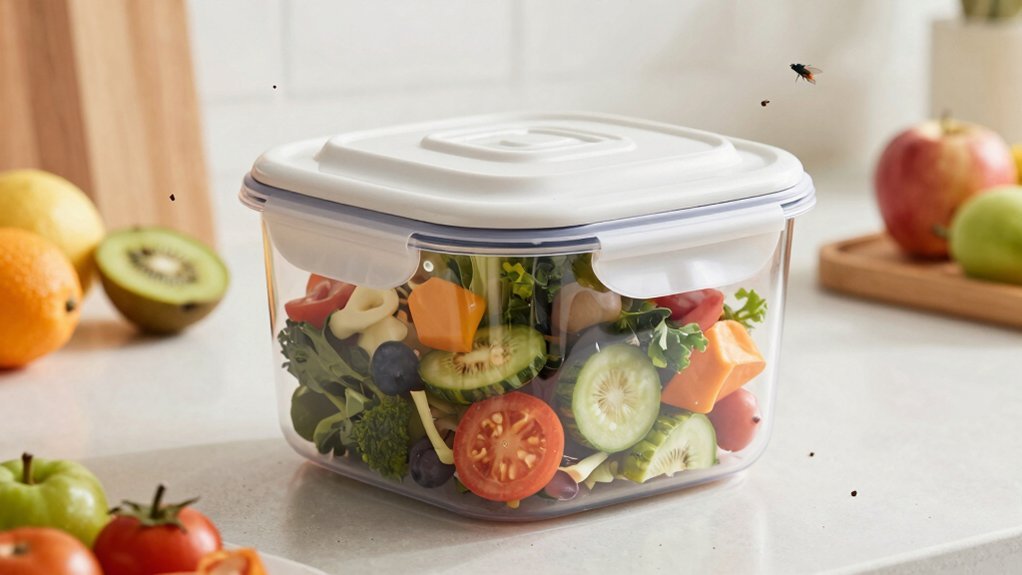
Keeping your bokashi caddy clean and sealed every day is the quickest way to stop fruit flies from turning your kitchen into a breeding ground. Empty the bin each night, never letting scraps sit longer than 24 hours. A tightly sealed lid blocks odor and access, so keep it shut even while you add new waste.
After you empty, rinse the container to wipe away residue that can lure flies and cause egg‑laying. If you can’t rinse immediately, at least spray the interior with a little water and wipe it dry. For additional pest protection, consider using clear storage containers with secure latching lids to hold pre-sorted compost materials before transferring them to your bokashi caddy.
Wrap wet scraps in newspaper or freeze them before they go in the caddy; this slows scent release and keeps the material dry.
Finally, clean the prep area, wipe spills, and store produce in covered bowls to prevent eggs from hitching a ride into your bin.
Removing all food sources helps reduce the problem.
Proper Bran Layering: How the Right Ratio Stops Odor and Insects
A proper bran‑to‑food ratio keeps your bokashi bin smelling fresh and deters insects by ensuring the lactic‑acid fermentation stays strong and anaerobic.
Aim for about 1 Tbsp of bran per inch of food waste, and sprinkle it evenly over each layer. For wetter or high‑protein scraps, add a little extra; excess bran isn’t harmful. Press the food down gently after each sprinkling to eliminate air pockets, then seal the lid. Consistent coverage lowers pH quickly, suppressing foul smells and making the environment unattractive to flies and ants.
- Start with a thin bran base, then alternate food and bran layers.
- Keep the bran layer uniform—no clumps or gaps.
- Lightly compact after each addition to keep the bin anaerobic.
Even coverage ensures the microbes reach all scraps quickly.
How to Transfer Bokashi to the Garden Without Attracting Rodents
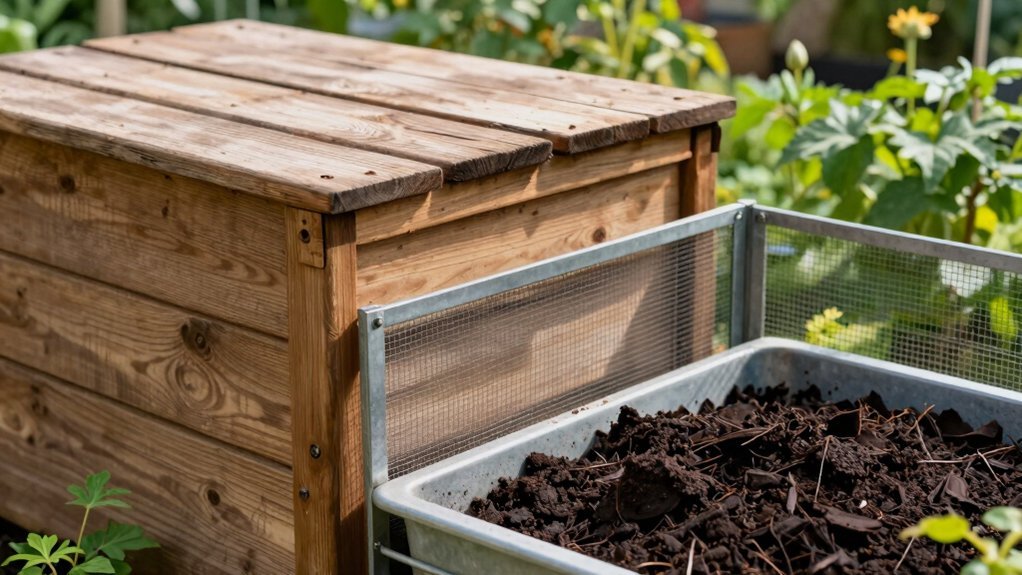
Transferring fully fermented bokashi to your garden without drawing rodents starts with confirming the fermentation is complete—usually after about two weeks, when the material looks pickled and smells sour, not putrid.
Once you’re sure it’s done, dig a trench 20–30 cm deep, then place the bokashi in the bottom. Cover it with soil, then mix thoroughly so no clumps remain and the scent is dispersed. The acidic fermentation environment created during the bokashi process naturally deters many common garden pests from targeting the material.
If you have high rodent pressure, use a sealed planter, a rodent‑proof bin, or a container garden bed that keeps the material inaccessible. Add a ring of deterrents—spiky holly, peppermint, or garlic—around the area, and avoid locations near sheds or known rat paths. Finally, tamp the soil and water lightly to settle everything and mask any lingering odor. Fermentation creates an acidic environment that deters pests.
Burying vs. Surface Composting: The Pest‑Proof Method Explained
Once your bokashi is fully fermented, you can choose how to handle the leftovers: bury them beneath the soil or keep them in a surface pile. Burying 6–12 inches deep hides odors and visual cues, so flies, raccoons, and rodents rarely find the food. Soil microbes, fungi, and earthworms instantly start breaking it down, speeding decomposition and creating a nutrient‑rich hotspot for roots. The buried material acts like a sponge, holding water in the root zone and releasing it slowly, which cuts watering needs and minimizes runoff. Surface piles, by contrast, expose scraps to air, require lids or frequent turning, and attract pests with scent and sight.
Bury bokashi 6–12 inches deep to mask odors, accelerate decomposition, and boost root moisture while deterring pests.
Why burying wins for pest control
- Soil cover blocks odor detection.
- Direct access for soil decomposers accelerates breakdown.
- Moisture retention benefits root health and reduces surface loss.
Microbial activity accelerates decomposition in buried bokashi.
Installing Wire Mesh Barriers: Bokashi Pest Prevention for Small Beds & Containers
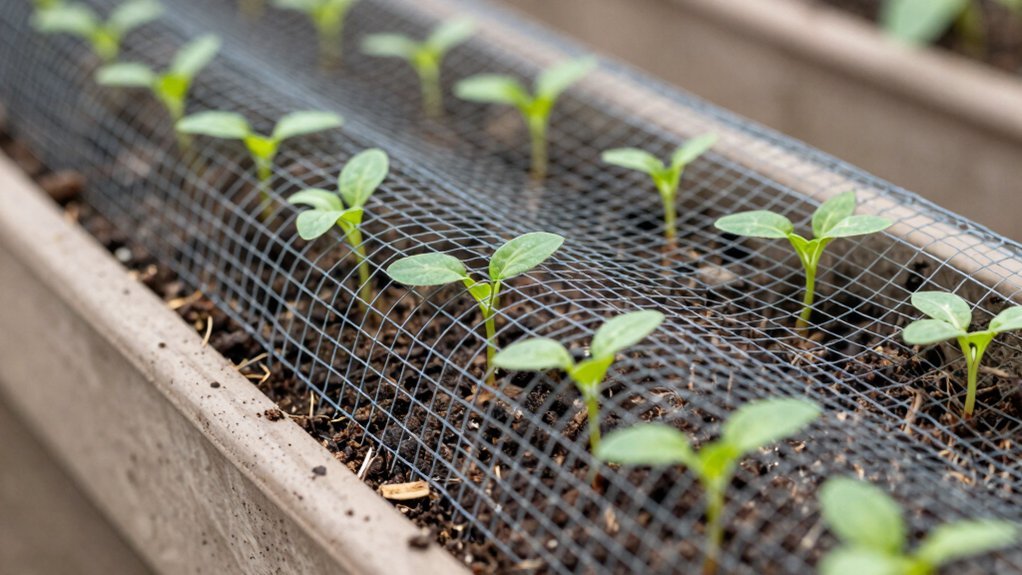
Two or three inches of hardware cloth around a small bokashi bin can keep rodents, raccoons, and seed‑eating birds out while still letting air flow. Choose 1/2″ × 1/2″ hardware cloth for tight exclusion; 1″ × 2″ or 2″ × 4″ meshes let critters slip through and let compost particles escape. A 3‑foot‑diameter, 3‑foot‑high circular frame fits most containers and stays stable under load. Secure the mesh with four to five stakes or rebar, weaving the rebar through the perimeter and pounding it into the ground. Clip or tie edges tightly, trim sharp ends, and smooth them to prevent injuries. Add a straw or cardboard layer around the outside for extra insulation, but keep the mesh open for ventilation. Rebar is woven into the mesh at several perimeter spots to stabilize the structure. Most bokashi composting kits feature airtight lids and built-in spigots to contain odors while you ferment organic waste including meat and dairy.
Mulch and Cover Strategies: Hide Fermented Waste From Birds and Rats
You can mask the smell and hide the sight of your fermented bokashi by spreading a thick layer of mulch, leaves, or straw over the burial spot. Adding a fine‑mesh wire barrier on top of that cover keeps birds and rats from probing the soil while the mulch does the heavy lifting of odor control. Together they create a simple, low‑maintenance shield that lets you compost without attracting pests. Maintaining proper ventilation and aerobic conditions throughout your composting process ensures optimal decomposition and reduces pest attraction. Bury the pre‑compost at least six inches deep to deter rodents.
Mulch as Conceal Waste
A solid mulch layer instantly hides bokashi waste, keeping birds and rats from spotting scraps or smelling fermentation. Choose a dense, heavy mulch—bark chunks, cedar, or rubber—to make pecking and digging harder. Aim for at least three inches of coverage, spreading it evenly over the compost bin and topping it with a thin soil layer if possible. Check the surface after rain or wind, and re‑apply mulch where it’s thinned or disturbed. Keep the surrounding area tidy; remove stray debris that could shelter rodents, and avoid piling mulch against plant stems. For additional pest protection in kitchen composting areas, consider using compostable trash bags to contain smaller fermented waste portions before garden integration. Incorporate native groundcover to further deter pests and support soil health.
Key actions
- Use coarse, oily mulches that birds dislike.
- Maintain a uniform 3‑inch depth, re‑dressing as needed.
- Inspect regularly for gaps, tunnels, or exposed scraps.
Wire Mesh Barrier
Ever wonder how to keep birds and rats from digging up your freshly buried bokashi? Use a wire mesh barrier right after you cover the trench. Lay a hardware‑cloth panel over the entire disturbed area; fine mesh stops both pecking birds and gnawing rodents. Trim any sharp edges before handling, then press the mesh onto the soil surface. Keep it in place until the fermentation odor fades—often longer than two weeks for extra safety. You can reuse panels for new burial spots, and they work well in beds, raised beds, cultivation boxes, and greenhouse floors. This physical cover is far more reliable than mulch alone, giving pests no foothold while the bokashi breaks down. Burying the bokashi deeply helps reduce smell and pest attraction over time.
Timing the Burial: When to Dig In for Fast Breakdown and Low Pest Risk
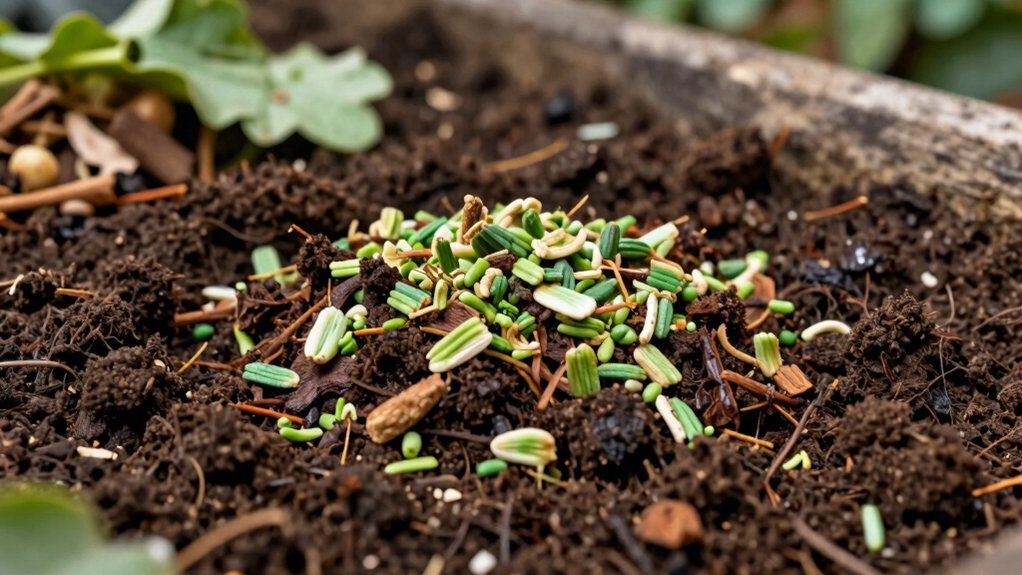
When should you dig in for optimal breakdown and minimal pests? Let the bokashi ferment sealed for at least 14 days after the last layer. This anaerobic period kills odors and makes the material less attractive to flies and rodents. Then, trench 8‑12 inches deep, cover fully with 6‑12 inches of soil, and mix in a few shovels of garden earth to boost microbial contact. Wait another two weeks before planting seeds or seedlings, giving acidity time to neutralize and microbes a chance to finish breaking down the waste.
- Fermentation – 14 days sealed, no fresh odors.
- Burial depth – 8‑12 inches, full soil cover, mix with garden soil.
- Post‑burial wait – 2 weeks before planting to ensure low pest risk.
White mold is not required for the bokashi to be ready for burial.
Monitoring Decomposition: Signs Your Bokashi Is Ready for the Soil
You’ll notice the sour, pickled scent turning into a milder, earthy aroma as fermentation wraps up. The material should feel softer and more pliable, losing its original crunch while staying slightly crumbly. At this stage the color shifts from bright, wet tones to a duller, gray‑brown hue, signaling it’s ready for soil integration.
Fermentation Smell Change
How can you tell your bokashi has finished its first, anaerobic stage and is ready for the soil? You’ll notice the sharp, vinegar‑like bite softening into a milder, pickled scent. The odor should feel more like fermented food than rotting garbage, and it won’t turn rancid or ammonia‑like. If the smell stays sour but not offensive after about two weeks, the first stage is likely complete. Once you bury the batch, the fragrance gradually shifts toward an earthy, soil‑like aroma, fading over weeks as microbes finish the job.
- Sharp‑to‑mild scent transition signals anaerobic completion.
- Persistent sourness without foul notes confirms proper fermentation.
- Earthy after burialsoil soil integration successful breakdown.
Texture Softening Indicator
Ever wonder how to tell if your bokashi has softened enough for the soil? You’ll notice the firm, chunky mass turning pliable and compressible. When you press it with a gloved hand or a potato masher, it should crumble easily rather than hold together as large, rigid pieces. The texture becomes more uniform, with fewer distinct food fragments and a drier, denser feel. Excess liquid should be minimal, and the material should no longer feel soggy or overly dense. A softened, broken‑down mass spreads readily when you mix it into soil, allowing even contact and faster post‑burial breakdown. If it still resists breakup, give it more fermentation time.
Color Shift Observation
When you watch the bokashi change color, you’ll spot the key cues that tell you whether it’s still fermenting properly or heading toward rot. Bright white or fluffy growth usually means fermentation is on track, especially when the smell stays sweet and pickly. Dark spots—black, blue, green, brown, or yellow—signal excess air or spoilage, and you should check for a rotten odor. If the bucket stays sealed, a lack of visible change isn’t a problem as long as the scent remains fermented. After burial, white or grey mold on the soil is a welcome sign of microbial activity.
- Trust odor over color when they conflict.
- Seal tightly and add bran to counter warning colors.
- Discard or deep‑bury if dark molds and foul smells appear.
Troubleshooting Common Pest Issues in Indoor Bokashi Systems
Wondering why fruit flies, maggots, or foul odors keep showing up around your indoor bokashi bin? Start by sealing the lid tightly and covering each new scrap with bokashi bran or spray right away. If flies still appear, the acidity may be low—add extra inoculant or liquid bokashi to boost the anaerobic environment.
Maggots usually hatch from eggs laid before the waste enters the bin, so keep a sealed kitchen‑scrap container and transfer quickly.
Strong, rotten smells signal weak fermentation; more bran and a closed lid will suppress odors and deter pests. Clean the bin exterior, avoid residue, and store scraps in a sealed container to block ant and fly access. Faster transfers and tighter seals keep your indoor system pest‑free.
Long‑Term Maintenance: Keeping Your Apartment Compost Pest‑Free Year‑Round
Usually, you’ll keep your apartment bokashi bin pest‑free year‑round by sealing it airtight and treating every addition as a micro‑batch: layer a thin slice of scraps, cover it with bokashi bran, then close the lid tightly before the next deposit. Keep the lid shut between deposits, drain liquid regularly, and store the bucket in a cool, shaded spot. Clean the rim and spigot weekly, and rinse the collection container daily to erase residue that attracts ants or flies. Rotate a second bucket so you never overfill one bin, and let each batch finish its 2‑4‑week fermentation before opening.
- Seal tightly, drain often.
- Rinse containers, clean spills.
- Rotate bins, respect fermentation time.
Frequently Asked Questions
Can I Add Pet Waste to My Bokashi Bucket Without Attracting Pests?
Yes, you can add pet waste to your bokashi bucket if you keep it sealed, sprinkle bran each time, and bury the finished compost deep in non‑edible soil, which prevents pests.
How Often Should I Replace the Bucket Lid Seal to Keep Rodents Out?
You should replace the bucket lid seal whenever you notice it softening, cracking, or leaking—typically every few months of heavy use, or immediately when odors escape or pests get in.
Will Using a Charcoal Filter on the Bucket Reduce Insect Attraction?
Yes, a charcoal filter will cut down the fermented odors that draw insects, but it won’t block them completely. Pair it with airtight lids, regular cleaning, and proper sealing for effective pest control.
Is It Safe to Bury Bokashi Near a Vegetable Garden Without Contaminating Produce?
Yes, you can bury bokashi near a vegetable garden safely if you bury it at least six inches deep, wait two to six weeks, and keep it away from fresh roots to avoid acid burn.
What Temperature Range Speeds up Bokashi Breakdown While Limiting Pest Activity?
You should keep your bokashi between 65°F and 85°F (18‑29°C). That warm, stable range speeds fermentation and keeps microbes happy while deterring flies, rodents, and odor‑driven pests.
In Summary
By sealing each addition, picking a dry indoor spot, and keeping food containers clean, you’ll keep fruit flies and other pests at bay. Proper bran ratios and timely burials stop odors, while regular monitoring tells you when the bokashi is ready for the soil. Follow these simple steps, troubleshoot any issues quickly, and enjoy a pest‑free, thriving compost system in your apartment all year long.