
You’ve got five proven vertical composting solutions that fit urban spaces perfectly. Start with budget-friendly five-gallon buckets layered with greens and browns. Try countertop electric composters for daily scraps without odors. Worm bins harvest castings layer-by-layer in compact footprints. Bokashi fermentation lets you compost meat and dairy indoors using special bran. Community composting programs offer drop-off or pickup services, eliminating equipment needs entirely. Each method transforms your apartment into a waste-reducing powerhouse, and discovering which fits your lifestyle best reveals surprising possibilities.
Five-Gallon Bucket Method: Budget-Friendly Indoor Composting
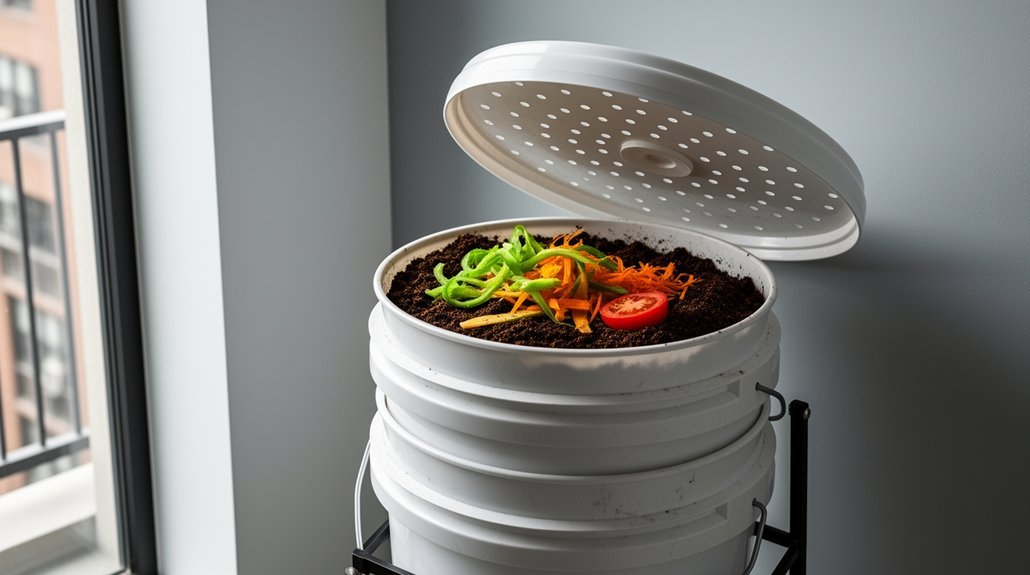
Ever wondered how you could compost in an apartment without the space or expense of elaborate systems? A five-gallon bucket offers a practical solution. You’ll drill 10 to 15 holes in the bottom and additional holes in the sides and lid for ventilation. Layer your greens and browns at roughly a one-third to two-thirds ratio, using kitchen scraps and shredded cardboard. Don’t overfill—airflow is essential. Shake or roll the bucket periodically to redistribute materials and manage moisture. You can nest a second bucket underneath to capture drainage. Compost tea collection from the lower bucket provides liquid fertilizer for watering plants. Consider adding coconut coir as a carbon-rich bedding material to improve aeration and moisture retention in your bucket system. Under good conditions, expect finished compost in about six weeks. The process shrinks materials to roughly half their original volume, giving you nutrient-rich compost for houseplants or small gardens.
Countertop Composters: Compact Systems for Daily Scraps
While the five-gallon bucket method offers simplicity and low cost, you might prefer a more automated approach that handles daily scraps with minimal effort.
Countertop composters are compact electric appliances that transform your daily food waste into pre-compost material within hours. You load scraps like peels, coffee grounds, and eggshells into a sealed chamber where internal motors, heating elements, or microbes break down organic matter. Carbon filters control odors, making these units ideal for apartments without outdoor space. To further manage kitchen odors, consider pairing your composter with activated charcoal odor absorbers for maximum freshness. Popular models like the Vitamix FoodCycler and Lomi Electric Composter use grinding and drying technology to process waste quickly while maintaining compact countertop footprints suitable for urban kitchens.
| Feature | Benefit |
|---|---|
| Processing time | Few hours to under 24 hours |
| Capacity | Around 2.5 liters in compact models |
| Output | Lighter, drier, easier to store |
You’ll reduce kitchen odors, fruit fly problems, and trash volume substantially. However, most units produce pre-compost rather than garden-ready compost, requiring additional curing before garden use.
Worm Bins: Layer-by-Layer Casting Harvests
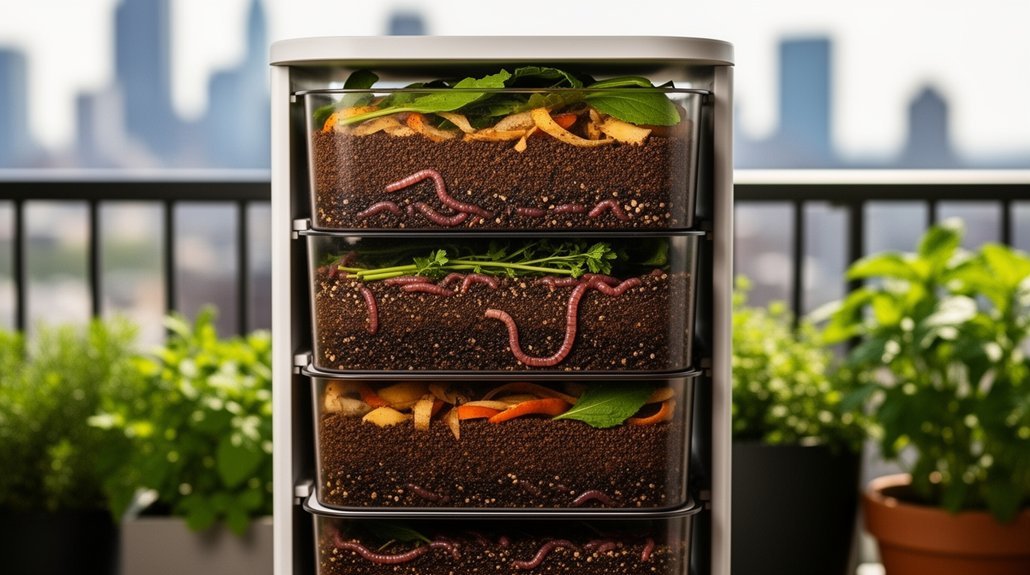
How do you harvest finished compost without dismantling your entire bin? Layered worm bins let you collect castings strategically without disrupting your whole system.
You’ve got three proven methods:
- Worm migration—Feed only the top tray, drawing worms upward and away from mature material below. After 1–2 weeks, the lower layers are harvest-ready with minimal worm removal.
- Light separation—Expose finished castings to bright light. Worms burrow downward instinctively, so you’ll scrape off surface material repeatedly as they retreat. Return visits every 10–15 minutes improve effectiveness as worms continue their downward migration.
- Sifting—Screen harvested material through a frame to separate fine castings from bedding fragments and food remnants. Larger particles and visible worms return to the bin.
Rebuild empty trays with fresh bedding using newspaper and cardboard, and you’re ready for the next cycle.
Bokashi Fermentation: Compost Meat and Dairy Indoors
What if you could compost meat, fish, and dairy right in your kitchen? Bokashi fermentation makes this possible through anaerobic composting in sealed buckets. You’ll layer your food scraps with bokashi bran—a wheat or rice bran inoculant containing beneficial microbes—which rapidly acidifies the contents over one to two weeks. Unlike traditional compost piles, bokashi accepts cooked foods, cheese, eggs, and oil-rich leftovers. The airtight bin produces leachate you’ll drain and dilute as liquid fertilizer. Once fermentation completes, you’ve got pre-compost requiring a second breakdown stage: bury it in garden soil, mix it into larger compost piles, or blend it into potting soil indoors. For odor management during fermentation, consider using compost bin filters to minimize food smell in tight quarters. For continuous processing, set up two buckets in rotation so you can fill one while the other ferments, allowing ongoing waste processing without interruption. This method transforms your kitchen waste into nutrient-rich amendments perfectly suited for urban apartments and limited spaces.
Community Composting: Access Without Personal Space
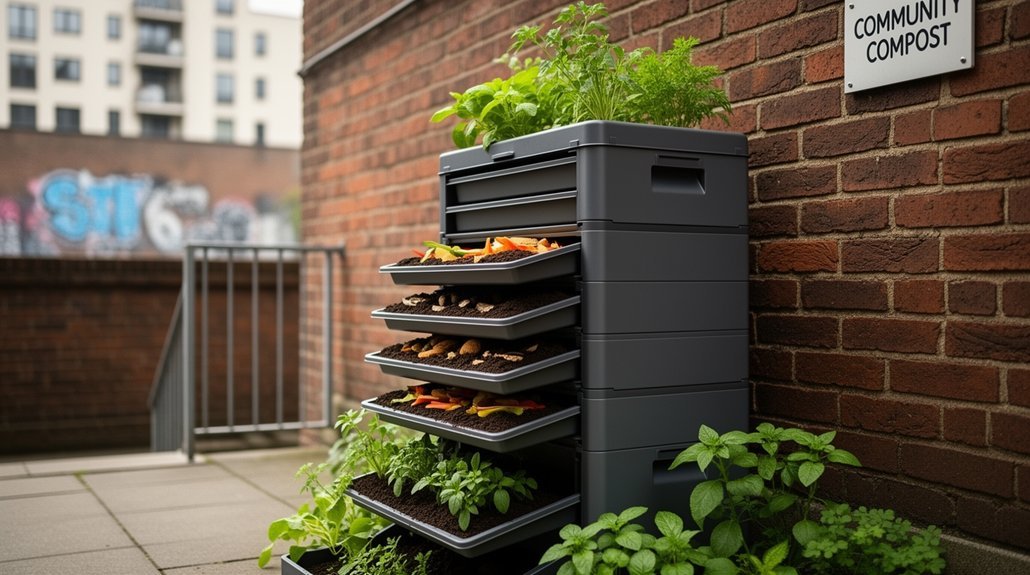
When apartment living or HOA restrictions prevent you from composting at home, community composting programs offer a practical alternative. You’ll find several accessible options:
- Drop-off sites at farmers’ markets, community gardens, and municipal waste collection points let you transport food scraps weekly or monthly.
- Residential pickup services collect buckets from your home, eliminating storage concerns and often returning finished compost.
- Shared compost hosts through location-matching apps connect you with nearby residents who manage collective systems.
These programs eliminate barriers like space constraints and equipment costs. You participate in waste diversion without needing outdoor room or specialized knowledge. Many programs charge modest monthly fees while offering finished compost returns or bulk purchase discounts, creating tangible benefits for participants committed to soil-building efforts. Additionally, finished compost from these community systems can be used in urban gardens and landscaping projects, supporting local greenery initiatives throughout your neighborhood. Community composting sites often benefit from odor-neutralizing sprays to manage any unpleasant smells in shared collection areas, ensuring a pleasant experience for all participants.
Frequently Asked Questions
How Do I Choose the Right Vertical Composting Method for My Apartment’s Specific Conditions?
You’ll match your method to your floor space, food-scrap types, odor tolerance, and local disposal options. Assess your kitchen layout, what scraps you generate, your neighbors’ proximity, and whether you’ve got finished compost needs or access to community drop-off services.
Can I Use Finished Compost From Indoor Systems on Edible Plants and Vegetables?
Yes, you can use finished compost from indoor systems on edible plants. You’ll need to ensure it’s fully cured for at least two weeks after soil incorporation before planting vegetables, and mix it thoroughly with existing soil to maintain proper drainage.
What Temperature and Humidity Levels Are Ideal for Indoor Composting Success?
You’ll achieve success maintaining 50–60% moisture and temperatures between 55–65°C. Keep your pile aerated, balance browns and greens at 25:1–30:1 ratios, and turn it when temperatures approach 140–155°F.
How Much Finished Compost Can I Realistically Produce Monthly From Small-Space Systems?
You’ll realistically produce modest monthly yields—typically a few liters to several gallons—depending on your system type, feedstock volume, and management. Vermicomposting offers steadier output; batch systems produce less frequently.
What Local Regulations or Building Codes Might Restrict Composting in My Apartment Building?
You’ll face mandates requiring five-plus-unit buildings to provide commercial composting services. Your building needs licensed hauler coordination, tenant education, convenient access, and contamination prevention—all affecting what systems you can install.
In Summary
You’ve got plenty of options to start composting in your city apartment today. Whether you’re working with a five-gallon bucket, a countertop system, or worms, you’ll find a method that fits your space and lifestyle. If you’re short on room, you can’t beat community composting. You’re reducing waste, enriching soil, and making an environmental impact without needing a backyard.



Leave a Reply