
You must join NYC’s organics program, use 55‑gallon‑or‑smaller bins with secure lids and weather‑proof “Compost” labels, and place them in a designated, ventilated rooftop or indoor area. Check your zoning map for permit requirements, install pest‑proof enclosures, and follow a strict collection schedule to avoid fines that start at $50. Proper odor control and regular inspections keep you compliant, and the next section shows how to get the right permits.
Understand NYC Rooftop Composting Rules
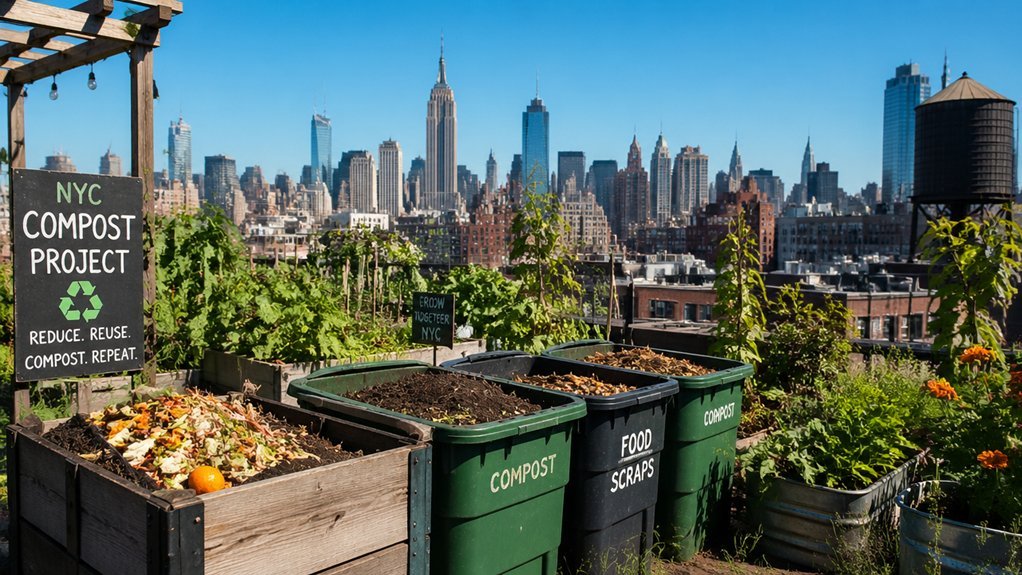
What does NYC actually require for rooftop composting? You must join the NYC organics program, which mandates residential waste separation of organics in buildings with four or more units. The citywide plan rolls out across all sanitation districts by October 7 2024, with early districts starting October 2 2023. You’ll need a designated storage area—either indoor bins or a rooftop/entryway setup—using labeled containers 55 gallons or smaller, equipped with secure lids and liners. Follow DSNY guidelines for approved composting solutions, and be ready for possible fines beginning April 1 2025 if you don’t comply. Even if your roof lacks a courtyard, you can still meet the rules by placing compliant bins in an accessible indoor location, keeping the program on track. OMRI listed
Identify Zoning Districts That Allow Rooftop Composting
Where do you need to look to know if your roof can host a compost bin? Check your city’s zoning map and the district code. Most residential and mixed‑use districts that allow rooftop composting require waste containment, odor control, and structural safety. You’ll likely need a permit or special‑use approval, and the bin must be compact, sealed, and set back from edges. Inspections keep you compliant with health and building standards. For urban rooftop setups, consider aligning with best practices from compact brewing and odor management to ensure safe, compliant operation permit considerations and ongoing compliance checks.
| District Type | Permit Requirement | Odor‑Control Rule |
|---|---|---|
| Residential‑A | Standard permit | Closed‑lid, sealed |
| Mixed‑Use‑B | Special‑use review | Certified odor‑filter |
| Commercial‑C | Site‑plan approval | Enclosed container, ventilation control |
Choose Minimum‑Size, Lid‑Approved Rooftop Bins
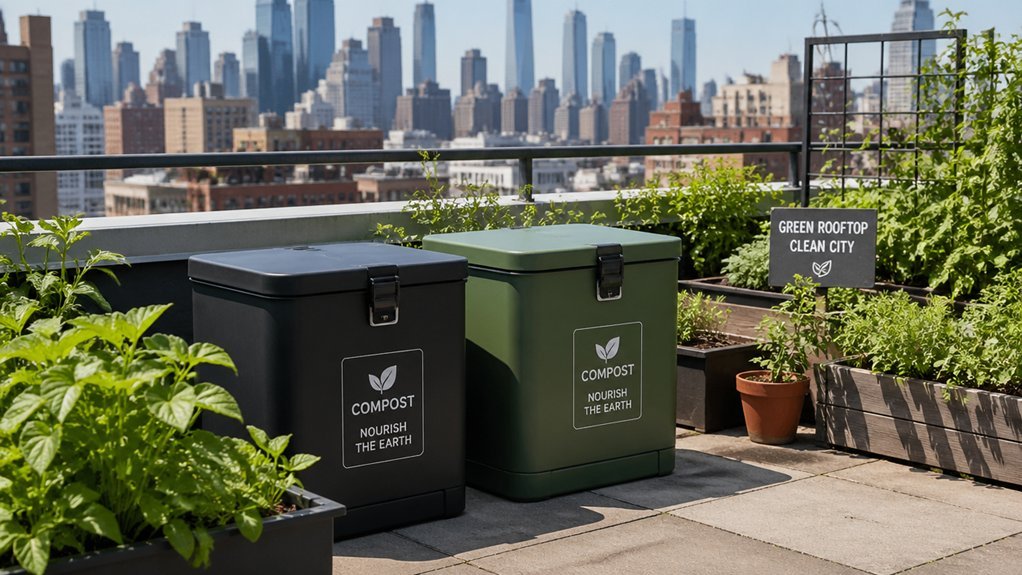
Looking for a bin that meets city limits? Choose a rooftop composting container no larger than 55‑gallon bins, and make sure it has a secure lid that won’t pop off in wind. The lid should lock tightly to keep pests out and moisture in, protecting both your building and the compost. Labeling is essential—stick a clear, weather‑proof label on the front that says “Compost” and includes any required city codes. Inside, line the bin with a clear plastic, paper, or certified compostable bag to catch drips and make cleanup easy. Keep extra yard waste in paper lawn‑and‑leaf bags or clear plastic bags placed beside the bin, and bundle twigs with twine for neat storage. This setup satisfies regulations while staying simple and functional. Security features help ensure the lid remains firmly closed during windy rooftop conditions.
Get a City Permit for Rooftop Composting
After picking a lid‑approved, 55‑gallon bin, the next step is securing a city permit. You’ll need to submit a site plan that shows exactly where the bin sits, how drainage works, and when you’ll turn the pile. Local laws demand clear access, safety rails, and fire‑code compliance, so your plan must note stair access and any fire‑suppression equipment. The permit application also asks for proof that your rooftop composting setup includes sealed liners, labeled storage, and a schedule for regular maintenance to keep odor and pests under control. Expect a review of your containment strategy and a brief inspection before you receive the permit, then you can start composting without violating city regulations. Materials safety
Pest‑Proof Your Rooftop Compost Bins
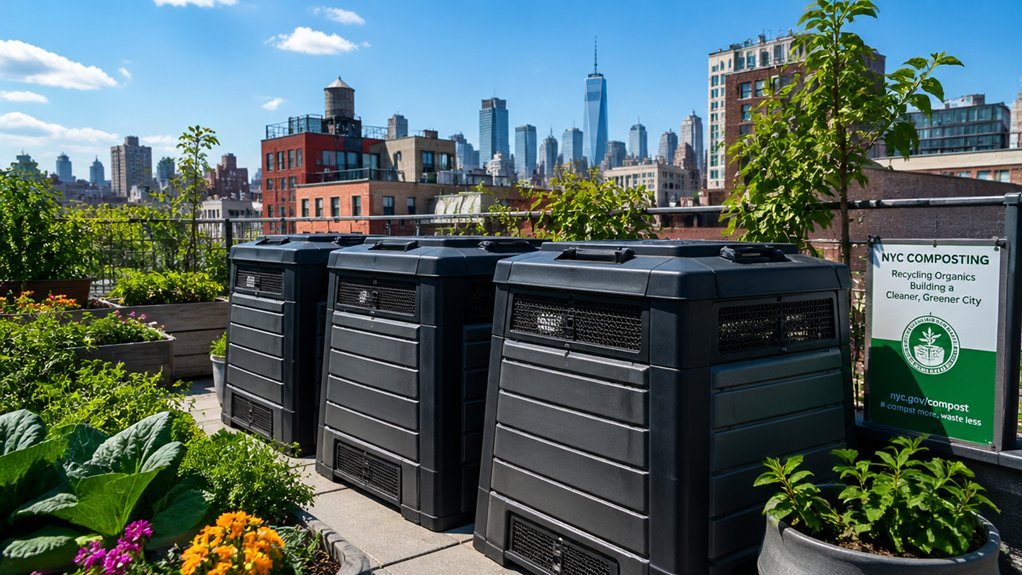
A well‑sealed, pest‑proof bin is the cornerstone of any rooftop compost system, because rodents and insects are drawn to exposed waste and odors. By choosing a container with secure lids and tightening every seal, you cut off the scent trail that invites vermin. Position the bin away from stairwells or utility shafts, and keep a schedule for cleaning and waste turnover. Regular inspections let you spot droppings or gnaw marks before an infestation spreads, and clear signage reminds tenants to avoid dumping meat or dairy. Use airtight, lightproof packaging to protect beneficial microorganisms and maintain a nearly odorless environment inside the bin Bokashi Bran quality. – Use a durable, lockable lid that snaps shut every time.
- Elevate the bin on a platform to deter crawling insects.
- Line the interior with a breathable, mesh screen for airflow without escape.
- Store a small, sealed trap nearby for quick pest capture.
- Rotate the compost weekly to maintain dry, less attractive material.
Control Odors and Ventilate Rooftop Bins
Ever wonder how to keep rooftop compost from stinking up the building? You can master odor control by using labeled 55‑gallon (or smaller) bins with tight‑fitting lids, placing them where wind can sweep away fumes. Position bins on the roof’s high‑point, away from windows and ventilation intakes, and add a simple vent stack or mesh screen to promote airflow without inviting pests. Open the lids only when you add material, then close them promptly to trap smells inside. Sweep the bin interior weekly, remove soggy layers, and rinse the lid seal to prevent mold. Keep a log of cleaning dates and check DSNY guidelines regularly; consistent ventilation and diligent care will keep your rooftop composting fresh and compliant. Regular use of properly rinsed coir bedding can help maintain moisture balance and reduce odors over time coir bedding benefits.
Schedule Collection and Select Approved Haulers
You’ll need to confirm which hauler your city has approved before you can set up a pickup schedule. Choose a collection frequency that meets the ordinance’s timing requirements and keeps odors and pests under control. Keep the hauler’s manifest on hand so you can prove compliance during inspections. Additionally, ensure the selected hauler supports any required odor-control measures and adheres to local landfill or composting guidelines to minimize environmental impact approved hauler.
Approved Hauler Approval
How do you ensure your rooftop composting stays on schedule and compliant? Approved hauler programs coordinate collection dates, supply properly tagged containers, and enforce pest‑ and odor‑control protocols tailored for high‑rise buildings. By partnering with an approved hauler, you align your organics program with city waste management rules and avoid penalties. The hauler’s service level agreement spells out pickup windows, route maps, and contact points for missed pickups or contamination. Choosing the right hauler depends on building type, occupancy, and the specific organics program requirements for rooftop composting.
- Verify the hauler’s certification for high‑rise compost collection.
- Confirm container labeling meets city standards.
- Review the service level agreement for pickup frequency.
- Ensure pest‑ and odor‑control measures are documented.
- Keep a contact list for reporting issues promptly.
Timing and Frequency
When should you schedule rooftop compost pickups to stay on track and avoid penalties? You must align your timing and frequency with NYCs organics rules, which mandate year‑round source separation and a phased curbside rollout that began Oct 2 2023 and ends Oct 7 2024.
Most approved haulers collect every two weeks, but some buildings opt for weekly service to reduce pest risk and indoor storage strain.
Check your lease or building management notice for the exact day the hauler arrives; missing a slot can trigger fines under Local Law 85.
Keep a calendar reminder, use the container lid securely, and confirm the hauler’s certification each season.
Consistent, on‑time pickups keep you compliant and your rooftop composting program running smoothly.
Know Penalties for Missed Collections and Violations
Ever wondered what happens if you miss a compost pickup or break the NYC DSNY organic‑waste rules? Missing a collection or committing a violation triggers penalties that can add up fast, and enforcement agencies don’t take them lightly. For individuals, fines start at $50 and can climb to $200 per infraction, such as putting bins out on the wrong day or using the wrong container size. Larger buildings face steeper fees—$100 to $300 per offense for structures with nine or more units. Landlords and condo boards are also on the hook, as they must supply proper bins and labeling. Ignoring these rules invites repeated enforcement actions and escalating costs.
- $50‑$200 fines for single‑unit residents per violation
- $100‑$300 fines for multi‑unit buildings (9+ units) per offense
- Additional penalties for repeated missed collections
- Enforcement can include mandatory compliance notices
- Landlords may be held liable for tenant violations
Follow a Compliance Checklist for Multi‑Unit Buildings
Wondering how to keep your building compliant without turning every hallway into a storage maze? Start by designating a clearly labeled rooftop storage area that can hold the required compost bins for your multi‑unit building. Ensure the space is sealed, ventilated, and positioned away from entryways to curb odors and pests. Separate organic waste—food scraps, soiled paper, yard debris, meat, dairy, and leaves—into the bins each collection day, which must match the recycling schedule. Post a simple checklist: 1) bins are on the roof, 2) signage reads “Composting Compliance,” 3) containers are the correct size and type, 4) residents know the drop‑off day, and 5) staff inspect for leaks or contamination weekly. Follow these steps and you’ll avoid fines and keep the system running smoothly.
Learn From NYC Rooftop Compost Case Studies
After setting up a compliant rooftop storage area, look at how NYC’s DSNY program has been tested in real buildings.
The city’s organics program forces you to label 55‑gallon containers, secure lids, and follow strict building guidelines. Residents report pest management headaches—rats, roaches, raccoons—so pilots often pair bins with sealed enclosures and regular inspections. Landlords who educate tenants about proper layering and moisture control see fewer odor complaints. These case studies prove that a modest upfront investment in sealed, ventilated bins pays off by keeping the rooftop composting system both legal and functional.
- Use DSNY‑approved 55‑gallon containers with tight‑fitting lids.
- Install lockable, weather‑proof enclosures to deter pests.
- Provide clear signage and tenant education on layering.
- Schedule monthly waste removal to prevent odor buildup.
- Conduct quarterly inspections to ensure compliance with building guidelines.
Access Resources and Contacts for Permits and Inspections
You’ll find the permit application guidelines on your city’s environmental‑agency website, where you can download forms and checklists.
The same portal lets you schedule inspections, providing a calendar of available slots and contact numbers for the inspection team.
Keep these resources handy so you can move quickly from paperwork to approval.
Permit Application Guidelines
If you’re ready to install a rooftop composting system, start by securing the required permit from your city’s environmental or building department. You’ll need to submit a design plan that meets local regulations, outline safety measures, and describe waste handling procedures. The application portal usually asks for site drawings, a pest‑control strategy, and a timeline for the first inspection. Keep copies of all correspondence and note any deadlines for follow‑up reporting. By staying organized, you’ll avoid delays and keep your composting project on track.
- Locate the city’s online permit portal and create an account.
- Download the rooftop composting design template and fill in all fields.
- Attach safety and odor‑mitigation plans as required by regulations.
- Submit the application and schedule the initial inspection.
- Track your permit status through the portal and respond to any requests promptly.
Inspection Scheduling Resources
Need to you NYC composting inspection? You’ll start by contacting DSNY’s organics division to request a site visit. Call the 311 hotline or use the online portal, cite your building’s address, and specify rooftop composting. DSNY will confirm which permits you need, then schedule inspections that align with your recycling pick‑up days. Keep your 55‑gallon bins labeled and secured; inspectors will verify container size, lid integrity, and dedicated storage area for multi‑unit buildings. If you manage a property with four or more units, coordinate with your property manager and the city permit office to avoid delays. FirstService Residential can also help you arrange training and logistics, ensuring you meet all compliance requirements before the inspector arrives.
Frequently Asked Questions
What Are the New Compost Rules in NYC?
You must separate organics from trash, use labeled bins or bags under 55 gallons, and store bins in a dedicated area if your building has four or more units. Fines start at $50 for non‑compliance.
Can You Have a Composting Toilet in Town?
You can install a composting toilet if local health codes permit it, but many towns require a permit, proper ventilation, and regular maintenance; check your municipality’s regulations before proceeding.
What Are the Rules of Composting?
You must separate organics, use a 55‑gallon (or smaller) bin with a secure lid, line it with a clear or compostable bag, keep it in a designated area if you live in a 4‑plus‑unit building, and avoid non‑compostables like plastics, metals, glass, and diapers; fines start at $50 and rise to $300 for repeated violations.
What States Are Legal for Human Composting?
You can legally practice human composting in Washington, Colorado, Oregon, and California; each state has specific licensing, site‑selection, and oversight requirements you must follow to remain compliant.
In Summary
By mastering NYC’s rooftop compost rules, you can turn unused space into a green asset without breaking the law. Pinpoint the right zoning, pick a approved, lid‑sealed bin, secure the necessary permit, and keep pests out. Stay on top of collection schedules to avoid fines, and use our checklist for multi‑unit compliance. Learn from local case studies, and tap the city’s resources—your building will be greener, cheaper, and fully compliant.