
You must provide at least one gallon of composting capacity for every unit in any multifamily building with five or more units, label each container in two languages, and schedule weekly pickups to avoid overflow. The ordinance starts on October 1, 2024, applies to new construction and expansions, and requires documentation of collection dates and compliance logs for inspections. Keep signage visible at all indoor and outdoor bins, and submit an annual composting plan to qualify for the up‑to‑$3,000 Zero Waste Business Rebate. Follow these steps and you’ll discover the full compliance process.
Which Multi‑Unit Properties Must Meet Composting Requirements?
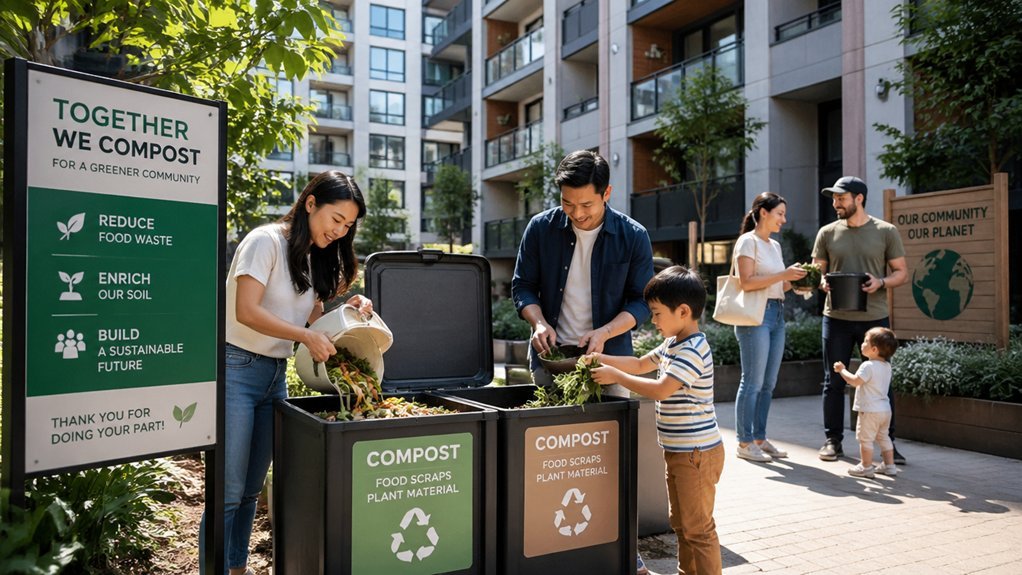
Which multi‑unit properties have to comply? If you own or manage a multifamily building with five or more units in Austin, you must provide composting. Starting October 1, 2024, every resident needs access to a compost container, and you can meet the requirement with shared bins as long as total capacity equals at least one gallon per unit. Acceptable materials include food scraps—meat, bones, dairy—food‑soiled paper, and any BPI‑certified compostable product. You’ll also have to submit an annual composting or waste‑diversion plan that outlines education for tenants. New constructions and expansions fall under the same rules, so guarantee your property’s design incorporates the required composting infrastructure before the deadline.
Key Dates, Scope, and Composting Requirements
You’ll need to start composting by October 1 2024, and the rule applies to any multifamily building with five or more units. Each unit must provide a one‑gallon compost container that’s collected weekly and can hold only the approved materials. The program emphasizes odor‑managed systems and low‑noise operation to suit shared living environments, drawing on standard 4L and 3L capacity models common in apartment setups. odor control and clear, user‑friendly signage are essential components to ensure consistent participation across residents.
Effective Date and Scope
When does the composting ordinance kick in, and who does it affect? It starts on October 1, 2024, and it applies to any multifamily properties with five or more units. The City Council approved the rule in September 2023, so you have a clear timeline. You must give each residential unit access to one gallon of composting capacity, with weekly collection and no overflow. Inside‑unit containers aren’t required, but you need to provide a convenient drop‑off point for the service. If you’re a new building, submit a waste‑diversion plan within 30 days of receiving your occupancy certificate. These requirements ensure consistent composting across all eligible properties and help the city meet its sustainability targets. Bokashi bran
Composting Capacity per Unit
The ordinance’s start date of October 1, 2024, means every multifamily building with five or more units must now guarantee a one‑gallon composting capacity per residential unit, whether the containers are shared or individual. You’ll need to arrange weekly pickups so the one‑gallon limit never overflows. Acceptable inputs include meat, bones, dairy, food‑soiled paper, and BPI‑certified compostables; containers must accommodate these items and be reachable by residents. Indoor bins aren’t required, but any outdoor unit must sit within 25 feet of the dumpster or cart area. This composting capacity rule applies to all multifamily properties, ensuring consistent service across the complex. Keep the system simple, monitor usage, and stay compliant with the weekly collection schedule. Regular audits help verify that the capacity per unit is maintained and that pickup schedules align with actual disposal patterns compliance tracking.
Resident Education and Signage
Where does your building’s composting education start? You must deliver clear education within 30 days of a resident’s move‑in or employee hire, then repeat it annually.
Use the city’s step‑by‑step guide to create a concise handbook that explains accepted items—food scraps, soiled paper, meat, bones, dairy, and BPI‑certified compostables—and the one‑gal lon‑per‑unit capacity rule. Sustainable sourcing is emphasized to support renewable waste handling and long‑term program viability.
Pair the handbook with prominent signage at every collection point, showing icons, drop‑off times, and overflow prevention tips.
Minimum Composting Capacity per Residential Unit
How much composting space does each apartment need? You must allot one gallon of composting capacity per residential unit, and you can share containers across adjacent apartments if you label them clearly. Starting October 1, 2024, multifamily properties with five or more units must provide access to commercial composting services, so you’ll need to plan for that gallon per unit in a convenient, labeled location. Ensure the container’s size meets the one‑gal lon requirement and that it’s placed where residents can easily drop off food scraps, food‑soiled paper, and BPI‑certified items. Collect the material at least once a week to avoid overflow and keep the area tidy. This setup satisfies the law and supports a smooth, sustainable waste stream for every tenant. container labeling
Accepted Compostable Materials for Composting

Ever wondered what you can actually toss into your apartment’s compost bin? In multifamily programs you can safely add a variety of compostable materials without worrying about contamination. The law lets you include everyday scraps and certified items, so you can reduce waste while staying compliant.
- Banana peels and fruit skins
- Leftover cooked meals, including meat and fish
- Food‑soiled paper products like pizza boxes
- BPI‑certified compostable cutlery and containers
- Plant trimmings and animal‑derived waste (bones, dairy)
These items fit within the one‑gallon‑per‑unit capacity and can be placed in the conveniently located containers. Just keep them sorted, avoid overflow, and the weekly pickup will handle the rest. Compliance standards
Set Up Weekly Compost Collection and Prevent Overflows
Typically, you’ll set up a weekly compost pickup by placing clearly labeled, one‑gallon containers in accessible indoor or outdoor spots—ensuring outdoor bins stay within 25 feet of the building’s dumpsters. Coordinate with a commercial composting service to schedule a regular composting collection every week, confirming the day and time that fits residents’ routines. Keep a simple log of pickup dates and monitor container fullness; if a bin reaches the brim, arrange an extra haul or redistribute waste to nearby containers. Provide a spare container on each floor to handle spikes in food‑scrap volume, and educate residents on separating eligible materials to reduce bulk. By maintaining consistent collection and a clear overflow‑prevention plan, you’ll stay compliant and keep the building odor‑free. Regular aeration and careful bin design considerations, such as ensuring access doors and pest‑resistant lids, can help prevent odor buildup over time odor control concepts.
Required Signage, Language Standards, and Placement Rules

You’ll need to post multilingual signs that clearly label each waste stream and include the recycling arrows symbol. Place those signs right next to indoor bins and on all outdoor containers so residents can see them instantly. Make sure every label covers both composting and recycling, using at least two languages for each sign.
Multilingual Signage Requirements
How do you make sure everyone can instantly recognize the right bin? You need clear multilingual signage that labels each waste stream, lists accepted materials, and includes the chasing‑arrows recycling symbol. Place signs on every outdoor container and near indoor bins, using at least two languages—draw on free translation resources if needed. Guarantee the signs are visible and positioned where residents and employees naturally glance, so they can quickly sort compost, recycling, and trash.
- Label each bin with the waste type in two languages.
- Add the chasing‑arrows symbol on recycling signs.
- Mount outdoor signs directly on containers.
- Position indoor signs on or next to the bin.
- Use high‑contrast fonts and icons for quick identification.
Strategic Container Placement
Where should you position waste containers to keep sorting intuitive and compliant? Place each container within 25 feet of the landfill dumpster or cart, ensuring haulers can reach it without extra maneuvering. If you have indoor landfill bins, group the Recycling and composting units together nearby and label them in at least two languages. Mount signs on every outdoor collection point, using the chasing‑arrows symbol for Recycling and listing accepted materials clearly. For indoor bins, attach multilingual signage directly on or next to each unit, meeting language requirements without clutter. This layout minimizes travel distance, promotes quick visual identification, and supports proper sorting while staying fully compliant with the law.
Standardized Waste Stream Labels
After placing containers within easy reach, the next step is to label each stream clearly. You’ll need signage that identifies every waste stream, lists accepted items, and appears in at least two languages. Outdoor collection points must carry these signs, while indoor signs belong directly on or near the bins. Recycling signs require the chasing‑arrows symbol, and if you have indoor landfill bins, you must also provide adjacent recycling and composting bins, grouped and labeled together. Use free multilingual signs to keep communication clear for residents and staff.
- Dual‑language text for all waste streams
- Chasing‑arrows icon on recycling signage
- Outdoor signs mounted at eye level on collection points
- Indoor signs attached to or placed beside each bin
- Grouped labeling for landfill, recycling, and composting bins together
Educate Residents & Employees and Track Participation
Ever wonder how quickly you can get everyone on board with the new composting plan? You must launch education and training within 30 days of a resident’s move‑in or an employee’s hire, then repeat updates annually. Use the city’s bilingual videos and template guides to explain waste streams, signage locations, and proper compost materials. Record each session in a training log and keep attendance sheets for the year. The city’s step‑by‑step compliance site helps you tailor communications, while the dedicated website offers printable flyers and FAQs. Keep your materials current as program rules evolve, and store all logs and templates in a central folder for easy audit. By tracking participation, you demonstrate compliance and reinforce proper habits across the building.
Submit Annual Composting Plans and Waste‑Diversion Reports
How do you guarantee your building stays compliant with the city’s composting mandate? You must file a composting plan submission each year between October 1 and February 1, and new properties also need a waste‑diversion report within 30 days of occupancy. The city’s website offers step‑by‑step instructions, so you can gather licensed hauler contracts, dumpster details, and pickup schedules without guesswork. Keep records tidy; the city will audit them against recycling and composting requirements.
- Compile hauler invoices for trash, recycling, and composting.
- Document dumpster or cart size, quantity, and exact location.
- Note pickup frequency and any service changes.
- Attach the waste‑diversion plan for new buildings.
- Submit everything through the city’s online portal before the February 1 deadline.
Apply for the Zero Waste Business Rebate After Plan Approval
After you submit your recycling plan, you’ll need to check the submission timeline to know when the rebate window opens. Make sure you meet the eligibility criteria, such as having new bins or programs for hard‑to‑recycle items. Once those boxes are checked, you can apply for the Zero Waste Business Rebate and claim up to $3,000.
Plan Plan Submission Timeline
When you submit your recycling plan, you can immediately start the process to claim the Zero Waste Business Rebate, which offers up to $3,000 for exceeding waste‑reduction targets. The plan submission timeline runs from October 1 to February 1 each year, so you must file before the February 1 deadline to stay eligible. Include a licensed hauler invoice or contract, plus dumpster size, quantity, location, and pickup frequency details. New properties need a waste diversion plan within 30 days of receiving the occupancy certificate. Keep copies of all documents; they’ll be required when you apply for the rebate.
- Verify the submission window (Oct 1–Feb 1)
- Attach hauler contracts for trash, recycling, compost
- Detail dumpster/cart specifications and pickup schedule
- For new buildings, add a diversion plan within 30 days of occupancy
- Store all paperwork for rebate application verification
Eligibility Criteria Overview
Your recycling plan is now in the system, so you can move on to the Zero Waste Business Rebate. To qualify, you must meet the Universal Recycling Ordinance and its composting requirements. The rebate caps at $3,000 and reimburses costs for new recycling or composting bins, plus programs that tackle hard‑to‑recycle items. Eligibility is assessed case‑by‑case after plan approval, and you can still explore additional funding for broader waste‑reduction projects.
| Requirement | Example |
|---|---|
| Ordinance compliance | Follow Universal Recycling Ordinance |
| Composting mandate | Provide resident compost bins |
| Expense type | Purchase bins, launch education |
| Max rebate | $3,000 per project |
| Additional funding | Apply for supplemental grants |
What to Do When You Miss a Requirement – Getting a Waiver
If you’ve missed a requirement, you can still secure a waiver by first submitting your recycling plan and documenting any progress on capacity and education. Once the plan is on file, gather evidence of what you’ve achieved—photos, logs, or training records—to show good faith effort. Reach out to your hauler; many offer audit services or can refer you to a qualified waste auditor. The auditor will conduct a waste‑characterization study, pinpoint gaps, and suggest corrective actions. Use the auditor’s report to strengthen your waiver request and demonstrate a realistic timeline for meeting the unmet capacity target.
Submit your recycling plan, gather evidence, enlist an auditor, and use the report to support your waiver request.
- Submit the recycling plan before asking for a waiver.
- Document capacity upgrades and resident education activities.
- Hire an auditor for a waste‑characterization study.
- Leverage hauler‑provided audit options or referrals.
- Attach the auditor’s findings to your waiver application.
Resources, Templates, and City‑Provided Tools for Managers
Looking for ready‑made help to launch a multifamily composting program? City websites in Austin and Denver give you a one‑stop shop of composting resources: capacity calculators, hauler guides, signage templates, and multilingual education flyers. Austin’s portal even offers a step‑by‑step compliance checklist and a dedicated hotline (512‑323‑0990) for quick answers.
Denver’s toolkit includes a printable sign‑requirement sheet in two languages, placement guidelines that keep containers within 25 feet of dumpsters, and an education‑first enforcement guide. Download the templates, plug your building’s unit count into the capacity calculator, and copy the signage files directly onto your property’s posters.
These resources streamline the rollout, keep you on schedule, and help you stay compliant without reinventing the wheel.
Quick Ongoing Composting Checklist
How can you keep composting smooth and compliant day after day? As a manager of a multifamily building, you need a quick, repeatable routine that meets the October 1, 2024 mandate and avoids overflow. Follow this checklist each week to stay on track and keep residents happy.
- Verify each unit has one gallon of labeled compost bin and that bins are clean.
- Collect all food scraps (including meat, bones, dairy), food‑soiled papers, and BPI‑certified items before the weekly pickup deadline.
- Record collection dates in a log to prove compliance for inspections.
- Review the annual composting plan and update any changes to capacity or service providers.
- Conduct a brief education session with new residents or staff, using city bilingual signage and resources.
Frequently Asked Questions
Can I Compost on My Apartment Balcony?
You can’t compost on your balcony unless your building’s rules allow it; most Austin multifamily units must use the provided outdoor bins, so check with your manager before starting.
What Is the New Composting Law in California?
You must provide at least one gallon of composting capacity per unit, offer weekly hauler‑collected service, label bins clearly, and give bilingual education within 30 days of move‑in and annually thereafter.
Can I Put Toilet Paper Rolls in My Compost?
You can’t assume toilet‑paper rolls are compostable; check your building’s plan plan. If the hauler lists them as accepted, you may add them, but otherwise keep them out of the bin.
What Three Items Should Not Be Placed in a Compost Pile?
You shouldn’t put meat, dairy, or oily foods in your compost pile, because they attract pests, create odors, and slow decomposition. Also avoid plastics, metals, and glass, as they contaminate the compost.
In Summary
By now you know which multi‑unit properties must compost, the key dates, capacity limits, and acceptable materials. You’ve got the steps to set up weekly collection, avoid overflows, and claim the Zero Waste rebate. If you slip up, a waiver’s within reach. Use the city’s templates and tools, and keep the quick checklist handy. Stay compliant, reduce waste, and make your building a model of sustainable living.