
First, learn NYC’s composting rules and the fines for non‑compliance. Next, pick a 55‑gallon (or smaller) orange‑labeled bin with a secure lid and line it with a clear or certified compostable bag. Then, separate food scraps, yard waste, and paper waste into distinct streams, keeping meat and dairy out. Set up an in‑unit collection system with odor‑control features and schedule curbside pickup or drop‑off via the DSNY app. Report any warnings through 311 and track your totals to spot contamination early. Keep these steps in mind and you’ll stay compliant while improving your building’s sustainability.
Know NYC’s Composting Law & Penalties
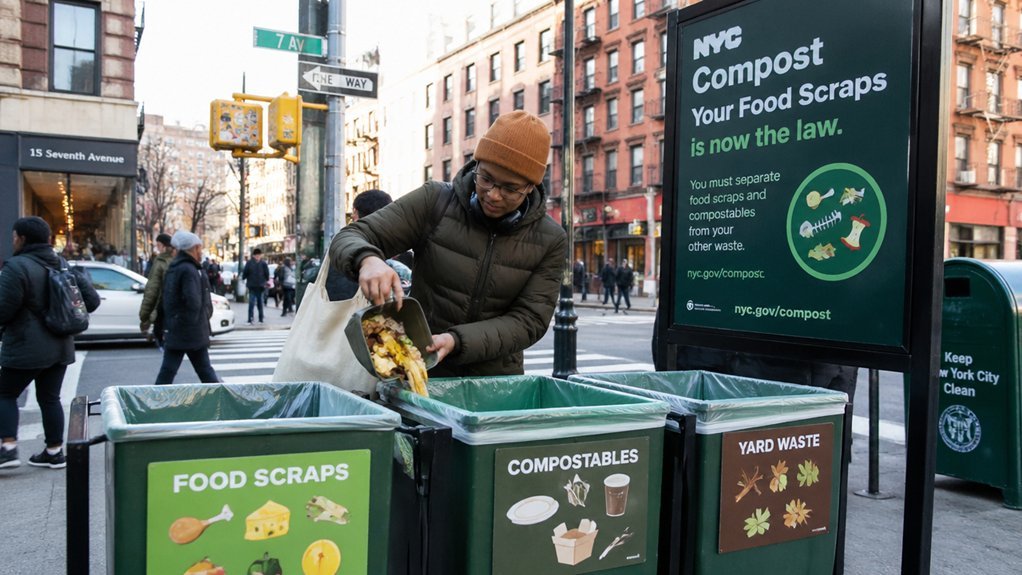
Ever wondered how NYC’s new composting law actually works? You must separate food scraps and other organics into orange “compost” bins, and DSNY will check your building’s compliance. If investigators spot open bags or missing bins, they’ll note noncompliance and issue a warning. After a few warnings, enforcement kicks in: buildings with eight units or less face fines of $25–$100, while those with nine or more units can be hit with $100–$300 penalties. The city encourages good‑faith participation, so even imperfect sorting won’t automatically trigger the highest fines. You can report suspected noncompliance through 311 starting mid‑April, helping DSNY target problem areas and keep the streets cleaner. Regular inspections and clear signage further support residents in meeting the requirements, reinforcing citywide compliance.
Select the Right Bin & Label for Your Building
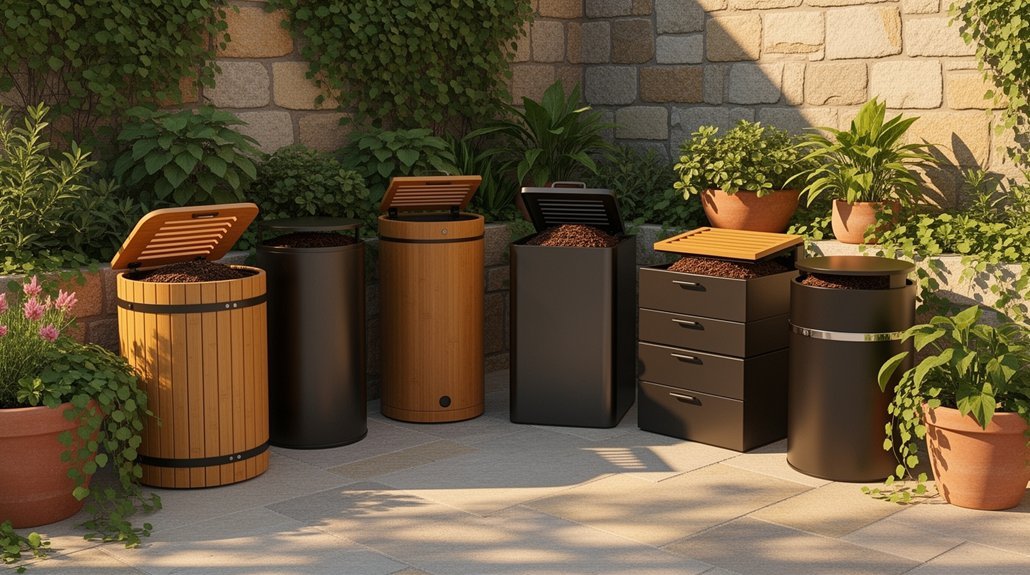
Where do you start when choosing a compost bin for your building? Pick a compost bin that holds 55 gallons or less and has a secure lid, then line it with a clear plastic, paper, or certified compostable bag. In multi‑unit buildings, set up a labeled storage area near the trash chute or kitchen where everyone can see the bin. Use the city’s orange curbside composting bins if you prefer, but you’ll need the app to open them. Keep organics separation simple: place food scraps in the bin, yard waste in a separate paper lawn/leaf bag, and bundle twigs with twine next to the bin. This setup meets the law, avoids penalties, and makes composting easy for all residents. Maximum ventilation design can help accelerate decomposition when using larger-capacity bins.
Separate Food, Yard, and Paper Waste for NYC Composting
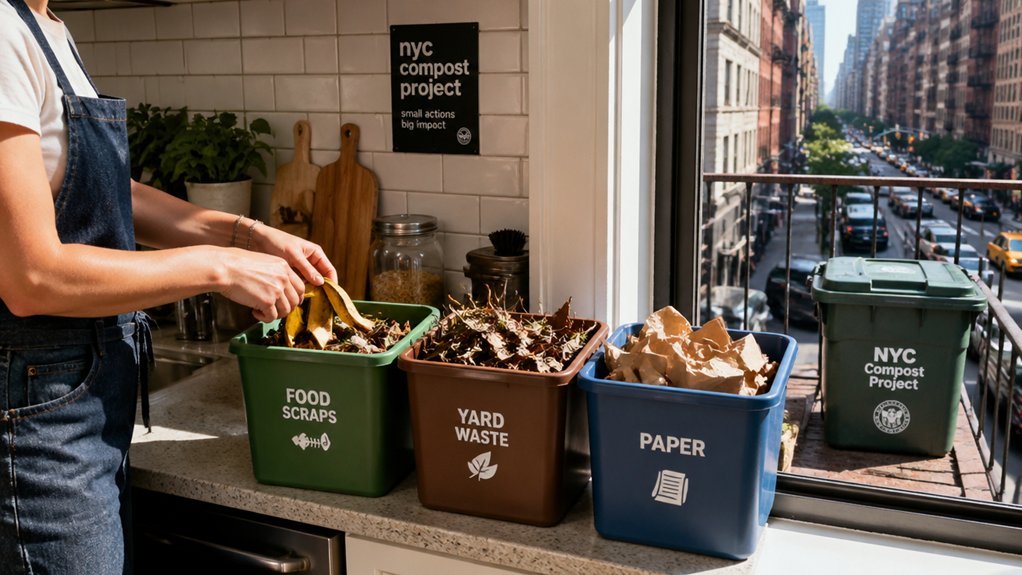
Now that your bin is set up and labeled, the next step is keeping the three streams—food scraps, yard waste, and food‑soiled paper—separate. You’ll need 55‑gallon bins or smaller, each with a clear liner that lets you see the contents and meets NYC composting rules. Toss only separate food scraps into the food bin; avoid meat‑free or dairy‑free items that could attract pests. To ensure efficient aerobic decomposition, consider placing the bins where air can circulate and regularly rotate the contents to prevent anaerobic pockets air circulation. Deposit leaves, grass clippings, and trimmings in the yard waste container, keeping it dry to prevent odor. Reserve a third bin for paper waste like pizza boxes, napkins, and coffee filters, and make sure the liner is clear so staff can verify compliance. Check that lids close securely, and empty each bin before it overfills to stay within city guidelines.
Create an In‑Unit NYC Compost Collection System
Pick a 55‑gallon‑or‑smaller bin with a secure lid and line it with a clear plastic, paper, or certified compostable bag to keep odors contained and cleanup easy. Fill the bin with food scraps, food‑soiled paper, and yard trimmings, but keep plastics, metals, glass, and pet waste out. Then, on recycling day, transfer the contents to the DSNY brown bin or a labeled curbside bin for pickup, and consider adding an official NYC compost label for consistency. For best results, choose a container that offers odor control features such as activated charcoal filters to maintain indoor cleanliness ventilation design and ensure the unit can be cleaned easily with dishwasher‑safe components.
Bin Bin Selection Guidelines
Which bin should you choose for an in‑unit NYC compost system? Pick a compost bin that holds 55 gallons or less, has a secure lid, and can be clearly labeled. Attach a “NYC composting disposal” tag so residents know its purpose. Line the bin with a clear bag—plastic, paper, or certified compostable—to keep scraps contained and visible for collection crews. The lid prevents odors and pests, while the label satisfies DSNY’s requirement for a dedicated storage area in buildings with four‑plus units. Keep the bin in an accessible spot, and use the clear bag for kitchen waste; you’ll stay compliant and make disposal hassle‑free. Additionally, choose a bin with a sturdy handle and durable materials to withstand frequent use odor control and ensure easy cleaning and maintenance over time.
Liner Options Overview
A well‑chosen bin works best when you pair it with the right liner, and NYC lets you use clear plastic, paper, or certified compostable bags to keep kitchen scraps contained and visible for collection crews. You’ll need compost bin liners that meet the city’s standards; regular trash bags won’t cut it for NYC organics or curbside collection. Pick a liner type that suits your routine: clear plastic bags let you see when the bin fills, paper liners are cheap and easy to replace, and certified compostable bags dissolve after disposal, reducing waste. Store the bin in a designated area, label it, and freeze scraps to curb odors before bag‑in‑bin or direct drop‑off. For added protection and smoother handling, choose liners that are compatible with your bin’s size and design, whether you’re using a long‑standing wooden tamper mindset or a modern stainless option for other kitchen tasks clear visual checks.
| Liner Type | Cost | Best Use |
|---|---|---|
| Clear plastic bags | Low | Quick visual checks |
| Paper liners | Very low | Budget‑friendly |
| Certified compostable bags | Medium | Eco‑focused residents |
| Reusable fabric liners | High | Long‑term savings |
| No liner (direct) | None | Minimal waste, frequent emptying |
Schedule NYC Curbside Pickup or Drop‑Off
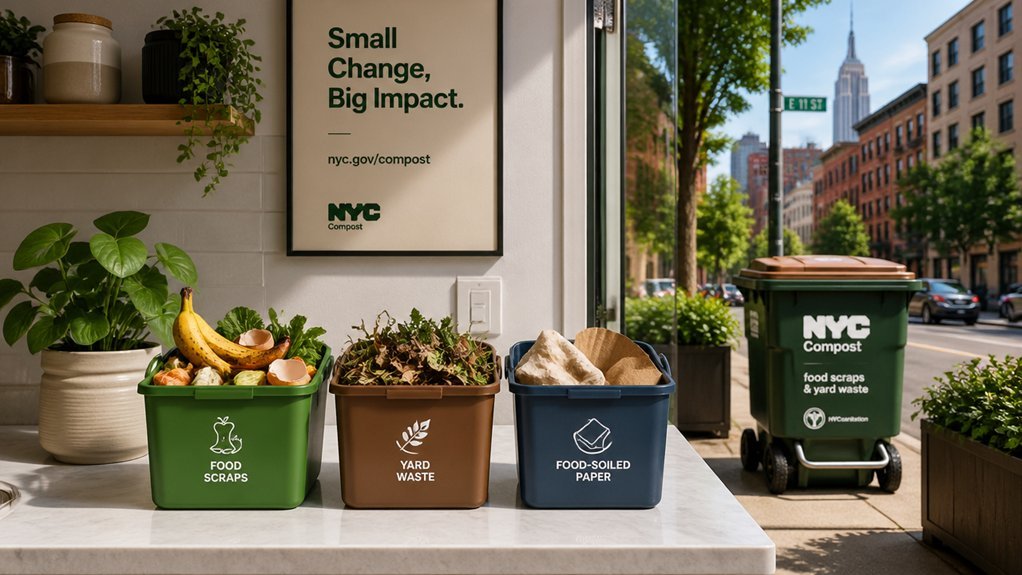
Scheduling NYC curbside compost pickup or drop‑off is straightforward: use the DSNY app to set a weekly collection for your 55‑gallon (or smaller) labeled bin with a secure lid, and choose a nearby Smart Composting Bin location for additional drop‑offs. Open the app, tap “Compost,” and enter your address; the system confirms your curbside pickup schedule and shows the nearest orange Smart Bin for drop‑off. Pack only clear plastic, paper, or certified compostable bags, and keep yard waste in paper lawn/leaf bags or clear bags. Remember that DSNY enforces compliance—fines range from $25 to $300 if you miss a pickup or misuse a labeled bin. Check the app weekly for updates, and report any issues through 311 to avoid penalties.
Handle Building Compliance & Reporting
Wondering how to keep your building compliant with NYC’s compost rules? You’ll need a clear plan for compostables separation, a designated storage area, and a system for reporting and investigations. Start by labeling the compost zone with orange signs, then train staff and tenants to keep bins sealed and empty. Track every warning from DSNY enforcement and log dates, so you can spot patterns before fines hit. When a warning arrives, respond promptly, document corrective actions, and submit proof through the 311 portal. Consistent documentation shows good faith and can reduce the risk of escalating penalties. DSNY enforcement alerts should be monitored regularly to ensure timely responses.
Track Your NYC Compost Impact & Avoid Contamination
By logging each day’s compost volume in a simple spreadsheet or the DSNY app, you can quickly see trends, spot contamination spikes, and prove compliance when inspectors knock.
Track total pounds, note any food scraps that slipped through, and flag days when the designated storage area looks overloaded.
This data fuels compliance tracking, letting you adjust curbside composting practices before DSNY inspections turn punitive.
If you catch compost contamination early, you can separate problem items, avoid fines, and keep the building’s record clean.
Share the spreadsheet with building managers so everyone knows the target weight and the acceptable waste mix.
Consistent monitoring shows you respect the law, reduces warning letters, and protects your community from costly penalties.
Frequently Asked Questions
What Are the 7 Steps in Composting?
You separate organics, choose a 55‑gallon or smaller bin with a secure lid, line it with a bag, add allowed compostable items, bag yard waste, bundle twigs, and schedule pickup next to the bin.
What Are the 7 Steps in Managing Wastes?
You’ll identify waste streams, separate recyclables, compost organics, store them properly, label containers, schedule regular pickups, and track compliance, all while educating occupants and adjusting processes as regulations evolve.
What Are the New Compost Rules in NYC?
You must separate food scraps, food‑soiled paper, and yard waste into labeled, lid‑secured bins 55 gallons or smaller; DSNY can issue warnings and fines—$25‑$100 for ≤8 units, $100‑$300 for ≥9—while 311 reports noncompliance and inspections target missing bins or bag searches.
What Are the 4 Stages of Composting?
You’ll see four stages: a mesophilic phase where sugars break down, a thermophilic phase that heats up and kills pathogens, a cooling/maturation period that forms humus, and a final curing stage that stabilizes the compost.
In Summary
By mastering these seven steps, you’ll keep your building compliant, cut waste, and boost sustainability. Choose the right bin, label it clearly, and separate your scraps. Set up an easy in‑unit system, schedule curbside pickup or drop‑off, and stay on top of reporting. Track your impact, avoid contamination, and watch your community benefit from cleaner streets and a greener future.