Keep your bin thriving by feeding 0.25–0.5 lb of scraps per pound of red wigglers each week and adjusting portions if leftovers linger; aim for 3–5 inches of moist, pre‑wetted bedding and check it with a squeeze test; and regularly harvest excess worms and castings using the dump‑and‑sort method, moving them to a fresh bin or sharing with neighbors. Follow these steps and you’ll discover even more tricks to keep your indoor worm bin balanced.
Set Feeding Frequency and Portion Size for Your Indoor Worm Bin

How often should you feed your indoor worm bin, and how much? Aim for a feeding frequency of about one quarter to one half pound of food scraps per pound of Red Wigglers each week. Start with that portion size, then adjust as you notice how quickly the composting worms consume the material. Use pocket or surface feeding so scraps sit near the worm bin while staying aerated, preventing anaerobic pockets. Keep an eye on monitoring temperature; if the bin stays between 55–77°F, the worms will work faster, so you may need to trim portions. If uneaten bits linger after two to three weeks, pause feeding for up to two weeks to preserve moisture balance, avoid odor, and maintain healthy bedding. Using a ceramic compost crock with odor control filters can help keep your indoor worm bin area fresh and manageable.
Optimize Bedding Depth and Moisture in an Indoor Worm Bin
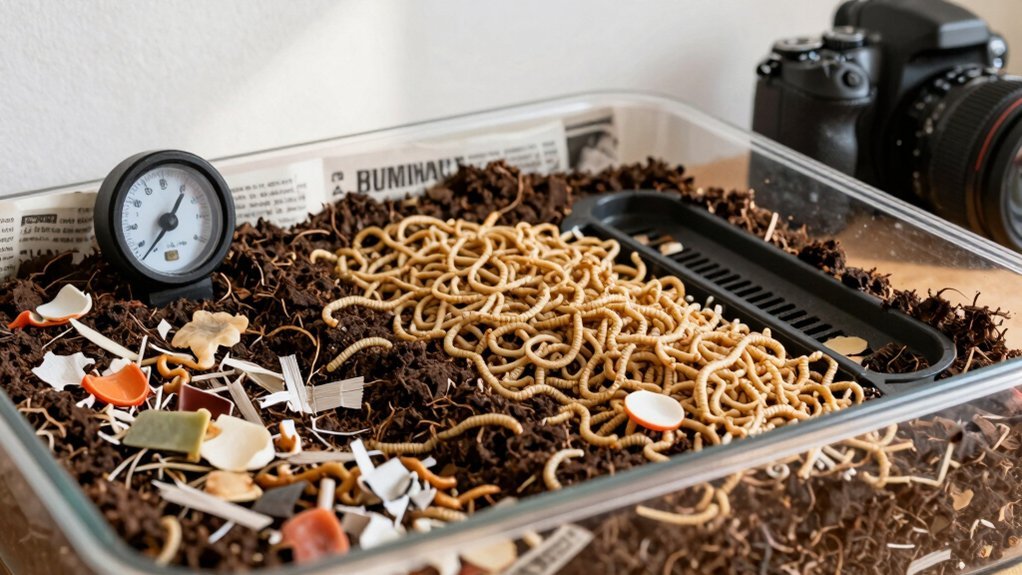
After setting your feeding schedule, turn attention to the bedding. Aim for a bedding depth of 3‑5 inches in your indoor worm bin to give worms room to move while preventing compaction. Use premoistened, absorbent browns—shredded newspaper or cardboard—to create a base that holds wrung‑out sponge moisture. Keep the layer damp, not soggy; a squeeze test should yield only a few drops. If the mix feels dry, spray lightly; if it’s wet, add more absorbent browns to soak up excess liquid. Regularly check moisture balance and adjust promptly, because stable damp bedding lets worms breathe, encourages activity, and stops anaerobic pockets from forming. This routine maintains a healthy environment and supports steady population control. Additionally, choosing tools with easy-to-clean components ensures minimal disturbance when maintaining your worm bin.
Harvest Extra Worms and Castings to Maintain Bin Balance

Wondering how to keep your worm bin thriving while preventing overcrowding? You can harvest worms and vermicompost in a few simple steps that support bin balance. First, spread the bedding on a tarp and form a small pile; place organic scraps nearby to coax worms out. Use the dump‑and‑sort harvest method: create cone‑shaped piles, wait 20 minutes, then brush off the tops so worms migrate inward. Scoop the remaining vermicompost and worm castings into a fresh compost bin, leaving the finished vermicompost behind. This bedding management reduces excess worms and boosts vermicompost yield. If numbers stay high, start a second bin or share excess worms with neighbors—an effective worm population control tactic that maintains a healthy, balanced system. To further maintain bin balance and reduce odors, consider using odor-neutralizing sprays designed to eliminate smells without harming beneficial microorganisms.
Frequently Asked Questions
What Smell Do Worms Hate?
You’ll find that worms hate strong, unfamiliar odors like garlic, onions, and overly acidic citrus—these scents trigger aversion, so avoid adding pungent foods and keep the bin’s smell mild and balanced.
What Are the 5 Mistakes That People Commonly Make When Composting With Worms?
You overfeed, forget to bury scraps, ignore moisture balance, neglect ventilation, and use the wrong worm species or temperature—each mistake fuels odor, pests, mold, and stunted worm growth.
How to Get Rid of Worm Infestation in House?
You’ll eliminate the infestation by sealing food, reducing moisture, cleaning the bin, replacing bedding, and moving worms to a fresh, well‑ventilated container while monitoring for pests daily.
Can Coffee Grounds Go in Worm Compost?
Yes, you can add coffee grounds to your worm compost, but mix them in moderately, keep them dry, and monitor moisture to avoid compaction, odor, or mold while maintaining balanced bedding.
In Summary
By fine‑tuning how often and how much you feed, keeping the bedding just right, and regularly harvesting excess worms and castings, you’ll keep your indoor bin thriving without it getting out of control. These simple steps balance the ecosystem, prevent overpopulation, and ensure a steady supply of nutrient‑rich compost for your plants. Stick to the routine, and your worm bin will stay healthy and productive.