
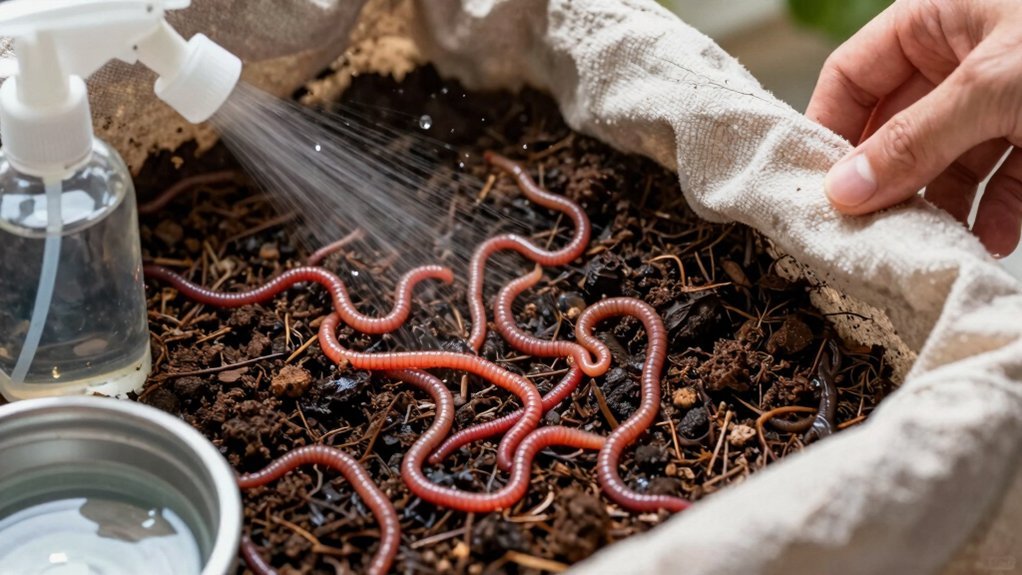
Add dry bedding after each wet feeding—shredded cardboard or coconut coir soaks up excess liquid and keeps the bin damp, not soggy. Instead of pouring water, give a fine mist; the tiny droplets settle evenly and prevent pooling while still hydrating the material. Finally, do the chocolate‑muffin squeeze test: a handful should feel like a wrung‑out sponge, holding shape briefly but not dripping. Master these steps and you’ll discover even more tricks for thriving worm bins.
Add Dry Bedding to Reduce Worm Bin Moisture

When you feed water‑laden foods like watermelon, add a layer of dry bedding right afterward to soak up the excess liquid and keep the bin from getting soggy. The dry bedding—shredded cardboard or coconut coir—absorbs excess moisture and helps balance moisture levels, keeping the environment damp but not soggy. After each feeding with wet waste, sprinkle a thin sheet of bedding to prevent the bin from turning soggy. The material also creates airflow, which is essential for anaerobic prevention.
If you notice worm bin moisture rising, add more bedding instead of pouring water. This simple step maintains proper hydration, supports healthy worm activity, and avoids the buildup of foul odors. Using materials like shredded cardboard also aligns with effective compost management techniques, similar to features in kitchen compost bins designed to control moisture and odor.
Mist Lightly, Not Pour, to Control Worm Bin Moisture
Ever wonder why a gentle spritz works better than dumping water into your worm bin? You should mist lightly with a spray bottle, letting the fine droplets settle on the top layer. This watering practice gives you precise moisture control, avoids pooling, and keeps the bedding like a wrung‑out sponge—just enough to stay damp without becoming soggy.
In a dry/arch climate, misting as method rehydrates gradually, preventing leachate from seeping down too fast. Light misting also spreads moisture from high‑moisture foods evenly, reducing anaerobic pockets. Remember, a few quick sprays keep the environment balanced, while a flood can drown the worms and create excess leachate.
Use this simple misting routine daily for optimal worm bin health. For effective moisture management, consider compost bins with vented lids and filtration to control odors and moisture simultaneously.
Perform the Chocolate‑Muffin Squeeze Test to Check Worm Bin Moisture

After misting lightly to keep the bedding evenly damp, grab a handful of material and give it the chocolate‑muffin squeeze test. You’ll feel for a damp, wrung‑out sponge texture: the ball should hold shape briefly, then crumble with a few drops of liquid. If the squeeze test results show a cohesive ball that barely drips, your worm bin moisture is too low—add dry bedding or a quick spritzing. If it turns into a muddy, overly wet mass, reduce watering and let the bedding dry.
Perform the moisture test across layers, because top and bottom can differ. Regularly repeat the chocolate‑muffin squeeze test after feeding or bedding changes to keep moisture levels balanced and maintain healthy worm bin moisture. Maintaining moisture within the ideal 40–60% range supports optimal decomposition and worm activity.
Frequently Asked Questions
How to Tell if a Worm Bin Is Too Dry?
You’ll know it’s too dry when the squeeze test yields only a few drops, the bedding feels stiff or crackable, dust settles on the surface, and worms retreat deeper, clustering near the moist layers.
Do Worm Bins Like Coffee Grounds?
Yes, you can add coffee grounds, but keep them moderate and mix them with dry bedding. Their porosity helps moisture balance, yet too much compacts the bin and can deter worm feeding.
What Can I Use Instead of a Worm Blanket?
You can replace a worm blanket with thick, unshredded cardboard, a layer of coconut coir, peat moss, or even a breathable fabric cover. Just keep it damp by misting lightly.
What Are the 5 Mistakes That People Commonly Make When Composting With Worms?
You’re overwatering, skipping the squeeze test, feeding without dry bedding, ignoring leachate buildup, and not adjusting moisture seasonally—these five mistakes ruin worm composting.
In Summary
You’ve learned how to keep your worm bin just right: add dry bedding when it gets soggy, mist lightly instead of pouring, and use the chocolate‑muffin squeeze test to gauge moisture. By balancing these steps, you’ll maintain a healthy environment that lets your worms thrive and your compost stay rich. Keep monitoring, adjust as needed, and enjoy the benefits of a perfectly moist worm bin.