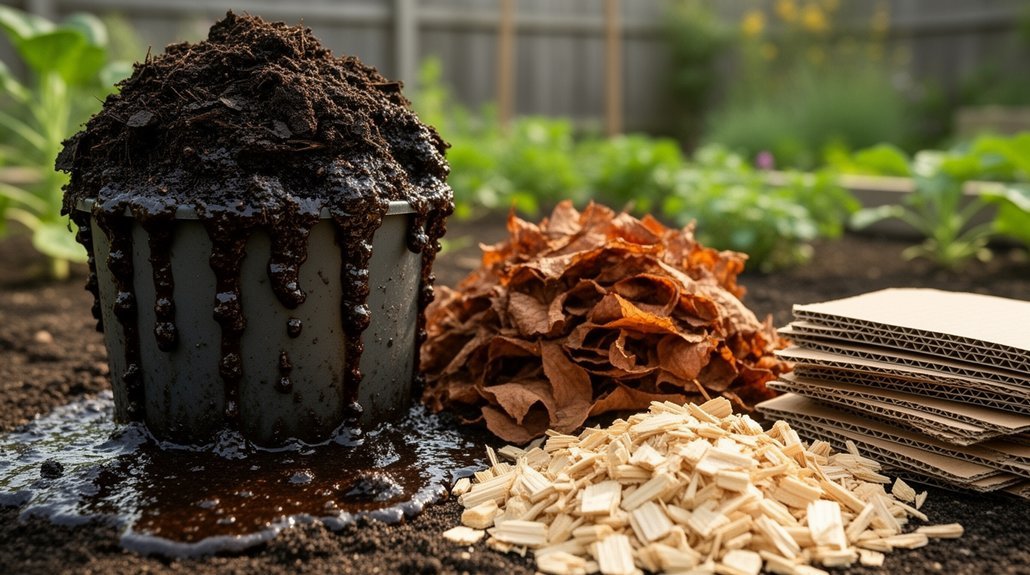
Add dry, carbon‑rich materials like sawdust, wood chips, or coconut coir to soak up excess water, then improve drainage by drilling holes or elevating the bin on pallets so leachate can escape. Cover the pile with a breathable tarp or burlap to keep rain out while allowing airflow, and turn it regularly—every few days when it’s hot, then weekly as it cools—to restore oxygen and prevent condensation. Keep reading for more detailed steps.
How to Absorb Moisture in Wet Compost

Ever wonder why your compost feels like a soggy mess? Add dry, carbon‑rich materials to soak up excess water. Toss a handful of sawdust, but keep it modest so you don’t tip the carbon‑to‑nitrogen balance. Mix in larger amounts of wood chips; they break down slowly and keep moisture in check. Coconut coir is a powerhouse—its absorbency can hold ten times its weight in water.
Next, introduce bulky absorbents. Coarse straw, dry leaves, or shredded cardboard create air pockets that prevent compaction and let water migrate away from saturated zones. For organizing and storing these dry materials, airtight storage containers can keep your absorbent amendments fresh and ready for use. Finally, protect the pile from new rain with a breathable cover or tarp. This blocks fresh moisture while still allowing airflow, letting your added absorbent materials work without becoming waterlogged. Apply a biocover layer of 6–12 inches to armor moisture and shield the pile from sun and wind.
How Often Should You Turn a Soggy Compost Pile?
When should you turn a soggy compost pile? You turn it when temperature drops after a peak or falls below 90–100 °F, because those shifts signal stalled airflow. In a wet, active pile, aim for a tighter schedule than a dry one; excess moisture clogs pores and speeds up odor buildup. Monitor heat and smell, and adjust accordingly.
- Every 3–4 days while the pile stays hot (above 140 °F) to keep microbes breathing.
- Every 7–10 days during the first month if the pile cools quickly or shows slimy patches.
- Weekly thereafter, unless you notice strong ammonia or compacted zones, then shorten the interval.
Frequent turning redistributes damp material, restores oxygen, and prevents the pile from turning cold or smelly. Adjust the rhythm as temperature and odor guide you. Adding coarse browns improves aeration and helps prevent compaction. For indoor composting systems like bokashi fermentation, anaerobic conditions replace turning as the primary method for processing food scraps efficiently.
Add Drainage and a Breathable Cover to Prevent Soggy Compost

Adding drainage and a breathable cover is the quickest way to keep a compost bin from staying soggy. Drill a few small holes in the base, or cut a slit if the bin sits on a hard surface, and elevate it on pallets or coarse wood so leachate can escape. Pair this with a burlap or mesh lid that blocks rain but lets vapor out; avoid airtight covers that trap condensation. Proper airflow from side vents and perforated pipes further reduces moisture buildup. Using perforated PVC pipe helps deliver air directly to the pile’s core, enhancing aeration and drying. Incorporating beneficial microorganisms through accelerators can also improve decomposition efficiency, which helps process excess moisture more effectively.
| Feature | Why it matters |
|---|---|
| Small base holes | Release leachate without losing material |
| Elevated platform | Prevents pooling on impermeable ground |
| Breathable lid | Shields rain while allowing vapor escape |
| Side vents or mesh | Improves oxygen flow, dries excess water |
Frequently Asked Questions
Can I Use Kitchen Scraps if My Compost Is Already Soggy?
No, don’t add kitchen scraps while the bin’s soggy. First mix in dry browns, turn the pile, and restore airflow. Once it’s fluffy and damp—not wet—you can reintroduce small, chopped scraps.
Will Adding Worms Help Dry Out a Wet Compost Pile?
No, adding worms won’t dry the pile. They need moist but not waterlogged conditions, so first add dry browns, turn the compost, and improve aeration; then introduce worms once it’s balanced.
Should I Mix in Fresh Soil to Improve Drainage?
You shouldn’t rely on fresh soil for drainage; it adds weight and compacts. Instead, mix in dry browns, straw, or wood chips, turn the pile, and improve airflow to dry it out.
How Does Compost Temperature Affect Moisture Levels?
You’ll notice that higher temperatures speed evaporation, so the pile dries faster, while cooler temps retain moisture; keep it around 45‑60 % humidity and 135‑150 °F for balanced activity.
Is It Safe to Compost Pet Waste in a Damp Bin?
No, you shouldn’t compost pet waste in a damp bin; the moisture will keep the pile cool, prevent reaching 140 °F, and let pathogens survive, making it unsafe for any use.
In Summary
By keeping your compost dry, turning it regularly, and adding proper drainage with a breathable cover, you’ll turn that soggy mess into a thriving, crumbly mix. These simple steps let oxygen flow, prevent bad smells, and speed up decomposition. Stick to the routine, and your garden will thank you with rich, healthy soil.