
Check the bin’s moisture by squeezing a handful from the middle; it should feel like a wrung‑out sponge, not a crumbling ball. If it’s dry, add a few spoonfuls of water in several spots, then mix in moisture‑rich greens like fruit scraps and absorbent browns such as shredded paper or cardboard. Turn the pile to spread the dampness evenly, and repeat the squeeze test weekly. Keep a lid on and a leak‑proof tray underneath to retain humidity, and you’ll find more tips on maintaining a healthy compost.
Spot a Too‑Dry Compost Bin in Your Apartment

How can you tell if your apartment compost bin is drying out? Look for dusty, crumbly texture and a pale, faded surface. If the material breaks apart easily when you squeeze it, it’s too dry. A handful from the center should feel like a wrung‑out sponge; if it crumbles or feels brittle, add water. Dry patches often appear near edges, lids, or vents, and food scraps stay recognizable longer because decomposition has slowed. You’ll notice a faint or absent earthy smell and reduced heat, while worms may retreat. Quick signs include unchanged kitchen scraps, dominant brown material, lighter weight, and dry pockets revealed when you turn the bin. These clues signal the bin needs moisture. Quality compost starters with diverse microbial consortia can help accelerate breakdown and maintain proper moisture balance in your bin. Add green materials such as fresh kitchen scraps or grass clippings to boost nitrogen and help retain moisture.
Why Moisture Is Critical for Apartment Compost Success
Usually, you’ll notice that a thriving apartment compost hinges on keeping the pile moist. Microorganisms need water as a medium to move, breathe, and eat; without it they slow down, producing dust and unfinished scraps. In a small indoor bin, moisture evaporates quickly, so you must aim for the “wrung‑out sponge” range—about 40‑60 % by weight, ideally near 50 %. Staying within this window keeps aerobic microbes active, controls odors, and prevents fungal dominance. A well-designed bin with 360° ventilation system features will help regulate moisture while maintaining consistent airflow.
- Aim for roughly 50 % moisture, checking by squeezing a handful of compost.
- Add water gradually, mixing after each addition to distribute evenly.
- Monitor for soggy spots; excess water (>65 %) can choke oxygen and create smells.
If moisture rises above 65 %, anaerobic conditions develop, killing aerobic organisms and producing ammonia odor.
Squeeze Test & Easy Moisture Checks for Apartment Compost

Grab a handful from the middle of your bin, squeeze it for five seconds, and see if it forms a damp ball or crumbles into dry pieces. Do this check every time you turn the compost, or at least once a week, to catch moisture swings early. If the sample feels like a wrung‑out sponge, you’re in the sweet spot; otherwise, add a little water and mix it in. Maintaining optimal moisture is crucial for microbial activity. Many large-capacity bins with multiple aeration vents can dry out faster due to increased air circulation, so renter-friendly models may require more frequent moisture monitoring.
Queeze Test Method
Ever wondered if a simple hand‑squeeze can tell you whether your apartment compost is too dry, just right, or soggy? Grab a handful of material, squeeze firmly, and watch how it reacts. If it forms a loose ball that crumbles, you’re dry; if it holds shape without dripping, you’re in the 50‑60 % sweet spot; if water drips or the ball stays soggy, you’ve over‑moistened.
- Dry: crumbly, falls apart, needs water or wetter greens.
- Ideal: damp, feels like a wrung‑out sponge, holds together.
- Wet: slick, drips, forms a muddy clump, needs more dry browns and airflow.
Use this tactile test whenever you add scraps, and adjust moisture before the pile becomes anaerobic or smelly. For precise monitoring beyond the squeeze test, consider using a compost thermometer to track whether your pile is maintaining the ideal 130-150F temperature range needed for optimal decomposition.
Moisture Check Frequency
After you’ve mastered the squeeze test, you’ll want to know how often to repeat it and which quick visual cues can catch dryness before it stalls decomposition.
In a small apartment bin, aim for a weekly moisture check; if your space is warm, dry, or well‑ventilated, bump it up to every three days.
In cooler months or a sealed container, you can stretch to bi‑weekly. Watch for pale, dusty clumps, brittle textures, or food scraps that sit on top without blending.
During daily kitchen cleanup, run a quick visual‑and‑touch scan: feel for uneven pockets, test if new scraps absorb moisture, and note how quickly the surface dries after watering.
Adjust frequency based on airflow, bin size, and high‑carbon inputs to keep the compost at a damp, wrung‑out‑sponge consistency. For kitchen composters using charcoal filters, ensure the lid remains properly sealed to maintain optimal moisture levels while preventing odor escape.
Microbial activity thrives when moisture stays near 50%, so regular checks prevent the compost from drying out too far.
Watering Indoor Bins Without Mess
You can keep your bin tidy by spoon‑feeding water directly onto the absorbent layers, which lets you control the amount without splashing.
Pair this with a leak‑proof tray beneath the bin to catch any excess liquid that drips down.
Together they give you precise moisture while keeping your kitchen mess‑free. Chlorine‑free water helps preserve the beneficial bacteria. For additional odor control and to maintain a fresh-smelling bin, consider that activated charcoal filters work best when the compost maintains proper moisture levels.
Spoon‑Fed Watering
Wondering how to keep your indoor compost bin moist without turning it into a soggy mess? Spoon‑fed watering lets you add just enough water to hit that “wrung‑out sponge” level. Grab a tablespoon or small measuring cup, sprinkle a few drops over several spots, then gently fluff the material so the moisture spreads. After each sip, wait a minute for absorption before checking the feel. If the mix feels dry, repeat the process until it feels damp—not dripping. This controlled dosing prevents pooling, keeps odors down, and lets microbes stay active. For best results, choose a bin with removable inner buckets to easily mix and distribute moisture throughout the composting material.
- Use a spoon or tiny cup for precise dosing.
- Sprinkle water in multiple spots, not one big pour.
- Mix or fluff after each addition to distribute moisture evenly.
Activated charcoal filter in the lid helps trap odors.
Leak‑Proof Tray System
A sturdy tray or saucer placed under your indoor compost bin catches any overflow the you water, keeping the countertop clean and preventing messes. Choose a rigid dish—terra‑cotta planter dishes work especially well under clay compost pots—so excess liquid stays contained until you can drain or absorb it. If your bin includes a drain tap, position a catch container beneath the spigot to avoid drips while you empty the bin.
Tight lids and removable charcoal filters keep odors low, but they also help you control moisture by limiting evaporation. Opt for a smooth‑walled, stainless‑steel or leak‑proof clay bin; its one‑piece construction prevents seepage onto the tray. For organizing multiple bins or sorting materials by decomposition stage, consider using multi-compartment sorters to keep your composting workflow systematic. Empty the tray regularly, especially in warm kitchens, to stop stagnant water, odor, and spoilage. Use a Joybos wall‑mounted trash can for easy access and a clean, organized countertop.
Green Materials to Boost Moisture in Your Apartment Compost

Ever wondered how a handful of fresh green scraps can instantly revive a bone‑dry apartment compost? You can boost moisture and jump‑start microbes by adding water‑rich greens in thin, mixed layers. Fresh fruit scraps, vegetable trimmings, and soft produce like cucumber peels dump liquid nitrogen straight into the pile, while coffee grounds or used tea bags contribute both moisture and scent. Pair greens with gentle aeration and turn the bin to spread wetness evenly, avoiding anaerobic pockets. Remember to chop large pieces so they release water quickly, and keep browns dominant to maintain balance. For organizing your composting materials and supplies, consider using clear storage containers to keep everything accessible and visible. Adding a small amount of moisture‑rich greens can significantly accelerate the composting process.
Fresh greens revive dry compost, adding moisture, microbes, and scent when mixed, chopped, and aerated.
- Fruit and veggie peels (melon, cucumber)
- Coffee grounds or tea leaves
- Fresh herb trimmings or houseplant cuttings
Moisture‑Retaining Browns (Paper, Cardboard, Straw) for Apartment Compost
How can you keep your apartment compost from drying out while still providing the carbon it needs? Use shredded, uncoated paper as a sponge‑like brown. It soaks excess water, balances wet and dry spots, and adds carbon for microbes. Tear cardboard into small pieces—plain, non‑glossy, and free of tape or ink—then mix it in. Cardboard holds liquid from scraps, adds structure, and prevents anaerobic pockets that cause odors. Sprinkle clean, untreated straw throughout the pile; its dry fibers create a sponge layer that releases water gradually and keeps the mix loose. Layer or stir these browns evenly, avoiding clumps, and balance them with enough greens. For small indoor bins, you may also consider lining your compost container with compostable bags to manage liquid runoff and contain odors. This approach stabilizes moisture, improves airflow, and fuels healthy decomposition in a small indoor bin. Adding brown matter helps prevent slimy, stagnant piles.
Turn & Aerate to Spread Moisture in Apartment Compost
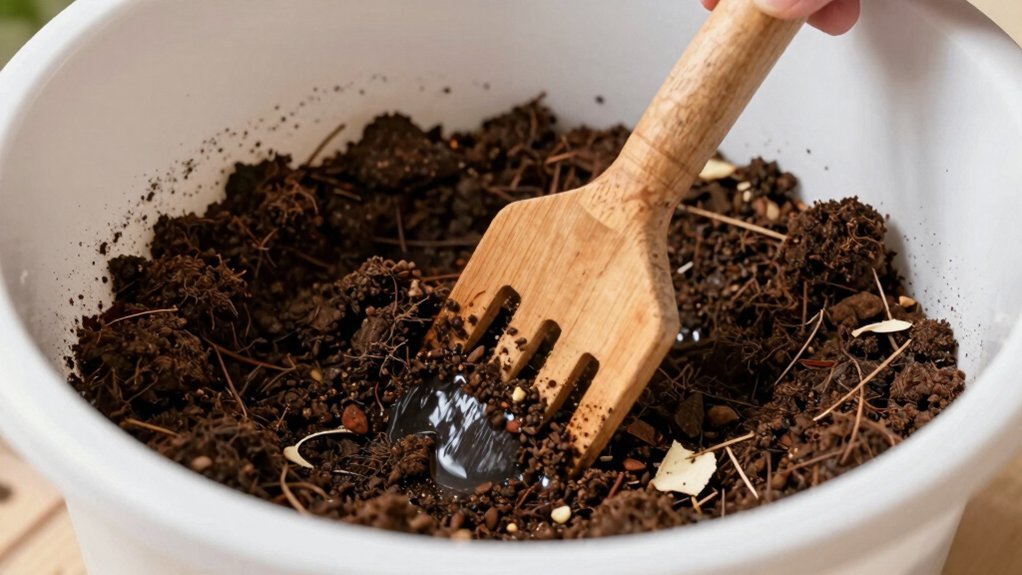
Your compost’s moisture balance hinges on regular turning and aeration, which shuffle wet and dry zones and restore oxygen flow. In a cramped apartment bin, a light fold‑and‑turn spreads moisture without overheating or stinking. Use a garden fork or sturdy stick to poke a few deep holes, letting water travel downward and air rise. After watering, turn the pile once or twice to mix the damp core with the drier outer layers, achieving a fluffy, sponge‑like texture. Keep an eye on the smell—earthy indicates success, sour means you need more airflow.
Turn, poke, and aerate regularly to keep compost moist, fluffy, and odor‑free.
- Poke vertical shafts with a fork or aerator.
- Turn the whole bin gently after each mist.
- Repeat weekly to maintain even hydration.
Aerobic bacteria need oxygen to break down material efficiently.
Routine, Storage, and Seasonal Tips to Keep Your Apartment Compost Hydrated
After you’ve turned and aerated the bin, keep the moisture steady by checking it at least once a week and rewetting when it feels like a wrung‑out sponge. Aim for 40‑60 % moisture; in hot, dry months you’ll likely need 50 %+ and a daily 1 % loss. Water slowly, preferably with a drip or a morning/evening pour, and reuse rinse water from veggies. Cover the bin with a lid or a layer of shredded paper to lock in humidity, and shade it near a window or balcony. Switch to less frequent watering in cooler, humid seasons, but still monitor for mold. Apply a thick biocover layer of wood chips or shredded paper to further protect moisture from evaporation.
| Time of Day | Method | Why it Works |
|---|---|---|
| Morning | Slow drip | Reduces evaporation |
| Evening | Rinse‑water pour | Utilizes waste water |
| Night | No watering | Allows microbes to rest |
Frequently Asked Questions
How Often Should I Check Moisture in a Small Indoor Bin?
You should check the moisture every few days, adjusting to daily in hot or dry conditions; the hand‑squeeze test lets you spot dryness quickly, so you can water before decomposition slows.
Can I Use a Spray Bottle Instead of a Watering Can?
Yes, you can use a spray bottle for a small indoor bin, but spray it lightly, mist dry spots, then mix the material. For larger or very dry bins, switch to a watering can.
What Temperature Range Is Ideal for Indoor Compost Moisture?
You should keep indoor compost between roughly 130°F and 150°F (55‑65°C). That range promotes active microbes while avoiding overheating, and it works best when moisture stays around 45‑60 %.
Do Essential Herbs Affect Compost Moisture Balance?
Yes, essential herbs can tip the moisture balance— their oils and woody stems absorb water and slow microbial activity, so you’ll need to add extra wet greens or water to keep the pile damp.
Is a Plastic Liner Helpful for Retaining Moisture?
Yes, a plastic liner can help retain moisture, but use it as a partial cover. It slows evaporation while still allowing airflow, preventing anaerobic smells and keeping your compost active.
In Summary
Now that you know why moisture matters, you can keep your apartment compost thriving. Just check the squeeze test, add a splash of water or wet greens when needed, and balance with dry browns. Turn it regularly, store it out of direct sun, and adjust for season. With these quick habits, your compost will stay moist, odor‑free, and ready to turn kitchen scraps into rich soil for your indoor garden.