
Keep your compost at 40‑60 % moisture so it feels like a wrung‑out sponge, not a dusty clump. Turn the pile every few days to break ant tunnels and spread heat. Seal the bin, raise it on a stand, and surround the base with coarse gravel. Balance greens and browns to a 30:1 C:N ratio, adding browns if it gets soggy. Remove sugary or oily scraps and wipe down the bin. Sprinkle diatomaceous earth, cinnamon, or peppermint around the perimeter as a natural barrier. If you need a stronger fix, ant bait can be used when the infestation gets serious.
Keep Compost Moisture Between 40‑60 % to Deter Ants
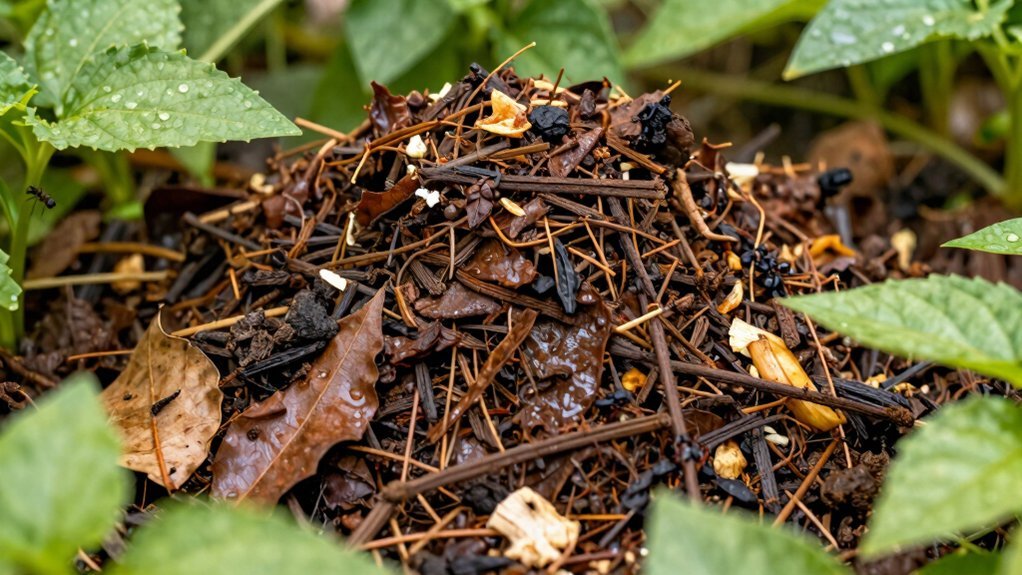
Wondering why ants swarm your compost? You’re probably dealing with a dry heap. Ants love dry, loose material because it lets them tunnel easily and stay stable. Keep the moisture in the 40‑60 % range and you’ll make the environment hostile to them. A properly damp pile feels like a wrung‑out sponge; it clumps lightly and doesn’t crumble. If it’s dusty or falls apart, add water gradually—don’t flood it. Sprinkle green scraps, grass clippings, or kitchen waste to boost moisture naturally. Let rain soak the bin if it’s outdoors, but monitor to avoid sogginess. Balanced moisture fuels microbes, speeds decomposition, and reduces ant attraction while keeping the compost active and odor‑free. For apartment dwellers, maintaining proper moisture levels in compact BSF composting systems prevents both ant invasion and odor issues. Ants also help with aeration by tunneling through the pile, which improves airflow and composting efficiency.
Turn the Compost Regularly to Disrupt Ant Nests
Turning your compost regularly is one of the most effective, chemical‑free ways to keep ant colonies from establishing permanent nests. Ants need stable tunnels and chambers; each flip breaks those structures, forces workers to relocate, and exposes brood to predators. Aim to turn the pile every few days when you see ant activity, using a pitchfork to lift material from the bottom and spread it out before restacking. This disrupts foraging trails and prevents cool zones where ants thrive. Consistent timing works better than a single disturbance, and it also aerates the compost, speeding decomposition. For larger compost bins, aerator tools can help you reach deeper layers and thoroughly mix materials to keep ant populations low. While turning alone won’t erase a large colony, it makes the habitat unsuitable for long‑term nesting and keeps ant numbers low. Ant activity can also help move minerals like phosphorus and potassium, enriching the compost.
Seal the Bin and Add a Gravel or Raised‑Stand Barrier
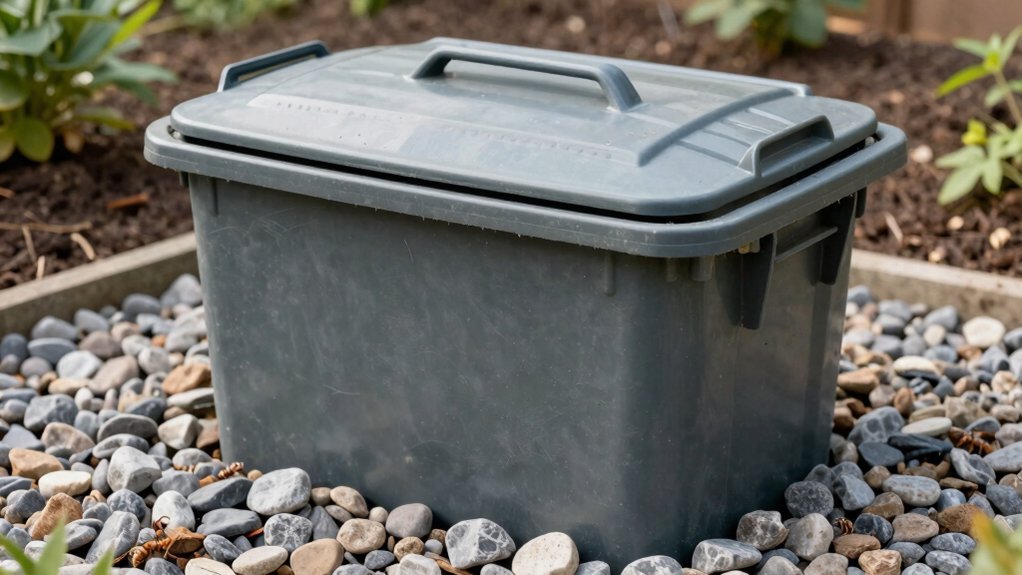
How can you keep ants out of your compost without chemicals? Start by sealing the bin with a tight‑fitting lid; this blocks the most common entry points and keeps moisture steady, making the pile less inviting. Next, elevate the container on a stand or legs—ant trails must now climb a physical barrier, which is harder for them than crawling directly from the soil. Add a ring of coarse, dry gravel around the base; the rough texture deters tunneling and defines a clean perimeter. Keep the area around the bin tidy and dry, wiping up spills and removing debris that could lure foragers. Fire ants are less attracted to compost that is regularly turned and kept hotter, as higher temperatures discourage their nesting. For additional pest management in your composting system, consider using wooden food and sauerkraut tamper kitchen masher tools to help turn and aerate your pile more efficiently. Combining a sealed lid, raised stand, and gravel barrier gives you a robust, non‑chemical defense against ant invasions.
Balance Greens and Browns for a Healthy C:N Ratio
Why does a balanced C:N ratio matter for your compost? It speeds aerobic breakdown, cuts odors, and keeps the pile dry enough to deter ants. Aim for a 30:1 start, staying within 20:1‑40:1, and let the ratio fall toward 20:1 as carbon releases CO₂. Use roughly three parts brown material—dry leaves, straw, shredded paper, cardboard—to one part green—food scraps, fresh grass, manure. This 3:1 volume rule fits the 2:1‑4:1 range most home composters recommend. If the pile smells sour or turns slimy, add more browns and turn it; if it’s dry and sluggish, toss in greens and a splash of water. A well‑balanced mix stays warm, aerated, and less inviting to ant colonies. For kitchen scraps, consider using a countertop compost bin to contain and manage your greens before adding them to the main pile. Practical volume ratios are easier for home composters than strict chemical C:N calculations.
Eliminate Sugary or Oily Scraps and Keep the Area Clean
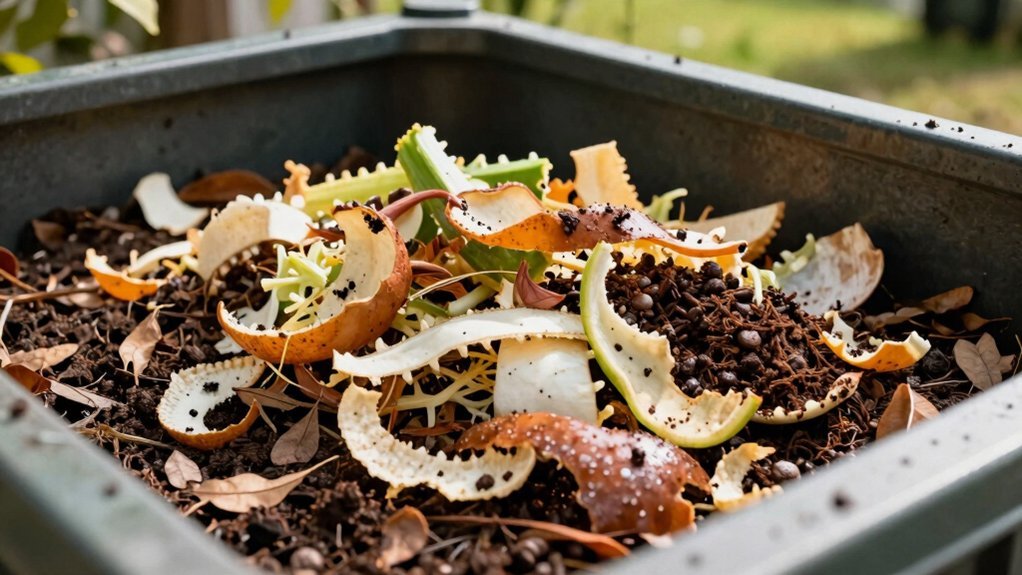
You’ll keep ants at bay by covering any oily scraps before they hit the pile and wiping down the bin’s edges after each use. Remove sugary residues and rinse containers so no sweet scent trails linger. A clean, crumb‑free area leaves the compost unappealing to foraging ants. Ants are drawn to food moisture in compost, so keeping the bin dry helps deter them. For additional protection, consider using a bin with an airtight lid to create a physical barrier against ant intrusion.
Cover Food Oily Scraps
Ever notice ants swarming the compost after a sugary spill? When you add oily scraps, the same problem shows up: the scent draws ants and other pests. First, keep grease, bacon fat, and cooking oil out of the pile. If you must discard oil, wipe the pan with a paper towel, then toss the towel in the trash rather than compost it.
For the few plant‑based oils you can use, sprinkle them thinly over the center of the pile and immediately cover them with a generous layer of dry carbon material—dry leaves, shredded cardboard, or newspaper. This dry cover masks odors, blocks ant pathways, and balances moisture. By burying oily waste deep and sealing it with browns, you deny ants easy access and keep your compost pest‑free. Shade cloth enhances airflow, further discouraging ant activity. Adding red wiggler worms to your compost bin accelerates decomposition while naturally suppressing pest populations through competition and biological activity.
Keep Compost Area Clean
How can you keep ants from turning your compost into a buffet? Eliminate sugary or oily scraps, then keep the whole area spotless. Wipe lids, rims, and tools after each use; greasy residue attracts foraging ants. Bury sweet fruit pieces inside the pile, never leave them exposed on the surface. Sweep or rinse the ground around the bin after you add scraps, removing any stray bits that could become a feeding trail. Store plates and leftovers in a sealed container before transferring them to the compost, preventing drips on the bin walls. For indoor kitchen composting, ensure your bin has smooth interior surfaces to prevent food debris from accumulating in crevices where ants might nest.
- Wipe lids and tools after each use
- Bury sugary fruit inside the pile
- Sweep or rinse the surrounding ground regularly
- Store leftovers in sealed containers before transfer
- Clean grease and residue from bin walls promptly
Ants are attracted to sweet foods in compost, so minimizing these sources helps keep them away.
Sprinkle Natural Repellents (Di‑earth, Cinnamon, Peppermint) Around the Perimeter
When you create a continuous band of food‑grade diatomaceous earth, ground cinnamon, or peppermint oil around the compost bin’s edge, you form a scent‑ and texture‑based barrier that disrupts ant trails and damages their exoskeletons, keeping them from crossing the perimeter. Apply a thin, unbroken line and reapply after rain or when the powder gets damp. Use a mask while dusting diatomaceous earth, and sprinkle cinnamon where ants are most active. Spray peppermint oil diluted with water every few days; the scent fades quickly outdoors. Ground cinnamon’s strong scent can further deter ants by interfering with their pheromone navigation. For indoor composting systems like bokashi bins with tight-sealing lids, maintaining proper odor control reduces the attraction of ants to your compost setup in the first place.
| Repellent | Application | Re‑apply |
|---|---|---|
| Diatomaceous earth | Dust around edge, keep dry | After rain |
| Ground cinnamon | Sprinkle on border | Every 1‑2 weeks |
| Peppermint oil | Spray diluted solution | Every 3‑5 days |
| Peppermint plants | Plant near bin | Seasonal trimming |
Use Ant Bait Only When Infestations Become Severe
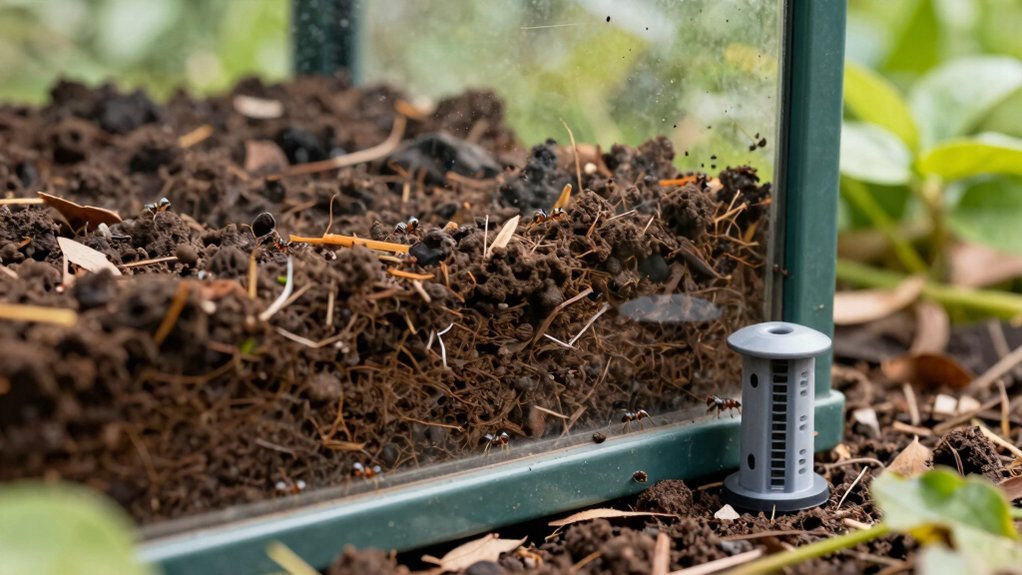
If the scent‑based barriers from diatomaceous earth, cinnamon, or peppermint aren’t keeping ants away, it’s time to contemplate bait, but only after the infestation has become severe. You’ll reserve bait for heavy activity that non‑chemical steps can’t curb, placing stations around the compost perimeter where trails converge. Bait attracts foragers, which carry the toxin back to the nest, tackling the colony at its source rather than just killing visible workers. Keep bait outside the pile to protect beneficial microbes, and use only products labeled for outdoor use, following dosage and timing instructions. For optimal results, select containers with soft-grip handles to easily transport bait stations during weekly monitoring rounds. Regularly check and replace stations, and avoid repellents near them.
- Position bait next to active ant trails on the compost edge.
- Choose fast‑acting, labeled baits (e.g., hydramethylnon, spinosad).
- Replace bait when it’s depleted; monitor weekly.
- Keep bait stations at least 12 inches away from the pile interior.
- Don’t spray repellents near bait, as they block ant access.
Ants prefer drier conditions than worms, so maintaining a moisture‑balanced habitat can naturally deter them.
Frequently Asked Questions
Can I Use a Compost Thermometer to Check Moisture Levels?
No, you can’t rely on a compost thermometer for moisture. It measures heat, not water content, so you’ll need a squeeze test, moisture meter, or oven‑dry method to gauge dampness accurately.
How Often Should I Turn My Compost in Winter?
You should turn your compost every 7‑14 days if it stays thawed and active; during brief thaws, turn more often, but skip turning when the pile freezes solid to preserve heat.
Will a Metal Bin Attract Fewer Ants Than a Plastic One?
You’ll likely see fewer ants with a metal bin because it stays rigid, keeps a tighter lid, and resists warping, so you’ll have fewer entry points and less odor leakage than many plastic options.
Can Coffee Grounds Replace Other Green Materials?
You can’t replace all greens with coffee grounds, but you can substitute part of them. Mix grounds with other nitrogen sources and keep browns balanced, or you’ll get clumps, moisture issues, and slower composting.
Is It Safe to Use Homemade Ant Bait Near Edible Plants?
You shouldn’t use homemade ant bait near edible plants unless you’ve verified the ingredient’s safety, kept it away from foliage, and assured pets or children can’t reach it.
In Summary
By keeping your compost moist, turning it often, and sealing the bin, you’ll make it an unwelcoming home for ants. Balance greens and browns, ditch sugary or oily scraps, and add a gravel or raised‑stand barrier. Natural repellents like di‑earth, cinnamon, or peppermint around the perimeter keep ants at bay, and you only need ant bait if the problem gets severe. Follow these steps, and your compost will stay ant‑free and thriving.