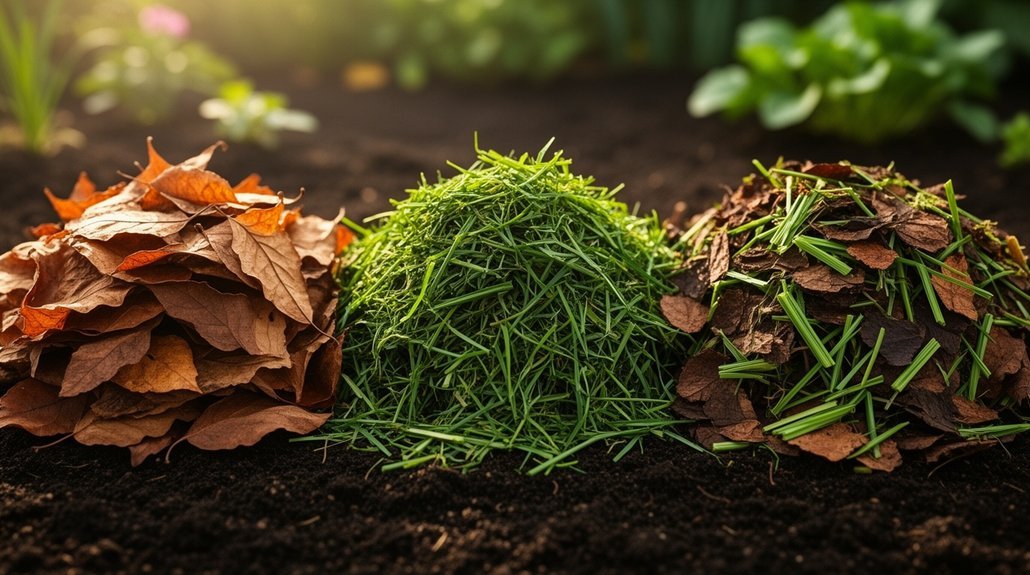
You can use three easy brown‑to‑green ratios to keep your compost healthy. For small bins, a 2:1 mix (two parts dry, carbon‑rich browns to one part nitrogen‑rich greens) balances moisture and airflow. If you want the pile to heat up quickly, aim for 3:1, which fuels microbes and reduces odors. For very wet scraps, a 4:1 ratio soaks up excess liquid and keeps things aerated. Adjust as needed, and you’ll discover more tips ahead.
2:1 Compost Browns‑to‑Greens Ratio – Simple Mix for Small Bins
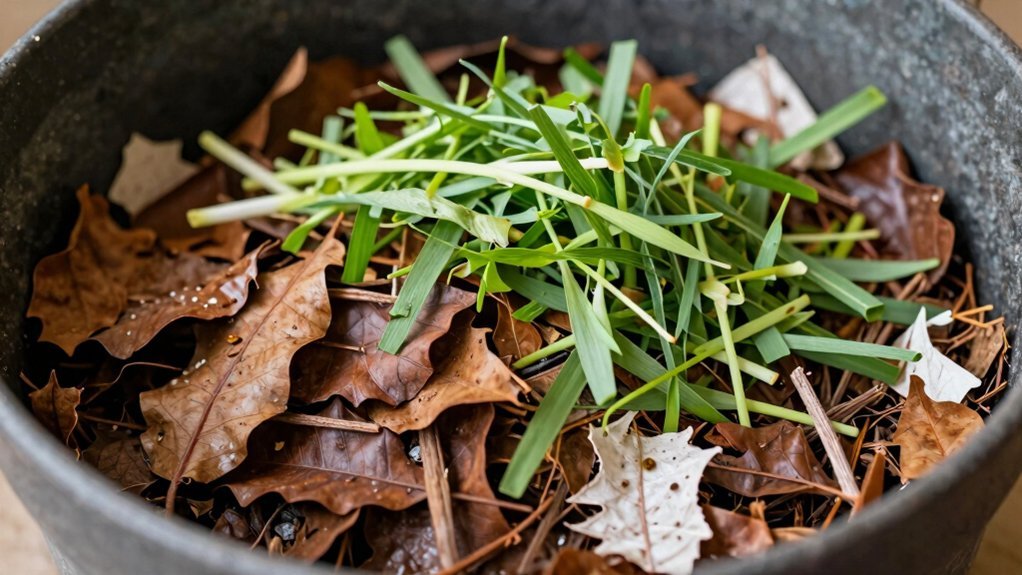
How do you keep a tiny compost bin from turning into a soggy mess? Aim for a 2:1 brown‑to‑green mix—two parts dry, carbon‑rich material for every part nitrogen‑rich food waste. Use shredded paper, cardboard, dry leaves, straw, or wood chips as browns, and add fruit scraps, coffee grounds, or fresh plant trimmings as greens. Chop browns into small pieces; they absorb moisture, improve airflow, and prevent slimy clumps. Toss the two components together before they hit the bin so they blend evenly. If the pile feels wet, sprinkle extra browns; if it’s dry, add a handful of greens. This simple ratio speeds breakdown, curbs odors, and keeps small bins breathable without complex calculations. Balanced moisture is essential for preventing foul odors and maintaining active decomposition. For small kitchen compost bins, compostable trash bags can line your container to simplify cleanup and transport of finished compost.
3:1 Compost Browns‑to‑Greens Ratio – Goldilocks Balance for Heat & Odor
Ever wondered why a 3:1 brown‑to‑green mix feels just right? You’re hitting the “Goldilocks” zone where carbon and nitrogen meet at roughly a 25‑30:1 weight ratio, even though volume and differ. This balance fuels microbes, so the pile heats up within days instead of staying cool. It also keeps airflow and moisture in check, preventing ammonia smells from excess greens and methane‑rich, low‑oxygen conditions from too many browns.
When you layer or mix chopped browns with moist greens, the browns absorb liquid and create structure, keeping the compost like a wrung‑out sponge. If it cools or smells, simply add more browns. Many subscription services include odor-neutralizing materials such as carbon-rich pellets and activated charcoal to help maintain fresh conditions throughout your composting process. Adjusting this ratio lets you enjoy fast, odor‑free compost without precise measurements. Adding a layer of coffee grounds can boost nitrogen and speed up the process.
4:1 Compost Browns‑to‑Greens Ratio – Moisture‑Master Mix for Wet Scraps
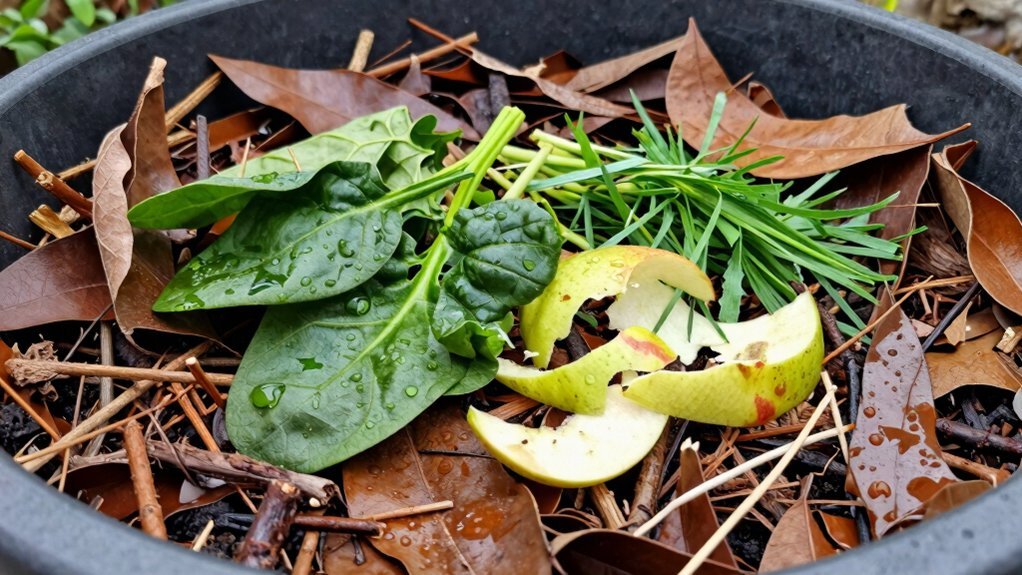
If the 3:1 “Goldilocks” mix keeps your compost warm and odor‑free, bumping the brown side to a 4:1 ratio turns it into a moisture‑master for wet kitchen scraps. A 4:1 blend—four parts carbon‑rich browns to one part nitrogen‑rich greens—soaks up excess liquid from fruit peels, veggie trimmings, and cooked plant waste. Use shredded cardboard, dry leaves, straw, or wood chips, and mix them thoroughly with your scraps so the dry material contacts every moist bite. The extra browns create pore space, keep the pile loose, and prevent anaerobic slime. You’ll notice a moist but not soggy texture, earthy smells, steady heat, and minimal flies. Consider using compostable bags to extend container life and simplify your composting workflow. If the pile gets too dry, add a few greens; if it gets wet or smelly, toss in more browns. Adding more browns helps maintain the ideal 4:1 ratio when wet inputs increase.
Frequently Asked Questions
How Do I Calculate Brown‑Green Ratios by Weight Instead of Volume?
You calculate it by measuring each material’s dry weight, estimating its carbon and nitrogen fractions, then using the weighted‑average formula: (brown C + green C) ÷ (brown N + green N) to hit about 30:1 C:N.
Can I Use Coffee Grounds as a Green or a Brown Material?
You can treat coffee grounds as a green material. They’re nitrogen‑rich, so mix them with browns—about ten to twenty percent of the pile—to keep airflow, heat, and decomposition balanced.
What’s the Best Way to Monitor Moisture Levels in a Small Bin?
You should squeeze a handful of compost—if it holds shape without dripping, moisture’s right. Use a probe meter in several spots, especially the core, and repeat after watering, turning, or rain.
How Often Should I Turn the Pile at Each Ratio?
Turn a 2:1‑4:1 pile every 3‑4 days; if it’s hot and active, turn twice a week; when too green or wet, turn more often, adding browns; if too brown, turn weekly or every other week.
Do Different Climates Affect the Optimal Brown‑Green Ratio?
Yes, climate shifts the ideal brown‑green balance. In humid areas you’ll add extra dry browns to soak moisture, while in arid zones you’ll boost greens and water. Adjust by watching odor, heat, and texture.
In Summary
You now know which ratio fits your bin: 2:1 for quick, small‑scale batches; 3:1 for steady heat and minimal odor; and 4:1 when you’re handling soggy kitchen scraps. Pick the mix that matches your waste stream, tweak it as needed, and watch your compost turn into rich, dark soil. Happy composting!