Your compost bin stinks when anaerobic pockets form because excess moisture, too many nitrogen‑rich greens, or poor airflow block oxygen, producing foul gases like hydrogen sulfide and ammonia. Fix it by turning the pile to re‑introduce air, adding dry carbon material (browns) to soak up liquid, and keeping the moisture at a wrung‑out‑sponge level. Aim for a 2‑3 : 1 brown‑to‑green ratio, use vented bins, and add bulking agents to create air pockets. If you keep these steps in mind, the next section shows more detailed solutions.
Our Recommended Products on Amazon

As an Amazon Associate we earn from qualifying purchases.
Why Your Compost Bin Stinks: Anaerobic Decomposition Explained
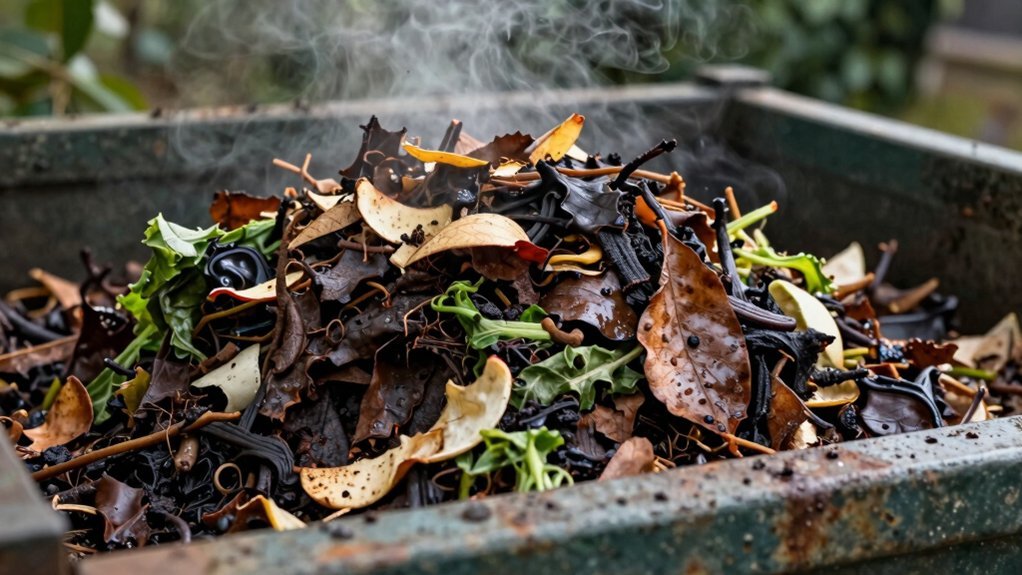
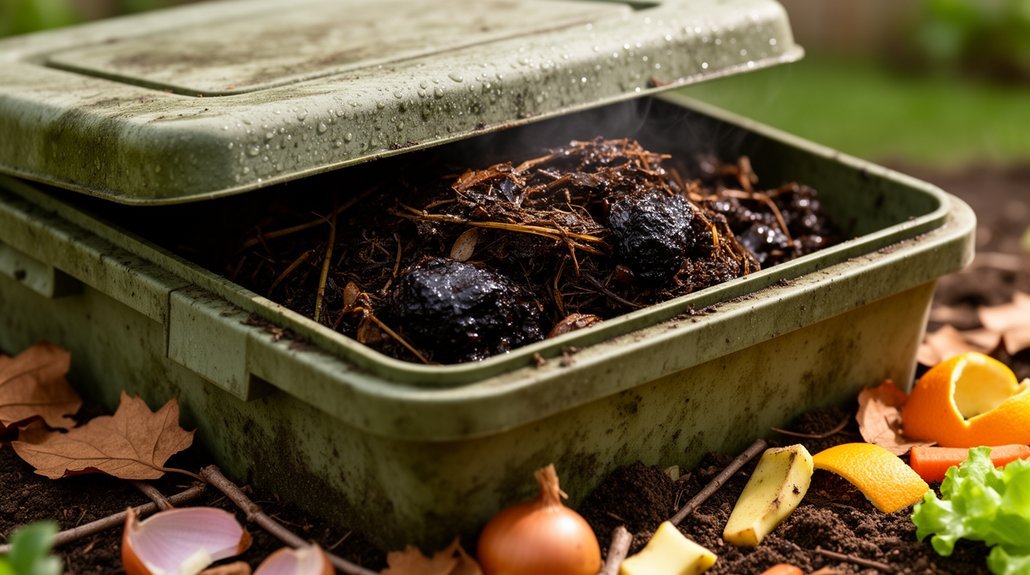
Why does your compost bin stink? When oxygen can’t reach the material, the process flips from aerobic to anaerobic. In those oxygen‑free zones—often deep inside compacted piles, sealed containers, or poorly vented bins—anaerobic microbes take over and pump out foul gases like hydrogen sulfide, methane, and other volatiles. You’ll notice sour, vinegar‑like, or rotten‑egg smells instead of the clean, earthy scent of healthy compost. Slimy textures, surface mold, and fermenting odors are warning signs that the pile has gone anaerobic.
The core can stay oxygen‑starved even while the outer layer looks normal. To stop the stink, reintroduce airflow: turn or fluff the pile, add dry carbon material, and ensure your bin has vents or holes for ventilation. This restores aerobic microbes and keeps odors at bay. Adding large particles can slow decomposition and increase anaerobic pockets.
How Excess Moisture Triggers Compost Bin Stink
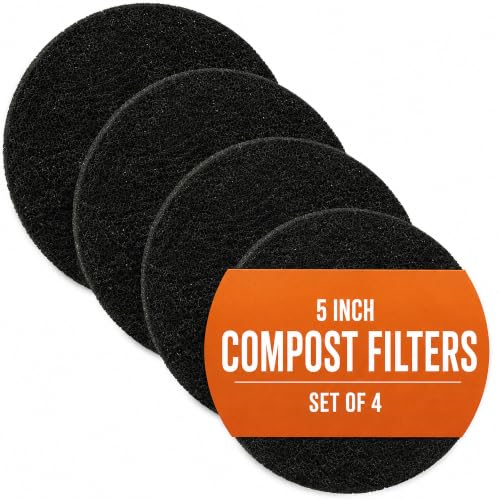
When you pile too much water in your bin, the extra moisture blocks the air channels that keep microbes breathing. That trapped oxygen forces the pile into anaerobic decay, which releases the foul, rotten smells you notice. Adding dry browns and turning the mix restores aeration and stops the odor. Excess moisture reduces oxygen levels, slowing microbial breakdown. Using activated charcoal filters in your compost container can help manage the odors that result from moisture-related decomposition issues.
Moisture Blocks Aeration
Ever noticed how a soggy compost pile suddenly smells like rotten eggs? When water fills the tiny gaps between particles, it chokes the airflow you need for aerobic microbes. Those microbes slow down, and compacted, water‑logged zones block oxygen even more. The result is an anaerobic environment where sulfur‑producing bacteria thrive, releasing hydrogen sulfide and other foul gases. Wet, nitrogen‑rich greens add to the problem, forming slimy mats that trap odor. To fix it, add dry carbon like shredded cardboard, dry leaves, or straw, and turn the pile regularly to break up clumps. Corrugated cardboard works especially well as a carbon source due to its absorbent properties and quick decomposition rate.
Aim for a wrung‑out sponge texture—moist but not dripping—so air can circulate and keep the stink at bay. Aerobic microbes require oxygen to efficiently decompose organic matter.
Excess Liquid Produces Odors
How does excess liquid turn your compost into a stinky mess? When water fills the pores, aerobic microbes lose oxygen and anaerobic bacteria take over, spewing sour, rotten, or sewage‑like smells. Rain, overwatering, and juicy scraps dump moisture faster than it can evaporate, leaving the pile soggy like a drenched sponge. To fight this, balance wet greens with dry browns—leaves, shredded cardboard, straw—so the mix feels damp, not dripping. Elevate the bin, add a cover, and sprinkle a thin carbon layer after each food addition to keep odor‑producing microbes at bay. Adding absorbent materials like coconut coir can significantly improve moisture management by absorbing excess liquid while maintaining proper aeration. Proper aeration is essential for healthy decomposition, and a lack of oxygen leads to foul odors oxygen shortage.
| Wet material | Dry absorbent | Result |
|---|---|---|
| Fruit scraps | Dry leaves | Balanced moisture |
| Grass clippings | Cardboard | Reduced sogginess |
| Coffee grounds | Straw | Fewer anaerobic zones |
Balancing Greens and Browns to Prevent Odor
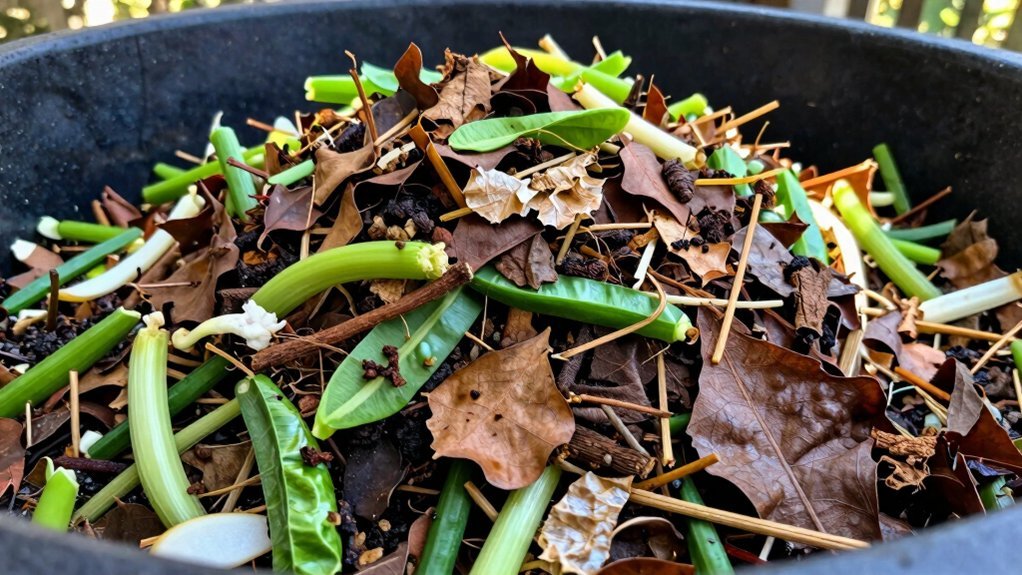
Why do your compost bins stink? Because you’ve overloaded them with greens—wet, nitrogen‑rich scraps that turn the pile anaerobic and release sour, sewage‑like smells. To fix it, balance every green addition with dry browns. Aim for a 2:1 or 3:1 brown‑to‑green ratio, roughly 70 % carbon material and 30 % nitrogen, which approaches the ideal 30:1 C:N balance. Browns such as dry leaves, shredded paper, straw, or cardboard soak up excess moisture, create air pockets, and keep the pile aerobic. Each time you toss kitchen waste, sprinkle a handful of brown material on top and mix it in. If the pile still smells, add more dry carbon until it feels like a wrung‑out sponge—damp but not soggy. This simple habit prevents odor and speeds decomposition. Dry leaves are especially effective for quickly absorbing excess moisture. For indoor kitchen composting, consider using hanging compost bins with odor-control features like airtight lids or activated-charcoal filters to contain smells while you collect materials before adding them to your outdoor pile.
Why Proper Aeration Is Essential in Small Bins
Balancing greens and browns stops the smell, but without enough air the compost still turns sour. In a small bin, compacted layers choke oxygen, pushing microbes into anaerobic mode and producing foul odors. You need to keep the pile airy so aerobic organisms can work fast and efficiently. Turn the contents regularly with a pitchfork or shake a tumbling bin to break up clumps and expose fresh material to breath. If turning’s hard, poke holes or insert ventilation tubes to create channels for airflow. Built‑in vents or perforated sides also pull fresh air in and push stale gases out. For deeper penetration into dense compost layers, specialized aerator tools like corkscrew designs draw core material to the surface more effectively than traditional pitchforks. By maintaining steady oxygen flow you prevent acidic, ammonia‑like smells and keep decomposition speedy and odor‑free. Adding bulking agents like straw or wood chips creates air pockets that further improve aeration.
The Effect of Warm Temperatures on Compost Bin Smell
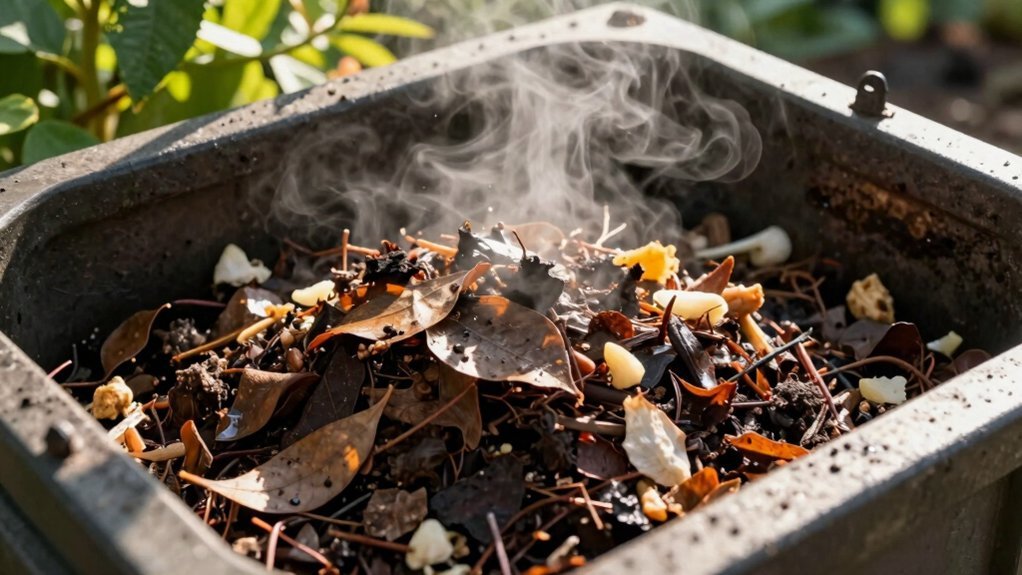
When the weather warms up, the microbes in your bin work faster, so you’ll notice the smell intensify.
The heat also traps moisture, which can make the pile soggy and amplify odors.
To keep the stank in check, you’ll need to boost ventilation and turn the compost more often.
Maintaining moisture at 40-60% helps balance decomposition speed while reducing excessive odor production.
The optimal temperature range of 90‑140°F promotes rapid decomposition while minimizing foul smells.
Heat Accelerates Microbial Activity
Warm temperatures crank up microbial activity, turning your compost bin into a rapid‑decomposition engine that often releases stronger odors. When the pile hits the thermophilic range (90‑140 °F, up to 149 °F), microbes work faster, breaking down organics and spewing volatile compounds that vaporize quickly. Those VOCs escape through any ventilation, giving you sharp whiffs whenever you open the bin.
If heat climbs past 140 °F, oxygen gets scarce, pushing sections toward anaerobic conditions that produce rotten, unpleasant smells. Turning the pile before it reaches that point restores airflow, cools the mass, and keeps the beneficial microbes alive. For apartment dwellers managing small composting spaces, bokashi bran can absorb excess liquid and minimize odors while maintaining beneficial microbial populations.
Monitoring temperature lets you stay in the sweet spot where decomposition is quick but odors stay manageable. Adding dry bulking agents helps absorb excess moisture and balance carbon‑nitrogen ratios, further reducing odor potential.
Thermal Moisture Retention
Heat drives moisture out of your compost bin, and that loss can tip the balance toward unpleasant odors. Warm weather speeds evaporation, so the pile can shed about 1 % moisture each day. When it dries too fast, dry pockets heat up, cool quickly, and create anaerobic zones that release rotten‑egg smells. Conversely, if moisture stays high, excess water blocks oxygen, compacts the material, and lets VOCs volatilize faster, especially above 70 °C. Keeping the pile around 60 %–65 % moisture is key: it fuels microbes, maintains airflow, and prevents long‑lasting odor spikes.
- Add dry browns (straw, shredded paper) to soak up excess water.
- Turn the pile regularly to redistribute moisture and break up compact spots.
- Cover with a tarp or roof to keep rain out and stabilize moisture levels. For balcony composting, airtight construction prevents odors while maintaining proper moisture balance in confined spaces.
If the pile is too small, it may not generate enough heat to sustain microbial activity, leading to low oxygen conditions and odor problems.
Ventilation Needs Increase With Heat
If temperatures rise, the compost’s microbial activity spikes, and the surge of volatile compounds pushes more odor out through any opening. Warm conditions speed metabolism, so VOCs and ammonia vaporize quickly and escape through vents, lids, or cracks. That means you’ll notice a stronger whiff, especially after adding fresh material.
To keep the pile aerobic, increase airflow: turn the heap or open vented containers before the temperature hits 160 °F. Turning re‑introduces oxygen, prevents anaerobic zones, and throttles the odor‑producing microbes. Ensure ventilation holes are positioned at multiple height levels throughout the bin to maintain consistent airflow across different sections.
Aim for a balanced C:N ratio and monitor the bin’s heat; when it climbs above 140 °F, add more ventilation. Proper airflow in hot weather keeps decomposition rapid and the smell minimal. The built‑in carbon filter in the HOTBIN lid captures and neutralizes most smells before they escape.
Quick Fix: Add Dry Browns to Absorb Extra Liquid
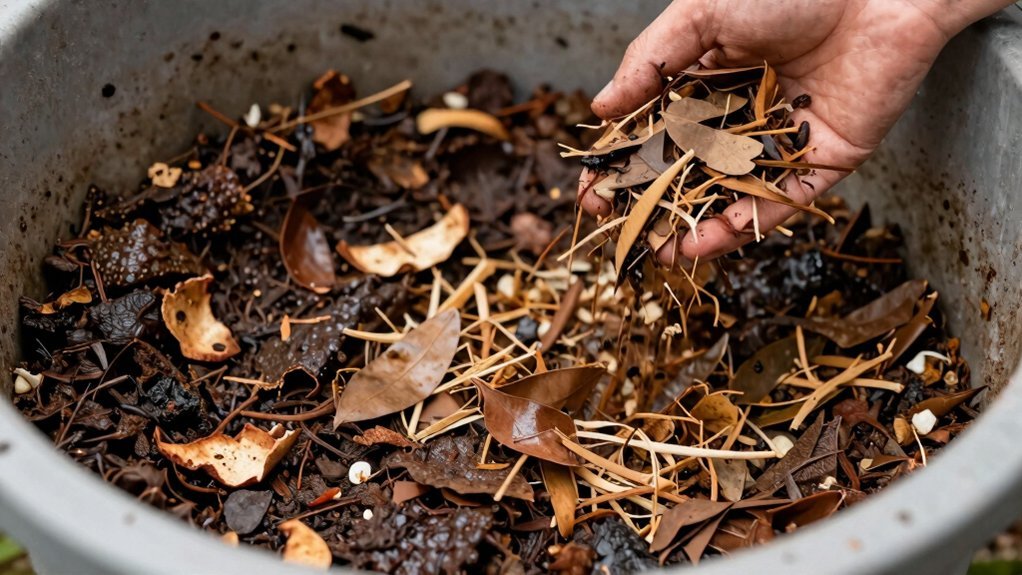
Wondering why your compost bin smells? Too much liquid is creating anaerobic pockets that unleash sour, rotten‑egg odors. The quickest fix is to dump dry browns that soak up excess moisture and restore airflow. By adding a handful of absorbent carbon each time you toss in greens, you keep the pile damp, not soggy, and let aerobic microbes dominate.
- Dry leaves, shredded newspaper, or cardboard – grab what you have, tear or shred it, and sprinkle it over wet scraps.
- Straw or wood chips – these coarse browns add structure, creating air pockets that prevent compaction.
- Layering – place a thin brown layer between each kitchen‑scrap addition to block surface odor and attract fewer flies.
If a squeeze test drips water or the texture feels slimy, add more dry browns until the pile feels loose and only slightly moist. Anaerobic decomposition occurs when oxygen is lacking, producing the rotten‑egg smell. Using compost starter bacteria can accelerate the breakdown of organic materials and improve microbial activity in your pile.
How to Turn and Mix an Apartment Compost Bin Effectively
Adding a handful of dry browns fixes excess moisture, but keeping that balance requires regular turning. You should stir your bin every week or every two weeks, depending on how fast it decomposes. Use a small compost fork or a sturdy spoon to lift material from the edges and fold it toward the center, breaking up clumps and creating air channels. When you add fresh scraps, layer them thinly, chop them small, and sprinkle browns each time. This keeps the mix moist, not soggy, and prevents anaerobic pockets that cause stink. Maintaining the proper carbon‑to‑nitrogen ratio helps control odors and speeds up decomposition.
| Tool | How to Use |
|---|---|
| Compost fork | Lift edge material, fold to center |
| Small shovel | Scoop bottom layers upward |
| Steel rod | Poke holes to loosen dense spots |
| Rebar | Create vertical air channels |
Choosing a Vented Indoor Compost Container
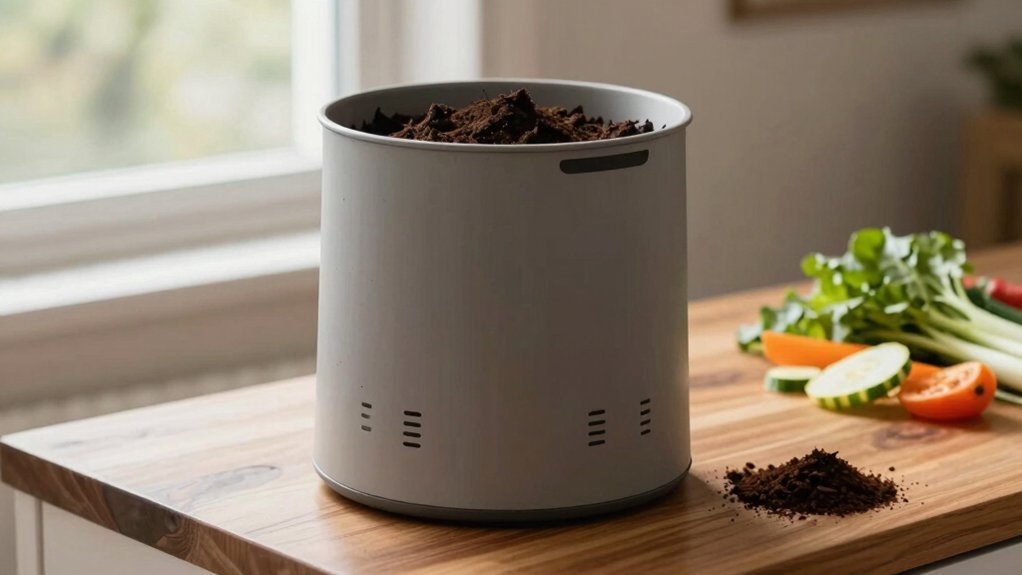
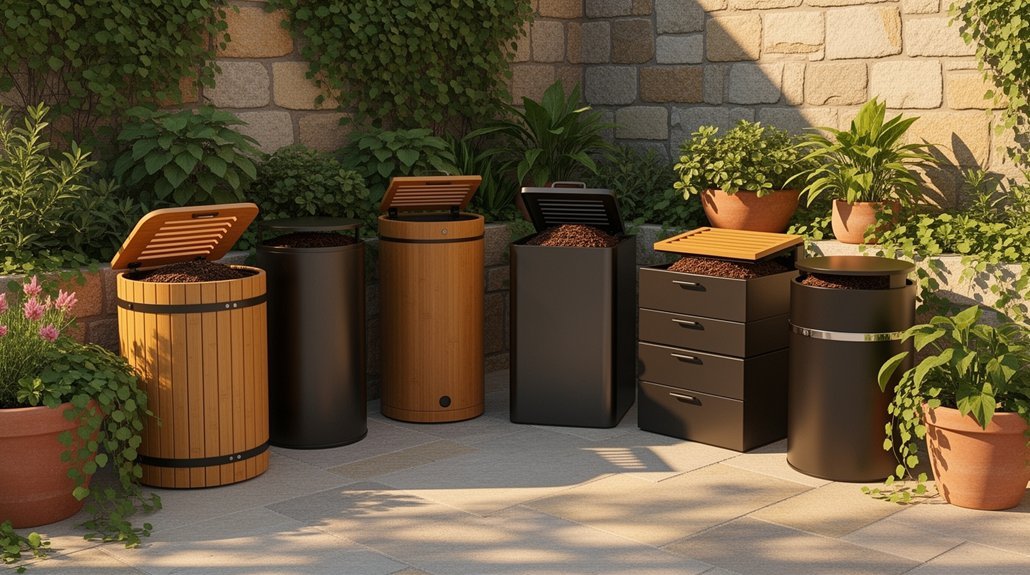
You’ll want a container with well‑placed vents that keep air flowing and prevent stale, anaerobic pockets.
Choose a material like stainless steel that resists moisture buildup while still being easy to wipe down.
A design that lets you quickly remove and clean the lid and interior will keep odors at bay with minimal effort.
Including a charcoal filter further reduces odor by absorbing gases.
Vent Placement and Airflow
Where should you place vents to keep your indoor compost bin smelling fresh? Position side vents near the middle of the container walls so fresh air can enter while stale air exits. Add a top vent or vented lid for upward airflow, and cover every opening with fine mesh to keep flies out. Ensure the bin is shallow and wide; this shape lets air circulate through the scraps instead of pooling at the bottom. A raised bottom or perforated support creates a channel for oxygen to reach the material, preventing anaerobic pockets that trigger sour odors.
- Side vents with mesh – balanced circulation, pest‑proof.
- Top vent or vented lid – helps heat and gas escape.
- Shallow, wide design – maximizes passive airflow.
Adding internal poles or sticks creates air pockets that further improve oxygen distribution throughout the pile.
Material Balance and Moisture
Ever wondered why your indoor bin starts stinking despite good ventilation? You’re probably feeding it too many nitrogen‑rich greens and not enough carbon‑rich browns. Aim for roughly two to three parts brown to one part green. Browns like shredded newspaper, cardboard, dry leaves, or straw soak up excess liquid, keep the pile airy, and prevent matting. When you add juicy scraps, sprinkle a generous layer of dry material right away; this absorbs moisture and blocks anaerobic pockets that cause rotten‑egg smells. Choose a vented container that lets air circulate, but remember it still needs the right dry‑wet balance. Add wet items in small batches, never compact the mix, and keep the texture like a wrung‑out sponge—damp, not dripping. If a smell appears, add more browns immediately to restore balance. Proper aeration is also essential to prevent odor buildup.
Easy Cleaning and Maintenance
What makes a vented indoor compost container truly hassle‑free? You’ll love a model that pairs airflow‑friendly lids with replaceable charcoal filters, so odors stay trapped while the bin stays aerobic. Smooth, dishwasher‑safe interiors and removable liners prevent residue from sticking, and hinged lids close cleanly to keep mess around the rim to A compact size encourages frequent emptying, and a sturdy, sealed lid keeps pests out while still allowing ventilation.
- Choose a bin with a charcoal filter positioned outside the perforated lid to avoid direct contact with scraps.
- Opt for stainless‑steel or coated interiors that you can pop into the dishwasher after each emptying.
- Pick a design with a hinged, removable lid and a snug closure to simplify daily loading and deter insects.
Weekly Emptying Routine to Stop Rot and Stink
Do you notice a sour smell creeping out of your compost bin? Empty it at least once a week, especially in hot weather when decomposition speeds up. A weekly dump stops wet scraps from turning anaerobic and keeps leachate from building up, which cuts down on rot, flies, and pests. After you dump, give the bin a quick rinse, then dry it completely; moisture fuels odor. Line the bin with newspaper or a compostable bag, and toss soiled paper in to soak up excess liquid. Add two parts brown material for every part green to balance moisture, and stir the pile each week to aerate it. If the lid stays closed, the bin stays fresher and smells less.
Using Bokashi as an Odor‑Control Alternative
Why not try bokashi for a near‑odorless kitchen waste solution? You’ll seal your food scraps in an airtight bucket, letting anaerobic fermentation do the work. Effective microorganisms—especially lactic acid bacteria—outcompete stink‑causing decay microbes, so the bin stays virtually scent‑free as long as the lid stays tight. Drain the liquid “bokashi tea” every few days to avoid buildup, and add fresh bran each layer to keep the microbes active. You can toss meat, dairy, and cooked leftovers without fearing the usual ammonia or sour smells that plague aerobic compost piles.
- Compact scraps and seal immediately after each addition.
- Drain leachate regularly to prevent liquid‑related odor.
- Sprinkle bokashi bran each time to sustain fermentation and suppress decay.
Managing High‑Moisture Scraps (Citrus, Melon, Coffee Grounds)
If you’ve already sealed your scraps with bokashi, the next hurdle is the water‑heavy leftovers that can turn a tidy bin into a soggy mess. Citrus peels, melon rinds, and coffee grounds all dump a lot of moisture into the pile, choking oxygen and sparking anaerobic, sour odors. Chop citrus and rind into small pieces, then bury them under a generous layer of dry browns—shredded cardboard, leaves, or paper.
Mix coffee grounds with the same dry material; the grounds act like a green, so you need equal or greater volume of browns to keep the balance. Turn or fluff the heap regularly, break up clumps, and drain any excess liquid before adding wet scraps. Freeze large batches until you’re ready to compost, and never overfill the bin, which would trap moisture and block airflow.
DIY Odor‑Neutralizers: Charcoal, Baking Soda, Essential Oils
Ever wondered how a few simple ingredients can keep your compost bin smelling fresh? You can tackle sour, musty, or smoky smells with a DIY blend that works fast and lasts. Sprinkle baking soda (1‑2 tsp) at the bottom of a small bin to neutralize acidic odors, then add a breathable sachet of activated charcoal (2 tbsp) to adsorb lingering molecules. Mix in a few drops of essential oil—lemon or eucalyptus, 4‑30 drops—to mask remaining scents and give a light antimicrobial boost. Rotate the soda every 24‑48 hours, refresh charcoal in sunlight monthly, and replace the blend when the scent fades.
- Baking soda for quick pH‑based control
- Activated charcoal for high‑surface‑area adsorption
- Essential oils for fragrance and mild antimicrobial help
When to Restart Your Bin: Signs It Needs a Fresh Start
Notice the tell‑tale signs—persistent rotten‑egg smell, soggy clumps, or a pile that never heats up—and you’ll know it’s time to restart your compost. If the odor shifts from earthy to sour, ammonia‑like, or downright foul, the balance of greens and browns is off and oxygen is lacking. Wet, slimy material that drips when squeezed, or dry, dusty clumps that won’t break apart, both signal moisture problems. When you can still see recognizable leaves or food scraps after weeks, and the pile stays compact, cold, and crusted, decomposition has stalled. Lack of worms or other decomposers confirms an unhealthy environment. Restarting means discarding the dead mass, adding fresh carbon‑rich browns, adjusting moisture to a damp feel, and turning regularly to restore airflow and heat.
Frequently Asked Questions
Can I Compost Meat or Dairy Without Odor?
Yes, you can compost meat or dairy without odor if you keep portions tiny, bury them deep, add plenty of dry browns, turn the pile often, and maintain hot, well‑aerated conditions.
Do I Need a Special Bin for Citrus Peels?
You don’t need a special bin—just chop the peels small, mix them with browns, keep the pile moist and aerated, and they’ll break down fine in any regular compost system.
How Many Times Should I Turn the Bin Weekly?
You should turn your bin about once or twice a week—roughly every three to five days—unless it’s hot composting, then aim for every two to four days to keep oxygen and moisture balanced.
Will Adding Garden Soil Improve Smells?
Yes, adding garden soil can help reduce mild odors, but only if you use it sparingly, mix it with dry browns, and keep the pile aerated. It won’t fix strong, anaerobic smells.
Can I Use a Freezer to Reduce Smells?
Yes, you can freeze high‑odor scraps to curb smells. Pack them in sealed bags or containers, then transfer the frozen waste to your compost bin on collection day, keeping kitchen odors at bay.
In Summary
By keeping your bin aerated, balanced, and not too wet, you’ll stop the stinky anaerobic breakdown in its tracks. Turn it regularly, add more brown material when it smells sour, and sprinkle a little charcoal or baking soda if needed. Swap in bokashi for especially smelly scraps, and watch the temperature stay moderate. Follow these quick fixes, and your compost will stay fresh, fragrant, and ready to enrich your garden.