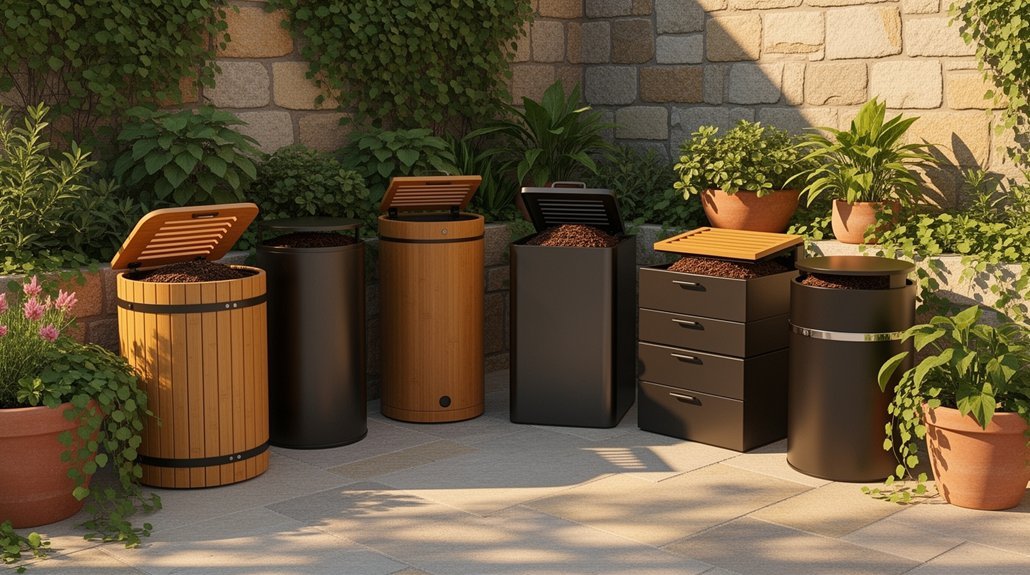
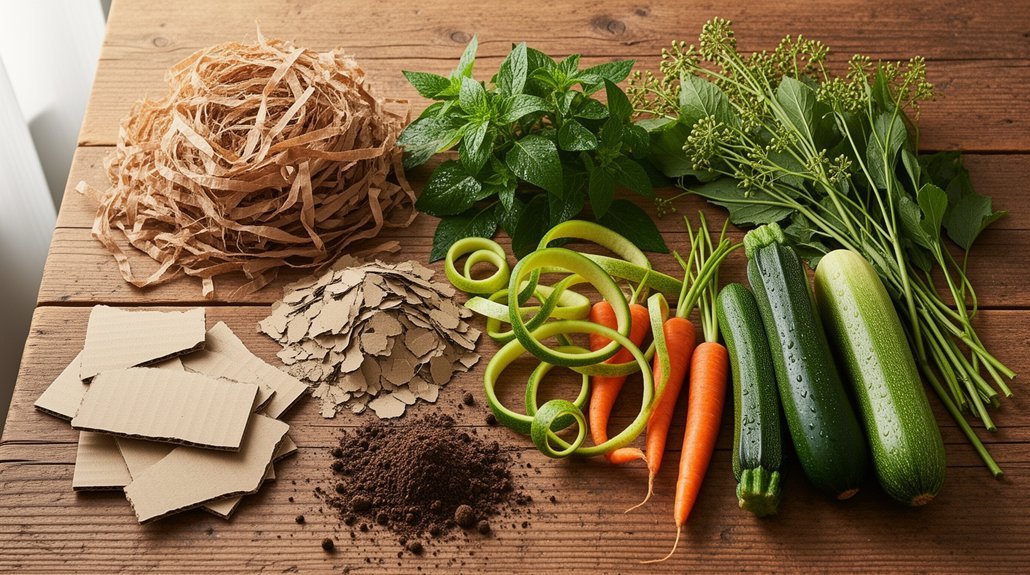
Use a 3:1 brown‑to‑green ratio, with shredded paper as the brown, to keep moisture at a wrung‑out sponge level (40‑60 %) and stay aerobic. Add dry paper first, then juicy scraps, and mist the paper lightly until it feels damp but not soggy. Turn the bin once a week, or twice if it’s a tumbler, to mix air and heat. If it smells sour or gets slimy, add more paper and turn again. Continue for more tricks on odor control and faster breakdown.
Why You Need a 3:1 Brown‑to‑Green Ratio in Apartment Compost
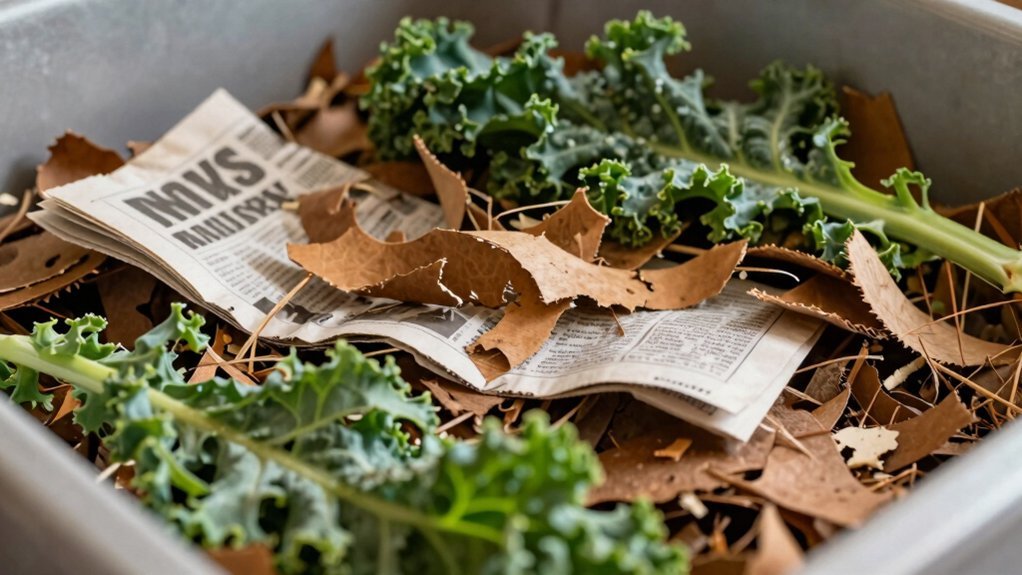
Why does a 3:1 brown‑to‑green ratio matter in apartment compost? Because your limited bin needs carbon to soak up moisture and keep microbes breathing. Browns—dry leaves, shredded paper, cardboard—supply the carbon, while greens—food scraps, coffee grounds—provide nitrogen. In a cramped, low‑airflow space, too many greens make the pile soggy, smelly, and anaerobic. Adding extra browns balances the carbon‑to‑nitrogen ratio, reduces odor, and prevents leachate. Conversely, excess browns dry the mix, slowing decomposition. The 3:1 rule is a practical approximation that creates a 20:1‑30:1 C:N environment, promoting steady heat, active microbes, and manageable turning. Adjust within the 2:1‑4:1 range as needed, but start with three parts brown to one part green. To keep the pile aerated, regular turning is essential. Systems like tight-sealing lids and advanced fermentation techniques further support odor reduction in confined apartment spaces.
Create Fast‑Acting Compost Brown From Shredded Paper
Balancing your compost’s carbon and nitrogen is only half the battle; the next step is to turn that carbon source into a fast‑acting brown, and shredded paper does the job perfectly. Shred office paper, newspaper, or cardboard into bite‑size strips; the larger surface area lets microbes feast faster. Mix the dry shreds with fresh greens instead of stacking them thick, so air can circulate and odor stays low. The paper soaks up excess liquid, keeping the pile damp but not soggy, while its structure creates pockets that prevent anaerobic spots.
Aim for roughly two to three parts shredded paper to one part greens, adjusting as you feel the texture and smell. Avoid glossy or heavily inked sheets, and strip staples or plastic before adding. For optimal results, prioritize unbleached paper since unbleached options are typically more eco-friendly and cost-effective. This simple technique speeds heating, reduces smells, and keeps your compost lively. Add browns when odors occur.
Measure Paper‑to‑Greens: 4‑Inch Layers vs. Bucket Ratios
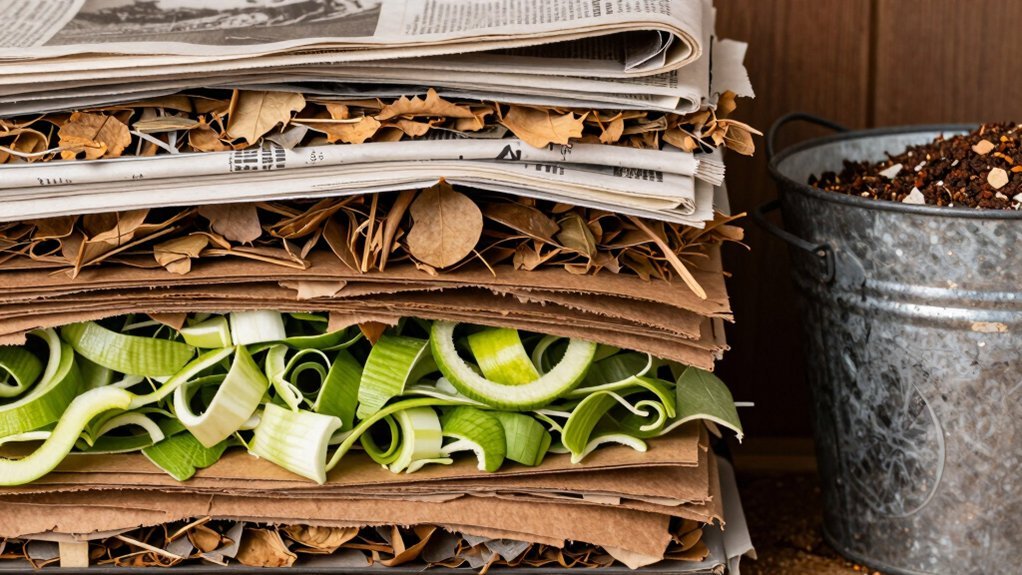
Ever wonder how to keep your compost lively without guessing? You can choose a 4‑inch brown layer or a bucket‑ratio approach, both aiming for a 3:1 brown‑to‑green volume. A 4‑inch layer gives a visual cue; a bucket ratio lets you work fast in the kitchen. Use shredded newspaper or cardboard for the brown and sprinkle grass clippings or food scraps for the green. Keep the pile moist, turn it weekly, and watch the heat rise. For kitchen scraps including meat and dairy, consider a bokashi fermentation system as an alternative preprocessing step before adding to your home compost pile.
| Method | Brown Volume | Green Volume |
|---|---|---|
| 4‑inch layer | ~4 inches of paper/brown | ~1 inch of greens |
| 1 bucket greens | 2–4 buckets paper | 1 bucket greens |
| 3‑bucket paper | 3 buckets paper | 1 bucket greens |
| 4‑bucket paper | 4 buckets paper | 1 bucket greens |
Both methods stay within the EPA’s 2–3 × brown recommendation, preventing dry or soggy spots. Choose the one that fits your rhythm and space. Adding high‑C:N materials like shredded newspaper helps maintain the microbes’ preferred carbon‑to‑nitrogen ratio.
Moisture Management: Wet Paper Without Slime
You’ll want to keep wet paper damp, not soggy, by shredding it first and mixing it with dry browns like straw or leaves.
Aim for a “wrung‑out sponge” texture—about 40‑60% moisture—so the pile stays airy and microbes stay active.
If you notice slime or a sour smell, turn the compost and add more coarse material to restore oxygen.
Place the compost piles in a shady location to protect moisture from direct sun exposure.
Maintaining proper moisture retention properties helps prevent waterlogging while keeping beneficial microbes engaged in the decomposition process.
Moisture Balance Tips
Wondering how to keep wet paper from turning your compost into a slimy mess? Aim for 40‑60 % moisture, the “wrung‑out sponge” feel. If the pile feels soggy, add dry carbon like shredded cardboard or dry leaves, and sprinkle coarse mulch to keep air channels open. Turn the heap regularly to redistribute moisture and prevent anaerobic zones. Reduce watery greens until the balance returns, and cover the bin during heavy rain. Check seepage from behind the mesh plate to catch hidden leaks early. Using activated carbon filters can also help manage odors that develop from excess moisture in dense compost piles.
| Action | Effect |
|---|---|
| Add dry carbon | Absorbs excess water |
| Introduce coarse mulch | Maintains airflow |
| Turn/mix pile | Redistributes moisture |
| Reduce wet greens | Lowers overall moisture |
| Cover during rain | Prevents waterlogging |
Paper Wetting Techniques
When you spray paper gradually instead of soaking it, you keep the moisture at that “wrung‑out sponge” level and prevent slime‑forming pools. Aim for about 50 % moisture by weight—wet enough to feel pliable but not dripping. Layer shredded paper with greens, then turn the pile to spread water evenly. If the paper feels crisp, add a light mist; if it pools, toss in dry browns like cardboard or straw to rebalance. Store pre‑wet paper under a breathable cover to limit evaporation before you mix it in. For fermentation projects requiring similar moisture balance, wooden tamper tools help efficiently pack and compress layered materials.
- Use a fine‑mist spray bottle for controlled wetting.
- Shred paper first; it absorbs water uniformly.
- Add dry bulking agents (cardboard, straw) when moisture spikes.
- Turn the pile after each watering to keep air flow.
- Ideal moisture is crucial for microbial activity, so keep the pile within the 40‑60 % range.
Preventing Slime Build‑Up
How can you keep your compost from turning into a soggy, slime‑filled mess? First, respect the 2‑to‑3 brown‑to‑green volume rule. Stack dry leaves, shredded newspaper, straw, or wood chips before you dump a batch of juicy fruit or coffee grounds. Spread paper in thin, fluffy layers rather than dense mats; this keeps air flowing and prevents the paper from turning paste‑like. Avoid glossy or heavily printed sheets—they absorb poorly and linger wet. If the pile looks shiny or smells sour, toss in more coarse browns and turn it to re‑oxygenate. Cover fresh scraps with 4‑8 inches of dry material, and never let rain‑water pool on the surface. For long-term storage of compost ingredients before adding them to your pile, consider using airtight storage containers to keep your dry browns fresh and prevent moisture contamination. These steps keep moisture balanced and slime at bay. Browns absorb moisture.
How Often and How to Turn Your Apartment Compost?
Ever wondered how often you should stir your apartment compost? You’ll need to keep oxygen flowing for the aerobic microbes that break down scraps fast. In most compact bins a weekly turn works, but if you have a thermophilic or tumbler system crank it up to two or three times a week to keep heat above 104 °F. Watch the pile settle; when the lower layers look compacted, mix them with fresh top material. Add new food waste only after the previous batch looks broken down, usually every 2–3 weeks for slower piles.
- Use a pitchfork or turning tool to pull edges toward the center.
- Rotate a tumbler twice weekly for hotter, faster breakdown.
- Keep the lid closed during and after turning to block pests.
- In worm bins, shift food to one side and let worms migrate before harvesting.
- Proper balancing of greens and browns prevents odor problems.
- Consider using ergonomic handles on your aerator to reduce strain during frequent turning sessions.
Fix Odor, Cold Piles, and Slow Break‑Down
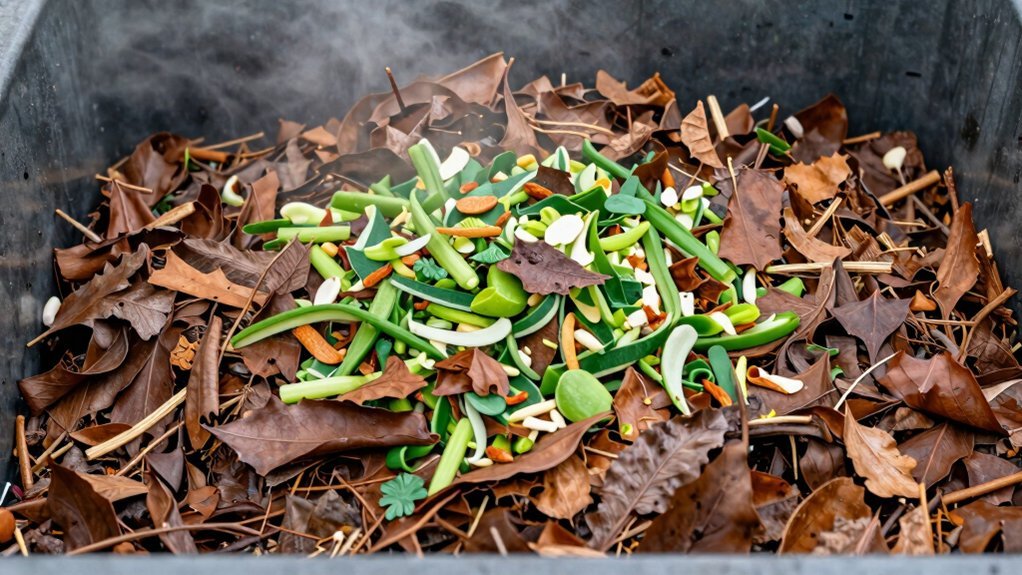
You’ll notice odor or a cold pile when the moisture‑air balance is off and the carbon‑nitrogen ratio leans too heavy on browns. Adding dry shredded paper and other brown material boosts airflow while soaking up excess moisture, restoring the right C‑N mix. Keep the pile moist but not wet and turn it regularly to keep oxygen flowing and microbes active. Aim for a 3:1 browns‑to‑greens ratio to prevent odor and improve heat generation. For kitchens generating significant food scraps, consider waste reduction percentages achieved through proper composting techniques to maximize your compost output.
Balancing Moisture and Airflow
Why does your compost smell, stay cold, or decompose at a snail’s pace? Because moisture and airflow are out of balance—too much water chokes oxygen, while too little leaves microbes dormant. Aim for a wrung‑out‑sponge feel (40‑60 % moisture). If it’s soggy, add dry, structured material like straw or cardboard; if it’s bone‑dry, toss in fresh kitchen scraps or grass clippings. Turn the pile every few days to redistribute water and inject air, and keep the bin loosely packed so pores stay open. Cover during rain to avoid waterlogging, and use a tarp or shade in wet weather. Add dry, fluffy amendments when wet. Mix in moist greens when dry. Turn regularly for even moisture and oxygen. Shield from heavy rain and avoid tight packing. Maintain moisture at 50‑60 % throughout decomposition.
Adjusting Carbon‑Nitrogen Ratio
When moisture and airflow are balanced, the next factor that dictates compost health is the carbon‑to‑nitrogen (C:N) ratio. Aim for a 25:1‑30:1 range; 30:1 is a solid target for active piles, while 30:1‑35:1 often yields the fastest breakdown. If you smell ammonia, you’ve tipped the balance toward nitrogen—add shredded paper, cardboard, or dry leaves to soak up excess nitrogen and raise the ratio. Conversely, a pile that stays cool and sluggish likely exceeds 35:1; toss in fresh kitchen scraps, grass clippings, or coffee grounds to inject nitrogen. Remember that volume rules (roughly three parts browns to one part greens) are only a guide—adjust by watching odor and temperature, and you’ll keep the C:N in the sweet spot for rapid, odor‑free composting. Thermophilic activity helps the pile reach temperatures of 150°F or higher.
Paper Compost Cheat Sheet for Quick Adjustments
A handful of shredded newspaper can instantly rebalance a soggy pile, because paper’s high carbon content soaks up excess moisture and adds the brown component you need. You’ll want to keep paper in thin layers, shred it for surface area, and mix it with greens to avoid a carbon‑heavy mat. When the pile smells sour or feels soggy, add a cup of shredded paper, then turn the mix. If it’s dry and slow, sprinkle a few strips of uncoated cardboard, break them into small pieces, and stir. Remember to avoid glossy or colored paper, and always monitor moisture and odor for quick tweaks. Aim for a target moisture content of 40-60% to ensure optimal microbial activity and prevent decomposition delays.
- Shred paper before adding to speed breakdown.
- Use thin layers to absorb excess moisture.
- Mix paper with greens to maintain aeration.
- Add small amounts of cardboard or paper towels for bulk.
Balancing moisture is essential to prevent odor and maintain microbial activity.
Frequently Asked Questions
Can I Compost Glossy Magazine Pages?
Yes, you can compost glossy magazine pages, but only in small amounts, shredded, and mixed with plenty of browns. Remove any plastic, staples, or heavy coatings first, and keep them under ten percent.
How Many Newspaper Sheets Equal One Bucket of Greens?
You’ll need roughly a bucket’s worth of shredded newspaper—about 30‑40 sheets, depending on thickness and shredding—so the paper volume matches the greens’ volume, then adjust if the pile feels too wet or dry.
Do I Need to Pre‑Wet Paper Before Adding It?
No, you don’t need to pre‑wet paper. Just shred or tear it, then toss it in. If it’s thick or stiff, a quick dampening helps, but dry paper usually absorbs excess moisture perfectly.
Can Cardboard Be Used as a Primary Brown Source?
Yes, you can use cardboard as your primary brown material, but shred or tear it, keep it unwaxed, and mix it well with greens to avoid moisture lock‑up and slow breakdown.
What’s the Best Way to Store Shredded Paper for Compost?
Store shredded paper in a sealed plastic bag or lidded bin inside a dry shed, garage, or under a tarp. Keep it away from moisture, pests, and greens until you’re ready to mix it.
In Summary
By sticking to a 3:1 brown‑to‑green mix, shredding paper into thin strips, and layering it in 4‑inch sections, you’ll keep moisture balanced and odors at bay. Turn the bin every few days, add water when the paper feels dry, and watch the pile heat up. With these quick tweaks, your apartment compost will break down fast, stay tidy, and give you nutrient‑rich soil for your indoor garden.